Introduction
A socialist market economy has helped China become the second-largest economy in the world in recent decades, thanks to reform and openness policies and the implementation of a market economy. China’s economic and political renaissance has become an attractive topic for many scholars specializing in international issues. Accordingly, there is a growing number of China observers who notice that China is going global to the extent that its renaissance affects the entire world. China’s relations with the Middle East are taking on a greater global significance in this environment. Worthy of special emphasis here is Syria’s strategic position in the region, which is also part of China’s larger Mideast strategy in the long term.
One should note that Chinese policymakers and scholars do not prefer to refer to the region as the "Middle East." Rather they prefer to call it "West Asia and North Africa" or WENA (Hachem, 2004:17). Major nations in the region are engaged in fierce international competition for many reasons. More than three-quarters of the world’s population lives in Asia, Africa, and Europe, which turns the WENA region into the center of political, economic, and social interests at both the local and global levels (Amine, 2004:15-20).
The Caspian Sea, the Black Sea, the Mediterranean Sea, the Red Sea, the Arabian Gulf, and the Indian Ocean are all located within or close to the region. In addition to the Nile, Tigris, Euphrates, and Jordan Rivers, it has other smaller rivers and waterways, most of which can be navigated. For example, the Suez Canal, the Bosphorus and the Dardanelles straits, the Bab al-Mandab, and the Strait of Hormuz are vital ports for regional and international trade, further increasing the importance of this region (Taher, 1998: 17-20).
When war breaks out, the area’s breadth and depth make it ideal for the establishment of military bases that can withstand conventional and unconventional attacks alike. Natural, mineral, and energy resources also abound in this Mediterranean region. As a result, the Middle East’s geopolitical qualities made it a point of strategic convergence and a battleground for major world powers. With its Mediterranean location, China sees Syria as a gateway for its European commodities, especially those manufactured in Syria and delivered through the ports of Latakia and Tartus, both located in the Eastern basin of the Mediterranean.
Since the end of the Cold War, the Syrian crisis has created favorable conditions for divisions and rivalries that go well beyond regional borders on an international scale never before seen. On one side, the so-called Syrian political and military opposition, with assistance from regional and international powers, formed an axis. The other side includes the Syrian government, Iran, and Hezbollah in Lebanon, with Russia and China on the international level. Given the strategic importance of the WENA region and Syria’s place in it, this paper discusses Sino-Syrian relations and explores the Chinese position on the Syrian crisis, the Belt and Road Initiative in the region, and Chinese progress in the WENA region.
The study draws on the inductive and comparative approach of the realist school of thought in international relations, looking at the world as it is rather than through the prism of the rules that govern it. This framework addresses Syria’s geographical position connects the continents of Asia, Europe and Africa in the World Land-Bridge. (Schiller Institute, 2016Schiller Institute (2016). The source article does not provide a separate full bibliographic entry for this citation.) the following research questions: What is the geostrategic importance of Syria? What is Syria’s strategic place in Chinese foreign policy? How have Chinese-Syrian relations developed in light of the current developments in the region?
The Geostrategic Importance of Syria
Foreign policy, according to Napoleon Bonaparte, is a matter of geography. In international relations, similarly, geostrategic factors are one of the most important factors in a country’s foreign policy. International relations are preoccupied with the state’s relationship to its environment and physical space, and it seeks to find solutions to all of the issues that arise from these relationships.
Syria’s relevance extends beyond its geographic location to include its role in the wider region. Syria is one of the most significant countries in the Middle East because of its strategic importance. In 2011, a movement in Syria against the Assad regime descended into a bloody proxy war. Because of this protracted war, the world is facing the biggest refugee crisis since World War II and one of the worst humanitarian situations in recent memory. About 11 million Syrians have been internally and internationally displaced due to the conflict’s rapid escalation (Gürcan, 2019aGürcan (2019a). The source article does not provide a separate full bibliographic entry for this citation.). The crisis has been unable to splinter or destroy the Syrian army, which is perhaps the greatest achievement (Zreik, 2022Zreik (2022). The source article does not provide a separate full bibliographic entry for this citation.). Syria has been elevated from this crisis to the status of a geostrategic player endowed with an equally strategic position.
Syria’s strategic importance can be summarized as follows: Syria is the hub of all regional balancing of power in the region. Syria stops regional powers from accessing the depths of the Arabian Peninsula from the eastern Mediterranean. At the same time, Syria serves as Lebanon’s geographic buffer. According to Marshal Alexander de Seversky, geopolitical scientist and air force expert, this Arab region (the Levant) connects the continents of Asia, Africa, and Europe. It is critical to protecting Africa and Europe from airborne threats (Gürcan, 2019b: 1-10Gürcan (2019a). The source article does not provide a separate full bibliographic entry for this citation.; Gürcan, 2020a: 65-80).
Syria’s geostrategic position as Asia’s entryway to Europe makes it a significant part of its natural surroundings. Syrian political and economic security has been bolstered by its favorable approach to China and Russia’s grand strategies as part of the Five Seas and the Silk Road frameworks, as well as China’s strategy to break the American blockade at the Strait of Malacca. Bashar al-Assad’s opening up strategy (infitah) aims to revitalize Syria’s economy and improve its foreign and regional alliances. President al-Assad announced his "Four Seas Approach" in 2004 to establish Syria at the heart of a regional energy and transportation network. Damascus gradually advocated his plan to make Syria a commerce hub in the Mediterranean, Black, Arabian, and Caspian seas. Later, the Red Sea was added. Before the foreign-orchestrated war on Syria, the Syrian President propagated this ideology across the area and boosted Syria’s relations with numerous eastern countries: Iran, In 2011, a movement in Syria against the Assad regime descended into a bloody proxy war.
Because of this protracted war, the world is facing the biggest refugee crisis since World War II. China, and Russia. President Assad articulated his broader goal in 2009: "Once the economic space between Syria, Türkiye, Iraq, and Iran is connected, we’ll link the Mediterranean, the Caspian, the Black Sea, and the Gulf ". The goal was to create a network of commercial trade, infrastructure, transportation networks, and pipeline projects (Abdullah & Arbache, 2020/2021, Gürcan, 2019/2020).
Confirmed gas discoveries in Syria and Lebanon and their surrounding waters sparked a global power battle over control of energy resources for the 21st century (Gürcan, 2020a: 65-80).
Nabucco Gas’s future rests on Syria’s role as a gas transit node, while the United States and other countries are fighting to free Europe from the control of Russia’s Gazprom. The United States and the West did not succeed in persuading Syria to give in to their demands. Iranian cooperation with the Lebanese, Iraqi, and Palestinian resistance was used to undermine and disrupt U.S., Atlantic and Israeli policies.
It is because of Syria’s unique geographical and strategic location that the Sumerians, Akkadians, Canaanites, and Phoenicians passed through this region. Throughout its history, Syria’s political and economic significance has been connected to its location at the crossroads of three continents and various cultures. Syria’s strategic location made it an important transit point for trade between the Middle East’s various countries and a pivotal player in the Arab-Israeli conflict.
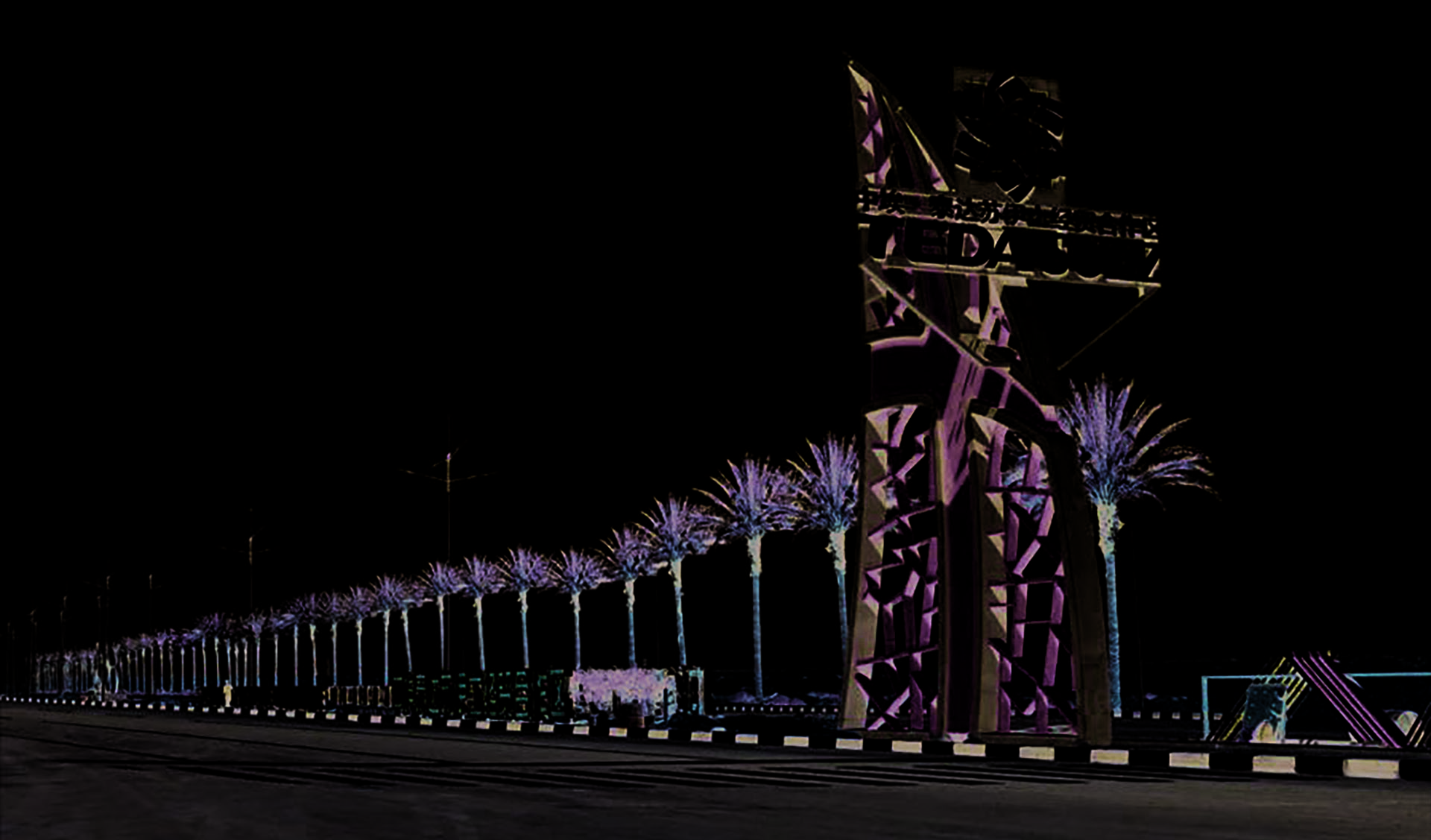
With these geopolitical features, Syria became a key player in the region’s economic and political interests, making it a polarizing A sign of the China-Egypt Suez Economic and Trade Cooperation Zone, located some 120 km to the east of Cairo near the Suez Canal, Egypt. (Xinhua Net, 2019Xinhua Net (2019). The source article does not provide a separate full bibliographic entry for this citation.) point for the aspirations of the regional and international powers. This made Syria a focal point for the sovereignty of regimes. The conflict in Syria has had a great effect on the regional and global balance of power (Zreik, 2020Zreik (2020). The source article does not provide a separate full bibliographic entry for this citation.; Gürcan, 2020b: 331-50).
Background on China-Syria Relations
Relations between China and Syria date back many centuries. When the Silk Road was first established, Syria was a key link between China and the Arab world because of its central location on three continents. China’s first line of defense in Central Asia and the Caucasus has been Syria since 1949, and the country has also served as a bridge for Russian oil to arrive in China while also serving as a transit country for most Iraqi oil from 1934 to 1982 and Saudi oil from 1973 to 1982. Later, President Bashar al-Assad has proposed a five-seas project that ties with the Chinese Belt and Road initiative (Abdullah & Arbache, 2020/2021).
Diplomatic relations between China and Syria extend back to 1956, when the two nations signed a Trade Promotion Agreement. This paved the way for Arab diplomatic contact with modern China. However, relations between China and Syria were hampered by the conflict between Beijing and Moscow (Lawrence, 2013Lawrence (2013). The source article does not provide a separate full bibliographic entry for this citation.). Despite Syria’s allegiance to the Soviet Union, China was eager to maintain political contact with the country and signed several agreements with it, including one in 1963 to increase trade cooperation and another in 1965 to establish cultural cooperation, which was the first of its kind between the two countries (Zreik, 2021Zreik (2021). The source article does not provide a separate full bibliographic entry for this citation.).
Relations between China and Syria improved after Egypt signed the Camp David Treaty in 1978, making Syria a point of balance in the Middle East not constrained by the decisions of the US. During the 1980s, Syrian-Chinese ties increased due to their shared perspective on the Iraqi-Iran war. China and Syria signed a long-term trade agreement in 1982, replacing the one signed in 1963. After the Soviet Union refused to provide Syria with medium-range missile technology, Beijing expressed its willingness to do so (Nabil, 2000Nabil (2000). The source article does not provide a separate full bibliographic entry for this citation.). With the help of Beijing in 1985, the Syrian government was able to create missile factories in Aleppo and Hama and educate Syrian professionals in using the weapons.
In 1996, the two sides inked a slew of agreements, including one to promote and safeguard mutual investment and another to give a ten-year loan of 100 million yuan for financing oil projects and spinning mills in Hama. The Chinese government awarded a total of twenty million yuan in grants in 1999 as non-refundable gifts. Trade between the two countries grew rapidly, from 70 million dollars in 1989 to 150 million dollars in 2000 (Graf, 2018: 443-532).
Chinese officials opposed the idea of the United States and Western countries imposing sanctions on other countries under the pretext of non-democracy or human rights violations, such as North Korea and other countries in the Middle East, such as Iran, and recently the US sanctions policy on Syria, which China rejected. In response to the United States’ embargo on Arab countries and Syria to purchase weapons in the mid-1990s, China supplied Syria with 150 surface anti-tank missiles, which helped to strengthen military ties between the two countries at the time.
Diplomatic relations between China and Syria extend back to 1956, when the two nations signed a Trade Promotion Agreement.
Syrian President Bashar al-Assad made his first trip to China in 2004. Economic cooperation between China and Syria was the primary emphasis of this visit. There were contracts for oil and energy tankers, manufacturing facilities, and foreign personnel in China’s interests in Syria. Cooperation agreements between China and Syria were formed during this period in oil and gas exploration, agricultural development, health, medical sciences, tourism, education, and culture. Syria received soft credit from China. Oil and cement have been popular investments for Chinese enterprises. Adra, a Syrian industrial city, was also built with Chinese help. The volume of trade exchange between the two countries grew to nine hundred million US dollars in 2005 (Zreik, 2022Zreik (2022). The source article does not provide a separate full bibliographic entry for this citation.; Anderson, 2018Anderson (2018). The source article does not provide a separate full bibliographic entry for this citation.).
China’s Position on the Syrian Crisis
A series of international events contributed to creating the right conditions to change the structure and shape of the international system. All these reasons converged on the Syrian crisis, which witnessed regional and global polarization that shattered traditional ideas, such as unipolarity, to create a new map of international relations based on the superiority of competing poles with different policies and goals (Gürcan, 2019cGürcan (2019a). The source article does not provide a separate full bibliographic entry for this citation.).
Since the start of the "Arab Spring", China has expressed its displeasure with the rise of Islamic movements in Arab countries, fearing for the safety of China’s Muslim minorities, particularly those in Xinjiang province, where the United States incited and allocated a huge budget for propaganda against China under the pretext of violating human rights (Zreik, 2021Zreik (2021). The source article does not provide a separate full bibliographic entry for this citation.).
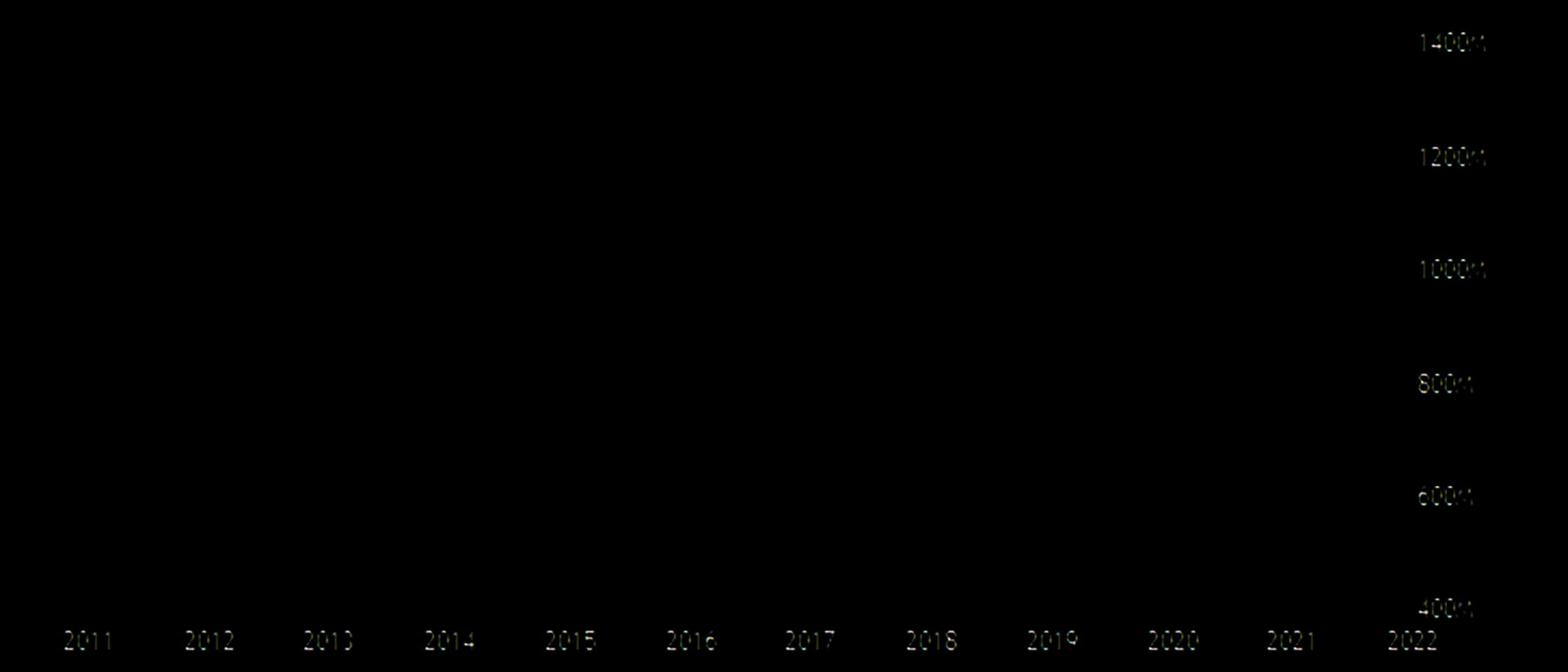
The fact that China took a different stance on the Syrian situation than the United States is nothing new. Given China’s pragmatic foreign policy regulated by the intersections of ideology and interests, China’s political orientations have always clashed with their US equivalents in recent times. Nevertheless, China’s position on the Syrian crisis is unique because it has crossed the usual boundaries A year over year graph on changing trade volume between China and Syria. (Trading Economics, 2022Trading Economics (2022). The source article does not provide a separate full bibliographic entry for this citation.) of situational difference with the policies of the United States in the Middle East and has reached the point of political confrontation. China is a new player, especially in light of the escalating crises in the region that reflect these balances of power (Al-Husseini, 2015:41Al-Husseini (2015). The source article does not provide a separate full bibliographic entry for this citation.).
With the US expanding its influence in Asia- Pacific, China is working to respond in other places, such as Syria, as a direct response to the US’ shifting strategy (Al-Sayyid, 2011:52). In addition to China accusing the United States of violating its essential interests, either by providing US weaponry to Taiwan or backing separatist organizations in Tibet, China accepted the war in the Syrian crisis as part of the response, even without any direct military intervention.
In 2013, the Pentagon considered creating a "new country" that would span the Syrian- Iraqi border to shut off the Silk Road. China changed its approach once ISIS took up this duty to avoid a run-in with the United States and stay out of the region’s crises. An industrial zone 120 kilometers from Cairo has been established as part of Beijing’s decision to change its route through Egypt (Meyssan, 2016Meyssan (2016). The source article does not provide a separate full bibliographic entry for this citation.).
In the same way that Berlin witnessed the beginning of the Cold War between the Soviet Union and the United States, Damascus saw the beginning of a significant shift in Chinese foreign policy. From its vetoes against resolutions on Syria, China’s position on the conflict has been characterized by its opposition to external interventions in general and military interventions in particular and the rejection of any measure in the Security Council that would open the door to intervention. For the first time in veto history, the veto was used by China to block legislation against Syria. In addition, China has exercised its veto privilege six times in relation to Syria. Syria’s strategic value comes not from its natural resources but rather from its geopolitical weight in terms of location and its influential role in Middle Eastern affairs. As a result of the joint Russian-Chinese veto, Beijing believes that the Syrian situation may be resolved (Zreik, 2019Zreik (2019). The source article does not provide a separate full bibliographic entry for this citation.).
Chinese Initiatives to Resolve the Syrian Crisis
For the first time in its modern history, China has given up its policy of not engaging in crises outside of its immediate interests or geopolitical area. China’s embassy in Damascus has remained operational despite Western pressure to close it. A ceasefire was assumed on April 10, 2012, as part of its initiative to resolve the Syrian crisis in February 2012. As Ahmad & Masaad (2012: 52) put it, the following points describe the initiative: - The appointment of UN-Arab League special envoy Kofi Annan to monitor the implementation of the political decision is welcomed by China. However, Beijing believes that the United Nations or any other impartial organization should review the humanitarian situation in Syria under the conditions of respecting Syria’s sovereignty.
In 2013, the Pentagon considered creating a "new country" that would span the Syrian-Iraqi border to shut off the Silk Road.
- It is imperative that the international community recognize Syria’s sovereignty, unity, and territorial integrity and that it "give the necessary aid and urge the various political forces in Syria to initiate discussion and respect the results of that dialogue". As a result, Beijing opposes armed intervention or pressure for regime change in Syria.
According to the United Nations Charter and international norms, all United Nations Security Council members must adhere to these rules.
Geneva Conference (1) was convened on June 30, 2012, and the Working Group for Syria (U.S.; China; Russia; France; UK; Türkiye; Arab League; and European Union) agreed on the fundamentals of a transitional phase in Syria. The plan calls for a "shared agreement" to build a "transitional government with full powers" but leaves President Assad’s future in the air. A post- Assad period in Syria was viewed as a possibility following a conference between the United States, Russia, and China in which they agreed that it is up to the Syrian people alone to decide the fate of their president (UNHCR, 2011UNHCR (2011). The source article does not provide a separate full bibliographic entry for this citation.).
The following are some of the most significant provisions made by the Geneva Conference (1): - The establishment of a transitional administration consisting of representatives from both the Syrian government and the opposition.
- Holding a national discourse that includes all segments of the Syrian population and leads to establishing the Syrian regime’s constitutional and legal framework and ensuring free and fair elections.
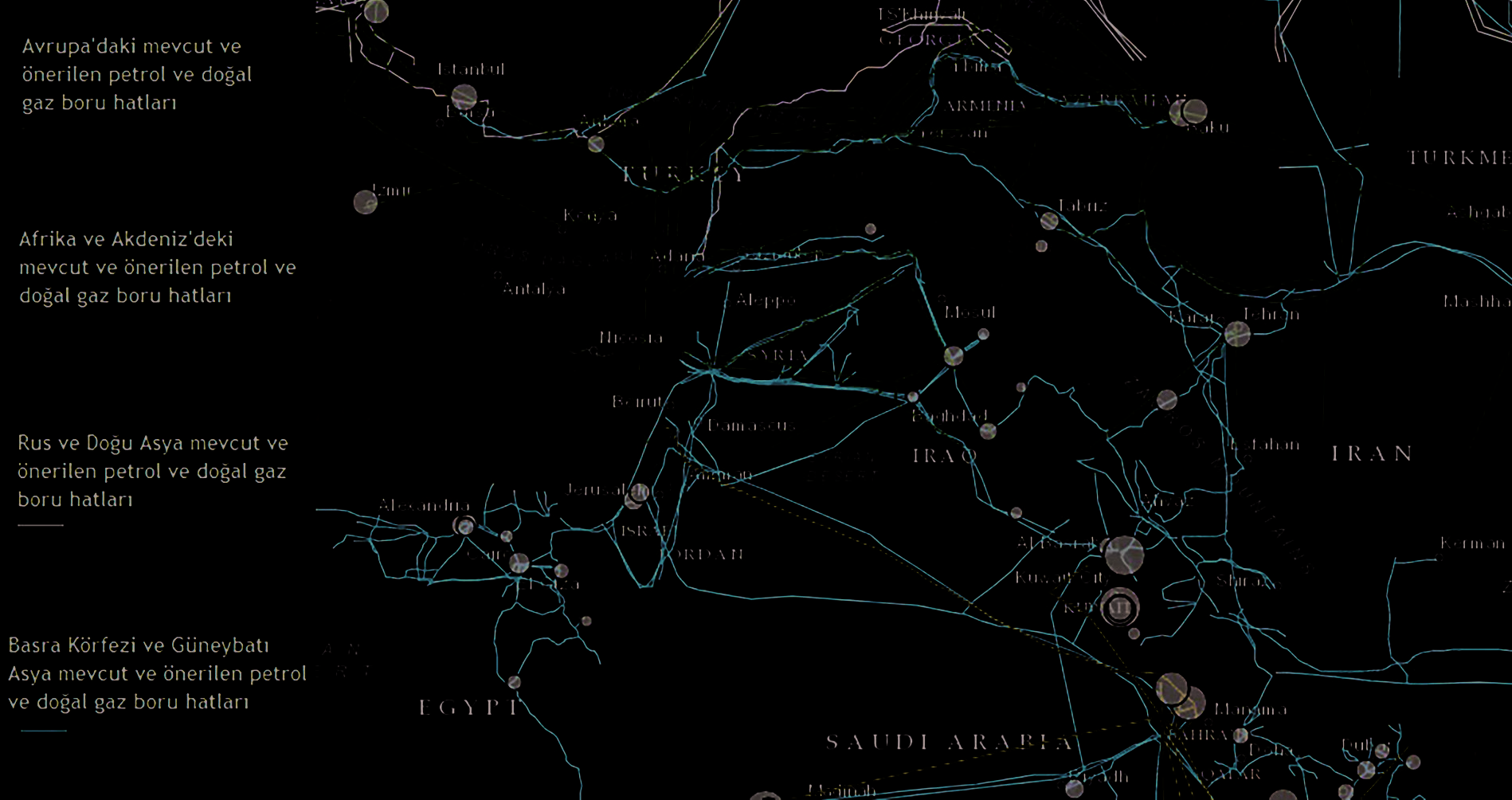
New recommendations were made in November 2012 to Lakhdar Brahimi, the UN and Arab League envoy, which included a phased ceasefire and the formation of a transitional government, which China had previously proposed. It was on September 30 of the same year that China proposed a plan to end the Gas and oil pipelines around the region. (FracTracker, n.d.FracTracker (n.d.). The source article does not provide a separate full bibliographic entry for this citation.) conflict in Syria through diplomacy while at the same time cooperating to fight terrorism.
Even if the goal is to combat terrorist groups in Syria, China has vehemently opposed any military intervention. During the "Libyan revolution," when President Muammar Gaddafi was in power, the Chinese vetoed two similar resolutions against Libya. Beijing felt that the Western engagement in Syria was not to protect civilians, as claimed by the West and US policymakers.
With China’s position on the Syrian issue and its use of its UN Security Council veto, the country’s determination to play a global diplomatic and political role commensurate with its rising economic and military capabilities was made clear. As China’s economic growth continues to outpace that of the rest of the world, Beijing’s support for the Iran nuclear deal represents a fundamental qualitative shift in Beijing’s vision of its diplomatic and political position in the global arena.
With the United States’ efforts to destabilize Arab countries, some believe that the US strategy is preventing the flow of oil supplies to China. This is especially true because the United States’ interest in the Middle East has decreased after it discovered vast quantities of oil in Canada and Brazil and is seeking to replace oil in the future with alternate and subterranean energy sources. Since the Chinese government views economic cooperation as contingent on world peace, it has made diplomatic attempts to de-escalate tensions and resolve international conflicts through a policy centered on a "zero problems" approach to ties with the outside world (Sayegh, 2012Sayegh (2012). The source article does not provide a separate full bibliographic entry for this citation.).
Governments in countries overwhelmed by events have attempted to continue their trade ties with China. As a result, China believes that the fall of the Syrian regime will lead to the development of a new regime that is more Western-friendly. Any Western engagement in Syria would also affect Iraq, a major oil supply for China. While China is always seeking to cement three truths in its strategic vision for the Arab area and world: guaranteeing its share of energy, developing economic ties to ensure that it can fulfill its rising needs, and its constant emphasis on solving problems through collaboration and dialogue (Ayoub, 2012:27).
Analysis of the Belt and Road Initiative in the WENA Region
The economic, political, and cultural consequences of China’s Belt and Road Initiative have sparked much attention. As a historic trade route that crossed three continents, the Silk Road reminds us of the long-standing ties that have bound governments and peoples worldwide. The activities and transactions that took place along the Silk Road are indicative of the emergence of a new wave of globalization. Through centuries, trade and cultural contacts took place between China, India, and many countries in the WENA
In the late 19th and early 20th centuries, the development of nation-states and imperial wars for regional and global hegemony halted globalization.
Governments in countries overwhelmed by events have attempted to continue their trade ties with China. Technology, popular culture, free trade, and population shifts in the late 20th century contributed to globalization’s growth. With today’s surge of huge energy resources, such as massive oil and gas deposits and renewable energy sources, the Middle East is one of the most important centers of world trade, commerce, politics and security. The Middle East has become one of the world’s most globalized regions due to expanding trade volume, foreign investments, and the increasing number of people traveling worldwide.
If the Belt and Road Initiative succeeds in bringing countries and cultures together, globalization will be a success. There are fewer barriers to economic interdependence as areas and countries grow increasingly integrated and networked rather than isolated and confrontational. Economic protectionism, barriers to free trade and foreign investment, and border closures for newcomers and immigration all contribute to a rise in antiglobalization sentiments in the West. Ironically, many who advocated and led globalization in the past, particularly in the West, are today celebrating populist isolationism.
The Belt and Road Initiative asks for a review of trends that could significantly impact the international trading system and the global security architecture, including the geopolitical and geo-economic landscape. However, there are still numerous difficulties to overcome, particularly in nations that have experienced years of political unrest and conflict. There is great potential in the Middle East; many world faiths have their roots in the Middle East, the Head of Syria’s Planning and International Cooperation Commission Imad Sabouni shakes hands with Chinese Ambassador to Syria Feng Biao after signing an economic cooperation agreement in Damascus, Syria, on March 4, 2020. (Ammar Safarjalani/Xinhua, 2020Ammar Safarjalani/Xinhua (2020). The source article does not provide a separate full bibliographic entry for this citation.) cradle of many civilizations and the birthplace of many world religions. A wide range of civilizations, ethnic groupings, and sectarian communities can be found in this region.
The China-Central Asia-West Asia Economic Corridor ends in the WENA region, where countries like Iran and Türkiye lie along its route (Fasulo & Talbot, 2017Fasulo & Talbot (2017). The source article does not provide a separate full bibliographic entry for this citation.). Economic growth in WENA is partly attributed to increased trade and investment. Economic exchanges, expectations, and dreams for the region and beyond are generated by a young, vibrant population, expanding wealth, and investment opportunities. WENA’s vast oil and gas deposits, renewable energy sources, and rapid growth in trade and industry with regional and global actors have made it a key hub for world trade, economics, politics, and security.
There is a growing interdependence between the globe’s economies, politics, and security in a globalizing world. This fact serves as a reminder that the Middle East and the rest of the globe are at risk if economic and political turmoil persists. Infrastructure investment will be limited if there is a lack of political stability and security; 60-65 % of the world’s proven oil and gas reserves are located in WENA and its bordering regions (Abbasi, 2013:93-120). Industrial and economic progress hinges on a balance between energy use and security. These areas are bursting at the seams with people, their economies booming, and new riches being created.
The importance of political stability, excellent governance, economic integration, and common security cannot be overstated. The effort presents a new opportunity for many countries to achieve their objectives but also has its share of challenges. By reviving the historic Silk Road through investments in rail and maritime links, the idea emphasizes the importance of a different form of globalization that includes countries in the North and South from East to West. In order to connect the world via a network of commerce routes, this path requires political and economic support. The Belt and Road Initiative aims to help partner countries thrive economically and financially.
With its investment and employment development, the Belt and Road Initiative hopes to help WENA’s economy grow. Political stability and peace will become more important to all participating countries as the economy grows, the quality of life improves, and the chances for education, travel and employment improve. Under these circumstances, governments and citizens should prioritize political stability and the prevention of violent conflict and terrorist acts. These are reasonable aspirations tempered by a sense of optimism. There will be no investment in infrastructure unless there is political stability and security for all citizens. Investors, corporations, and governments are nevertheless hampered by political unrest and security concerns.
WENA has enormous potential and opportunity, but it also faces challenges in regional upheavals and geopolitical developments that could impede the implementation of Belt and Road projects.
There is a growing interdependence between the globe’s economies, politics, and security in a globalizing world. Ineffective governance and economic progress, opposition to political reform and scorn for public ambitions are all obstacles that must be overcome. Problems such as these will impede cooperation and policy development in the WENA region (Bölme, 2015:7-37). The safety of the area and the world must come first. The U.S. invasion of Iraq in 2003 resulted in disorder and instability that persists today. Tunisia, Egypt, Libya, Yemen, and Syria were revolutionized by the Arab Spring in 2010. (Sadiki, 2015Sadiki (2015). The source article does not provide a separate full bibliographic entry for this citation.). While the political dialogue in Tunisia led to relative calm, Egypt’s military coup, witnessed in silence by the world’s superpowers and the West as the claimed advocates of freedom, brought order following deadly social upheavals (Karakoç, 2015:172-199).
There has been an increase in the impact of non-state actors and terrorist organizations. In this case, no effective action was taken by the international community, global powers, regional institutions, or international organizations. Terrorist groups have enhanced their positions by recruiting militants, engaging in commercial enterprises, and committing ethnic cleansing because of governments’ lack of interest in finding solutions to oncoming crises. Conflicts in the region have left a trail of destruction, and the danger extends beyond the nations involved. Chinese Ambassador Li Baodong voted against the draft resolution calling for regime change in Syria. (China Daily, 2012China Daily (2012). The source article does not provide a separate full bibliographic entry for this citation.) As the crisis in Syria escalates, a proxy war is happening there, dispersing its people. ISIS has emerged in Syria due to the regime’s use of all available tools to quash dissent, which resulted in war crimes against its people and the loss of control of the country (Gürcan, 2019aGürcan (2019a). The source article does not provide a separate full bibliographic entry for this citation.).
About 15 million Syrians have been displaced since the conflict began six years ago. Syrian refugees in Türkiye, Lebanon, and Jordan profoundly impact the countries’ economies, societies, and political and social landscapes (Ferris and Kirişçi, 2016Ferris and Kirişçi (2016). The source article does not provide a separate full bibliographic entry for this citation.). This is the most serious humanitarian issue of the twenty-first century. The global impact was created due to inaction by governments and international organizations. Türkiye, France, Belgium, the UK, Russia and Iran have all been targeted by ISIS militants. No country can be considered secure until a political settlement in Syria and a regional security policy are agreed upon. The unrest and ills afflicting the Middle East must be addressed.
The new Silk Road will traverse through the Suez Canal, including numerous regional actors, via the Middle Corridor and Sea Route. Preconditions for full implementation include regional stability, peace, common security, collaboration, and effective governance. Without it, a promising project may collapse and fall short of its objectives. The initiative’s greatest challenge is to meet and maintain these preconditions (stability, common security, and cooperation). The reopening of the historic Silk Road has aroused widespread interest and raised the prospect of a new geopolitical order in the Middle East. Development, security, conflict resolution, political stability and effective government all benefit from the new Silk Road.
To lay a solid foundation, the Belt and Road Initiative and its partner countries must deal with political instability, armed conflicts, forced migration, large numbers of refugees, security threats, terrorist organizations and networks, a lack of good governance and legitimacy, and radical ideologies. Many countries in the Middle East face serious threats to their national security. The ramifications of ISIS in Syria and Iraq are widespread. It is imperative that the Belt and Road Initiative’s investors have a safe and stable environment in which to operate (Keskin, 2016Keskin (2016). The source article does not provide a separate full bibliographic entry for this citation.). In this way, terrorist organizations and networks are given legitimacy, which they do not deserve. As a result of the crisis, the Middle East would have been destabilized politically, economically, and militarily. For this initiative to succeed, terrorist organizations must be eliminated and security established (Ataman, 2017Ataman (2017). The source article does not provide a separate full bibliographic entry for this citation.).
Syria: A Strategic Partner for China
The great Chinese industrial and economic renaissance can serve as a role model for Syria and other developing countries. China’s balanced position recognizes the interests of all parties and supports the state and people in Syria. Since President Xi Jinping announced the Belt and Road Initiative in 2013, Syria has shown interest in joining the initiative as a member state (Zreik, 2021Zreik (2021). The source article does not provide a separate full bibliographic entry for this citation.).
To lay a solid foundation, the Belt and Road Initiative and its partner countries must deal with political instability, forced migration, large numbers of refugees, security threats, terrorist networks, a lack of good governance and legitimacy.
China’s ancient Silk Road passed through Syria, and in modern history, Syrian-Chinese diplomatic contacts have existed for more than 60 years, and the two economies have been intertwined ever since. Economically, Adra’s free industrial city provided China with a huge potential to enter markets in WENA and Europe, which were previously out of reach (Nabil, 2000Nabil (2000). The source article does not provide a separate full bibliographic entry for this citation.).
The economic sanctions on Syria have devastated its economy and social infrastructure after the war on Syria destroyed its national economy and resulted in significant losses in GDP, human capital, and infrastructure. The war’s minimum financial toll is expected to be around $500 billion and might top $1 trillion (Sun, 2012Sun (2012). The source article does not provide a separate full bibliographic entry for this citation.).
Since many Syrian regions have been liberated and ISIS has been defeated in many areas, the Syrian government has announced the beginning of the reconstruction phase, in which China and the friendly countries that stood by Syria are invited to play an important role, especially that the Syrian government adopts the policy of heading east.
As a result of Syria’s dependence on China, which accounts for more than 7 % of the country’s total exports, commerce between Syria and China has remained steady and now exceeds $1 billion (Burton, Lyall & Pauley, 2021: 55-75). The Syrian market’s future seems bright, but it still needs more projects and investments in the post-crisis era.
The time has come for the Chinese to enter Syria to invest in infrastructure, trade cooperation and reconstruction rather than wait for full political stability, as most of the country’s topography is stable and the situation is ready for investment. Sanctions severely hamper several sectors of the Syrian economy, and China’s investment in these sectors, particularly in infrastructure and technology (notably communications and financial systems), is expected to be a game changer for the country (Zreik, 2019Zreik (2019). The source article does not provide a separate full bibliographic entry for this citation.).
Even before the crisis, Syria tried to emulate China’s development model while acknowledging ideological differences. Returning to this approach after the war feels like an important necessity. The Syrian administration believes that the issue of Syrian refugees is being used as a political tool by unfriendly countries. Measures must be taken to achieve the desired result, such as moving to national reconciliation internally, and ensuring the needs of survival, such as housing and infrastructure, are in place before the refugees return home.
There are many people fleeing terrorism, so it’s important to work on updating the law to address their needs. These people come in various forms and may face security or political issues. Refugees’ applications for asylum were exploited as a political tool by nations trying to influence the path of the Syrian civil war. Rebuilding trust and overcoming sensitivity and divisions can only be accomplished via open communication with refugees in countries of asylum, who are being reached out to The time has come for the Chinese to enter Syria to invest in infrastructure, trade cooperation and reconstruction as most of the country’s topography is stable and the situation is ready for investment. learn about their needs and the injustices and violations they are subjected to.
Syria hopes to learn from China’s experience rebuilding human capital through the Chinese model using the Chinese experience, such as the decision-making cycle, the function of think tanks, universities and the means of communication. Future academic collaborations between institutions could benefit a more prosperous future. Many Syrian intellectuals have acquired a deeper knowledge of Chinese culture through the Confucius Institutes and Chinese media, which broadcasts in Arabic to reach the largest segment of the Arab people. This may be the way to compete with Western cultural expansion in Syria. The Syrian government admires China’s experience in dealing with cultural diversity, its challenges, and how it decided to handle them (Al-Husseini, 2015Al-Husseini (2015). The source article does not provide a separate full bibliographic entry for this citation.).
For some situations, the Chinese model should be applied to solve some problems and avoid them from becoming long-term crises, such as the issues of international terrorism, ethnic cleansing and sectarian conflicts that Beijing has used modern technology to resolve. For this reason, the Chinese government has also set up an educational center for backward and impoverished citizens in rural areas to prevent terrorist attacks. (Ghiselli & Alsudairi, 2022Ghiselli & Alsudairi (2022). The source article does not provide a separate full bibliographic entry for this citation.). Additionally, the legislation must be disseminated, and the state’s official language must be taught to these people so they can find work more easily.
A national strategy to tackle poverty could also draw on China’s grand development strategy, which aims to bridge the eastern and western areas of the country (Meyssan, 2016Meyssan (2016). The source article does not provide a separate full bibliographic entry for this citation.). China’s experience in developing the eastern part of the country can also be used. China has ended extreme poverty thanks to its decades-long reform and opening-up policies. The Chinese Communist Party has drawn up an ambitious plan to eliminate all of China’s impoverished by 2021, the party’s 100th anniversary.
Recommendations
“A Chinese cultural center in Damascus should be established as soon as possible, and some graduates of the Arabic language department from China should be sent to Syria (in the form of exchange fellowships) to complete their higher studies and secure a job in the cultural center by teaching the Chinese language there. Intensification of undergraduate and graduate scholarships for Syrian students to study in China, working with the Chinese government to support Syrian universities in their efforts to teach Chinese, and translating some Chinese literary works to promote cultural ties between the Arab and Chinese nations. Moreover, there is a strong need for developing a permanent mechanism of inter-university cooperation between China and Syria and sustained cooperation between research centers operating in relevant areas.
Conclusion
There is a misperception among Chinese citizens and intellectuals about the current security situation in Syria, as they continue to view it as a region riven with wars, turmoil, and tensions and as a long-term and complex conflict. As a result, Chinese business people and companies are wary of doing business in Syria. Western propaganda and US sanctions play an important role in keeping foreign investors away from Syria in the post-conflict era.
The Syrian government and the international community must work tirelessly to reconcile and end the bloody and ongoing conflict, and China wants to play a role because all Syrian parties accept it as a neutral and friendly state. China is accepted by all Syrian parties (the people the government - the opposition), which is a factor for Chinese diplomacy.
Political and security stability is indeed necessary for economic cooperation and reconstruction, but this should not prohibit the search for answers to challenges that may limit economic collaboration or involvement in reconstruction. Promoting and encouraging collaborative engagement between Syrian and Chinese business people is an important step toward solving reconstruction-related issues like funding.
With this in mind, the two nations should work together to develop a meaningful economic alliance to link Iran’s transportation and energy infrastructure with Chinese investment in Iraq and Syria. Syrian President Bashar al-Assad proposed the strategy of turning Syria into a gas transportation hub and a free trade zone linking the East and West by linking the five seas, which China saw as a revival of the Silk Road.
This is in accordance with the Chinese Belt and Road Initiative by Chinese President Xi Jinping, who proposed it in 2013. The banking system in Syria must be improved as well, and to do so, Syria looks to China’s experience in the financial and investment fields and alternative payment methods to the US dollar. It is beneficial to strengthen ties between the two chambers of commerce, industry, and agriculture and to set up joint chambers at this level.
One could conclude that China’s stance on the conflict in Syria is based on two factors: the geostrategic position of Syria on the Silk Road and its location in the middle of the continents of the ancient world. From a Chinese point of view, the current world order formed after the collapse of the Soviet Union and the United States losing its position as a sole global power little by little. Therefore, China will have a prominent position in the world order that is forming. With its expanding economic and military power, Beijing wants to play a role in global diplomacy and politics.
In the late nineteenth and early twentieth centuries, China suffered from foreign interference, not to mention the sanctions imposed on it under the leadership of the United States during the Cold War. China’s opposition to any interference in the internal affairs of countries was, and still is, a determinant of China’s foreign policy. References Abbasi, M. (2013) “The Future of Oil and Natural Gas Politics in Central Asia: A Statistical Analysis,” NDU Journal, (2013), 93-120. Abdullah, B. & Arbache, Z. A. (2020/2021). How to revive the “Five Seas Strategy”? The Syrian vision. Belt & Road Initiative Quarterly, 2(1), 6-22. Ahmed, A., Masaad, N. (2012) The State of the Arab Nation (2011-2012)
Dilemmas and Prospects of Change, 1st Edition, Beirut: Center for Arab Unity Studies, 2012, s. 52. Al-Husseini, S. (2015) “China’s Policy towards the Syrian Crisis: Does it Reflect New Strategic Transformations in the Region?”, Arab Future Magazine, No. 440, October 2015, s. 41. Al-Sayyid, S. (2011) “The Reality and Future of Alliances in Asia,” Journal of International Policy, Year 47, No. 183, January, 2011, s. 52. Amin, S. (2004). Globalism or apartheid on a global scale. The modern world-system in the longue durée, 5-30. Anderson, P. (2018). Aleppo in Asia: mercantile networks between Syria, China and post-Soviet Eurasia since 1970. History and Anthropology, 29(sup1), S67-S83. Ataman, M. (2017) July 15 Coup Attempt in Türkiye, (Ankara: SETA Publications, 2017Ankara: SETA Publications (2017). The source article does not provide a separate full bibliographic entry for this citation.). Ayoub, Medhat (2012) “Restoring Balance.. The Arab Revolutions and Redefining the Pattern of China’s Rise”, Supplement to the International Politics Journal, Issue (190), Cairo: Al-Ahram Center for Political and Strategic Studies, 2012, s. 27. Bölme, M. S. (2015) “The Roots of Authoritarianism in the Middle East,” in Julide Karakoç (ed.), Authoritarianism in the Middle East: Before and After the Arab Uprisings, (London: Palgrave McMillan, 2015London: Palgrave McMillan (2015). The source article does not provide a separate full bibliographic entry for this citation.), 7-37. Burton, G., Lyall, N., & Pauley, L. (2021). China and the Reconstruction of Syria. The Middle East Journal, 75(1), 55-75. Fasulo, F. & Talbot, V. (2017) “The MENA Region: Where the Belt Joins the Road,” in Alessia Amighini (ed.), China’s Belt and Road: A Game Changer?, (Milano: ISPI, 2017Milano: ISPI (2017). The source article does not provide a separate full bibliographic entry for this citation.) Ferris, E. G., K. Kemal (2016) The Consequences of Chaos: Syria’s Humanitarian Crisis and the Failure to Protect, (Washington: The Brookings Institution, 2016Washington: The Brookings Institution (2016). The source article does not provide a separate full bibliographic entry for this citation.). FracTracker. (n.d.) Retrieved from https://maps.fractracker.
org/3.13/?appid=19264b538bc042f2862f7ebb69f573d5 Ghiselli, A. & Alsudairi, M. (2022). Exploiting China’s Rise: Syria’s Strategic Narrative and China’s Participation in Middle Eastern Politics. Global Policy. Graf, D. F. (2018). The Silk Road between Syria and China. Trade, commerce, and the state in the Roman world, 443-532. Gürcan, E. C. (2019/2020). Building a fair world order in a post-American age. Belt & Road Initiative Quarterly, 1(1), 6-16. Gürcan, E. C. (2019a). Extractivism, neoliberalism, and the environment: Revisiting the syrian conflict from an ecological justice perspective.
Capitalism Nature Socialism, 30(3), 91-109. Gürcan, E. C. (2019b). Political geography of Türkiye’s intervention in Syria: underlying causes and consequences (2011-2016). Journal of Aggression, Conflict and Peace Research, 11(1), 1–10. Gürcan, E. C. (2019c). Multipolarization, south-south cooperation and the rise of post-hegemonic governance. Routledge. Gürcan, E. C. (2020a). International Security After the Arab Spring: Domestic and International Sources of the Syrian and Libyan Conflicts (2011-2020). Belt & Road Initiative Quarterly, 1(2), 65-80., https://briqjournal.com/en/international-security-after-the-arabspring-domestic-and-international-sources-the-syrian-and Gürcan, E. C. (2020b). Domestic and External Factors in the Syrian Conflict: Toward a Multi-causal Explanation. Philipp O. Amour (ed.), The Regional Order in the Gulf Region and the Middle East, New York: Palgrave Macmillan, 331-350. Hachem, A. Y. (2004) The Future of China in the New International Order, Cairo: Dar Al Maaref, s. 17. Karakoç, J. (2015) “A Comparative Analysis of the Post-Arab Uprisings Period in Egypt, Tunisia and Libya,” in Julide Karakoc (ed.), Authoritarianism in the Middle East: Before and After the Arab Uprisings (London: Palgrave McMillan, 2015London: Palgrave McMillan (2015). The source article does not provide a separate full bibliographic entry for this citation.), 172-199. Keskin, B. (2016) “PKK’s Syria Branch PYD: A Violent Non- State Actor and its Controversial Legitimacy,” The New Türkiye, (April 18, 2016April 18 (2016). The source article does not provide a separate full bibliographic entry for this citation.). Lawrence, V. S. (2013) U.S. China relations: an overview of policy issues, Congressional Research Service, August 1,2013. Meyssan, T. (2016) “La Chine se déploie au Proche-Orient”, Voltaire Network, 25 January 2016. Nabil, M. (2000) “Chinese military industries and their sales in the Middle East,” International Policy magazine, April 2000, at the link: http://digital.ahram.org.eg/articles.
aspx?Serial=219828&eid=3987 Sadiki, L. (2015) Routledge Handbook of the Arab Spring: Rethinking Democratization, (Abington: Routledge, 2015Abington: Routledge (2015). The source article does not provide a separate full bibliographic entry for this citation.) Sayigh, Y. (2012) “China’s Position on Syria,” Carnegie Middle East Center (February 9, 2012, available at: http://carnegie-mec.org/ publications/?fa=47149&reloadFlag=1 Sun, Y. (2012). Syria: what China has learned from its Libya experience.
Taher, Alaa (1998) The Islamic World in the Contemporary Global Strategy, Beirut: Center for Arab-European Studies, 1, 17-20. UNHCHR, Report of the Fact-Finding Mission on Syria pursuant to Human Rights Council resolution S-16/1, Geneva, Office of the High Commission for Human Rights, 18 August 2011, viewed 3 June 2022, http://reliefweb.int/sites/reliefweb.int/files/resources/Full_ Report_965.pdf Yeşiltaş, M., Kardaş, T. (2017) Non-State Armed Actors in the Middle East: Geopolitics, Ideology, and Strategy, (Cham: Springer International Publishing, 2017Cham: Springer International Publishing (2017). The source article does not provide a separate full bibliographic entry for this citation.). Zreik, M. 2019. CHINA’S INVOLVEMENT IN THE SYRIAN CRISIS AND THE IMPLICATIONS OF ITS NEUTRAL STANCE IN THE WAR. RUDN Journal of Political Science. Vol. 21, No. 1, 56 - 65.
http://journals.rudn.ru/political-science/article/view/2097 Zreik, M. 2020. The Dimensions of the US-China Trade War.
Open Political Science, De Gruyter. Volume 3: Issue 1, 47-55. April 22, 2020 DOI: https://doi.org/10.1515/openps-2020-0004 Zreik, M. 2021. The Potential of a Sino-Lebanese Partnership through the Belt and Road Initiative (BRI). Contemporary Arab Affairs 1 September 2021; 14 (3): 125–145. doi: https://doi.
org/10.1525/caa.2021.14.3.125 Zreik, M. 2022. U.S. - China Relations in the Era of Multi- Polarism: Trade War between the Two Economic Giants. Eurasian Research Journal, 4 (2), 43-65. Retrieved from https://dergipark.org.
tr/en/pub/erj/issue/69540/1107920