Introduction
Turkey and china are two important asian powers, each with a deep-rooted history and civilization. The 1911 Chinese Revolution led by Sun Yat-Sen at one end of Asia and the Turkish Revolution led by Mustafa Kemal Atatürk at the other represent an important awakening in Asia. The Republic of China, founded in 1912, and the Republic of Turkey, founded in 1923, were two young republics that gained their independence by overthrowing the monarchic regime and resisting imperialism. The subsequent democratic revolutions carried out by these two deep-rooted civilizations brought along a mutual interaction. Sun Yat-Sen laid out a political program based on the Three Principles of the People, which included nationalism, democracy, and people’s livelihood to fight against the feudalist autocracy. Mustafa Kemal Atatürk’s Six Arrows program and Sun Yat-Sen’s Three Principles of the People (三民主 義; Sān Mín Zhǔyì) were fundamentally in harmony (Perinçek, 1999:23Perinçek, D. (1999). Kemalist Devrim-3 Altı Ok. İstanbul: Kaynak Yayınları.; Gürcan, 2010Gürcan, E. C. (2010). The Evolution of Turkish Nationalism: An Unconventional Approach Based on a Comparative and International Perspective. In W. Glass (Ed.), Beyond Imagined Uniqueness: Nationalisms in Contemporary Perspectives (pp. 141-168). New Castle: Cambridge Scholars Publishing.).
Lenin stated that the democratic revolution wave that started with the 1905 Russian Revolution continued in Asia by spreading to Turkey, Iran, and China. Moreover, he explained how Sun Yat-Sen’s populist principles were a Narodniks movement based on the people’s desire for full democracy and republic and that the movement would create a radical wave of new ideas. He emphasized that this program was a revolutionary movement that mobilized the working masses in China and allowed the Chinese people to escape centuries of captivity (Lenin, 1973: 163-169Lenin, V. I. (1973). Collected Works Vol.18, April 1912-March1913, Moscow: Progress Publisher.). Mustafa Kemal Atatürk was pursuing a populist, secular, revolutionary program for a democratic revolution that resisted imperialism and tried to build national economy against its capitulations. Despite their geographical distance, the similarities between the two republics brought them closer and were instrumental in establishing friendly relations. Before they established a diplomatic relationship, China was interested in Turkey. At the heart of this interest was the resistance of both countries against imperialism. Cai Hesen (蔡和森)1, a member of the Communist Party of China (CCP), enthusiastically hailed Turkey’s victory over the imperialists in his article written in 1922. He stated that Turkey and China were exposed to the pressures of imperialism and that the Anatolian victory of the Turks was a development that would encourage all oppressed nations, especially China (Fidan, 2019: 5-10Fidan, G. (2019). Cumhuriyet’in Çinli Misafirleri, İstanbul: Türkiye İş Bankası Yayınları.). Another CCP member, Gao Junyu (高君宇), also hailed Turkey’s victory over imperialism (Junyu, 2019: 97-102).
Turkey’s success against imperialism has had a significant impact on China’s progressive intellectuals. This situation encouraged the strengthening of China’s relations with Turkey. The fact that the revolutions of 1911 in China and 1923 in Turkey were similar in character further aligned the two countries. The frequent visits of Chinese delegations to understand the success of the Turkish Revolution and the reports they gave about Turkey highlight this situation. Turkey similarly followed developments in China and Far Asia. Especially during the Sino-Japanese War, reports from the Ministry of Foreign Affairs and the Tokyo Embassy were published on events in the region and China’s economic developments (BCA, 1940BCA. (1940, Şubat 20). Fon 30-10-0-0, Yer no: 257-728-15.).
Although many interactions between the two countries exemplify close friendship and understanding, a study containing sufficient information about the relations between Turkey and the Republic of China in the period was not found in the literature review. It has been observed that the studies conducted in general are studies involving a narrow-ranging period and with limited resources. For this reason, there is an important need to clarify the relations between Turkey and China between 1923 and 1949. This is a study to address the lack of a descriptive study on the relations between Turkey and the Republic of China for 1923 to 1949.
Diplomatic Relations Between Turkey and the Republic of China (1923-1949)
After establishing the Republic of Turkey, a great effort was made to solidify a peaceful diplomatic network with other countries through foreign policy. The first diplomatic contact with the Republic of China was made on 17 October 1925 by an initiative of the Belgian Embassy of Turkey to establish diplomatic relations (DBA, 1925DBA. (1925, Ağustos 2). Fon: 515, Yer no: 7414-38427-5.; 1925a; 1925b). Turkey contacted China’s Ambassador to Belgium, Wang Jingqi, to show its intention to develop friendly relations with China and to sign a trade agreement. Having received information that the Turkish Government wanted to establish diplomatic relations with China, the Beiyang Government2 ordered the Chinese ambassador in Belgium to immediately contact the Turkish chargé d’affaires to negotiate and sign a trade agreement. However, when the Turkish chargé d’affaires stated that the most favored nation registration clause should be used in the trade agreement to be signed, the negotiations on the trade agreement were firmly opposed by the Chinese Government. However, China recognized Turkey as a large Asian state and understood that a trade agreement should be signed as soon as possible to establish friendly relations (Huang, 2003Huang, W. (黄维民), (2003). 中土关系的历史考察 及评析 (Zhōng tǔ guānxì de lìshǐ kǎochá jí píngxī). 西亚非洲 (Xīyǎ fēizhōu). 5 期.).
On 4 March 1926, the Ministry of Foreign Affairs of the Beiyang Government called the diplomat Zheng Yanxi in Russia and asked him to contact Zekai Apaydın, Turkey’s Ambassador to Russia. While the consultations and negotiations between Zheng Yanxi and Zekai Apaydın were continuing, 165 Chinese led by Wang Zengshan and Ma Hongdao, who lived in Turkey for many years, submitted a joint petition to the Beiyang government to accelerate the friendship and signing of the trade agreement with Turkey. The Beiyang government prepared a draft of an 8-point China-Turkish friendship treaty. However, China’s Xinjiang Province Governor, Yang Zengxin (杨增 新), opposed signing any agreement with Turkey, fearing that Turkey could influence Xinjiang Muslims to create a power element in the region (Huang, 2003: 54Huang, W. (黄维民), (2003). 中土关系的历史考察 及评析 (Zhōng tǔ guānxì de lìshǐ kǎochá jí píngxī). 西亚非洲 (Xīyǎ fēizhōu). 5 期.). The establishment of the national government in Nanjing interrupted negotiations between Turkey and China.
In 1929, while negotiations on the friendship treaty between the two countries were continuing, Turkey attempted to have the Japanese ambassador Hulusi Fuad Tugay recognized as the Chinese Chargé d’Affaires. China accepted this request (BCA, 1929BCA. (1929, Nisan 29). Fon 30-10-0-0, Yer no: 129-926-7.). Thus, Hulusi Fuad Tugay became Turkey’s first Chinese diplomat. Hulusi Fuad Tugay arrived in Shanghai on 1 April 1929 and went to Nanjing on 9 April to be accepted by the Minister of Foreign Affairs. During the meeting, the Chinese Foreign Minister conveyed his satisfaction with establishing bilateral relations and stated that China is going through the revolutions Turkey had gone through, therefore expressing how the Chinese government and the Chinese nation had sympathy towards Turkey (BCA, 1929aBCA. (1929, Nisan 29). Fon 30-10-0-0, Yer no: 129-926-7.). Turkey’s chargé d’affaires experienced various accommodation and economic problems between 1929 and 1931 and consequently had to leave China in 1931.
Mutual negotiations and correspondence were made between Turkey and China to sign a friendship agreement from 1925 to 1934, but, due to various reasons, an agreement could not be reached. At the end of nine years of mutual negotiations, on 4 April 1934, a four-point friendship agreement was signed in Ankara between Tevfik Rüştü Bey, Deputy Foreign Minister on behalf of Turkey, and M. V Hoo Chi Tsai (胡世泽 hushize), the Bern Ambassador on behalf of the Republic of China (Official Gazette of the Republic of Turkey, 1934Official Gazette of the Republic of Turkey (1934). The source article does not provide a separate full bibliographic entry for this citation.). After China and Turkey signed a friendship and trade agreement, diplomatic representations were established between the two countries, and political and economic relations were strengthened. For example, in the same year, China’s exports to Turkey exceeded 100,000 silver dollars. This amount constituted 2.5% of China’s exports at that time. Thus, trade between Turkey and China doubled. In particular, Chinese citizens came to Turkey to work and do business, which greatly encouraged social interactions between the two countries (Huang, 2003:55Huang, W. (黄维民), (2003). 中土关系的历史考察 及评析 (Zhōng tǔ guānxì de lìshǐ kǎochá jí píngxī). 西亚非洲 (Xīyǎ fēizhōu). 5 期.). At the same time, after signing the Turkish-Chinese friendship treaty, the number of Chinese delegations to Turkey increased. In this case, the curiosity of the Chinese about the Turkish Revolution and the rapid development of Turkey was effective.
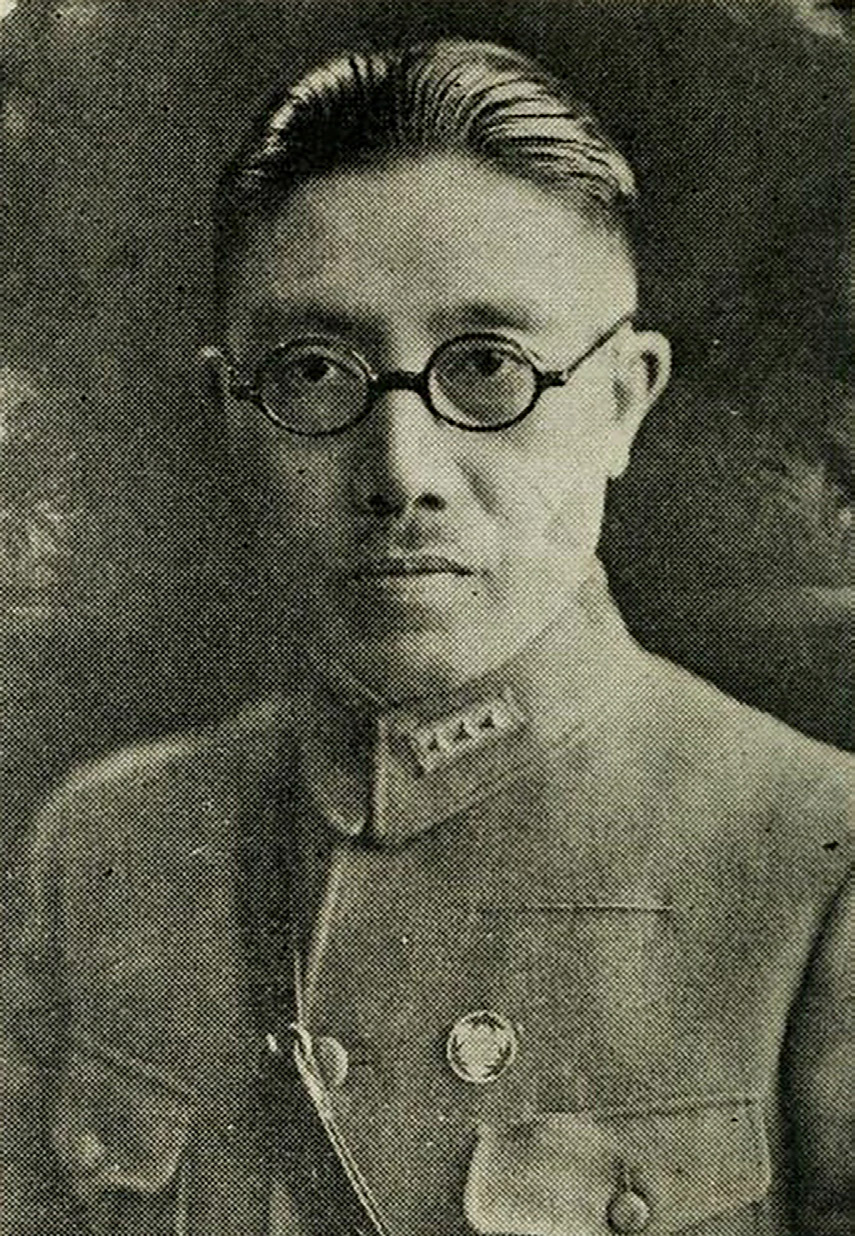
It is possible to understand China’s interest in the Turkish Revolution from the interview of Turkey’s first Chinese ambassador. After establishing bilateral relations, China’s first envoy, He Yao Zu (贺耀祖), expressed his intent in the Cumhuriyet newspaper in Nanjing to try and apply the Turkish Revolution to his country by studying it. China’s first Turkish diplomats had a very high interest in the Turkish Revolution. Nimetullah, the second clerk of the Chinese Embassy in Ankara, completed his secondary and high school education in Turkey and even graduated from the Faculty of Letters of Istanbul University.
Nimetullah frequently mentioned the Turkish Revolution in the conferences he gave in China (Cumhuriyet, 1935:1-2Cumhuriyet. (1935, 28 Ocak). Çin’den Türkiye’ye ilk Elçi, 1-2.). In addition, Wang Pengsheng (王芃生), undersecretary of the Chinese Embassy in Ankara, believed that Turkey’s success offered an important lesson for China. He stated that Japan and Turkey brought about successful national revolutions in Asia, but the difference was that while Japan had imperialist ambitions, Turkey adopted a peaceful policy. According to Pengsheng, the modern and humanitarian policy drawn by Atatürk was an example for all nations of the world. He said that the Chinese nation should strive to walk the path drawn by Atatürk (Cumhuriyet, 1935b: 1-4Cumhuriyet. (1935, 28 Ocak). Çin’den Türkiye’ye ilk Elçi, 1-2.).
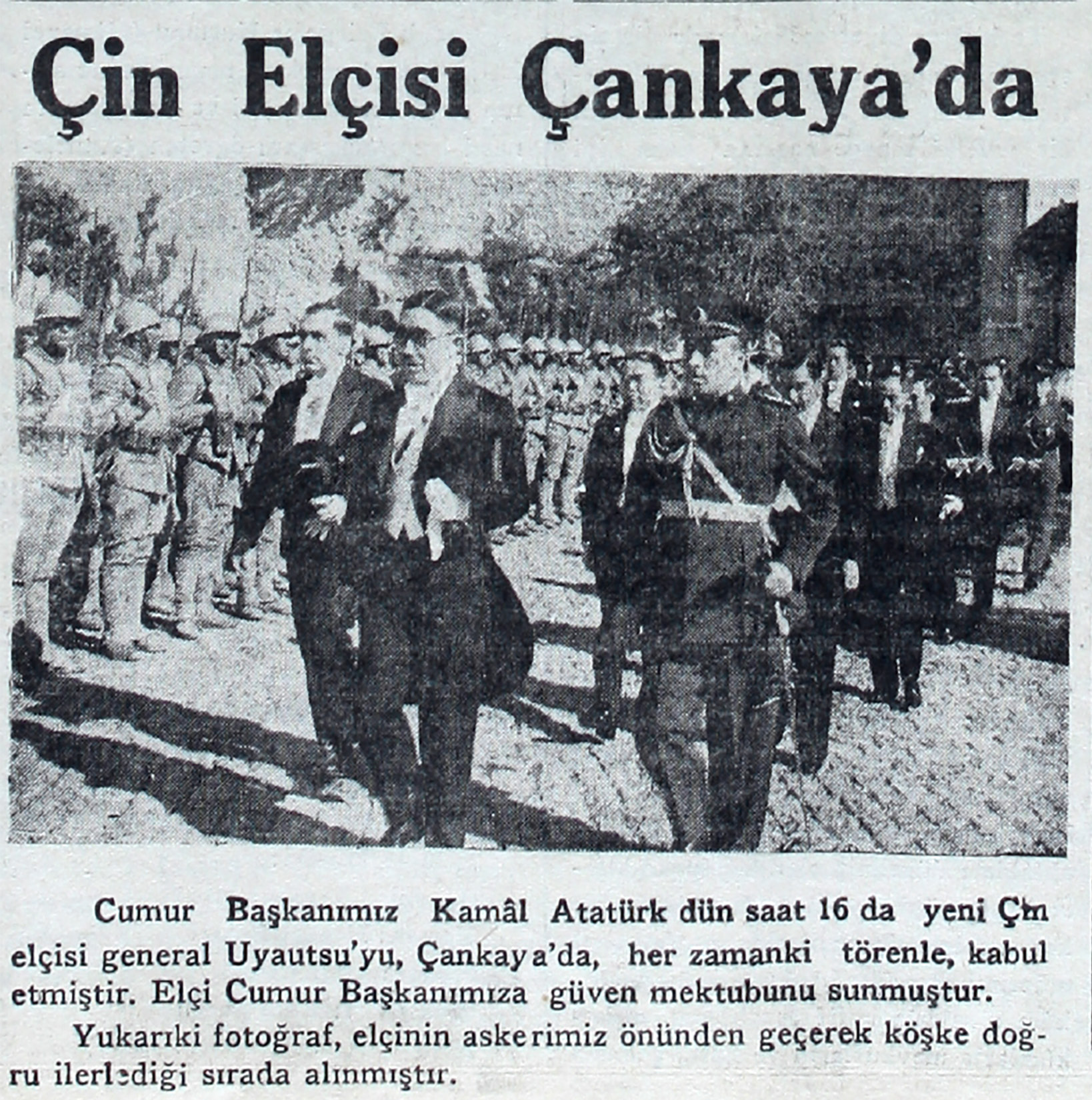
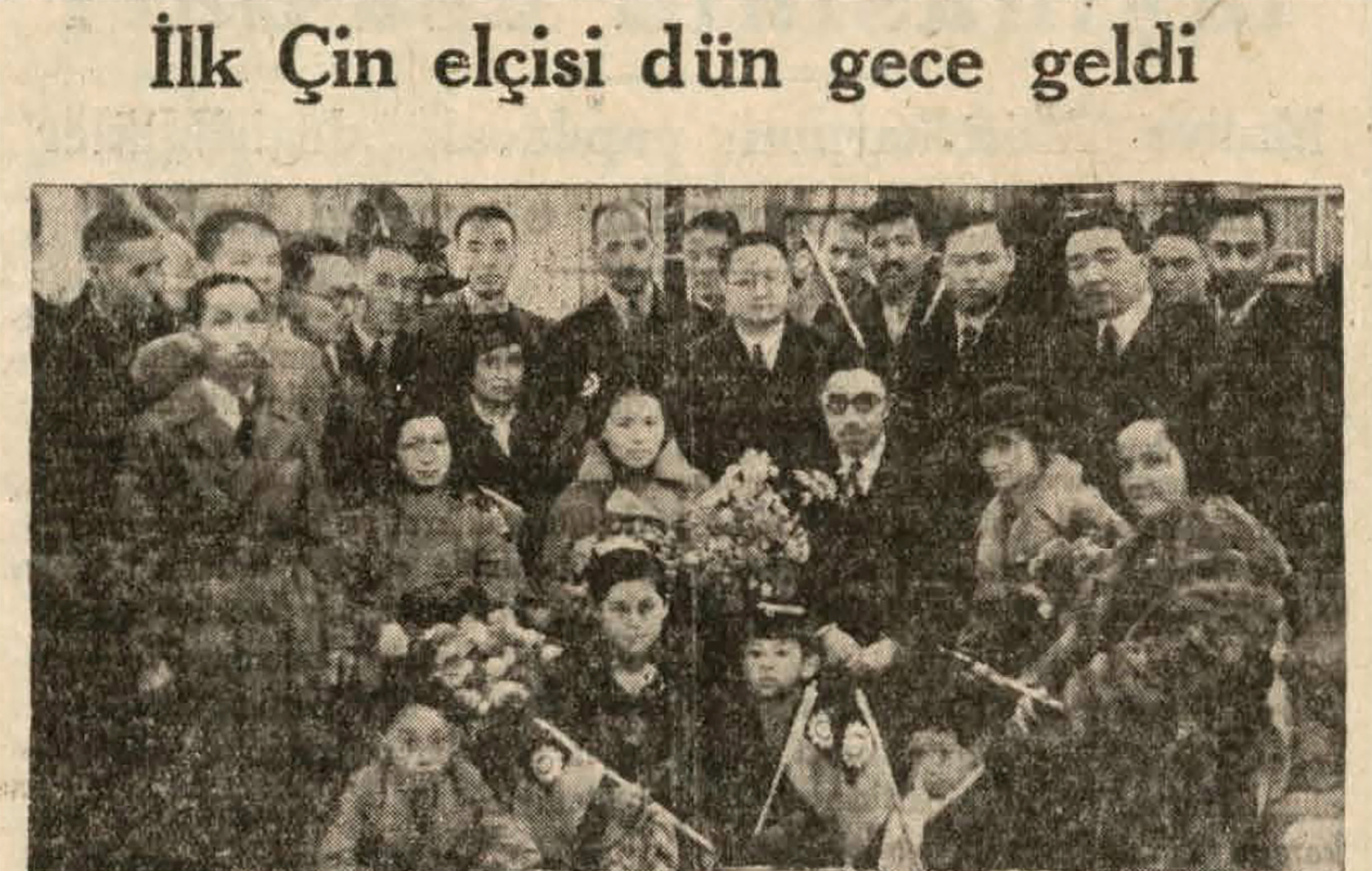
On 7 May 1935, China’s first Ambassador to Turkey, He Yao Zu, arrived in Istanbul. The Ambassador said on the first day, “I bring the Chinese nation’s respectful greetings to your Great Chief and his precious friends who saved Turkey. We hope that by establishing an embassy in Turkey, we will help strengthen the relationship between the two friendly nations. Since I did not give the letter of confidence to your President, I say these words not as an envoy, but as a true Turkish friend” (Cumhuriyet, 1935c: 2Cumhuriyet. (1935, 28 Ocak). Çin’den Türkiye’ye ilk Elçi, 1-2.). On 16 May 1935, He Yao Zu, the first Chinese Ambassador to Turkey, began his mission by presenting a letter of confidence to President Atatürk, stating how “It is an unprecedented opportunity for us to learn important lessons from Atatürk”, the Chinese envoy told Anadolu newspaper.
Giving an example from a Chinese poem, he stated that “The greatest pleasure is to have a new friend, and after a long separation, an old friend can come to a new friend. It is impossible not to say that we have become new friends after our historical relations of 3000 years have become old acquaintances. By a beautiful coincidence, it rained with thunder before I delivered the letter of confidence. In our old books, thunder brings movement. It is a good omen that will strengthen our relations from today on. And rain means friendship. Our ancestors called their old friends the old rains. We are very pleased that this symbol has come to our official relations with our former relations” (Ulus, 1935:3Ulus. (1935, 17 Mayıs). Çin Elçisi Çankaya’da, 3.; 1935a: 1-3; Anadolu, 1935: 1-4Anadolu. (1935, 19 Mayıs). Çin Elçisinin Söylevi, 1-4.; Yeni Asır, 1935: 3Yeni Asır. (1935, 19 Mayıs). Yeni Çin elçisi A. Ajansına diyevi, 3.).
These words from the Chinese Ambassador reveal a deep awareness of the historical past between the Turks and the Chinese, and his belief in the Turkish Revolution’s application to China was very strong. It is further possible to see this belief of the ambassador in the statements he gave to Turkish and Chinese newspapers and in the reports he wrote to the Chinese government about Turkey.
The interest and relevance of Chinese diplomats in Turkey to Turkish development and modernization are great, for they enabled the revolutionary and progressive personality of Mustafa Kemal Atatürk to play an influential role. In 1938, the newly appointed Chinese Chargé d’Affaires M.D. Toung stated in an interview with the Cumhuriyet newspaper that he was very pleased to be in Ankara, which combined the charms of the east and the west. He stated that the Turks took civilization from the east to the west, and now they took the new and modern civilization from the west to the east. He stated that the Chinese President, Chiang Kai-shek (蒋介 石), always commemorates Mustafa Kemal Atatürk and his revolutions with admiration and how “The Chinese nation is fighting against the Japanese for its glorious future with the methods of Kemal Atatürk in the national struggle. We are defending national dignity, honor, and peace. China has never fought. Its history and philosophy prove this. It is a Chinese love of peace” (Cumhuriyet, 1938: 5Cumhuriyet. (1938, 14 Nisan) Yeni Çin Maslahatgüzarı, 5.). Turkey’s struggle for national independence against imperialism was an important symbol of Chinese resistance against Japanese imperialism. The common attitude between Turkey and China against imperialism is evident in this interview.
Turkey also strived to establish an embassy in China after an 8-year hiatus. Emin Ali Sipahi (Ministerial) arrived in Chongqing on the morning of 21 December 1939. The Chinese warmly welcomed the first Turkish ambassador assigned to their country. Diplomat Mao-Lan-Tuan, Chinese foreign press members and the Turks living in China welcomed the ambassador. Emin Ali Sipahi was received by Chiang Kai-Shek on 27 December and began his duties as the first Turkish Ambassador to China (BCA, 1940BCA. (1940, Şubat 20). Fon 30-10-0-0, Yer no: 257-728-15.). However, due to the continuation of the Sino-Japanese War during this period, the Turkish ambassador had to continue his duty from Shanghai between 1940 and 1941.
Due to the Second World War, relations were not interrupted, but there were occasional gaps in the appointment of ambassadors. The Chinese Ambassador, Feng Chun Chang, who was appointed to Ankara on 2 June 1942, was received by President İsmet İnönü (Cumhuriyet, 1942: 1Cumhuriyet. (1942, 3 Haziran). Milli Şefimiz Çin elçisini Kabul ettiler,, 1.). The Chinese Ambassador, Chang, left Turkey for another mission and the Vatan newspaper, believing that the ambassador had been appointed to a different location, wrote that he was an exceptional person, that he had established many friendships in Ankara in a short time. He made a news report that the departure of the Chinese envoy from Turkey would cause serious hesitation and leave a gap (Vatan, 1942: 1Vatan. (1942, 4 Haziran). Doktor Chang Aramızdan Gidiyor, 1.). In 1943, bilateral relations were upgraded to the ambassadorial level, and Hulusi Fuat Tugay was appointed to Chongqing as the first Ambassador and submitted a letter of confidence on 13 June 1944.
In 1944, a delegation consisting of three people, Wan Yun Woo, Wen Yuan Ning, and Han Li Woo, came to Turkey to develop the Turkish-Chinese friendship (BCA, 1944BCA. (1944, Ocak 24). Fon 30-10-0-0, Yer no: 257-728–20.). After the Second World War, the Turkish embassy continued to work in Nanjing and Shanghai. Despite the civil war in China, efforts to improve bilateral relations continued. In a note from the Chinese embassy in 1945, they stated that they wanted to open a consulate in Istanbul (BCA, 1945BCA. (1945, Temmuz 30). Fon 30-10-0-0, Yer no: 257-728-21.). Remarkably, there was no correspondence between the Presidents until this period. After the Second World War ended, on 15 August 1945, President İsmet İnönü sent a congratulatory message to the President of China, Chiang Kai-Shek, celebrating his victory over Japan (BCA, 1945aBCA. (1945, Temmuz 30). Fon 30-10-0-0, Yer no: 257-728-21.). This represents the first correspondence between the Presidents. In 1947, Li Ti Tsu was appointed as the Chinese Ambassador to Ankara. After the intensification of the civil war in China and the realization that Nanjing would be placed under communist rule, the Turkish Foreign Ministry ordered the Ambassador to withdraw to Hong Kong. Thus, after the disappearance of the Republic of China, the Turkish government could not determine what attitude to take, resulting in diplomatic relations being cut off.
China’s Interest in the Turkish Revolution
Before diplomatic relations between Turkey and the Republic of China were established, interest in the Turkish Revolution in China was high. Between 1920 and 1930, a total of 46 political comments and reports was written in newspapers and magazines about the Kemalist Revolution and reforms, the 1908 Revolution, and the War of Independence (Ye, 2021: 72-77Ye, Z. (2021). Turkey as a role model in Chinese newspapers of 1920-1930s. [Review of the book The road of Turkey: Research and review of Chinese scholars by Wang, S.] Belt & Road Initiative Quarterly, 2(3), 73-77.). It is enough to look at the abundance of reports in the Chinese press to understand China’s intense interest in Atatürk and the Kemalist Revolution. From 1919 to 1949, 745 articles were written about Atatürk’s life and struggle in the Chinese press (Alan, 2020: 21-26Alan, E. (2020). 1919-1949 yılları arasında Çin gazetelerinde çıkan Mustafa Kemal haberleri ve Çin’e etkisi, Teori Dergisi, Kasım, 21-26.).
Before establishing diplomatic relations between the two countries, Shi Zaoji the Chinese Ambassador to the United States, visited Turkey in 1925. In his observations, the Ambassador stated that Turkey was in a much worse situation than China at the end of the World War I, but in 3 years, China dumped its enemy into the sea, signed the Lausanne Peace Treaty, abolished its capitulations, established a new regime, and rapidly developed and built a new capital.
In particular, the Chinese diplomat was attracted by Turkey’s careful decision not to borrow foreign currency and its resolute stance on abolishing capitulations. The ambassador believed that there were many important points that China could learn from in this determined attitude of Turkey towards foreign powers. In his writings, he asserted that Turkey’s successful experiences are a reference for China, though he acknowledged that the Turkish example could not be applied exactly (Fidan, 2019: 53-60Fidan, G. (2019). Cumhuriyet’in Çinli Misafirleri, İstanbul: Türkiye İş Bankası Yayınları.). Here, considering the social differences between China and Turkey, the ambassador thought it was right to take Turkey as an example with a specialized perspective on China.
The visit of Hu Hanmin (胡汉民) and Finance Minister Sun Ke (孙科)3 to Turkey in 1928 was important to bilateral relations between Turkey and China. Although bilateral relations had not been officially established yet, this was the highest-level visit of China to Turkey. Hu Hanmin and Sun Ke were individuals who held significant political weight in the Kuomingtang. The delegation observed social change, educational mobilization, fiscal reforms, the CHP (Republican People’s Party), and Turkish nationalism in Turkey. In addition, Hu Hanmin and Sun Ke held a meeting with İsmet İnönü, the Prime Minister of Turkey. Hu Hanmin was impressed by Turkey’s successful reforms and sincerely stated that Turkey should be taken as an example (Fidan, 2019: 62- 73Fidan, G. (2019). Cumhuriyet’in Çinli Misafirleri, İstanbul: Türkiye İş Bankası Yayınları.). After this visit, relations between the two countries developed rapidly and delegation visits to observe Turkey increased.
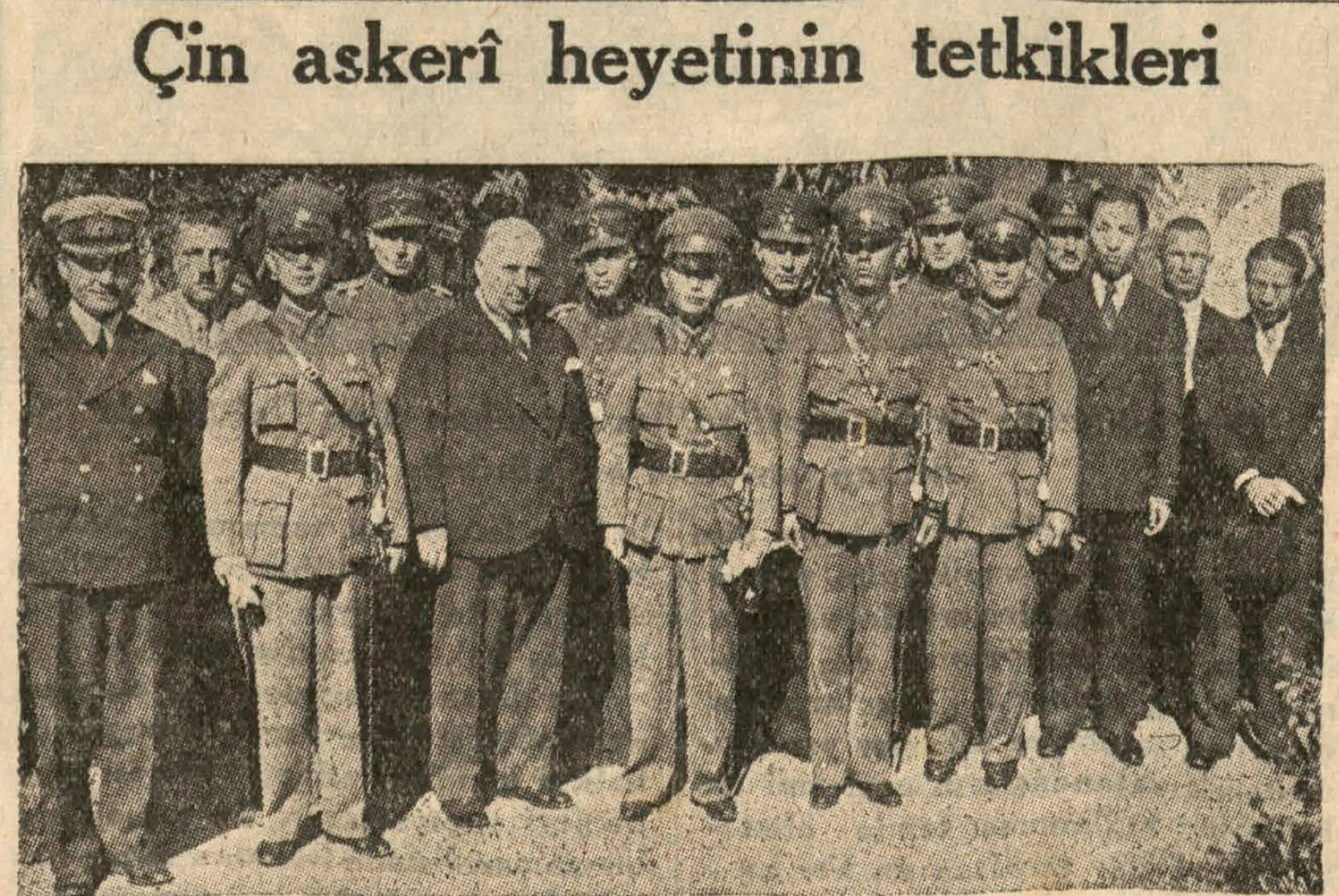
In the 1930s, China’s interest in the Turkish Revolution gradually increased. It is possible to understand this from the increase in the visits of the Chinese delegations to examine the Turkish Revolution closely. The first official visit was in 1930 by a Chinese military delegation of three, consisting of General Vonk Moo Song, Colonel Cenk Kay, and Pilot M. V. Chio. The delegation stated that “All of China follows the Turkish youth and revolutions with great relevance and appreciation”. It also stressed that “the Chinese intelligentsia recognized and loved Mustafa Kemal as the greatest saint”. The delegation was interested in revolutions, especially the revolution of the Turkish alphabet and found observation very fruitful. It expressed “How China considered adopting Latin letters after Turkey as the guide to the civilization of the East. However, in their review, they stated that it was not realistically possible, so they worked to make reading the old letters easier by correcting and standardizing them” (Cumhuriyet, 1930: 2Cumhuriyet. (1930, 27 Eylül) Bir Çin Heyeti, 2.; 1930a: 2).
The second official visit was the visit of the Chinese military delegation to Istanbul and Ankara on 17 February 1934 to observe the Turkish army. The delegation consisted of Nanjing Military Academy commander General Yang Shiyesin (Chih-Zhang Zhizhong 張治中), Colonel Huvang, Lieutenant Colonel Voo, Captain Chen Soai Shiyeh, Lieutenant Tishan Loo, and Clerk Tong. After conducting military studies in America and Europe, the delegation visited the military barracks in Turkey (Cumhuriyet, 1934: 1-4Cumhuriyet. (1934, 17 Şubat). Bir Çin askeri heyeti şehrimize geldi, 1-4; 1934aOfficial Gazette of the Republic of Turkey (1934). The source article does not provide a separate full bibliographic entry for this citation.). The head of the delegation stated that they were very pleased to have the opportunity to get to know the young Republic better. He stated that his views on the Turkish army were very important for China. In addition, the delegation was also accepted by Atatürk. The head of the delegation stated how Turkey had made important revolutions in a short time and rose rapidly due to its valuable leader. He underlined his admiration for Atatürk in the development of Turkey and emphasized the lack of such a leader in the Chinese Revolution (Cumhuriyet, 1934b: 1-4Cumhuriyet. (1934, 17 Şubat). Bir Çin askeri heyeti şehrimize geldi, 1-4; 1934e: 2Official Gazette of the Republic of Turkey (1934). The source article does not provide a separate full bibliographic entry for this citation.).
China has given special attention to the study of the Turkish Revolution to sustain its economic, military, and political development. On 14 June 1934, a delegation of 4 people consisting of M. Chang, M. Farrai Chang, M. Z. D. Shu, and M. Shelley Love arrived. The delegation examined the Republican regime, its benefits, working style, and system in Ankara to organize a program that would strengthen China financially and morally. The head of the delegation stated that they visited the committee working in the Foreign Ministry in Nanjing to convey their examinations. The delegation leader stressed how Turkey was the most remarkable country to undergo major revolutions and development during its examinations. He stated that Turkey is the country that they pay the most attention to. The chairman of the delegation emphasized that it is an important necessity to observe Turkey closely, which is embodied by a genius leader and valuable staff around him. (Cumhuriyet, 1934c: 1-4Cumhuriyet. (1934, 17 Şubat). Bir Çin askeri heyeti şehrimize geldi, 1-4; 1934d: 5).
In October 1934, a military delegation consisting of 1 General (Sin Ju Tu), 2 Colonels, 2 Lieutenant Colonel, and 1 Professor (Wu-Tang) came to examine the military developments in Turkey and Europe. The delegation visited Istanbul Police School, Harbiye High School, War Academy, and Galatasaray High School and took a close interest in the Scouting organization. Wu-Tang wrote a note in the school’s visiting book about how they found the scout organization and especially its equipment to be excellent. The delegation then continued its trips in Ankara (Akşam, 1934a: 7Akşam. (1934, 5 Nisan) Türkiye-Çin Dostluk Muahedesi, 2.; 1934b: 4Official Gazette of the Republic of Turkey (1934). The source article does not provide a separate full bibliographic entry for this citation.; Cumhuriyet, 1934f: 2Cumhuriyet. (1934, 17 Şubat). Bir Çin askeri heyeti şehrimize geldi, 1-4). Their telegram when the Chinese military delegation left Turkey stated that “appreciated the great achievements of the CHP, recalling the critical condition China had before the War of Independence, which is similar to the current situation in China” (BCA, 1934BCA. (1934, Şubat 28). Fon 30-10-0-0, Yer no: 257-728-11.).
In 1937, at the request of the League of Nations and the Chinese government, Professor Pen came to observe Turkey’s health and social organization. In his observations, Pen stated that it was essential for China to imitate Turkey, which showed significant development in its health and society. He stated the importance of Turkey having Atatürk as a leader, who directed the civil and social revolutions after the liberation struggle. According to Pen, Turkey was the only example for China (Cumhuriyet, 1937: 3Cumhuriyet. (1937, 11 Ağustos). Bir Çinli Adana’da Tetkikat yapıyor, 3.).
Wang Pengsheng (王芃生), the undersecretary of the Chinese Embassy in Ankara, thought that the relations between the two states had a long history and that both states had gone through similar difficulties. He believed imperialist states wanted to suppress the two nations, aligning their destiny. He noted that the liberation and development of the Turkish nation under the leadership of Atatürk caused indescribable joy in the whole of China and that Turkey’s development success in ten years was an important lesson in China as in other countries. For this reason, he suggested that the Chinese press should discuss Turkish success frequently:
“This success is the source of the great feeling of friendship held by the Chinese state towards the Turkish nation. For China, Turkey’s development was a great lesson to be benefited from. Therefore, it was decided that China should establish an embassy in Ankara that was given more importance than the embassies in other countries.”
Pengsheng thought it would be a pleasure for the Turks to see the salvation of the Chinese by taking lessons from the Turks. Madam Wang, the wife of the undersecretary, stated in her declaration that she was very glad that the Turkish woman had won the right to be elected, stating that she had been satisfied that this right had been in China since 1911. Embassy employee Nimetullah Ma (Beijing Muslim clerk) translated Atatürk’s Speech, Ziya Gökalp’s principles of Turkism, and Ömer Seyfettin’s stories into Chinese (Cumhuriyet, 1935a: 1-9Cumhuriyet. (1935, 28 Ocak). Çin’den Türkiye’ye ilk Elçi, 1-2.).
Before He Yao Zu, China’s first Ambassador to Turkey, came to Turkey, his leading questions were as follows: “how Turkey developed a unique political path between communism and fascism”, “how Turkey’s parliament was able to continue its work without turning into an autocracy despite being a single party”, and “how Turkey developed economically in a short time”.
Firstly, He Yao Zu stated that the cultural and historical depth of the Turks was effective in creating a unique political path, even if other ideologies influenced it. However, this influence was tempered by a deep-rooted historical heritage that created a strong nationalism that played an important role in finding its own way despite the ideologies of fascism and communism. He outlined how success in Turkey was due to the successful execution of the constitution and the separation of powers. He also noted that the stability in Turkey’s rapid economic development was achieved by reducing imports and through government incentives for local production in industry and agriculture:
“This model of Turkey corresponds to the Three Principles of the People. This proves how far-sighted Sun Yat-Sen was. The Turkish model succeeded in practice, and if this model was applied to China, there would be prosperity in a short time” (Fidan, 2019: 88-99Fidan, G. (2019). Cumhuriyet’in Çinli Misafirleri, İstanbul: Türkiye İş Bankası Yayınları.).
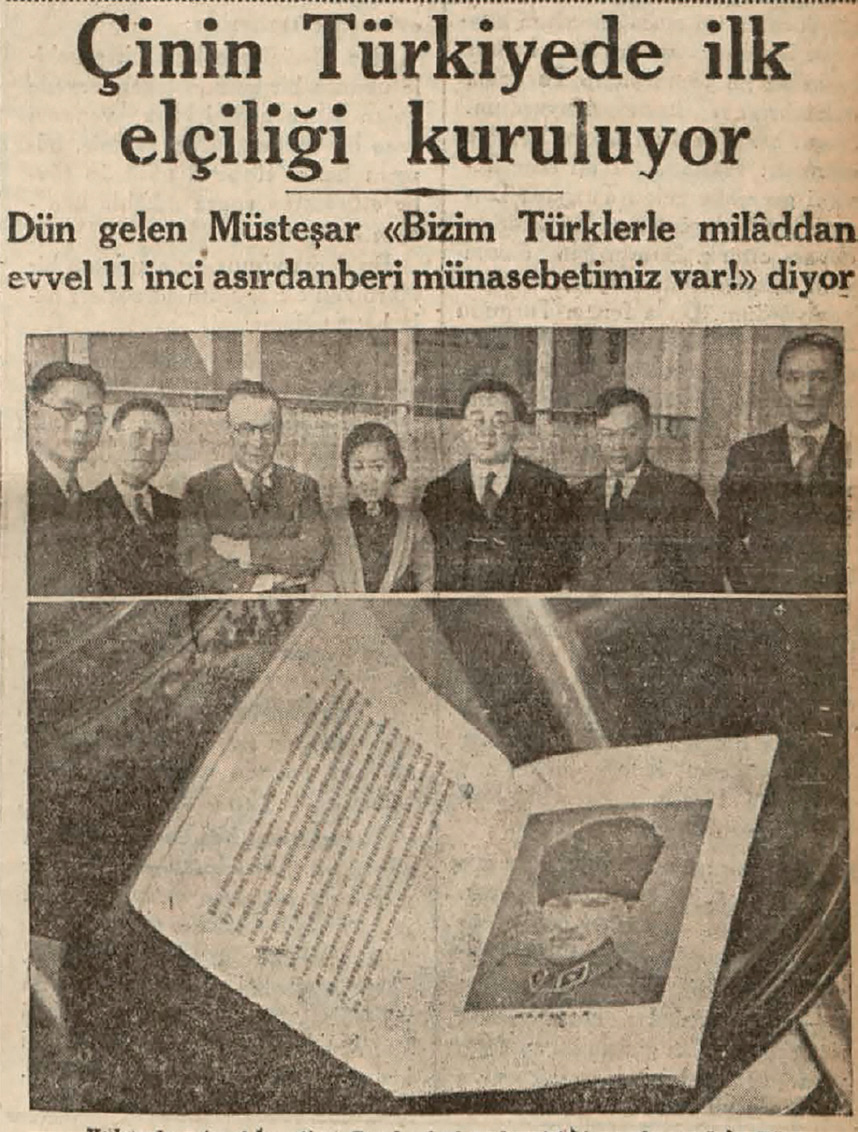
At the same time, the election of China’s first ambassador to Turkey was carefully considered. He Yao Zu was the most suitable candidate to take on this important task at that time. He prepared a report on “Turkey’s Revival History and Our Efforts in the Country’s Difficult Times”. In this report, he presented an analysis of China and Turkey’s history and current situation, stressing the importance of Turkey as a model for China. It showed that He Yao Zu and the embassy employees who went to Turkey fulfilled their duties and played an important role in strengthening the communication between China and Turkey. He Yao Zu and others had a deep understanding of the Turkish Revolution and believed that China should learn from the experiences of the Turkish Revolution. Wang Pengsheng, the first secretary of the Chinese Ambassador to Turkey, was a well-known historian. He outlined China and Turkey’s long and close friendly relationship since the 11th century BC to explain that Sino-Turkish relations have not been interrupted since ancient times. He brought many ancient Chinese books with him, proving that the friendship between the two countries has a long history. Consequently, the ancient Chinese books taken by the Turkish ambassador of China satisfied the desire of the stabilized Turkey to discover the origin of the nation (Geng, 2013Geng, P. (耿萍萍), (2013). 以《申报》为视角 探究 1935 - 1936 年的中土关系 Yǐ “shēnbào” wèi shìjiǎo tànjiù 1935-1936 nián de zhōng tǔ guānxì), Forward Position, No.14, No.340.).
Turkey’s Interest in China
Turkey also conducted political and academic studies aimed at recognizing China. As relations improved between the two countries, the Faculty of Language and Geography of Ankara University was established (1935), and Sinology and Turkology studies were started. After the arrival of Wolfram Eberhard in Turkey in 1937, sinology studies in Turkey greatly expanded. Eberhard taught Sinology and history at the Faculty of Language Geography of Ankara University between 1937 and 1948. In 1947, Eberhard’s book ’A History of China’ was published. However, due to the cessation of bilateral relations after establishing the People’s Republic of China in 1949, the study of Sinology in Turkey was disrupted.
The Turkish embassy conducted several studies aimed at recognizing China and the Kuomintang. Two of Eberhard’s books about Atatürk and the Turkish revolution published in China (The New Turkey-Song Su Shen and Kemal-Xing Moqing) were translated into English and sent to the Atatürk corner in Izmir. In addition, the Turkish embassy translated the Chinese Kuomintang party charter and the Chinese Constitution and sent it to the CHP (Republican People’s Party) (BCA, 1942BCA. (1942, Kasım 26). Fon 490-1-0-0, Yer no: 206-818-1.; 1948). At the same time, the Chinese embassy also did similar work for the Kuomintang on understanding the CHP.
After the Sino-Japanese conflict in Manchuria, the Turkish government prepared a 23-page report on the subject. This report stated that China was the target of the Japanese imperialists and that the capitulations offered by Japan to the Chinese government were the most terrible example of Japanese imperialism. The Turkish example was frequently cited regarding the abolition of the capitulations in Manchuria, where the nationalist movements in China increased daily. Furthermore, during the protests in which Japanese goods were boycotted and the Japanese consulate was set in stone, university students held demonstrations with the banner “Do not forget about the example of Turkey”. The goal of the Japanese imperialists was to seize China to dominate Central Asia (BCA, 1931BCA. (1931, Aralık 30). Fon 30-10-0-0, Yer no:257-728-7.). In fact, a correspondence sent from the Turkish Embassy in Warsaw stated that the Japanese were planning to use the Turkish and Muslim communities in Asia against the Chinese and Soviets. In addition, a Japanese map showing the Turkic communities in Asia was also added to the correspondence (BCA, 1933BCA. (1933, Haziran 26). Fon 30-10-0-0, Yer no 257-729-26.).
Japan’s imperialist goals were instrumental in encouraging the Turkish government to take a pro-Chinese stance. The Turkish government wanted the issue to be resolved peacefully and expressed its discomfort that Japan pursued an imperialist policy. Turkey’s Bern Ambassadors Cemal Hüsnü Bey and Sivas Deputy Necmettin Sadık took part in the commission formed by the League of Nations on the Sino-Japanese conflict (BCA, 1932BCA. (1932, Aralık 13). Fon: 30-18-1-2 Yer: 32-74-14.).
In addition, the Turkish press paid attention to China’s struggle for independence against Japanese imperialism. An article called “The Chinese Future of Chiang Kai-Shek” was published. Moreover, articles on Chinese modernization and life between Turkey and China (Nadi, 1943: 1-4Nadi, N. (1943, 12 Birinci Teşrin). Çin istiklali ve Mareşal Çan Kayşek, Cumhuriyet, 1-4.; Chiang, 1945:2Chiang, K. (1945, 12 Aralık). Çin’in İstikbali, Cumhuriyet, 2.) also reflected this support (Cumhuriyet, 1935d: 7Cumhuriyet. (1935, 28 Ocak). Çin’den Türkiye’ye ilk Elçi, 1-2.). The fact that Turkey recognized the imperialist threat in China and openly expressed its support for resisting it demonstrates the importance of uniting against imperialism in bilateral relations.
Conclusion
The most influential factor in the development of diplomatic relations between Turkey and China was the issue of how the Turkish Revolution and the Chinese Revolution had a similar character. Sun Yat-Sen’s Three Principles of the People and Mustafa Kemal Atatürk’s Six Arrow program pioneered democratic revolutions in Asia. Particularly, Chinese intellectuals’ interest in the rapid development and reforms of the Turkish Revolution helped to effectively establish diplomatic relations with Turkey. The visits of Chinese military and diplomatic delegations to Turkey were the clearest indication of this situation. China saw Turkey as a role model country in development and reforms. In addition, Turkey also considered China to be a peaceful country in the east and actively tried to get to know China to strengthen relations.
Furthermore, employees of the Chinese embassy in Ankara comprehended the historical depth of the relations between Turkey and China and the Turkish Revolution. In Turkey, it seems that when bilateral relations were strengthened, studies were carried out to understand historical China by giving special attention to Sinology and Turcology studies. At the same time, given that China was the target of Japanese imperialism and Turkey was fighting a war of independence against imperialism made it easier for the two countries to align. Turkey had a policy that supported China against imperialism in embassy reports and the Turkish press. Despite the chaos of the Second World War and the civil war in China, the relations between the two countries have since developed steadily.
Turkish-Chinese relations between 1923 and 1949 were a period of friendship in which they strived to improve their knowledge of each other. The relationship between the two countries focused on solidarity against imperialism and mutually learning.