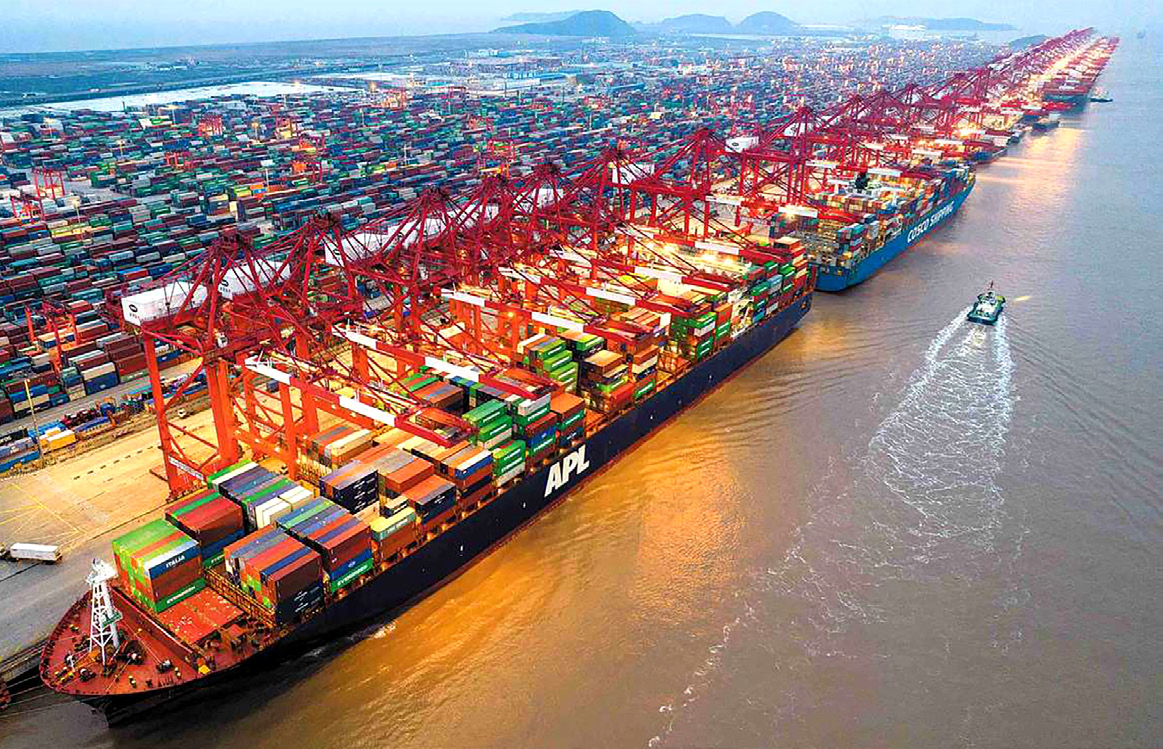
The biggest difference of the 21st century from the 20th century is that the “Oppressed World” has created from within itself a “Developing World” that tends to be an alternative to the imperialist system in all aspects of life. The center of production in the world has shifted from the West to the East. The successes of the People’s Republic of China, which led this process with a state-led and sharing approach under the leadership of the state, created a “miracle” effect all over the world. The growth and development theories developed in the West began to be questioned radically. The one-size-fits-all recipies imposed by the World Bank and the International Monetary Fund on all countries have now lost their credibility as well as their functionality.
The neoliberal international order of the USA, which intended to dominate the globe in an unrestrained way following the dissolution of the Soviet Union, is now collapsing with the emergence of a multipolar world. Today, the whole world is in search of a more egalitarian and fair international order. More importantly, the achievements of the Developing World and the multipolarity accompanying it create a suitable ground for each country to benefit from international cooperation in line with the development strategy it has determined for itself.
Today, in the Developing World, we are going through a period in which objective imperatives strongly influence subjective attitudes. The expansion of the sphere of life gained by limiting the hegemony of the imperialist system brought along the rapid spread of this effect in political, economic and cultural fields. The fact that the currents triggered by objective factors are so strong is unique to the rising periods of revolution. Today, humanity is on the verge of creating a wholly new world.
On the other hand, it is not possible for the tendencies triggered by objective factors to automatically carry humanity to this new world. Especially in our age, in which humanity has reached the end of spontaneity in social development, understanding this impossibility seems to have become more important than ever. Despite being unique to China, the most important lesson that the Chinese experience teaches to the Developing World, which faces a similar problem, is the indispensability of applying a holistic program and strategy prepared in the light of science under the leadership of the state to be successful.
The Main Challenge of the Age of National-Democratic Revolutions and Opening Up to Socialism
The human factor lies at the center of productive forces. The essence of man is his social being. Social relations strengthen the human essence to the extent they contribute to the ability of the society to change the world by mobilizing the creativity and energy of the society. Throughout history, social systems have tended to reinforce the social essence of man during periods of rise, while letting it wither away during periods of downfall. It would not be misleading to take the impact of the system on human social existence as an objective criterion in determining what is socially advanced and what is socially backward.
The position of man in the productive forces has gained a different meaning than ever before. Mankind has not reached the end of history, but it has reached the end of spontaneity in the development of relations of production. Capitalist relations of production constitute the last instance of production relations that developed spontaneously within the heart of the previous social system. Capitalist relations of production did not emerge as a product of democratic revolutions. On the contrary, democratic revolutions arose as a result of capitalist production relations that developed in the midst of feudalism prior to the revolution. What the revolution has accomplished is the breaking down of the feudal barriers to the spread of these relations and making capitalism the dominant mode of production.
However, neither socialist, nor national-democratic production relations opening up to socialism come into being by themselves in the heart of capitalism. Socialism and the transition to a classless society were put forward as a historical foresight before such a system became real anywhere on earth. It is necessary to design the relations of production towards socialism and therefrom to a classless society, to create the necessary tools for the implementation of the design, and to continue this transformation in an uninterrupted manner. Such a transformation requires a social organization that has a holistic program created under the guidance of science, integrates this program with implementation plans, leads and mobilizes the society for the realization of these plans. In other words, the continual design and transformation of production relations has become a duty that falls upon the human factor located at the center of productive forces. Today, the social organization that is endowed with this ability is the national-democratic state.
The leading role played by the state in making capitalism the dominant mode of production in Germany, Japan and Italy, which are the countries of “late capitalism”, is instructive in this respect. In the Age of Imperialism, the path to “late capitalism” is blocked for oppressed countries. Aiming at “late capitalism” therefore would inevitably damage the independence and sovereignty of a developing country by subordinating it to imperialist markets.
The main force, on which the protection of independence and sovereignty can be based, is the nation. A country’s letting itself to get directed by imperialist market forces would end up with weakening the nation. While the working classes, which make up the majority of the nation, would be crushed under this burden, an important part of the industrialists and businessmen who are based on the country’s soil would face destruction. The maximal goal of imperialism is to liquidate the national states of the oppressed and developing countries. The consequence of the weakening of the national state is that the imperialist system gains new positions to dissolve the nation by manipulating the social fault lines within the country. On the other hand, the disintegration of the nation weakens the nation-state further as well.
The nation is also the main force of development of the country in every field - first and foremost in the economy - along with protecting and consolidating the independence and sovereignty of a country. Independence and sovereignty are the prerequisites to reveal the production potential of the nation at a maximal level. When unleashing this potential is accompanied by sharing the wealth among the whole nation in a way that reinforces the national unity, independence and sovereignty will also be further assured unshakably. Thus, the main challenge faced by the oppressed developing countries is to strengthen the national unity in order to preserve and consolidate their independence and sovereignty, along with organizing and transforming the production relations in a way that will optimize the productive forces qualitatively and quantitatively.
There is no ready-made recipe for pursuing these two aims in a harmonious manner such that they mutually reinforce each other. Although different countries can benefit from each other’s experience as they have common problems, the main principle is that each country determines and implements a development strategy in every field, not only in economy, specific to its own characteristics in the light of science. Scientific socialism is the true guide in establishing and transforming the relations of production, as well as in managing this process so as to prevent the contradictions between different classes and segments of the nation from becoming antagonistic and without creating obstacles to development. Today, this problem constitutes the main source of the theoretical development of scientific socialism in praxis.
This complex process, which covers all areas of life, can only be carried out under the leadership of the state. In order for the nation to mobilize its energy and creativity, however, the state must truly be transformed into the organized form of the nation. This goal can only be reached under the guidance of scientific socialism. Today, we are going through a period in which the fact that the working class is the class that has to save all of humanity in order to save itself has become very prominent.
National-Democratic Revolution and Development
As long as an abundance of production that enables distribution according to need cannot be achieved, competition in sharing will continue to exist among individuals. Although the existence of individuals who prioritize the public interest above their individual interest constitutes an indispensable condition for social progress of humanity today, it alone does not suffice to eliminate the competition for distribution. In other words, it is not possible to eliminate the contradiction between public interest and individual interest through purely ideological struggle, as long as a suitable objective ground is not established in economic terms.
Based on this conclusion, we can make the following four inferences. First of all, it is inevitable to make use of individual interest as a driving force in order to be able to convert a nation’s potential into a productive power at a maximal level. Secondly, the shaping of this process cannot be left to the spontaneity of the capitalist market forces, and thus there is a need to design social and economic mechanisms that will subordinate the individual interest to the public interest. Thirdly, arranging the relations of production so as to open the way for the development of productive forces should not be considered as a one-shot act, but rather as an uninterrupted process that should continually be kept on the agenda. Fourthly, this process can only be managed appropriately under the presence of a political power that is guided by science and prioritizes public interest over individual interest.
Creative Competition Instead of Destructive Competition
Under capitalism, competition is unrestrained. In the capitalist system, it was competition itself that destroyed competition because of its lack of restraint. Regarding everything that leads to domination as allowable has led non-economic means of power to come to the fore in competition. Monopolization is the product of this self-destruction of competition. The financial capital ceased to function as the blood circulation of production and gained a dominating position over the production economy due to the competitive advantage that money capital owns. Most importantly, the aim of acquiring new and powerful means of competition led to the formation of the imperialist state, by making the state a collective armed organization of finance capital under capitalism. The imperialist state thus turned into an armed device that serves to pave the way for the export of increased finance capital, seeking new areas for itself. Today, the imperialist state has gained a mafia-like character, which is collecting tribute directly by means of force.
As a consequence, the capitalist system lost its resource distribution efficiency, which it owned in its competitive period. Today, the system that can benefit from this ability of the markets is a national-democratic system opening up to socialism. On the other hand, in order for competition to continue its function to reveal the production potential and creativity of the nation, it is essential not to leave the economy to the spontaneity of market forces, since the main factor that led to the destruction of competition under capitalism was precisely the spontaneity of the process. Competition serving the aim specified above can only be sustained under the leadership of a state that watches over the interests of the whole nation, especially the working classes, and that is equipped with the central tools needed to steer the markets. Moreover, it is of vital importance for the state to protect itself from the influences of those who gain economic power in this process with the goal of letting the state deviate from collective aims for the sake of their own individual interests. In other words, “capitalist roaders” need to be kept away from power, especially from key points of power. Today, it is impossible for an oppressed country to become a capitalist country by getting integrated to the imperialist world market. The only way for such a country to become a capitalist country is, however, to “return to capitalism” after having developed its economy through the national-democratic revolution.
Planning to Subordinate Individual Interest to Collective Interest
The regulatory and guiding role of the national-democratic state on the markets is not limited to intervening in the distribution process. Undoubtedly, it is extremely important to ensure that all segments of the nation benefit from the increase in welfare in order to consolidate national unity. Moreover, it is necessary to give priority to the poorest sections of the nation and the poorest regions of the country. But limiting the economic leadership of the state to this function simply means reducing it to a “social state”. The long-term focus of the collective interest is the development of productive forces. For this reason, production is located at the top of the planning hierarchy in terms of content and level.
It is essential that production goals reflect the interests of the collective. Planning should not be considered as a purely technical activity. Development is a two-legged process with both economic and social aspects. That is so as its implementation requires the strengthening of the nation’s overall ability. Achieving the set goals requires not only the training of a workforce equipped with the necessary techniques and knowledge, but also the mobilization of the nation by appropriating the adopted strategy. Unleashing the energy and creativity of the nation and ensuring effective participation in the implementation of the strategy are of key importance. Raising the cultural and social level of the nation is an element that must be constantly observed. In case social development lags behind economic development, the consequence is that economic development both slows down and moves away from the collective interest. It is essential that every development strategy is accompanied by a formal and nation-wide education strategy.
Planning includes determining both the goals and a road map to be followed to achieve those goals. It is of great importance to make the right distinction between what is to be planned directly and what will benefit from the functioning of the markets in order to reach the set targets. To give an example from the human body, the fact that our heartbeat, breathing, or functioning of our internal organs are automated, enables us to concentrate our consciousness beyond the bodily activities necessary for survival. If one had to constantly run the “blood pump” or “breathing bellows” oneself, one would not be able to do anything but struggle to stay alive.
“Economic and Social Design” is a relatively new branch of science that deals with the design of economic and social mechanisms to ensure that the resulting outcomes are compatible with the collective interest in environments where the use of individual interest as a trigger is inevitable. Concentrating on this field within the science of economics is expected to yield quite efficient results.
A Planning Process Based on Continual Transformations Under the Leadership of the State
The problem underlying the national-democratic development is to ensure the harmony between the productive forces and the relations of production in a way that will develop the productive forces. This situation necessitates constant readjustments in the relations of production, depending on the qualitative and quantitative improvement in the productive forces. The Chinese Experience provides us with rich examples in this respect.
What enabled China to acquire and develop advanced technologies through partnerships between China’s state companies and foreign companies in the 1990’s was that the production capability of China’s manufacturing industry had already developed beyond a certain threshold with the Reform and Opening Up Movement that had started in 1978. Eliminating the inequality between rural areas and cities requires an urbanization process compatible with the development speed of the industry. One of the reasons why China was locked in a high growth rate for a period was to ensure that the planned urbanization could be carried out without causing unemployment. In the transition from an export-based economy to an economy that considers strengthening the domestic market as its primary goal, measures have been taken to reduce the savings rates of households. This transition was accompanied by an increase in welfare in the whole country, the middle class was strengthened, and the transfer of resources towards production to the relatively backward regions was centrally accelerated in order to reduce the inequalities between regions. This made it possible to eradicate absolute poverty in China in 2021. The eradication of absolute poverty was achieved not by “providing monetary support”, but by creating new production and employment opportunities.
In an economy directed sheerly by market forces, it is not possible for backward technologies to survive alongside advanced technologies that have become widespread. The reason for this is that the main factor that drives the economy is the “profit motive”. However, in a state-led economy based on production and employment, it is possible to use advanced and backward technologies simultaneously in the same field. China has successfully benefited from this opportunity in its development process.
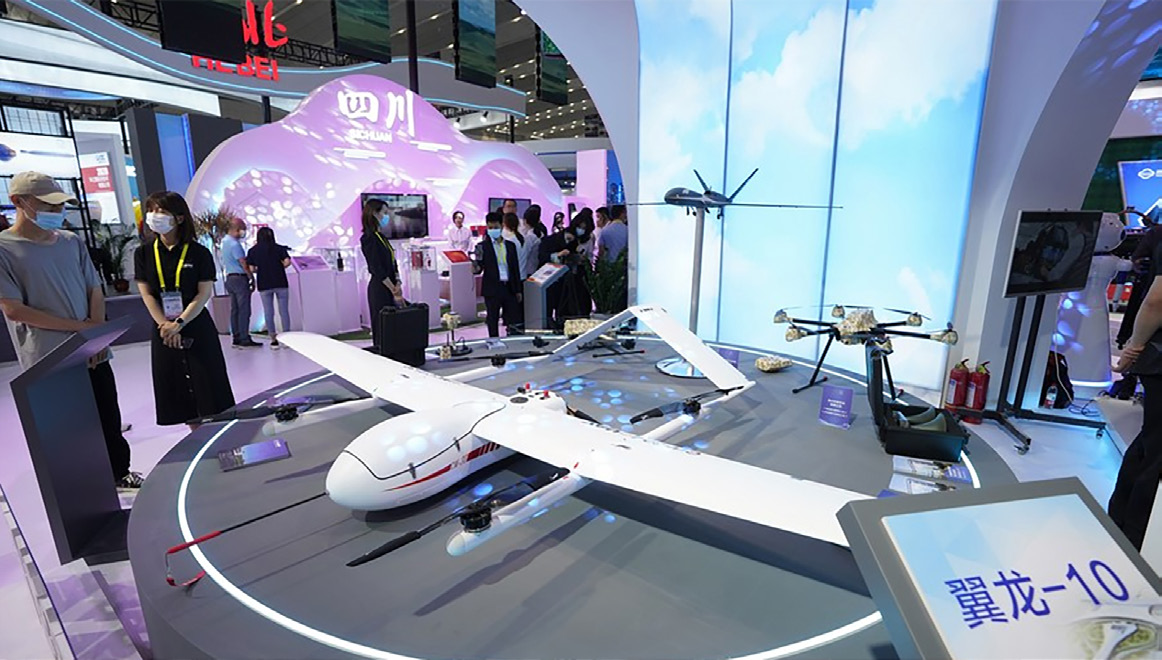
The development of productive forces is based on raising the productivity of the workforce. China’s “high-tech zones”, which were created to acquire advanced technologies, are not limited to partnerships established with foreign direct investments using advanced technology. In each high-tech region, besides the production activity, there are universities, vocational schools and research and development centers.
As vocational schools carry out their training on the job as a part of production activity, there is also a division of labor between universities and R&D centers. While universities are trying to develop solutions for the relatively more general problems of the region, which also require a theoretical approach, the task assigned to R&D institutions is the designing of innovations that will increase the competitiveness of products. In addition, the obligation to employ a certain percentage of Chinese managers at all management levels of the partnerships in these regions is also meant to provide a wide-spread “training in management”.
Property relations are at the center of relations of production. The Chinese economy is today a mixed economy led by the state. In the Chinese economy, where public ownership, group ownership and personal ownership coexist, different “hybrid ownership forms” have also been “experimentally” examined in this process. The designed hybrid property forms were first put into practice in the pilot regions, and after testing their ability to develop productive power, the successful ones were expanded, while the unsuccessful ones were abandoned.
Interest rates, exchange rates, inflation, employment, savings and investment rates and similar macroeconomic indicators form the climate of an economic environment. Therefore, these variables have different optimal values in terms of compliance with the priorities of each period. The state should be equipped with the central tools needed for the transformation of the economy, which will enable it to make the route changes, naturally obeying the objective causality relations that exist between these variables. China, which has made such route changes by regarding money as the “blood” of production and thereby subordinating the money circulation to the needs of production, has thus managed to come out of the global financial crisis with relatively less damage.
The State Directed by the Public Interest Under the Guidance of Science
Today, the nation is the main force for both the protection of the independence and sovereignty of the country against the imperialist hegemony and for the development of the country. The nation-state is the basic organization of the nation in this struggle. There are two main principles for the successful management of these processes by the national state. The first is combining the guidance of science with the total and effective mobilization of the nation; and the second is to ensure that the political power adheres to the principle of subordinating individual interest to collective interest. To the extent these two principles are fulfilled, the national state truly transforms into an organization of the nation.
The main source of democracies established with the bourgeois democratic revolutions in the West is the need for reaching a compromise among the ruling classes. The position assigned to the people in these democracies is a passive one. The liberating effect of the rise of capitalism led the people to go beyond the position assigned to them by the system and to fight for their rights. The imperialist countries managed to soften their internal contradictions by plundering the colonies and gradually reduced democracy to a tool of disabling systemic dissapprovals by dragging them to the edge of the society. The function tailored to “democracy” by the imperialist system in the developing world countries, on the other hand, can be summarized as keeping the country’s channels open to imperialist influence, pressure and interventions.
However, the need of developing countries is to bring the people to an active position. The main assurance of the protection of the country’s independence, consolidation of the nation’s sovereignty and the implementation of development programs and strategies is the mobilization of the nation. Thus, the Developing World needs a New Democracy that looks after the masses to raise their level by learning from their own experiences, and that serves to unleash their creativity and productive energies. Each country is faced with the task of establishing and developing its own “New Democracy”, which fits its own characteristics and whose main principle is “serving the people”, instead of the one-size-fits-all “democracy recipes” imposed by the West.
The formation and dissemination of political powers based on public interest and sharing, relying on the guidance of science in social and economic development in the Developing World will only become possible if this goal is appropriated by the whole nation, especially the working classes. The dominance of the economically powerful groups in power is an obstacle to this goal. Political powers that adopt science as a guide and serving the public as a principle will form the pioneering units of the New World sharing a common future.
The Chinese Experience contains elements that are instructive in this respect as well. The secret of China’s success lies in the insistence on socialism together with the re-discovery of nation as the fundamental social force of our age. Today, special care is taken to keep capitalist roaders away from power in order to continue the construction of socialism in China.
An Egalitarian and Just International Order and Development
Competition under capitalism has turned into destruction at the stage of imperialism. The two world wars, triggered by the rivalry between imperialists, have brought a destruction to humanity, which is unprecedented throughout history. The key concept of the international order imposed by imperialism on the world is “hegemony”. Today, hegemony encompasses not only the coercive domination of the imperialist system over the Oppressed World, but also the US control over other imperialist countries within the imperialist system’s own hierarchy. The neoliberal international order designed and imposed by the USA for this purpose is rapidly collapsing today. The main factor that led to this rapid decline of US hegemony is the Rise of Eurasia. This rising power, which tends to form an alternative to the imperialist system in all aspects of life, aims to jointly shape the common future of humanity. A new, egalitarian, just and mutually beneficial international order has already begun to be established within the struggle against US hegemony in military, political, economic, ideological and cultural fields.
Today, the only monotype system is the imperialist world. Developing countries show a wide diversity due to the fact that they are at different stages of the nationbuilding process and their historical, cultural and social backgrounds differ. The new international order will be one that respects this diversity and allows each country to benefit from international cooperation in line with its own development strategy determined according to its own characteristics. The diversity of the Developing World will thus turn into a new source of power that does not divide countries, but unites them in building the common future of humanity. Interaction between different cultures will strengthen the process of building a new and higher level of common human culture.
A new international order can only be built with the active participation of all countries in life and struggle. The Belt-Road Initiative, led by China, is an effective and important tool for advancing this process. The success of this initiative, which also aims to transform the terrestrial structure of Eurasia from being a disadvantage to an advantage, depends on the participation of other countries more effectively in both shaping and implementing this initiative.
The most solid guarantee of an egalitarian and fair international order is that all countries become strong. China’s rapid development, which is described as “miraculous”, has shown the whole world that poverty is not destiny. It has thus been demonstrated how effective a correct development strategy, which is set on the basis of science and put into practice under the leadership of the state, is in revealing the production potential of a nation. It has become visible with naked eye that the welfare of a country is not located behind mountains that are not accessible. This is the most important lesson to be drawn from the Chinese experience. Moreover, the possibility of transforming “international relations”, which acts as a hindrance under the imperialist system, into international cooperation that each country can benefit from in accelerating its own development in the new international order opens up new horizons for humanity.
Programs, strategies and policies, no matter how strongly they reflect the common aspirations of humanity, are excluded from life as long as their objective conditions are not met. Today, the decline of imperialist hegemony and the widening of the living space of developing countries cause the objective imperatives of these countries to play a more active role in guiding the attitudes of both their governments and their peoples. President of Turkey, Tayyip Erdogan, recently made a statement that they “adopted the Chinese model”. MetroPOLL Research Company, in its field research, confirmed that the demand for Turkey to “give priority to China and Russia” in its foreign relations has become outweighing the demand of “giving priority to the USA and the European Union” among the Turkish people. Russia, China and Turkey are seen as friends of Africa in the struggle against neocolonialism rising in this continent. All of these are indications that the nations of the world are seeing and learning the facts quickly within their own experiences. The USA’s prioritization its efforts to thwart the Belt-Road Initiative, or the portrayal of Xi Cinping, Vladimir Putin and Tayyip Erdoğan in semi-official media organs of the imperialist system as “leaders who must be eliminated as soon as possible” form the other facet of one and the same medallion.
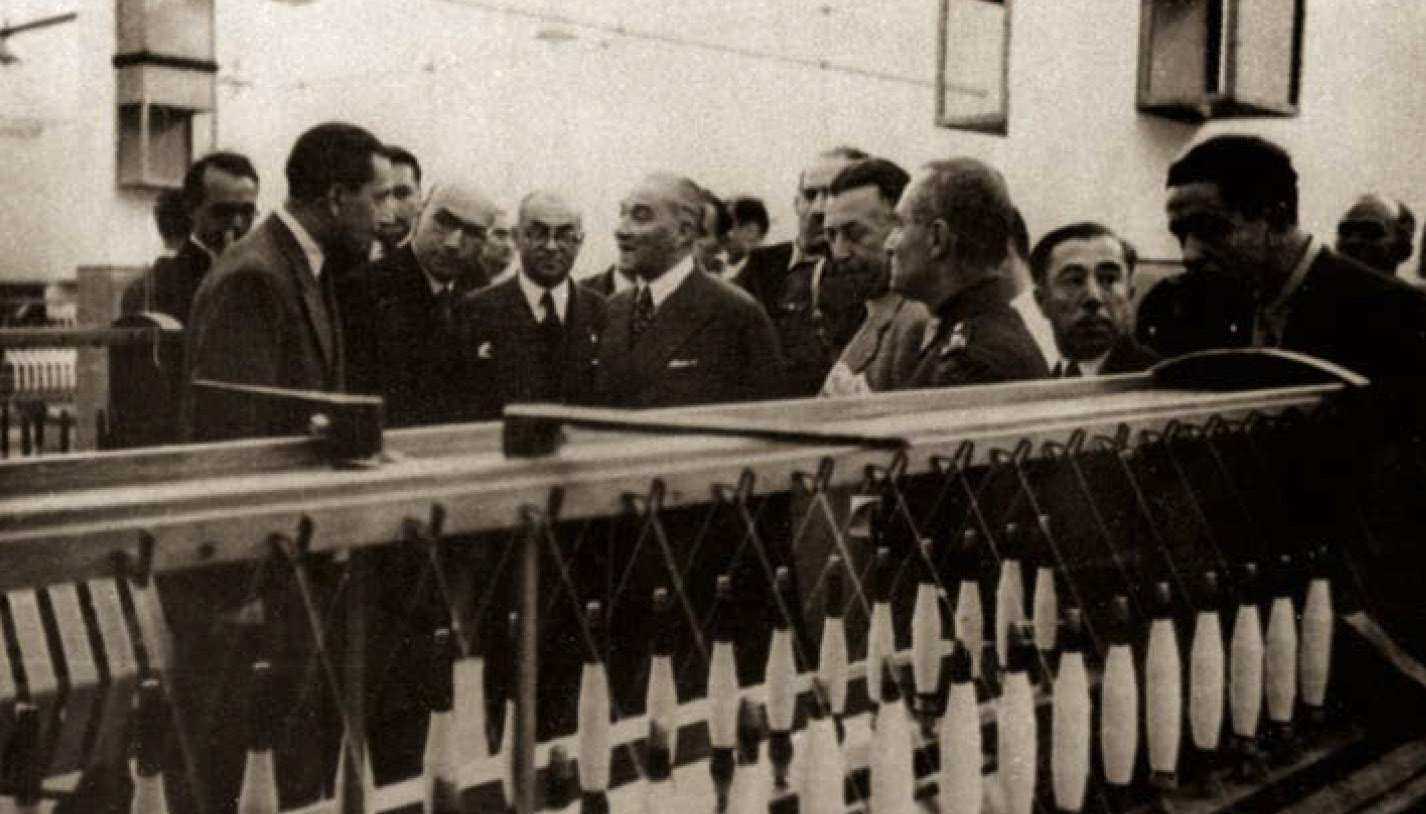
Turkey achieved its independence and sovereignty with the War of Independence against the imperialist occupation at the beginning of the 20th century. The Kemalist Revolution, led by Atatürk, constituted a unique breakthrough of Turkey’s national-democratic revolution. The principles of nationalism, populism, republicanism, statism, secularism and revolutionism summarize the Kemalist Revolution Program. Nationalism states that the basic power is the nation, both for the protection of independence and sovereignty, and for economic and social development. Populism bases the revolution on the people – first and foremost the peasantry – and the principle of serving the people. It reflects the approach that the future of the country cannot be secured without ensuring the welfare and effective participation of the people. Republicanism is the expression of the need for the nation-state to be truly the organized form of the nation. Statism emphasizes the indispensability of the leading and planning function of the state for the construction of a national-democratic economy and society. Secularism is the main tool for overcoming the feudal elements that hinder the nation-building process. Secularism is based on the Enlightenment, which accepts science as the truest guide in life. Revolutionism reflects the fact that the revolutionary process must be carried out incessantly.
A century that has passed has not eroded the principles of the Kemalist Revolution. Despite its diversity, these principles form the backbone of the Developing World’s common program today. Desired benefits from flexibility can only be obtained in the presence of a solid spine. The objective conditions in the world today create a very suitable basis for Turkey to complete its national-democratic revolution that it started with the Kemalist Revolution.
The 20th century began with the rising wave of democratic revolutions in Russia, Turkey, China and Iran. It is no coincidence that these four countries are still at the forefront of the struggle against imperialist hegemony at the beginning of the 21st century. This is a clear indication that our age is the Age of National Democratic Revolutions and Opening up to Socialism.