Introduction
The first asian-african conference took place on April 18, 1955, in Bandung, Indonesia. It brought together representatives from 29 Asian and African countries to discuss issues of common interest. The event was significant, as it was the first international event hosted by Indonesia after gaining independence (Portal Informasi Indonesia, 2019Portal Informasi Indonesia (2019). The source article does not provide a separate full bibliographic entry for this citation.) and also the world’s inaugural intercontinental conference (Kemlu, 2019Kemlu. (2019). Retrieved October 24, 2024, from). Additionally, it provided a groundbreaking platform for Asian and African nations to have comprehensive discussions on regional affairs without any participation from official representatives of colonial powers. The conference not only strengthened the ties among emerging independent nations and pushed forward the process of global decolonization but also laid a foundation of equality and inclusiveness for multilateral cooperation among developing countries (Portal Kemlu, 2020Portal Kemlu. (2020). Retrieved October 24, 2024, from; 2022).
Thus, the countries of Asia and Africa began to emerge as an independent political force on the international stage. Furthermore, Asian and African countries have established ten principles for managing interstate relations based on the Five Principles of Peaceful Coexistence, thereby fostering the Bandung Spirit of solidarity, friendship, and cooperation. This enduring spirit holds immense practical significance and exerts a profound influence on international exchanges among developing countries to this day (Arsip Nasional Republik Indonesia, 2012Arsip, D. B. K. & Indonesia, A. N. R. (2012). Guide Arsip Konferensi Asia-Afrika Tahun 1955. Arsip Nasional Republik Indonesia Jakarta.).
Scholars from various perspectives have extensively studied the Bandung Conference. Chinese scholars have specifically focused on examining its impact on China’s international image and analyzing Premier Zhou Enlai’s diplomatic practices (Chen & Niu, 2018Chen, C. W. & Niu, D. Y. (2018). A successful example of China’s pioneering a new situation in Asian-African diplomacy: Revisiting the Bandung Conference. Social Sciences in Chinese Higher Education Institutions, (4), 82-91+159.; Shi, 2023Shi, Z. Q. (2023). Zhou Enlai and the Geneva Conference and the Bandung Asian-African Conference: Commemorating the 125th anniversary of Zhou Enlai’s birth. Mao Zedong Thought Study, 40(2), 36-63.; Xie, 2019Xie, D. B. (2019). Bandung Conference and the international shaping of New China’s image. CPC History Studies, (9), 40-51.). Indonesian scholars focus on Indonesia’s important role in the Bandung Conference, its impact on the urban transformation of Bandung, its support for independence movements in Asia, Africa, and Latin America, and its supporting activities (Arsip Nasional Republik Indonesia, 2012Arsip, D. B. K. & Indonesia, A. N. R. (2012). Guide Arsip Konferensi Asia-Afrika Tahun 1955. Arsip Nasional Republik Indonesia Jakarta.; Wulandari, 2021aWulandari, A. (2021a). Membayangkan Bandung dalam Satu Dasawarsa Pasca-konferensi Asia Afrika: Konektivitas Global, Modernitas, dan Perubahan Sosial (1955-1965). Jurnal Penelitian Sejarah dan Budaya, 7(2), 479607.; Kusmayadi, 2018Kusmayadi, Y. (2018). Pengaruh Konferensi Asia Afrika (KAA) tahun 1955 terhadap kemerdekaan negara-negara di Benua Afrika. Agastya: Jurnal Sejarah dan Pembelajarannya, 8(1), 15-34.; Parastantria, 2022Parastantria, P. (2022). Dari kegiatan pendukung hingga hospitality committee: Sisi lain konferensi Asia Afrika 1955 (Doctoral dissertation, Universitas Gadjah Mada).). Additionally, Wulandari examined the role of women in the 1963 Asian-African Journalists Conference (a legacy of the Bandung Conference) from a female perspective (Wulandari, 2021bWulandari, A. (2021a). Membayangkan Bandung dalam Satu Dasawarsa Pasca-konferensi Asia Afrika: Konektivitas Global, Modernitas, dan Perubahan Sosial (1955-1965). Jurnal Penelitian Sejarah dan Budaya, 7(2), 479607.). Sopart conducted a critical analysis of the Spirit of Bandung, highlighting that, despite the emphasis on Asian-African unity, obvious disparities in power structures and regional allegiances were exhibited at the Bandung Conference (Sopart, 2018Sopart, T. (2018). The emergence of the “Bandung spirit” - A critical analysis of the concept of Afro-Asian solidarity.).
In summary, previous research offers diverse perspectives on exploring the Bandung Conference and its impact. As the host country, Indonesia proposed and initiated the conference while playing a crucial role in its organization and success. However, non-Indonesian academics have given limited
attention to Indonesia’s role in this event. On the occasion of the 70th anniversary of the Bandung Conference, this paper seeks to analyze its legacy in Indonesia’s foreign policy based on Indonesian language materials, revealing its historical significance and practical impact.
Why did Indonesia Initiate the Bandung Conference?
In his influential work, Man, the State, and War, Kenneth Waltz examines the root causes of war across three dimensions: human nature and behavior, the internal structure of a country, and the state of anarchy in international relations (Waltz, 2018Waltz, K. (2018). Man, the state, and war: A theoretical analysis. Columbia University Press.). This analysis provides fresh perspectives and insights for research in the field of international relations. This paper adopts this multi-dimensional analysis method to analyze the causes of Indonesia initiating the Bandung Conference from three levels: international power structure, national attributes, and leaders’ aspirations.
Reconfiguration of Global Powers Necessitates Third World Nations Uniting for Mutual Support
After World War II concluded, the global community entered a Cold War era characterized by the dominance of two superpowers: namely, the United States and the Soviet Union. These two blocs not only diverged significantly in terms of ideology but also engaged in fierce competition across various domains, including politics, economy, and military affairs (Wibisono, 1955Wibisono, H. K. (1955). Nusantara Geopolitics and the Rising Tide of Colors (Indonesia Cultural Strategy at Asia-Africa Conference, 18-24 April 1955).).
Historian Odd Arne Westad has observed that a crucial aspect of the Cold War entailed the rivalry among major powers through interventions in third-world countries (Westad, 2005Westad, O. A. (2005). The Global Cold War: Third World Interventions and the Making of Our Times. Cambridge UP.), and this
assertion is equally applicable to Southeast Asian countries. For instance, when the Anti-French Resistance War in Vietnam (i.e., the First Indochina War) erupted in 1946, the Soviet Union and its allies actively supported the Vietnamese independence movement by providing economic and military aid to North Vietnam (Luthi, 2006Luthi, L. M. (2006). Confronting Vietnam: Soviet Policy toward the Indochina Conflict, 1945-1963. Journal of Cold War Studies, 8(4), 164-165.). In contrast, to contain the expansion of communism in Southeast Asia and prevent South Vietnam from falling into the Soviet bloc, thus triggering a domino effect, the United States initially maintained a neutral stance but later shifted its support to France on all fronts by providing military and financial assistance (Thuan & Minh, 2024Thuan, P. D., & Minh Thuan, T. (2024). The First Indochina War (1946–1954) and the Geneva Agreement (1954). Cogent Arts & Humanities, 11(1), 2365048.).
After long struggles against imperialism and colonialism, Vietnam (1945), India (1947), Burma (1948), Indonesia (1945), and Egypt (1953) eventually achieved their independence.
As a former colony of the United States, the Philippines maintained close military ties with it. After World War II, the U.S. continued to station troops in the Philippines and signed the Mutual Defense Treaty between the Republic of the Philippines and the United States of America (MDT) in 1951 to provide military aid and technical support, helping suppress the communist movement (Fitzsimmons, 2018Fitzsimmons, M. (2018). Taming the Tiger: Factors Behind the Successful Counterinsurgency Campaign of the Huk Rebellion.). In Laos, the U.S. supported anti-communist regimes to contain communism militarily and politically, while the Soviet Union supported leftwing forces to expand the communist sphere of influence. Thailand was an ally of the United States in Southeast Asia during the early Cold War and
maintained close military cooperation with the United States, becoming an important part of the anti-communist forces in Southeast Asia (Klemm, 2019Klemm, A. J. (2019). Representations of Cold War Thailand in US Army Documentaries and British Pathé Newsreels, 1955-1967. The Asian Congress for Media and Communication Journal, 6(12), 35-56.).
In 1955, under the leadership of the United States, the Southeast Asia Treaty Organization (SEATO) was established, which included both Southeast and South Asian countries, including the Philippines, Thailand, and Pakistan, as well as Western countries such as Britain, France, New Zealand, and Australia. Through this organization, the United States sought to promote anti-communist governments and expand its influence in Southeast Asia.
However, at that time, most Asian and African countries were unwilling to be drawn into the vortex of great power competition. After long struggles against imperialism and colonialism, Vietnam (1945), India (1947), Burma (1948), Indonesia (1945), and Egypt (1953) eventually achieved their independence. The economic structures of these emerging independent nations were shaped by colonial rule and heavily relied on the production and export of a single commodity, which posed a challenge to their economic autonomy after gaining independence. For instance, the Indonesian economy heavily relied on raw materials such as rubber, palm oil, and spices during Dutch colonial rule. This resulted in an unbalanced economy with a narrow range of products that was highly dependent on external market fluctuations (Aditya et al. & Yunita, 2024Aditya, F., Pratama, R. S., Siagian, S. Z., Daely, V. G., & Yunita, S. (2024). Pengaruh Kolonialisme terhadap Struktur Sosial dan Ekonomi Indonesia. Jurnal Pendidikan Tambusai, 8(2), 2440224407.). Not only that, imperialist countries often defined the boundaries of their colonies based on their interests, ignoring local ethnic, religious, and cultural differences, leading to frequent ethnic conflicts and political instability in newly independent countries. For example, ethnic and administrative divisions imposed by Britain in Burma led to a long-lasting civil war (Sadovschi, 2024Sadovschi, A. (2024). Post-colonial identity and power politics. The case of Myanmar’s civil war. EIRP Proceedings, 19(1), 255-266.).
The US-Soviet confrontation worsened regional instability and profoundly impacted the political landscapes of Asian and African countries, posing significant threats to their sovereignty and independence. Consequently, these countries caught in the battle between the two camps felt deeply insecure. Meanwhile, in the process of striving for independence and development, Asian and African countries not only had to deal with external interference but also had to resolve internal ethnic conflicts and address economic backwardness. These factors limited their status in international affairs and prevented them from playing a decisive role in the bipolar world order (Serikat Petani Indonesia, 2007Serikat Petani Indonesia - SPI. (2007). Retrieved October 24, 2024, from).
The United Nations, as the most important international organization, failed to effectively meet the core demands of Asian and African countries for independence, peace, and development. Therefore, emerging independent countries urgently need to seek new ways to establish equal international relations and advocate for their interests on the global stage. In this context, the idea of an Asian-African Conference emerged.
The United Nations, as the most important international organization, failed to effectively meet the core demands of Asian and African countries for independence, peace, and development. Therefore, emerging independent countries urgently
need to seek new ways to establish equal international relations and advocate for their interests on the global stage. In this context, the idea of an Asian-African Conference emerged (Arsip Nasional Republik Indonesia, 2012Arsip, D. B. K. & Indonesia, A. N. R. (2012). Guide Arsip Konferensi Asia-Afrika Tahun 1955. Arsip Nasional Republik Indonesia Jakarta.).
The Recently Liberated Indonesia was in Urgent Need of Asserting its Sovereignty and Independence
Indonesia was under Dutch colonial rule from the end of the 16th century until the middle of the 20th century. In 1942, Japan seized control of the country from the Dutch. On August 17, 1945, President Sukarno proclaimed the Republic of Indonesia after Japan’s unconditional surrender on August 15, 1945. Finally, after more than 300 years of colonial rule, the Indonesian people gained their independence (Kab. Sarolangun, 2024Kab. Sarolangun. (2024). Retrieved October 24, 2024, from).
The Netherlands, rather than recognizing Indonesian independence, sought to extend its colonial control in Indonesia (Nurbantoro et al. & Widjayanto, 2021Nurbantoro, E., Midhio, I. W., Risman, H., Prakoso, L. Y., & Widjayanto, J. (2021). Perang Kemerdekaan Indonesia (1945-1949) dalam perspektif strategi perang semesta. Jurnal Pendidikan Tambusai, 5(3), 10520-10530.). To protect the nation’s sovereignty, the Indonesian people, led by President Sukarno and Vice President Mohammad Hatta, steadfastly opposed the military invasion by the Netherlands and engaged in a prolonged war for independence lasting almost four years. During this struggle, extensive armed confrontations occurred between the Indonesian military and Dutch colonial troops, as the anti-colonial ambitions of the Indonesian populace were brutally repressed by the Dutch military.
Alongside armed conflict, Indonesia pursued foreign assistance via diplomatic avenues. As the nation with the biggest Muslim population worldwide, Indonesia sought acknowledgment of its sovereignty from Arab nations. Conversely, in the post-war era, when the United States championed national self-determination and opposed colonialism, it
supported Indonesia’s quest for independence. As a result, Indonesia diligently pursued American assistance in opposition to Dutch colonial domination. Furthermore, Indonesia sought expanded support and recognition from the United Nations in international forums (Zhao, 2020Zhao, C. (2020). Diplomatic strategies during Indonesia’s war of independence (1945–1949). Journal of Yunmeng, 41(6), 11–19.).
Following international condemnation and persistent pressure, the Netherlands and Indonesia executed the Hague Agreement on November 2, 1949. The Netherlands consented to relinquish sovereignty. On August 17, 1950, Sukarno proclaimed the formation of a unified Republic of Indonesia subsequent to the ratification of a temporary constitution. Following a steadfast struggle of five years, Indonesia ultimately attained true independence, thereby concluding Dutch colonial control and establishing the groundwork for future modernization initiatives. The steadfast resolve exhibited by Indonesians during this battle highlighted their deep desire for freedom and self-determination while cultivating significant appreciation for the hard-earned sovereignty they attained. As a nascent independent state at that time, Indonesia ardently sought to establish its independence in international relations.
Sukarno’s Firm Anti-Imperialist and Anti-Colonialist Stance
Nationalist ideas significantly motivated Sukarno’s initiative to organize the Asian-African Conference. In 1926, he founded the Algemeene Studie Club in Bandung, which subsequently transformed into the Indonesian National Party (PNI), primarily aimed at cultivating national consciousness.
His resistance to colonialism resulted in his incarceration at Banceuy Prison in Bandung in late 1929. While there, he authored Indonesia Accuses (Indonesian Menggugat) and emerged as a trailblazer in the struggle against colonial domination. In 1933, Sukarno authored To Attain Independent Indonesia (Mentjapai Indonesia Merdeka) in Bandung, further elucidating his support for independence (DetikNews, 2015DetikNews. (2015). Retrieved October 24, 2024, from). These factors also played a pivotal role in determining the significant status and symbolic importance of Bandung within Indonesia’s anti-colonial movement.
Sukarno, the first president of post-independence Indonesia, had a deep comprehension of the subjugation inflicted by imperialism and colonialism on Asian and African countries. He fervently advocated for the rights of subjugated nations to attain autonomy and liberation. Inspired by this concept, Sukarno fervently promoted solidarity across Asian and African nations, creating a cohesive alliance against colonialism. Indonesia was a heterogeneous society with numerous ethnicities and religions, necessitating Sukarno’s skillful management of intergroup dynamics while reconciling various political forces, including nationalists, Muslims, and communists. Consequently, Sukarno necessitated an international conference to solidify his political standing, establishing himself as a leader among nascent sovereign nations, bolstering nationalist fervor locally, and enhancing Indonesia’s global impact in anti-colonial movements.
Bandung Conference and Indonesia’s Domestic Diplomacy
The organization of the Bandung Conference was intricately associated with the vision of Ali Sastroamidjojo, the Prime Minister of Indonesia. Throughout his tenure as Ambassador to the United States (1950-1953), he engaged in lengthy dialogues
with leaders from many Asian and African nations regarding future collaboration. Upon assuming the role of Prime Minister in 1953, Ali Sastroamidjojo recognized that solidarity and collaboration among Asian and African nations were essential for addressing global tensions during the Cold War and served as a significant catalyst for world peace (Departemen Luar Negeri Republik Indonesia, 1996Indonesia, D. L. N. R. (1996). Sejarah Diplomasi RI dari Masa ke Masa Periode 1960-1965. Jakarta: Departemen Luar Negeri Republik Indonesia.).
On August 25, 1953, Prime Minister Ali Sastroamidjojo delivered a statement on Indonesia’s foreign policy at the Provisional House of Representatives (DPRS), highlighting that Asian and African countries faced significant external pressures during the Cold War era. He underscored the necessity for heightened collaboration among Asian and African nations to effectively tackle this predicament (Kementerian Penerangan RI, 1956Kementerian Penerangan RI. (1956). Keterangan dan Djawaban Pemerintah atas Program Kabinet Ali Sastroamidjojo di DPRS Djakarta. Jakarta: Percetakan Negara.). For this reason, in April and December 1954, Indonesia, India, Burma, Pakistan, and Ceylon held separate meetings in Colombo and Bogor (Kusmayadi, 2018Kusmayadi, Y. (2018). Pengaruh Konferensi Asia Afrika (KAA) tahun 1955 terhadap kemerdekaan negara-negara di Benua Afrika. Agastya: Jurnal Sejarah dan Pembelajarannya, 8(1), 15-34.).
At the Colombo Conference, Ali Sastroamidjojo advocated for the organization of an Asian-African Conference. This proposal was later included in the joint communiqué of the Colombo summit, leading to the notion of an Asian-African summit (Asmawi, 1985Asmawi, B. (1985). Beberapa Catatan Sekitar KAA di Bandung dan Dampaknya Terhadap Gerakan Kemerdekaan Rakyat Afrika. Makalah IKIP Bandung, 12-15. Bandung.). Indonesia has conducted diplomatic discussions with 18 Asian and African nations to get their viewpoints on the conference’s convening. Notwithstanding differences concerning conference scheduling and eligibility requirements for participating nations, there was a consensus among all countries to convene the conference, with Indonesia preferred as the host. In December 1954, the five nations convened in Bogor, where they resolved to conduct the Asian-African Conference in Bandung in April 1955 (Abdulgani, 1988Abdulgani, R. (1988). The Bandung Connection: Konferensi Asia-Afrika di Bandung Tahun 1955. Gunung Agung.). A consensus was also achieved about the participating nations, conference dates, and agenda (Arsip Nasional Republik Indonesia, 2012Arsip, D. B. K. & Indonesia, A. N. R. (2012). Guide Arsip Konferensi Asia-Afrika Tahun 1955. Arsip Nasional Republik Indonesia Jakarta.).
Bandung was strategically situated to hold an international conference. On one hand, it held profound
significance in the history of Indonesia as a symbol of strong resistance against Dutch colonial rule. It witnessed the anti-colonial and anti-imperialist struggles led by Sukarno and embodied the relentless efforts of the Indonesian people toward independence. On the other hand, Bandung’s strategic location, easy accessibility, and its status as the capital of West Java made it capable of hosting international conferences while providing adequate hospitality and security. At that time, the city boasted high-standard hotels and conference facilities, making it an ideal venue for international conferences (DetikNews, 2015DetikNews. (2015). Retrieved October 24, 2024, from).
In preparation for the Asian-African Conference, the Government of Indonesia, together with the other four organizing countries, established the Conference Secretariat and the Joint Secretariat. These secretariats were responsible for overall planning
and day-to-day management to ensure a smooth preparatory process. A local committee was set up in Bandung, where the conference was to be held, to coordinate accommodation, logistics, transportation, health services, communications, security measures, entertainment arrangements, protocol services, and lighting (Arsip Nasional Republik Indonesia, 2012Arsip, D. B. K. & Indonesia, A. N. R. (2012). Guide Arsip Konferensi Asia-Afrika Tahun 1955. Arsip Nasional Republik Indonesia Jakarta.). On January 15, Indonesia officially extended an invitation to participate in the conference.
On April 16, 1955, delegates arrived in Bandung via Jakarta (Arsip Nasional Republik Indonesia, 2012Arsip, D. B. K. & Indonesia, A. N. R. (2012). Guide Arsip Konferensi Asia-Afrika Tahun 1955. Arsip Nasional Republik Indonesia Jakarta.). Preceding the conference, Indonesian Prime Minister Ali Sastroamidjojo cordially received the heads of delegations in Jakarta and engaged in informal discussions to establish consensus on matters such as conference chairmanship, procedural rules, decision-making processes, and discussion topics.
These preliminary efforts laid a solid foundation for the subsequent success of the conference (Panitia Penulisan Sejarah Departemen Luar Negeri, 1971Panitia Penulisan Sejarah Departemen Luar Negeri. (1971). Dua Puluh Lima Tahun Departemen Luar Negeri, 1945-1970. Jakarta: Percetakan Ofsett KAWAL.).
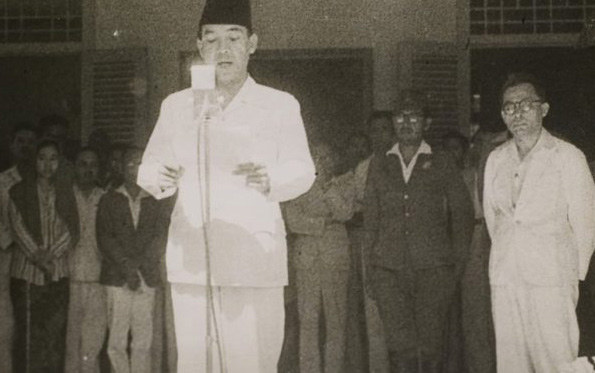
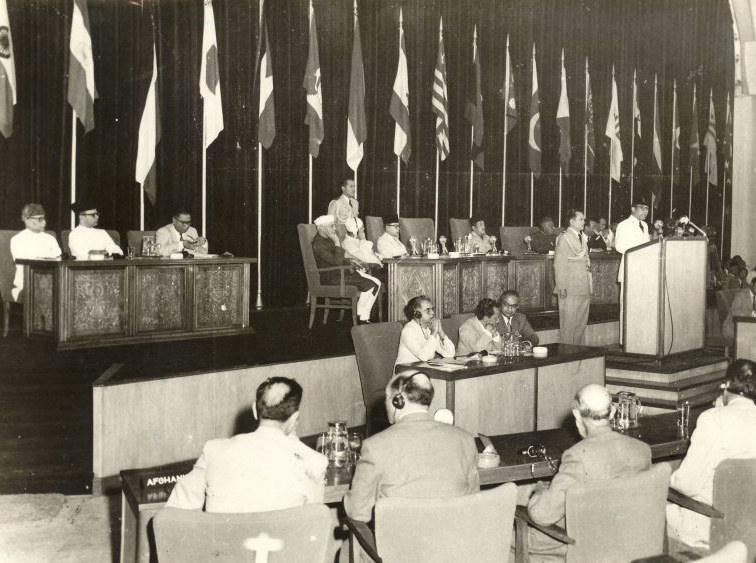
On the morning of April 18, 1955, delegates, dressed in traditional attire, made their way from their lodgings to the Merdeka Building (Gedung Merdeka) for the opening ceremony of the Asian-African Conference. During the journey, the residents of Bandung offered a warm and respectful reception to the delegates. During the inaugural event, Sukarno presented a speech titled “Let a New Asia and New Africa Be Born” (Lahirlah Asia Baru dan Afrika Baru).
“I hope that it will give evidence of the fact that we, Asian and African leaders, understand that Asia and Africa can prosper only when they are united, and that even the safety of the world at large cannot be safeguarded without a united Asia-Africa. I hope that the conference will give guidance to mankind and will point out to mankind the way it must take to attain safety and peace."
With enormous passion, he envisioned a shared rise and promising future for Asian and African nations, reaffirmed an unshaken dedication to national self-determination, categorically rejected all forms of colonialism, and emphasized the importance of equal status among all nations (Ekadjati, 1985Ekadjati, E. S. (Ed.). (1985). Himpunan Dokumen Konferensi Asia-Afrika 18-24 April 1955. Jakarta: Panitia Nasional Peringatan 30 Tahun Konferensi Asia Afrika.). He highlighted that despite their diverse ethnicities, social backgrounds, cultures, and religions, the participants in the Bandung Conference resonated with a common experience of anti-colonial struggle, which led to Asian-African solidarity in their pursuit of global peace. He concluded his speech by saying that:
“I hope that it will give evidence of the fact that we, Asian and African leaders, understand that Asia and Africa can prosper only when they are united, and that even the safety of the world at large cannot be safeguarded without a united Asia-Africa. I hope that the conference will give guidance to mankind and will point out to mankind the way it must take to attain safety and peace. I hope that it will provide evidence that Asia and Africa have been reborn, that a New Asia and New Africa have been born!” (Museum Konferensi Asia Afrika, n.d.Museum Konferensi Asia Afrika. (n.d.). Sejarah Konferensi Asia Afrika. Retrieved October 14, 2024, from).
Despite the eventual success of the conference, its preparatory process faced numerous challenges, particularly obstruction from Western countries such as Britain and the United States. These countries attempted to weaken the influence of the conference, discourage other countries from participating, and interfere with the conference process by exerting influence on “friendly countries.” As a result, there was significant controversy and disagreement in the early stages of the conference, posing a threat to its smooth progress (Acharya, 2016Acharya, A. (2016). Studying the Bandung Conference from a global IR perspective. Australian Journal of International Affairs, 70(4), 342-357.).
Prior to the conference, the British government issued a series of “guidance” documents to 37 foreign missions, alleging the threat of “communist colonialism,” recommending an embargo on strategic goods against China, and warning about the risks associated with the Five Principles of Peaceful Coexistence. British representatives were asked to urge “friendly countries” to resist proposals that support disputed expansion of sovereignty in the conference and alert allies to possible plans by Asian-African countries that could destabilize the region. For example, prior to the conference, Britain sent a memorandum to the Prime Minister of Ceylon, John Kotelawala, urging him to pay full attention to “communist colonialism.”
Kotelawala openly criticized what he termed “communist colonialism” at the meeting, which offended Chinese Prime Minister Zhou Enlai and Indian Prime Minister Nehru. Nehru promptly adopted a resolute position against equating Western colonialism with the circumstances in the Soviet bloc nations.
The Eisenhower administration instructed the U.S. missions to avoid an open show of interest in the Bandung Conference and instead follow the British example by offering “advice” and “guidance” to friendly governments such as Japan, Turkey, South Vietnam, Lebanon, the Philippines, and Thailand. The U.S. also had advance access to the speech of Carlos Pena Romulo, the chief representative of the Philippines, at the opening session of the Bandung Conference and supplied him with a draft resolution concerning Taiwan. Romulo promised to use it at the conference (Acharya, 2016Acharya, A. (2016). Studying the Bandung Conference from a global IR perspective. Australian Journal of International Affairs, 70(4), 342-357.).
The Bandung Conference encompassed three political perspectives: (1) pro-Western stances, exemplified by the Philippines, Thailand, Pakistan, Iran, and Turkey; (2) pro-communist positions represented by the People’s Republic of China and North Vietnam; and (3) neutral viewpoints held by India, Burma, Ceylon, and Indonesia (Panitia Penulisan Sejarah Departemen Luar Negeri, 1971Panitia Penulisan Sejarah Departemen Luar Negeri. (1971). Dua Puluh Lima Tahun Departemen Luar Negeri, 1945-1970. Jakarta: Percetakan Ofsett KAWAL.).
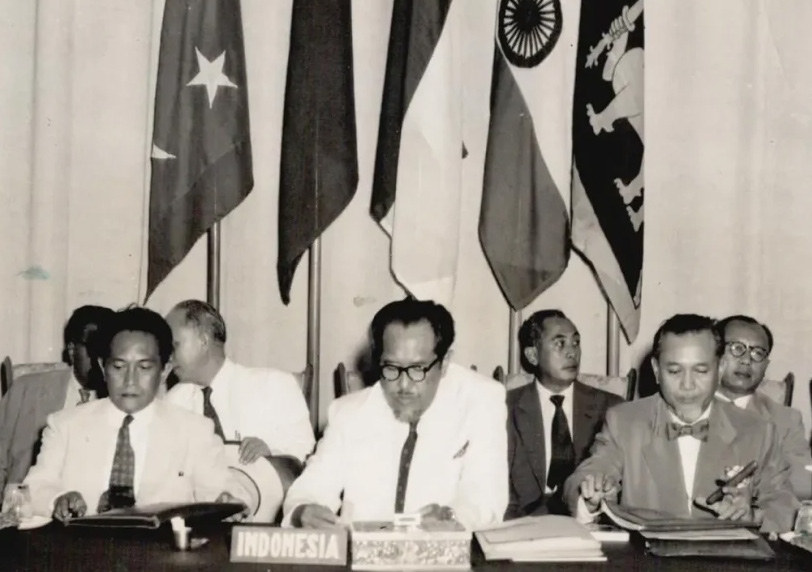
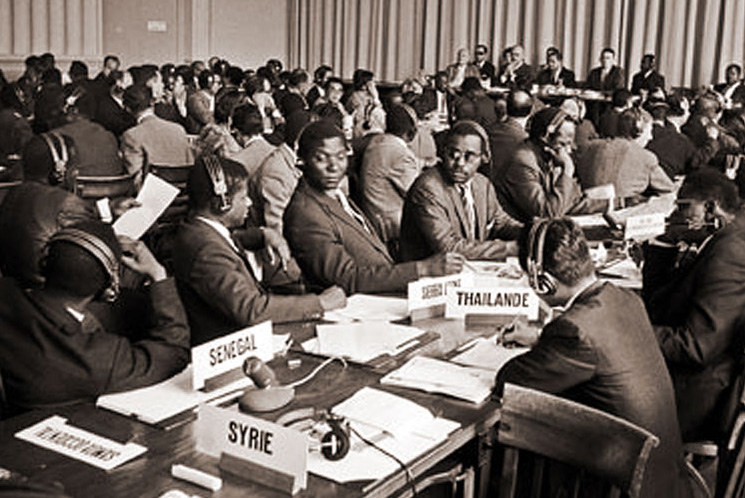
The conflict of divergent positions at the conference somewhat hindered its smooth progress and consensus-building. However, under the guidance of the conference president, participating countries adhered to principles such as seeking common ground while respecting differences and practicing mutual tolerance, ensuring a smooth progression (Anwar, 2009Anwar, R. (2009). Sejarah Kecil, Petite Histoire Indonesia Jilid 2. Kompas, Jakarta, Indonesia.). During the conference, representatives from various countries held consultations on issues of common concern for Asian and African countries, reached consensus on matters such as economy, culture, human rights, sovereignty, peace, and cooperation, and proposed the “Ten Principles of Bandung (Dasasila Bandung) for managing international relations. The conference communique reaffirmed the shared vision of Asian and African countries to deepen cooperation in all areas (Arsip Nasional Republik Indonesia, 2012Arsip, D. B. K. & Indonesia, A. N. R. (2012). Guide Arsip Konferensi Asia-Afrika Tahun 1955. Arsip Nasional Republik Indonesia Jakarta.).
The Bandung Conference bolstered Indonesia’s diplomatic ties with Asian and African nations, becoming the initial expression of its proactive engagement in international relations. The Asian-African Conference is considered a pivotal moment in Indonesia’s dedication to an “independent and active” foreign policy (Kemlu, 2019Kemlu. (2019). Retrieved October 24, 2024, from). The Final Communiqué of the Asian-African Conference mandated that the five founding nations diligently organize for the subsequent Asian-African Conference by comprehensive consultations with additional countries. However, the preparations for and the convening of the second Asian-African Conference have encountered formidable challenges. In 1965, shortly before the conference was set to commence, a coup d’état in Algeria, the host nation, obstructed the timely execution of the Second Asian-African Conference (Arsip Nasional Republik Indonesia, 2012Arsip, D. B. K. & Indonesia, A. N. R. (2012). Guide Arsip Konferensi Asia-Afrika Tahun 1955. Arsip Nasional Republik Indonesia Jakarta.). Nonetheless, the Bandung Spirit epitomizes unity, equality, and peace, offering a conceptual basis for Asian and African nations to pursue collaboration and development.
Indonesia’s Inheritance or Divergence from the Bandung Legacy
Under Sukarno’s leadership, Indonesia’s foreign policy has been significantly shaped by nationalist and anti-colonial ideologies. It upholds the notion of bebas dan aktif (independent and active), preserving an independent and autonomous position in international relations without aligning with any major power (Kusno, 2014Kusno, M. (2014). Bung Hatta dan Politik Bebas Aktif Indonesia. Konfrontasi: Jurnal Kultural, Ekonomi dan Perubahan Sosial, 1(1), 12-25.).
Under the influence of nationalism, Sukarno stood firm against Dutch colonial rule, defended national sovereignty, and fought for the restoration of control over West Irian. Through diplomatic efforts and military preparations, the Netherlands eventually agreed to resolve the West Irian issue through negotiations. In 1963, control of West Irian was formally transferred to Indonesia, reinforcing Sukarno’s commitment to national independence and territorial integrity.
Sukarno, from an anti-colonial standpoint, fervently endorsed national liberation movements across Asia, Africa, and Latin America, while championing solidarity and collaboration among Third World nations. Throughout the Vietnam War, Sukarno vehemently opposed and condemned US military intervention in Vietnam, viewing Ho Chi Minh as a significant freedom fighter against imperialism and endorsing the Vietnamese people’s struggle for national unity and independence (Husin, 2010Husin, A. Z. (2010). Indonesia, Vietnam, Perang Dingin, dan Dasar Berkecuali: Hubungan Vietnam-Indonesia Era Presiden Sukarno hingga 1966. Perspektif: Jurnal Sains Sosial dan Kemanusiaan, 2(1), 28-46.). Throughout Algeria’s struggle for independence from French colonialism, Indonesia offered both political and material support, as well as deployed military missions to aid its liberation movement (Mangkusubroto, 2023Mangkusubroto, M. I. (2023). Diplomasi Tentara Nasional Indonesia Era Presiden Soekarno. Jurnal Kewarganegaraan, 7(2), 2491-2496.).
Motivated by the Bandung spirit, Sukarno ardently advocated for South-South cooperation, fostering collaboration among developing nations in political, economic, technological, and cultural spheres. Indonesia was a founding member of the Group of 77, established in 1964, aimed at reducing dependence on developed nations and promoting solidarity, cooperation, and development within the Global South (Center for East Asian Cooperation Studies, 2010Center for East Asian Cooperation Studies. (2010). Studi arah kebijakan Indonesia dalam kerjasama Selatan-Selatan: Laporan akhir dan policy paper. Japan International Cooperation Agency.). Indonesia, as a representative of Southeast Asia, has actively participated in the group’s initiatives.
On 16 September 1963, the Federation of Malaya, together with Sabah, Sarawak, and Singapore, established Malaysia. Indonesia perceived this as an extension of Western colonialism and asserted that Sarawak and Sabah ought to be incorporated into Greater Indonesia. To attain this objective, Indonesia initiated a sequence of border confrontations, especially in Borneo. Indonesia diplomatically highlighted to Asian and African nations that Malaysia was a byproduct of Western colonialism and advocated for a boycott of it. Indonesia terminated its economic relations with Malaysia, thereby intensifying its economic difficulties. These actions not only contravened the principle of peaceful dispute resolution, as highlighted at the Bandung Conference, but also jeopardized regional stability (Ali, 2024Ali, A. R. M. (2024). Konfrontasi Indonesia–Malaysia (1963-1966) Persengketaan Dua Negara Serumpun. International Journal of Civilizational Studies and Human Sciences, 7(1), 92-103.). In January 1965, Indonesia officially declared its withdrawal from the United Nations, vehemently opposing Malaysia’s election as a non-permanent member of the UN Security Council. Indonesia alleged that this action exemplifies the collective endorsement of Malaysia by Western nations and the suppression of Indonesia (Kusmayadi, 2017Kusmayadi, Y. (2017). Politik Luar Negeri Republik Indonesia Pada Masa Konfrontasi Indonesia-Malaysia Tahun 1963-1966. Jurnal Artefak, 4(1), 23-34.).
Between 1963 and 1966, during the confrontation between Indonesia and Malaysia, the United States curtailed its assistance to Indonesia, maintaining only military-related projects to bolster the army’s capacity to counter Sukarno, while China and the Soviet Union supplied Indonesia with diverse forms of aid, including armaments and technology. To consolidate his political standing, Sukarno endorsed leftists and communists, cultivated closer relations with socialist nations, and vehemently denounced US support for Malaysia and its aggression against North Vietnam. In the latter years of Sukarno’s administration, Indonesia became increasingly entangled in the dynamics of great power rivalry.
The Association of Southeast Asian Nations (ASEAN) was officially founded in 1967 to foster regional peace and stability. Since its inception, Indonesia has conducted multiple ASEAN Summit meetings and engaged in regional collaboration, endeavoring to take a prominent position within ASEAN (Wiharyanto, 2010Wiharyanto, K. (2010). Proses Berdirinya ASEAN. Jurnal Pendidikan Sejarah, 1(1).).
During the early 1960s, Indonesia’s economy persisted in its decline, accompanied by escalating public discontent. Sukarno’s robust endorsement of the Communist Party of Indonesia (PKI), which faced opposition from the military, exacerbated the turmoil. This resulted in the 30 September Movement of 1965. Following Sukarno’s demise, Indonesian politics transitioned into the Suharto Era (1967-1998) (You, 2015You, L. (2015). Wandering between camps: Sukarno’s middle path in the context of the Cold War. Cold War International History Studies, (Z1), 159-183+5.).
The Suharto government advocated for peaceful dialogue and the resolution of international disputes through multilateral diplomatic channels. On August
11, 1966, Indonesia signed a normalization agreement with Malaysia, officially marking the end of the Indonesia-Malaysia confrontation and the restoration of bilateral relations. In September 1966, Indonesia rejoined the United Nations. The two countries formally reestablished diplomatic relations in 1967 (Omar, 2008Omar, M. (2008). Indonesia–Malaysia Confrontation. National Library Board. Retrieved October 24, 2024, from).
The Association of Southeast Asian Nations (ASEAN) was officially founded in 1967 to foster regional peace and stability. Since its inception, Indonesia has conducted multiple ASEAN Summit meetings and engaged in regional collaboration, endeavoring to take a prominent position within ASEAN (Wiharyanto, 2010Wiharyanto, K. (2010). Proses Berdirinya ASEAN. Jurnal Pendidikan Sejarah, 1(1).). In 1976, Indonesia convened the inaugural ASEAN Summit and ratified the Treaty of Amity and Cooperation in Southeast Asia (TAC), which established the principles of peaceful coexistence and collaboration in the region. These initiatives exemplified the Bandung spirit; however, it is undeniable that certain diplomatic practices of the Suharto administration markedly diverged from it.
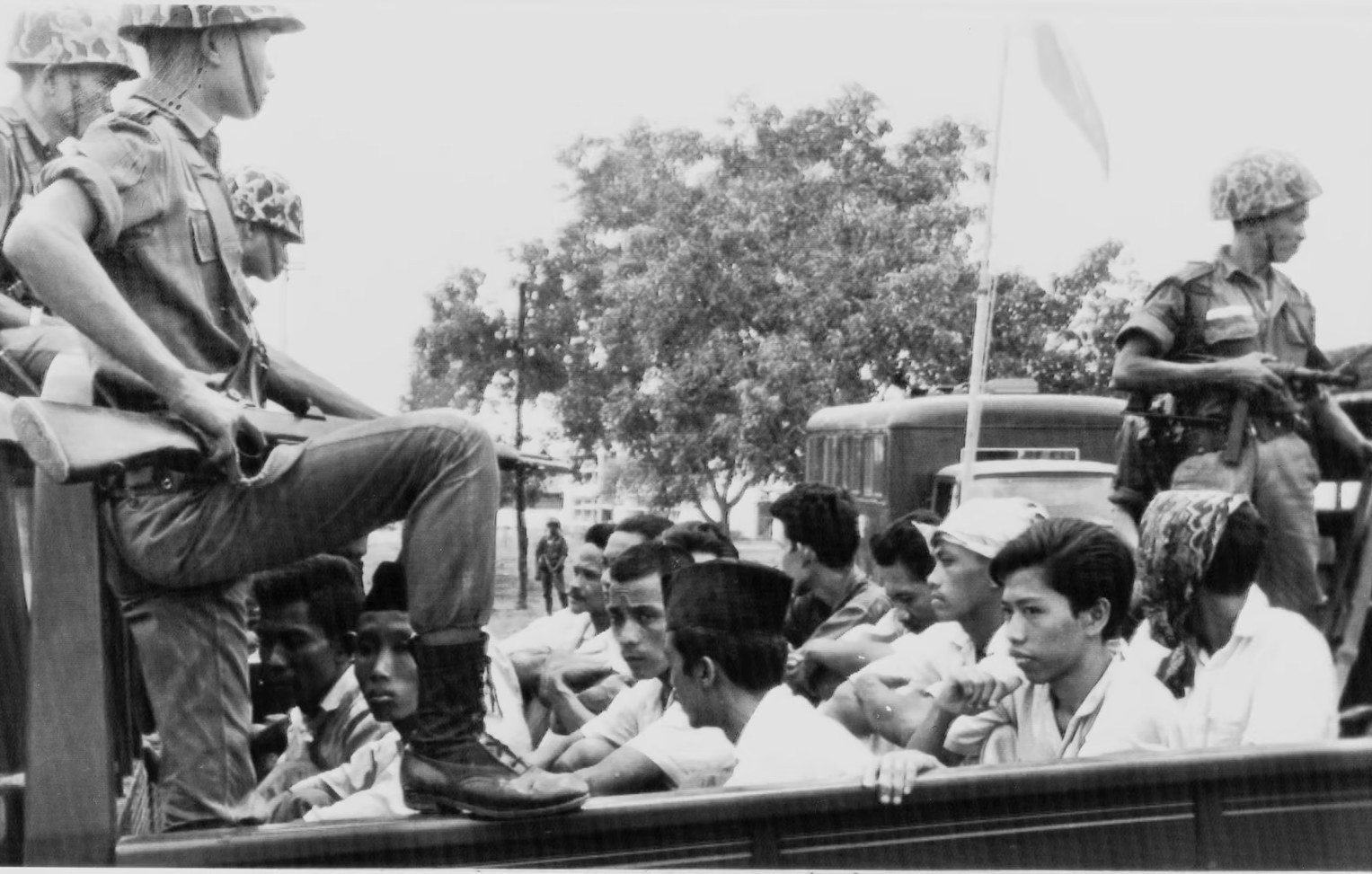
On the evening of September 30, 1965, Lieutenant Colonel Untung Syamsuri proclaimed the initiation of the “September 30th Movement.” On the morning of October 1, the Indonesian military abducted and executed six high-ranking generals. Major General Suharto of the Indonesian Army was not apprehended. Upon receiving the news, he commanded the army to quell the coup and swiftly usurped power during the suppression. Subsequent to the coup, the government alleged that the Indonesian Communist Party (PKI) orchestrated it. Subsequently, anti-communist factions led by Suharto initiated a widespread anti-communist purge. From 1965 to 1966, numerous members of the Communist Party and leftists faced persecution, resulting in the massacre of hundreds of thousands. Suharto incrementally consolidated authority over the government and the military. He officially assumed the presidency in 1967, instituting a new regime focused on military and pro-Western political factions (Adriyanto, 2016Adriyanto, A. (2016). Kontroversi Keterlibatan Soeharto dalam Penumpasan G30S/PKI 1965. Kalpataru: Jurnal Sejarah dan Pembelajaran Sejarah, 2(2), 1-12.). From 1966 to 1967, anti-Chinese sentiment in
Indonesia intensified, resulting in multiple assaults on Chinese embassies and consulates. In 1967, the Suharto administration implemented severe measures, instituting a total prohibition on the dissemination of Chinese literature, culture, and script in Indonesia, while urging Indonesian Chinese to renounce their Chinese names. The two nations entirely terminated their diplomatic relations on October 30, 1967 (Xue, 2020Xue, S. (2020). 70 years of China-Indonesia relations: Interaction and changes. Southeast Asian Affairs, (01), 41-54.).
Throughout the Suharto administration, Indonesia exhibited a diplomatic inclination towards the United States. The Suharto administration entered into a military cooperation agreement with the United States, resulting in the provision of military aid to Indonesia, including weapons, training, and intelligence, thereby enhancing the capabilities of the Indonesian military. Concurrently, Indonesia enacted the “New Order” (Orde Baru) policy, which advocated for market liberalization reforms, eased limitations on foreign investment, and promoted the entry of American enterprises into the Indonesian market. Consequently, American
corporations acquired a substantial market share in oil, gas, minerals, and other sectors (Setia, 2023Setia, N. (2023). Keterlibatan Amerika Serikat dalam Upaya Pembangunan Ekonomi Indonesia Era Soeharto 1966-1980. Journal of Indonesian History, 11(1), 44-54.).
The Suharto government’s policy regarding East Timor significantly diverged from the principles of Bandung. East Timor endured prolonged oppression under Portuguese colonial rule. On November 28, 1975, East Timor proclaimed its independence and formed the Democratic Republic of East Timor. One week later, the Suharto administration commanded Indonesian forces to invade East Timor. The coercive annexation of East Timor as Indonesia’s 27th province in 1976 elicited extensive denunciation and significant censure from the international community (Ulung, 2023Ulung, A. K. (2023). Pengaruh sanksi Amerika Serikat terhadap kepatuhan Indonesia pada rezim Hak Asasi Manusia (HAM) di Timor Timur. Jurnal Ilmiah Multidisiplin, 2(02), 01-10.).
The 1997 Asian financial crisis triggered a significant economic decline in Indonesia, intensifying social unrest and confronting the nation with an unparalleled challenge marked by increasing calls for political reform. Suharto resigned from the presidency in 1998, thus ending his thirty-year reign. Subsequently, Indonesia initiated a phase of democratic transition.
The Transformation of Indonesian Diplomacy and its Contribution to Fostering the Bandung Spirit
In the post-Suharto period, the Bandung spirit and the Five Principles of Peaceful Coexistence have reemerged as the foundational tenets of Indonesia’s foreign policy. First, to reestablish friendship and collaboration with China. Since August 8, 1990, when China officially reinstated diplomatic relations with Indonesia, Sino-Indonesian relations have swiftly advanced in economic and trade collaboration, cultural exchanges, and people-to-people interactions. In 2013, President Xi Jinping visited Indonesia as his inaugural destination in Southeast Asia, where he conferred with President Susilo Bambang Yudhoyono. In the meeting, he declared the elevation of relations between the two nations to a comprehensive strategic partnership and suggested the establishment of the Asian Infrastructure Investment Bank (AIIB) (Kementerian Sekretariat Negara Republik Indonesia, 2013Kementerian Sekretariat Negara Republik Indonesia. (2013). Retrieved November 9, 2024, from tgl2oktober2013diistananegara.). Recently, the cooperation between the two countries has entered a new stage of all-around development. Joko Widodo (2014-2024) visited China eight times during his 10-year presidency, and President Xi met with him twelve times (Antara, 2024bAntara. (2024a). Deretan poin penting pidato perdana Presiden Prabowo. Retrieved October 24, 2024, from). The Jakarta-Bandung High-Speed Railway, as a landmark project of bilateral cooperation, showcases the potential for collaboration between China and Indonesia in infrastructure development (Yamin & Windymadksa, 2017Yamin, M. & Windymadaksa, S. (2017). Pembangunan kereta cepat Jakarta-Bandung sebagai mercusuar hubungan Indonesia-Tiongkok. Jurnal Politik Profetik, 5(2), 200-218.). Furthermore, Indonesia has revised its policy toward Chinese-Indonesians, gradually restoring their legal rights and promoting harmonious social development (Dwivianto, 2016Dwivianto, B. P. (2016). Pengaruh Kebijakan Mengenai Etnis Tionghoa di Indonesia Era Pemerintahan Abdurrahman Wahid terhadap Hubungan Bilateral Indonesia dan Tiongkok. Jurnal Analisis Hubungan Internasional, 5(2), 476-485.).
Second, Indonesia engages in international organizations such as the UN, IMF, WTO, and NAM (Non-Aligned Movement) to foster global cooperation and development. Indonesia actively participates in peacekeeping operations and fulfills its international obligations. As of July 11, 2024, Indonesia had deployed a total of 2,715 military and police personnel to UN peacekeeping forces, actively engaging in missions in Sudan, the Central African Republic, Cyprus, and other regions,
thereby ranking as the sixth-largest contributor of peacekeeping personnel worldwide. Furthermore, Indonesia significantly contributes to the female peacekeeping contingent, with 183 female peacekeepers engaged in peacekeeping operations (Widyawati, 2024Widyawati, S. (2024). Perserikatan Bangsa-Bangsa berterima kasih kepada Indonesia atas kontribusinya dalam Pemeliharaan Perdamaian. Perserikatan Bangsa - Bangsa Indonesia. Retrieved November 9, 2024, from).
Third, to enhance ASEAN’s function in regional integration. Since its inception in 1967, ASEAN’s prominence in regional and international matters has been progressively increasing. In 1997, ASEAN leaders introduced the “ASEAN Vision 2020,” with the objective of establishing a peaceful, stable, prosperous, and inclusive ASEAN Community (ASEAN Main Portal, 2012ASEAN Main Portal. (2012). Retrieved November 9, 2024 from). As a founding member of ASEAN, Indonesia is dedicated to promoting an enhanced role for ASEAN in regional integration. Indonesia introduced the ASEAN Political-Security Community (APSC) at the Bali Summit in 2003 to uphold regional stability (Mohadib, 2018Mohadib, M. (2018). Prospek dan Tantangan Komunitas Politik Keamanan ASEAN. Jurnal Lemhannas RI, 6(3), 35-48.). In terms of economic development, during its tenure as the ASEAN Chair in 2011, Indonesia reached an agreement with all member states to continue strengthening the construction of the ASEAN Community, laying the foundation for the formal launch of the “ASEAN Economic Community” (AEC) in 2015. Meanwhile, Indonesia actively participates in the construction of the ASEAN Free Trade Area (AFTA) to reduce tariff barriers, promote the free flow of goods and services, and expedite the process of economic integration. In the social and cultural realm, Indonesia has pushed for the establishment of the ASEAN Socio-Cultural Community (ASCC) and participated in setting up the ASEAN Cultural Fund to protect the cultural heritage of ASEAN member states and promote exchanges and interactions in language, culture, and education within the region.
Fourth, to change the policy on the East Timor issue. Indonesia declared in 1999 that a referendum would allow East Timor to decide its future status. In August 1999, under the supervision of the United Nations, East Timor held a referendum, with the results showing that about 78.5% of voters supported independence. The voting results sparked a riot by pro-Indonesian militants. Under the urging of the international community, Indonesia agreed to allow the United Nations to send international peacekeeping forces to East Timor to quell the riots and restore order. On May 20, 2002, East Timor formally declared independence and established the Democratic Republic of East Timor (Rustamana & Narendra, 2023Rustamana, A., & Narendra, D. (2023). Proses Integrasi dan Terlepasnya Timor-Timur terhadap Indonesia. Kultura: Jurnal Ilmu Hukum, Sosial, Dan Humaniora, 1(4), 1-18.). Following this, Indonesia worked closely with East Timor under the supervision of the international community to engage in reconciliation dialogues and restore bilateral relations. In August 2005, the two countries jointly established the “Indonesia-East Timor Commission on Truth and Friendship” to conduct a comprehensive investigation into historical atrocities and promote historical reconciliation.
In support of the just cause of the Palestinian people, Indonesia has refused to establish diplomatic relations with Israel and has urged the international community to take action for justice.
Fifth, to uphold a just stance in the Palestinian-Israeli conflict and condemn Israel’s aggressive actions. In support of the just cause of the Palestinian people, Indonesia has refused to establish diplomatic relations with Israel and has urged the international community to take action for justice (Portal Informasi Indonesia, 2024Portal Informasi Indonesia. (2024). Retrieved October 24, 2024, from). As the country with the largest Muslim population, Indonesia has always supported Palestine’s legitimate rights and advocated for the advancement of the peace process through international law and multilateral frameworks. Indonesia consistently opposes Israel’s policy of occupation and settlement expansion, utilizing platforms such as the United Nations, the Organization of Islamic Cooperation (OIC, formerly the Organization of the Islamic Conference), and the Non-Aligned Movement to urge concrete measures from the international community in promoting Palestinian independence. At the 60th anniversary commemoration of the 1955 Bandung Conference in Jakarta in 2015, Indonesia reaffirmed the Bandung Spirit and strengthened international attention on the Palestinian issue. In 2016, at the fifth special summit of the OIC, Indonesia once again urged member states to intensify their aid and support for Palestine (Kementerian Sekretariat Negara Republik Indonesia, 2016Kementerian Sekretariat Negara Republik Indonesia. (2016). Retrieved October 24, 2024, from ke-5oki.).
Sixth, to reject choosing sides and maintain a flexible stance in the strategic competition between China and the United States. Indonesia values economic development and regards China as an important trade and investment partner. It actively participates in the Belt and Road Initiative to promote infrastructure development and enhance economic connectivity. Simultaneously, it maintains security cooperation with the United States, ensuring its flexibility in the great power game (Luo, 2024Luo, Y. K. (2024). An analysis of Indonesia-U.S. military security cooperation. China security studies, (05), 124-142+155-156.). In the South China Sea issue, as a non-claimant country, Indonesia insists on prioritizing peace and opposing military conflicts. It advocates resolving disputes in a peaceful manner based on international law through ASEAN and multilateral mechanisms (Antara, 2024cAntara. (2024a). Deretan poin penting pidato perdana Presiden Prabowo. Retrieved October 24, 2024, from). On October 20, 2024, Prabowo Subianto was inaugurated as Indonesia’s president. President Prabowo has stressed that he will continue the policies of his predecessor, President Joko Widodo, by upholding the principle of an independent, active, and non-aligned (bebas aktif nonblok) foreign policy while refraining from joining any military alliances to maintain Indonesia’s independence and sovereignty (Antara, 2024aAntara. (2024a). Deretan poin penting pidato perdana Presiden Prabowo. Retrieved October 24, 2024, from).
In summary, in the post-Suharto era, Indonesia’s political reform and democratization process is closely linked to the spirit of the Bandung Conference, and Indonesia continues to play a bridge role in Asian-African cooperation on the international stage. The principles of independence, equality, and peaceful coexistence advocated at the Bandung Conference provided Indonesia with ideological support for exploring its path to development in the post-Suharto era. At the same time, Indonesia continued to promote South-South cooperation in the international community and world peace and prosperity.
Conclusion
Indonesia emerged from the anti-colonial struggle, achieving independence with much effort. During the Cold War, it was imperative to swiftly identify novel methods to convey its political interest. The Asian-African Conference in Bandung was shaped by various elements, including systemic polarization, the characteristics of newly independent nations, and Sukarno’s anti-colonial and anti-imperialist philosophy. Overcoming challenges in planning, preparation, and conference execution, Indonesia, as host country, took the lead in proposing a vision and making a significant contribution to the conference’s success. The successful convening of the Bandung Conference signified the initial emergence of Asian and African nations as an independent political force globally, while also fostering the influential Bandung Spirit and informing Indonesia’s diplomatic strategy. In some historical epochs, Indonesia diverged from the diplomatic tenets set forth at the Bandung Conference, leading to its eventual diplomatic isolation and a deterioration of its international stature. Throughout the democratic transition, Indonesia has revitalized the Bandung Spirit, enhancing relations with China and actively participating in the formation of the ASEAN community while preserving an independent and flexible position in the strategic rivalry between China and the United States. The Bandung spirit has proven its importance in Indonesia’s diplomatic endeavors throughout the past seventy years, encompassing both positive and negative aspects, while also acting as a foundational principle for promoting solidarity and collaboration among nations in the Global South.