This article aims to analyze the scope and features of China-Arab cultural relations and its implications on their bilateral political and economic partnerships. These bilateral relations have evolved from strategic cooperation in 2010 to strategic partnership in 2018. Political cooperation, economic development, and cultural exchanges represent the three pillars of the contemporary China-Arab strategic partnership. China’s cultural exchanges with Arab countries are implemented by different agencies. Education, publication, tourist, and religious exchanges have become the main pillars of cultural exchange. In this process, the Ministry of Foreign Affairs, the Propaganda Department of the CPC Central Committee, the Xinhua News Agency, the State Administration of Radio and Television, the Ministry of Culture and Tourism, the Press and Publication Administration, the State Administration of Religion, the Ministry of Education, the China Center for Language Education and Cooperation, the China-Arab Friendship Association, and other departments have formed a portfolio to participate in cultural exchanges between China and Arab countries. Their cultural exchanges are driven by Chinese and Arab officials. The two sides have set an example of South-South cooperation for exchanges of hearts and minds. Through the process, strategic cooperation between China and Arab countries has been enriched, which is an important means to enhance China’s soft power in the Arab world. On this background, in this study firstly, it is introduced what the Chinese tools for cultural cooperation and which organizations are used, then the intellectual cooperation between China and Arab countries, the role of public opinion, the ways for improving mutual understanding, interactions between religious groups will be analyzed. It is also questioned the prospects of China-Arab cultural exchange. Finally, these issues will be evaluated in conclusion.
Keywords
Belt & Road InitiativeChina-Arab RelationsChina’s Middle East DiplomacyCultural ExchangeSoft Power
Full Text
Introduction
The arab world, as the core area of the Middle East and the Islamic population, stretches from West Asia to North Africa. Surrounded by the Arabian Sea, the Red Sea, and the Mediterranean Sea, the Arab countries cover an area of 13 million square kilometers and have an approximate population of 400 million (Sun, 2020: 37Sun, D. (2020). The multiple Arab worlds. Globe, (18).). Chinese and Arabs have a long history of people-to-people exchange, being the co-founders of the ancient Silk Road, that stretches back approximately 2,000 years. Standing at the East and West ends of the Belt and Road, China and the Arab countries are all developing countries that were marginalized after the post-First World War Western domination of Eurasia and Africa. In the present day, political exchanges, economic cooperation, and cultural exchanges are the three driving forces of China-Arab relations, and cultural exchan-
Cultural exchanges between China and Arab countries include various official and non-governmental interactions, involving exchanges on culture, education, art, science and technology, health, sports, religion, tourism, press and publication, radio, film and television, academic research, as well as other fields (Ding & Chen, 2018:30Ding, J. & Chen, J. (2018). On cultural exchanges between China and Middle East countries since the reform and opening up. Arab World Studies, (5), 34-35.). These exchanges involve a total of 23 sovereign states, as well as local governments and supranational regional organizations such as the Gulf Cooperation Council (GCC) and the Arab League. The focus of these cultural exchanges between China and Arab countries is on education, tourism, media, and religion. Additionally, such cultural exchanges between China and Arab countries take place on both digital and physical platforms, including personnel exchanges, translation and publication of classic books, and media and new media exchanges. Cooperation forums such as the Conference on Dialogue among Civilizations, the China-Arab Friendship Conference, the Tourism Conference, and the Press Cooperation Conference as part of the China-Arab States Cooperation Forum are also important.
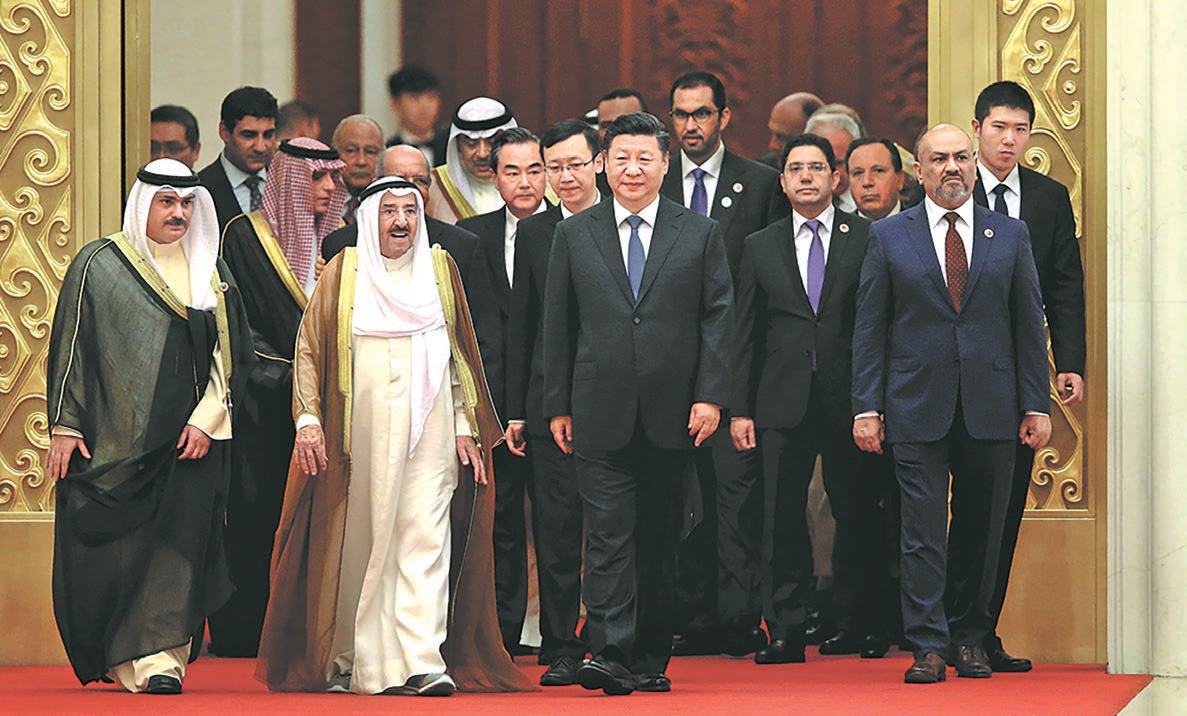
Cultural exchange between China and Arab countries primarily relies on top-level government action. A case in point is the 8th Ministerial Meeting of the China-Arab States Cooperation Forum (CASCF), which was held in Beijing in 2018. President Xi Jinping announced at the opening ceremony that China would invite 100 youth leaders from Arab countries, 200 youth scientists, and 300 scientists and technicians to visit China. In addition, it is announced that 100 Arab religious leaders and 600 Arab political party leaders will be invited to visit China, while 10 thousand training positions will be provided and 500 medical teams will be sent to Arab countries (Xi, 2018aXi, J. (2018a, July 10). President Xi Jinping’s speech at the opening ceremony of the eighth Ministerial Conference of China-Arab States Cooperation Forum.).
The 9th Ministerial Conference of CASCF was held online in July 2020 due to COVID-19. Wang Yi, State Councillor and Foreign Minister, and Ayman Safadi, Minister of Foreign Affairs and Expatriates of Jordan, co-chaired the meeting. Foreign ministers and ministerial officials from all members of the League of Arab States (also called Arab League) and Ahmed Aboul Gheit, Secretary-General of the Arab League, attended the meeting, to which Chinese President Xi Jinping sent a congratulatory letter (Xinhuanet, 2020Xinhuanet. (2018, February 2). Morocco expects to attract 500000 Chinese tourists every year by 2020.).
These developments provided a framework for deepening cultural exchanges between China and Arab countries under the BRI.
Table 1 : Mechanisms and departments for cultural exchanges between China and Arab countries
Cultural Exchange Mechanisms
Responsible (Leading) Department
1. China-Arab Radio and Television Cooperation Forum
Central Propaganda Department, Xinhua News Agency, Radio, Film and Television Department
2. China and Arab Cooperation for Art Festivals and Cultural Industries
Ministry of Culture and Tourism
3. China-Arab Tourism Cooperation Forum
Ministry of Culture and Tourism
4. China-Arab Civilization Dialogue Conference
State Administration of Religion, China Islamic Association
5. China-Arab University Presidents’ Forum; and cooperation between China and Arab think tanks
Ministry of Education
6. China-Arab Friendship Conference
China-Arab Friendship Association
7. China-Arab Women Cooperation Forum
All China Women’s Federation
8. China-Arab non-governmental organizations and social organizations
Ministry of Civil Affairs
9. China-Arab youth friendship and ambassador project
Youth League Central Committee
10. China-Arab Expo, and China-Arab Cities Forum
Local provincial and municipal governments
Source: (CASCF, n.d.; Ministry of Foreign Affairs of the People’s Republic of China, n.d.)
China-Arab cultural exchanges consist of educational, media, tourist, and religious interactions. The first focuses on elite and intellectual exchanges; the second aims to influence public opinions of the target countries; the third aims at better understanding between the mass; the fourth attempts to influence religious groups between Chinese and Arabs. The following are the operations and cooperation areas for cultural exchanges between China and Arab countries.
Table 2: Confucius Institutes/Classrooms in the Arab world
Host Countries
Confucius Institutes or Confucius Classrooms
Year of Founding
Chinese Counterparts
Lebanon
Confucius Institute at Saint Joseph University
2007
Shenyang Normal University
Egypt
Confucius Institute of Cairo University
2008
Peking University
Egypt
Confucius Institute of Suez Canal University
2008
Beijing Language and Culture University
Jordan
Amman TAG Confucius Institute
2009
Shenyang Normal University
Tunisia
Sfax Broadcasting Confucius Classroom
2009
China Radio International
Sudan
Confucius Institute of Khartoum University
2009
Northwest Normal University
Morocco
Confucius Institute of Mohammed V University
2009
Beijing International Studies University
The United Arab Emirates
Zayed Üniversitesi Konfüçyüs Enstitüsü
2010
Beijing Foreign Studies University
The United Arab Emirates
Confucius Institute of Dubai University
2011
Ningxia University
Jordan
Confucius Institute of University of Philadelphia (Jordan)
2012
Liaocheng University
Morocco
Confucius Institute of Hassan II University
2012
Shanghai International Studies University
Bahrain
Confucius Institute of Bahrain University
2014
Shanghai University
Comoros
Confucius Classroom of Comoros University
2014
Dalian University
Egypt
Nile TV Confucius Classroom
2015
Beijing Language and Culture University
Morocco
Confucius Institute of Abdul Malik al Assad University
2016
Jiangxi Normal University of Science and Technology
Source: Center for Language Education and Cooperation, n.d.; Dingz& Chen, 2018: 34-35.
Among African countries, Egypt has won the most scholarships from the Chinese government, and the students who have won the Chinese government’s scholarships are mainly students in applied disciplines, such as science and engineering. The professional fields of study for foreign students include modern science and technology such as aerospace, life science, marine science, mechanical engineering, and information technology (Xinhuanet, 2019aXinhuanet. (2019a, August 29). 364 Egyptian students who have won Chinese government scholarships are about to study in China.). In West Asia, to promote educational exchanges between China and Arab countries, the Silk Road College of China University of Geosciences (Wuhan) was officially launched in 2017, laying the foundation for the “China Jordan University” jointly built by the two countries. China Jordan University is the first university led by the Chinese government to go abroad. Its campus is in Amman, the capital of Jordan. It is supported by the China University of Geosciences (Wuhan). After being completed, it will recruit students locally and regionally (“China and Jordan jointly”, 2017China and Jordan jointly build China Jordan University. (2017, December 6). Wuhan Evening News.). In 2018, the Chinese ambassador to Jordan, Pan Weifang, and Jordanian Minister of Culture, Nabih Shuqum, signed the agreement on the establishment of a Chinese cultural center in Amman, the capital of Jordan.
In recent years, King Saudi University has opened a Chinese major. In 2019, during the visit of crown prince Mohammed bin Salman to China, the Saudi government announced that the Chinese language would be included in the curriculum of all education levels in the kingdom. In addition to Saudi Arabia, Palestine also actively supported the founding of Confucius Institutes. In 2019, Al Quds University of Palestine celebrated the launch of the Chinese Confucius Institute, the first of its kind in the Palestinian territory. The university is important because it meets the growing needs of Palestinians to learn Chinese, enhances the Palestinian people’s understanding of Chinese culture, and develops the traditional friendship between the two populations (Xinhuanet, 2019bXinhuanet. (2019a, August 29). 364 Egyptian students who have won Chinese government scholarships are about to study in China.). Despite the long-term unrest in Palestine, young students have great enthusiasm for learning Chinese.
Influencing Public Opinions: China-Arab Media Exchanges
Radio communication between China and Arab countries is a form of public diplomacy, which helps Arab people better understand the real image of rising China. China aims to spread the cultural value of “benevolence, humanity and tolerance”. At the same time, radio communication is a media channel for China to understand Arab culture. In exchanges of films and television programs, China has translated many of its films and television series into Arabic. Some of the films also use Egyptian and North African dialects. In 2013, Kim Taro’s Happy Life, which depicts China’s modern life, was on the screen in the Arab world (Wu & Tang, 2019Wu, D. & Tang, J. (2019). How do Chinese popular dramas become popular in the Arab world?). Furthermore, a documentary on China’s Sala ethnicity, still living on the Qinghai Plateauy, won the first prize in the documentary program of the Arab Radio and Television Festival.
Due to the extensive use of digital satellite TV, 4G and 5G technologies, and mobile phones, the original single pattern of media communication is moving towards diversification and intelligence. In China, many important public information websites and television stations have set up Arabic websites, such as the People’s Net, China Network Television, Xinhuanet, International Online, Chinese network, and other media. In addition, Arabic and Chinese bilingual media, such as the “Arab Information Exchange Center” and the “China-Arab network”, are increasingly popular. Local customs and practices in China are included in news coverage WeChat, Today’s Headlines, micro-blog, and so on. Promoted by Chinese and Arab leaders as an important part of media exchanges, the CASCF will hold art festivals and exchange visits of literature and artist groups following The Action Plan of the CASCF for 2018-2020, which clearly stated that China would hold the fourth “Arab Art Festival” in Beijing and Chengdu, and host the Forum of Chinese and Arab Ministers of Culture under the framework of the bilateral art festival.
China invited Arab artists to participate in the “Silk Road International Art Festival”, the “Maritime Silk Road International Art Festival”, and the “Silk Road (Dunhuang) International Cultural Expo”. China invited the Arab counterparts to attend the “Silk Road International Theatre Alliance”, the “Silk Road International Art Festival Alliance”, the “Silk Road International Museum alliance”, the “Silk Road International Art Museum Alliance”, and the “Silk Road International Library Consortium”. The translation of classic literature is a cornerstone of cultural exchange between China and Arab countries.
In 2010, China and the Secretariat of the League of Arab States signed a memorandum of cooperation on the “project of mutual translation and publication of Chinese and Arab classics” and launched the “project of joint translation and publication of Chinese and Arab classics”. By 2018, more than 30 kinds of Chinese and Arab classics had been translated and published. Professor Zhong Jikun of Peking University and Professor Zhu Weilie of Shanghai International Studies University successively won the “King Abdullah World Translation Award” in Saudi Arabia (Ding & Chen, 2018: 34Ding, J. & Chen, J. (2018). On cultural exchanges between China and Middle East countries since the reform and opening up. Arab World Studies, (5), 34-35.).
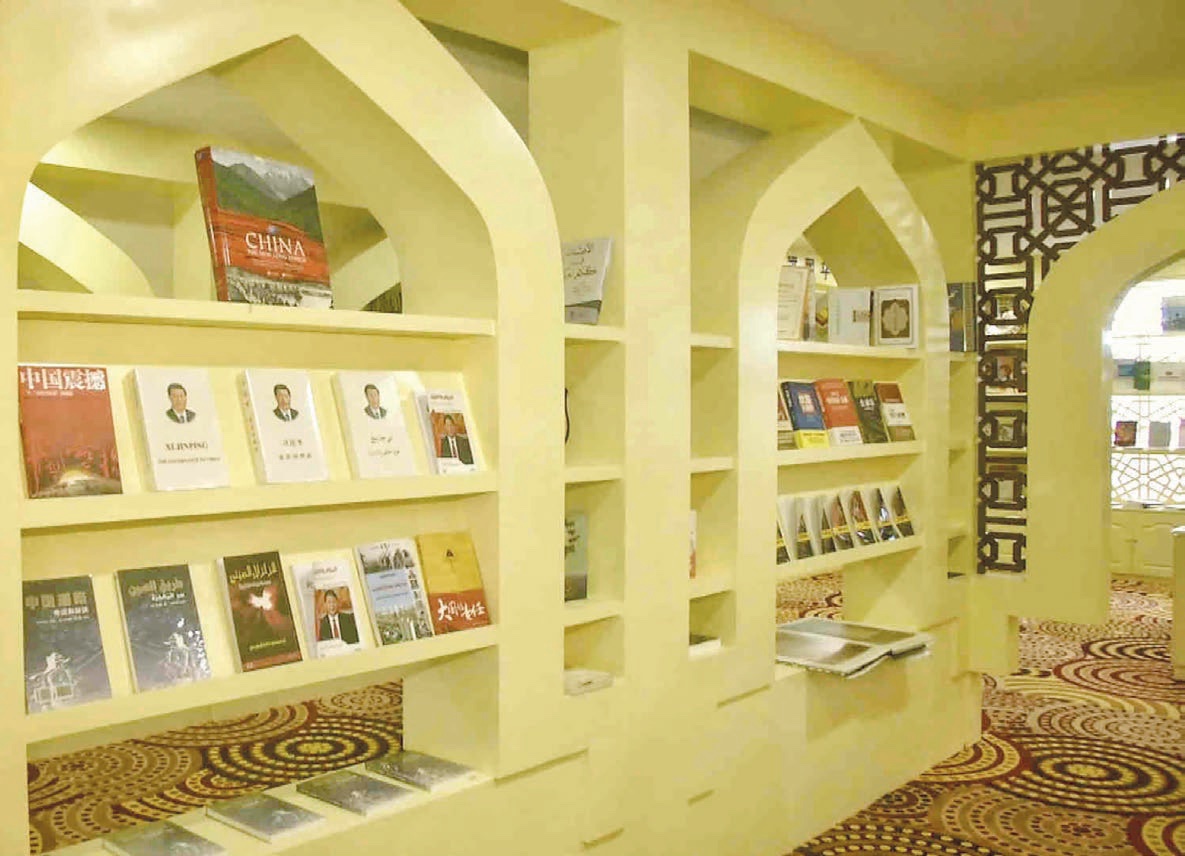
The mutual translation of Chinese and Arab classics helps to strengthen cultural understanding between the two populations. Since 2016, many Chinese books have been published in Arab countries, introducing China’s economic development, diplomatic strategy, reform and opening-up, China’s rise, China's poverty-lifting, and the BRI.
Table 3:Major Chinese books published in Arab countries
Titles of the Chinese Books
Publishers
Years of Publications
China Phenomenon: China’s Experience and the Development of Diplomatic Relations during Reform and Opening up (1990-2015)
Tripoli: Modern Writers Press
2016
The Coming Oriental Giant: Will China Rule the World?
Cairo and Damascus: Arab Writers Press
2016
Political Socialism and Market Capitalism: China’s Economic Development
Amman: Writers Academic Center
2016
China’s Rise and Energy Challenges
Amman: Writers Academic Center
2016
Sudan-China Relations: 1956-2011
Beirut: Center for Arab Unity Studies
2016
We and China: Responding to the Second Leap-Forward
Casablanca: Arab Cultural Center
2017
Development Strategy, Economic and Trade Relations between China and the United Arab Emirates
Amman: Amjad press
2017
China’s Poverty Eradication Policy: A Case Study of Algeria and China
Algiers: Banner Press
2017
Belt & Road Initiative and the Future of China Model
Ruth: Beirut Press
2018
New Journey of China’s Economic Reform
Riyadh: King’s University Press
2018
Chinese Dragon: A Global Economic Empire
Amman: Time Press
2018
Source: It is based on the open sources see (Ajang, 2021).
Through a series of foreign translation projects (such as that of Ningxia People’s Publishing House), China has promoted the publication of Chinese classics in the Arab world. The “Project of Translation of Chinese and Arab Classics”, the “Chinese Academic Translation Project”, the “Chinese Book Promotion Plan”, the “Classic China International Publishing Project”, the “Silk Road Book Project”, the “Chinese
Cultural Works Translation and Publishing Project”, and the “Contemporary Chinese Works Translation
Project” were established, which all became important platforms for the translation of classics (Bao,
2019: 140-160). For instance, Professor Wang Youyong of Shanghai International Studies University has been committed to the translation of Chinese classics into Arabic for a long time.
In recent years, he has successively translated Arabic versions of Xunzi and Liezi, which have been published and distributed in Lebanon by the Arab Thought Foundation and have had an influence in the Arab world.
Bettering the Mutual Understanding of the Mass: China-Arab Tourism Cooperation
In 2013, at least 270 thousand Chinese tourists visited the UAE for leisure and business tours; from 2005 to 2015, the number of Chinese tourists to the Emirates increased by 98% and is expected to reach 540 thousand by 2030. According to the 2014 China Luxury Tourist White Paper, Dubai has become the third-largest overseas tourism destination that attracts rich Chinese tourists. In November 2016, the UAE announced that it would grant visa-free treatment to Chinese citizens. According to the statistics of Dubai Tourist Administration, the number of Chinese tourists exceeded 764,000 in 2017, an increase of 41%. On February 24, 2019, according to statistics released by the Dubai Tourist Bureau, the number of international tourists entering Dubai overnight was 15.92 million, with the number of Chinese tourists reaching 875 thousand, an increase of 12%. China surpassed Oman and became the fourth largest tourist source market of Dubai (Xinhuanet, 2019dXinhuanet. (2019a, August 29). 364 Egyptian students who have won Chinese government scholarships are about to study in China.). Emirates is a leading passenger service provider of China, operating 38 flights to and from China every week. According to data from the Ministry of Tourism of the UAE, the number of Chinese tourists in 2019 represented about 6.04% of the total number of UAE tourists. In the first five months of 2019, the number of Chinese tourists to the UAE reached 433 thousand, an increase of 5% (about 401,000) over the same period in 2018. In the past five years, Dubai has attracted 3.06 million Chinese tourists in total.
In May 2018, the Etihad Aviation Group of the UAE signed a memorandum of understanding with the China Jiangsu Overseas Cooperation and Investment Corporation (JOSIC) to establish a strategic partnership. Accordingly, due to its investment in the China-UAE Industrial Park, Etihad Airlines of the UAE can enjoy preferential air transportation and freight prices on flights and services between China and other destinations through the Group’s network. Etihad Airlines has also become the preferred airline for all operating companies in the China-UAE Industrial Park (Netease Airlines, 2018Netease Airlines. (2018). Atihad Airlines has established a cooperative relationship with Jiangsu Overseas cooperative investment company.).
In addition to the UAE, other Gulf countries have had a significant increase in Chinese tourists. For example, since Oman signed a memorandum of understanding on tourism with China in 2006, the number of Chinese tourists to Oman has increased by more than 30% every year, next only to the UAE. Between 2013 and 2017, Oman has had a significant increase in the number of Chinese tourists.
China’s tourists to Arab countries can be divided into three categories in terms of purpose: business, Hajj, and leisure. Chinese tourists can choose their own tourist routes both online and offline.
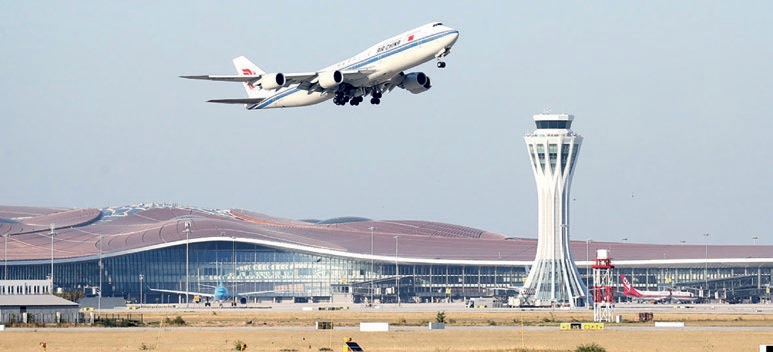
With the development of tourism in China and Egypt, which is primarily for leisure, the exchanges and cooperation between China and Egypt’s civil aviation industry are also increasing. There are two direct flights from China to Egypt (from Beijing and Guangzhou to Cairo). According to the data provided by the Egyptian Embassy in Beijing, about 150 thousand Chinese citizens visited Egypt in the first five months of 2017. During this period, Chinese tourists booked 850 thousand nights in Egyptian hotels, an increase of 116% over the same period in 2016 (Egyptian Embassy in China, 2017Egyptian Embassy in China. (2017, May 1). Chinese tourists to Egypt increased by 94% year-on-year in 2017. 199IT.). According to the 2018 Chinese Citizens’ Africa Tourism Report released by CYTS travel.com, Egypt has become one of the five most popular destinations for Chinese citizens in Africa (CYTS Travel Network, 2018CYTS Travel Network. (2018). Report on Chinese citizens’ tourism in Africa.). Egypt regards China as its main source of tourism and thus has successfully formulated projects to promote Egyptian culture in the Chinese market that has doubled the number of Chinese tourists to Egypt.
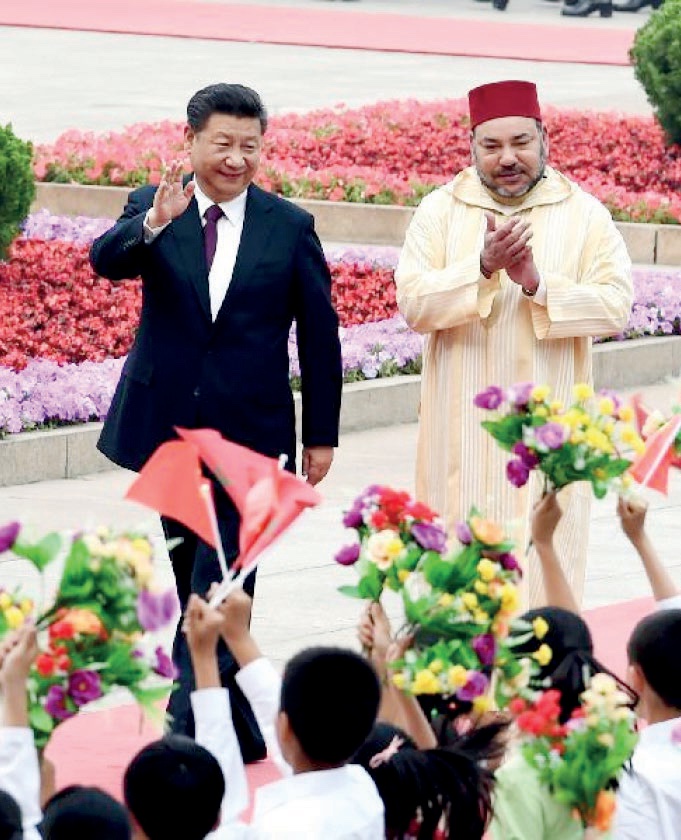
Song Yu, Secretary-General of the World Tourist Cities Federation claimed that the total number of Chinese tourists to Morocco in 2017 exceeded 100 thousand and that Morocco has become the country with the fastest growth of Chinese tourists in Africa (Xinhuanet, 2018Xinhuanet. (2018, February 2). Morocco expects to attract 500000 Chinese tourists every year by 2020.). There are many reasons for the increase in Chinese tourists to Morocco. First, with the rise of China’s national strength, the national disposable income has increased; second, Morocco promoted visa exemption for Chinese tourists during Chinese Ambassador Sun Shuzhong’s tenure; and third, in recent years, direct flights between Morocco and China have been opened, which is one of the key factors that has enhanced Morocco’s attraction to Chinese tourists.
Lebanon is particularly rich in tourism resources. On October 12, 2015, Lebanon held a tourist promotion activity for China in Beirut, its capital, to strengthen the cooperation between travel agencies of the two countries and customize tourism projects and routes for Chinese tourists. In 2018, 9,453 Chinese tourists visited Lebanon. In 2019, the number of Chinese tourists to Lebanon reached 12 thousand, an increase of 22.4%. Lebanese travel agencies had plans to receive 20 to 30 thousand Chinese tourists in 2021 if it were not COVID-19 (Xinhuanet, 2019cXinhuanet. (2019a, August 29). 364 Egyptian students who have won Chinese government scholarships are about to study in China.).
Interaction between Religious Groups: China-Arab Religious Exchanges
From the establishment of diplomatic relations between China and Egypt on May 30, 1956, to the establishment of diplomatic relations between China and Saudi Arabia on July 21, 1990, China has established diplomatic relations with all 22 member states of the Arab League. Over the years, friendly relations between China and Arab countries have been developing continuously, and religious exchanges are an indispensable part of it. In 2018, Chinese President Xi Jinping said at the opening ceremony of the eighth Ministerial Conference of CASCF, China would invite 100 Arab religious leaders to visit China for exchange with different religions (“Jointly promote China-Arab”, 2019Jointly promote China Arab strategic partnership in the new era. (2019, July 11). People’s Daily.). Religious exchanges help to enrich the cultural exchanges between China and Arab countries.
After the Arab world became an epicenter for COVID-19, the Muslim community in China responded pro-actively to the call of the Chinese government on struggling in unity against the pandemic with Arab countries. On February 2, 2020, the China Islamic Association’s website released the “Wa’z” (sermon) entitled “carry forward the fine traditions of Islam and contribute to overcoming the epidemic”, which clarified the importance and necessity of suspending collective religious activities and implementing various measures from the perspective of religious doctrines, and called on the Islamic world to carry forward the spirit of science and strengthen their faith (China News Network, 2020China News Network. (2020, February 15). Islamic circles in China: overcoming difficulties and fighting the epidemic.). The China Islamic Association took the lead in donations for the Arab world and Chinese Muslims took the initiative as well. By February 14, 2020, Islamic associations in China had donated a total of more than 86.09 million RMB to fight the pandemic (China News Network, 2020China News Network. (2020, February 15). Islamic circles in China: overcoming difficulties and fighting the epidemic.).
A united front against the pandemic has become an extension of religious exchanges between China and Arab countries.
Since the BRI was established, increasing amounts of Arab students have come to study in China. In 2008, 1,127 Chinese students were studying in Arab countries and Arab Muslims also actively aided China’s education. Since 1978, the Islamic Development Bank under the Organization of the Islamic Conference (now renamed “Organization of the Islamic Cooperation” and has 57 Member States), has provided $10 million for the construction and restoration of China’s Islamic colleges, etc. (Fjnet, 2009Fjnet. (2009, October 26). Vice President of China-Iran Association: China Arab Muslim exchanges are gradually establishing a normal mechanism.).
Although the overall design of cultural exchange between China and Arab countries has essentially been completed, there is still a long way to go to consolidate it. Especially since 2020, the scramble of the great powers’ geopolitical struggle has escalated, COVID-19 has been wreaking havoc on the world, the world economy has been sluggish, and the “fragmented” Arab world has faced challenges for cultural exchanges between China and Arab countries.
First, cultural exchanges between China and Arab countries are still subordinate to political and economic exchanges. Although China has established diplomatic relations with all Arab countries, such diplomatic ties are mainly reflected in political, economic, and trade relations. Due to the differences between ethnic and religious beliefs, the people of Arab countries have not been monolithic, making it hard for China to implement unified cultural diplomacy (Zhao, 2012: 23Zhao, H. (2012). On the “China-Arab States Cooperation Forum” promoting the demand and training of Arabic talents in Northwest China. China Informatization, (24).). Since the beginning of the 21st century, China has established relatively mature cultural exchange mechanisms with the United States, Europe, Great Britain, and the Association of South-East Asian Nations, but the institutionalization level of cultural exchange between China and Arab countries is still limited.
Second, neither China nor Arab countries give priority to each other for cultural exchanges. Both sides focus on cultural exchanges with their respective neighboring countries on the one hand, and with Europe and America on the other hand. For Arab countries, their key partners for cultural exchanges are European countries; for China, their focus in cultural exchanges are Eastern and South-Eastern Asian countries, meaning Arab countries are secondary. Therefore, China-Arab cultural exchanges should be pragmatic starting with small steps.
The Chinese government attaches great importance to Arabic education and Chinese education is also highly valued by Arab countries.
Many universities in China have successively opened Arabic majors and trained a batch of excellent Arabic talents. These talents and scholars who are proficient in Arabic have become the pioneers to promote the development of China-Arab relations. However, if China and Arab countries do not seize the opportunity to improve teaching materials, teaching methods, talent training modes, and formulate medium and long-term development plans, the outstanding talents of China and Arab countries may flow to Europe and America, resulting in the ‘brain drain’ of Chinese and Arab talents. As a result, both China and Arab countries face an asymmetric dependence on European and American countries in education. China and Arab countries have long been marginalized with the backdrop of strong Western discourse, so they still have a long way to go to prioritize cultural exchanges between each other.
Finally, cultural exchanges between China and Arab countries need to mobilize non-governmental organizations. In recent years, cultural exchanges between China and Arab countries have been more official than non-governmental, resulting in “hot official ties while aloof non-governmental communication”. There are few exchanges between local governments, non-governmental organizations, universities, think tanks, and citizens of China and Arab countries. Although tourism between China and Arab countries is grassroots, it is formidable to achieve the goal of “connecting the hearts of the people” put forward by the leaders of China and Arab countries.
The Chinese and Arab governments have taken the lead in designing several mechanisms, such as the China-Arab civilization dialogue, the China-Arab
Art Festival and cultural industry cooperation, the China-Arab Tourism Cooperation Forum, the China-Arab Radio and Television Cooperation Forum, the China-Arab University Alliance, the China-Arab Think Tank Cooperation, the China-Arab Friendship Conference, the China-Arab Women’s Cooperation Forum, the China-Arab Forum for non-governmental organizations and social organizations, the China-Arab Youth Friendship and Ambassador Project, the China-Arab city forum, and more. However, ordinary people are “stand-by”, making it difficult to align the feelings of Chinese and Arab civilians.
While these forms of cultural exchange between China and Arab countries are relatively active, sometimes the content is “vague”, meaning Chinese and Arabs are like “familiar strangers”. The purpose of cultural exchanges between China and Arab countries is to promote mutual cultural identity and promote the construction of a “community with a shared future for mankind”. In addition to the existing top-down cultural exchange mechanism, it is necessary to promote exchanges between the two sides from bottom to top, with ordinary Chinese and Arab people as the predominant players.
Next, China and Arab countries need to expand the field of cultural exchanges. So far, the cultural exchanges between China and Arab countries are mainly in the four fields of education, media, tourism, and religion.
It is also necessary to expand to the “new frontier” of cultural exchanges between China and Arab countries, such as the exchange of traditional Chinese medicine and cultural heritage protection.
Moreover, cultural exchanges between China and Arab countries need to keep pace with the times by incorporating new technologies and platforms. With the rapid development of technology, especially with the continuous emergence of social networking sites that affect people’s views and positions, China and Arab countries must pay attention to the role of the internet in non-governmental exchanges. In China and the Arab world, hundreds of millions of citizens are using the internet, including social networking sites that influence public opinion, such as microblogs, WeChat, Facebook, YouTube, etc. The number of Arab citizens using WeChat to communicate both with their Chinese friends and each other has been incresing. The Embassy of China in Egypt and other Arab countries began to build a WeChat official account while some embassies opened micro-blog accounts. New media will become a key platform for cultural exchanges between China and Arab countries in the future.
Conclusion
The friendship between the countries is expressed by the affinity between their peoples. In recent years, China and Arab countries have carried out dialogue and exchanges in the cultural field. The exchange of visits between Chinese and Arab artists has flourished, the number of exchange students has increased year by year, the project of mutual translation and publication of Chinese and Arab classics has been actively promoted, the joint translation training program has been carried out smoothly, and there are many highlights in the fields of civilization dialogue, de-radicalization cooperation, and youth and women exchanges.
First, China-Arab cultural exchanges have a profound historical accumulation. Research shows that the historical heritage of cultural exchanges between China and Arab countries is the ancient Silk Road. The Silk Road reminds both China and Arab countries of their respective glorious national histories and cultures and serves to enhance their national pride. When the Arab Empire and the Chinese Tang Empire were the most powerful in the 7th century, their interactions began. During this period, Chinese papermaking, silk, tea, and other products were introduced into the Arab world, while blue porcelain technology and galaxy science were introduced into China by the Arabs. In recent years, joint archaeological expeditions between China and Arab countries, the revival of each other’s ancient medicine, and the protection of cultural relics have all helped to promote the connection between the two people.
Second, cultural exchanges between China and Arab countries are integrated. Their cultural exchanges play a “fundamental” role in deepening and developing strategic relations and help to cultivate an affinity and friendship between the two sides. Both China and Arab countries are developing countries with underdeveloped social groups. The Chinese Ministry of Foreign Affairs, together with the Propaganda Department of the CPC Central Committee, the Ministry of Culture and Tourism, the Ministry of Education, the Xinhua News Agency, the Ministry of Health, the Friendship Association, and more than a dozen other departments, as well as provinces and cities, have promoted cultural exchanges between them. Thus, coordination and unity between different departments will be developed and overall cooperation with Arab countries within the framework of the CASCF will be developed.
Third, Cultural exchanges between China and Arab countries are divided into three different mechanisms: multilateral, collective and bilateral cooperation. Multilateral and collective cooperation is carried out under the framework of the CASCF, which has the advantage of higher efficiency because it can cover 22
Arab countries. Since the BRI was raised, China and Saudi Arabia, Egypt, the United Arab Emirates, and Algeria have formed high-level joint committees to promote cultural exchanges under bilateral relations.
Fourth, China-Arab cultural exchange needs to be pragmatic. Although the current cultural exchange mechanism between China and Arab countries has been established, led, and promoted by the government, the key to its effectiveness is in non-governmental exchanges. In other words, the government can only play a leading role while specific affairs need to rely on social and non-governmental sectors. Exchanges between ordinary people and enterprises are grassroots and fundamental. It is far from enough to rely on several cooperation mechanisms and platforms such as the CASCF to promote cultural exchanges and cooperation at the official level. China and Arab countries should respect each other’s cultural differences.
Therefore, China and Arab countries need to adhere to pragmatism and steadily promote cultural exchanges. After China put forward its BRI, Arab countries started “looking East” and China-Arab relations turned from “back-to-back” to “face-to-face”. Cultural exchanges between China and the Arab countries will enable the two forces at the two ends of the BRI to revitalize the spirit of the Old Silk Road and develop a mutually beneficial and harmonious relationship.
Visuals and tables6
Visuals
Visual 1Cultural exchange between China and Arab countries primarily relies on top-level government action. (Feng Yongbin /China Daily, 2018)
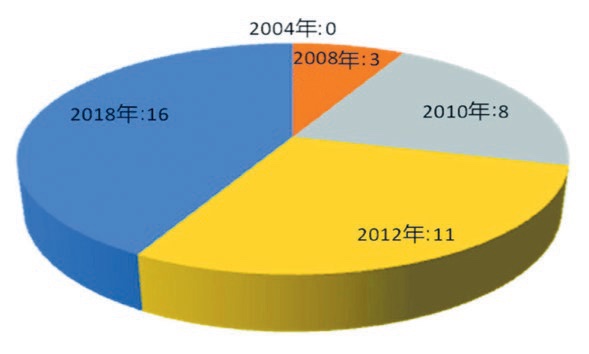
Visual 2Diagram 1: Cumulative number of Confucius Institutes and Confucius Classrooms in Arab countries from 2004 to 2018 Source: (Middle East Studies Institute of Shanghai International Studies University & Research Center of CASCF, 2018: 19).
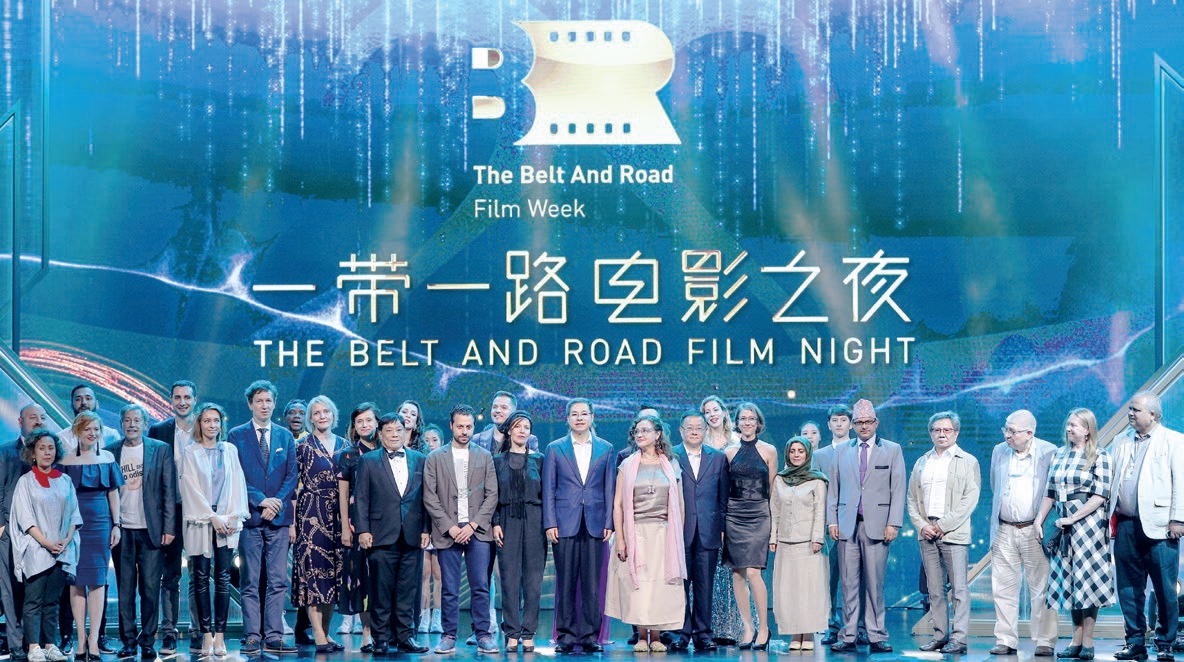
Visual 5The exchange of visits between art festivals and literary and artistic groups is an important part of the CASCF on cultural exchanges and cooperation. (CGTN, 2019)
Visual 6With the development of tourism in China and Egypt, the exchanges and cooperation between China and Egypt’s civil aviation industry are also increasing, Beijing Daxing International Airport. (Zou Hong /China Daily, 2019)
A separate funding statement is not available in the source record for this article.
Conflict of Interest
No conflict of interest was declared by the author(s).
Cite this articleAPA 7
Formatted citationAPA 7
Sun, D. & Abdrabou, A.A. (2021). The development of China-Arab cultural exchanges: Opportunities and challenges in the Belt and Road era. Belt & Road Initiative Quarterly, 2(4), 24-42.
Bao, C. (2019). Current situation, foundation and challenges of cultural exchanges between China and Arab countries. West Asia and Africa, (1), 140-160.
China and Jordan jointly build China Jordan University. (2017, December 6). Wuhan Evening News.
China has Established 550 Confucius Institutes around the World [ تأشنأ نيصلا550 (.]،٩١٠٢/٢١/٧١ ،” ملاعلا ىف سويشوفنوك دهعم2019, December 17). Retrieved from https://www.chinainarabic.org/?p=49605
Consulate General of the People’s Republic of China in Dubai. (2020, July 20). Consul General Li Xuhang attended the opening ceremony of Dubai Chinese School. Retrieved from http://dubai.chineseconsulate.org/chn/xwdt/t1799161.htm
Ding, J. & Chen, J. (2018). On cultural exchanges between China and Middle East countries since the reform and opening up. Arab World Studies, (5), 34-35.
Egyptian Embassy in China. (2017, May 1). Chinese tourists to Egypt increased by 94% year-on-year in 2017. 199IT. Retrieved from http://www.199it.com/archives/607635.html
Fjnet. (2009, October 26). Vice President of China-Iran Association: China Arab Muslim exchanges are gradually establishing a normal mechanism. Retrieved from http://www.fjnet.com/gdb/200910/t20091026_139243.htm
Gong, M, & Zhou, L. (2020, July 14). China-Arab Cooperation in combating epidemic diseases and building a community of common destiny. People’s Daily.
Guangzhou Islamic Association Network. (2015, November 8). Delegation of well-known Islamists from Arab countries visited Guangdong. Retrieved from http://www.gzislam.com/pd.jsp?id=144
Jointly promote China Arab strategic partnership in the new era. (2019, July 11). People’s Daily.
Ma, L. (2015). Comparative advantages of China’s “Silk Road strategy” and Islamic Silk Road cultural exchange. World Religious Culture, (1).
Middle East Studies Institute of Shanghai International Studies University & Research Center of CASCF. (2018). Jointly Building “Belt and Road”, and promoting the new starting point of collective cooperation between China and Arab countries: Achievements and prospects of CASCF. Retrieved from http://www.chinaarabcf.org/chn/zagx/ltdt/P020180614580301500634.pdf
Xi, J. (2018b, July 11). Work Hand in Hand to Promote the Strategic Partnership between China and Arab Countries in the New Era: Speech at the Opening Ceremony of the Eighth Ministerial Con ference of China-Arab States Cooperation Forum. People’s Daily.
Xing, L. (2019). Cultural exchange and the construction of a community with a shared future for mankind. International Issue Studies (6).
Xinhuanet. (2019b, December 17). ينيصلا سويشوفنوك دهعم نيشدت [ نيطسلف يف ةرم لوألInauguration of the Chinese Confucius Institute for the first time in Palestine]. Retrieved from http://arabic.news.cn/2019-12/17/c_138638145.htm
Zhao, H. (2012). On the “China-Arab States Cooperation Forum” promoting the demand and training of Arabic talents in Northwest China. China Informatization, (24).
Zhou, L. (2010). Foreign cultural exchanges and China’s new diplomacy. Beijing: Culture and Art Press.