Today, we see that the necessity of transitioning from Conventional Fossil Fuels (CFF: coal-oil-natural gas) to Renewable Energy Sources (RES) is at the top of the global agenda.
It has become clear that the transition is not a choice and stems from a deep concern for collective ecological destruction caused by Climate Change. Today's civilization is essentially a coal-oil-natural gas civilization. Since the First Industrial Revolution, which began about 250 years ago, the world has constantly been warming, particularly due to energy production and consumption. In other words, the ongoing lifestyle associated with the prevailing "system" across the globe has caused Global Warming leading to Climate Change and the destruction of the world’s ecosystem.
We consider that the phenomenon of Climate Change caused by Global Warming has turned into an existential threat for human beings over the past 250 years and has brought the entire global ecosystem to the brink of the "Sixth Mass Extinction" (Robinson, 2021Robinson, D. (2021). Sixth Mass Extinction of Wildlife Accelerating- Study, August 10th 2021).
In this context, today's obvious and simple fact is that even one more gram of coal and oil, and even one more cubic meter of natural gas, should no longer be used for energy production. In this context, REC has become an absolute necessity.
A question has always been at the center of the discussions on RES: can it completely replace CFF today and in the future?
I seek the answer to this question in this study. We can say with confidence that RES has the potential to replace CFF and Nuclear Energy combined with the prominence of Hydrogen Energy, which is among the RES varieties. RES is thought to have the capacity and potential to protect life on our planet from the threat of mass extinction.
RES types are divided into two groups in terms of their key characteristics. While wind, solar (PV), concentrated solar (CSP), and wave (including tides) are all classified as intermittent types, geothermal, biomass and hydrogen-based energy production methods are identified and differentiated as RES types with “base load” character. Among RES varieties, only biomass and hydrogen have the advantage of being transportable and storable.
It is worthwhile to note that although hydrogen and biomass-based energy production systems can be in operation for 7,500 to 8,000 hours a year (hence their base load character), the time that wind and solar energy-based systems can be available during the year is only 2,000 to 3,000 hours in sometimes unpredictable periods. On the other hand, it should be noted that unlike CFF and other RES types, which are defined as "primary energy sources", hydrogen must be primarily produced from other sources to be used in energy production, and in this sense, it is not a "primary" energy source. Hydrogen is defined as an “energy carrier” in the literature (IEA, n.d.IEA (t.y.).).
Climate Change and the Necessity of Transition to RES
Since the First Industrial Revolution, the earth’s ecosystem has been brought to the brink of a total collapse due to our lifestyle and the uncontrolled consumption of natural resources. One factor leading to this result is the use of CFF in energy production. Energy production from CFF, as the major cause of Global Warming by human beings, has led to Climate Change, which has turned into an existential problem today. It would be beneficial in terms of the integrity of the subject to include the findings and indicators regarding the reasons behind said obligation.
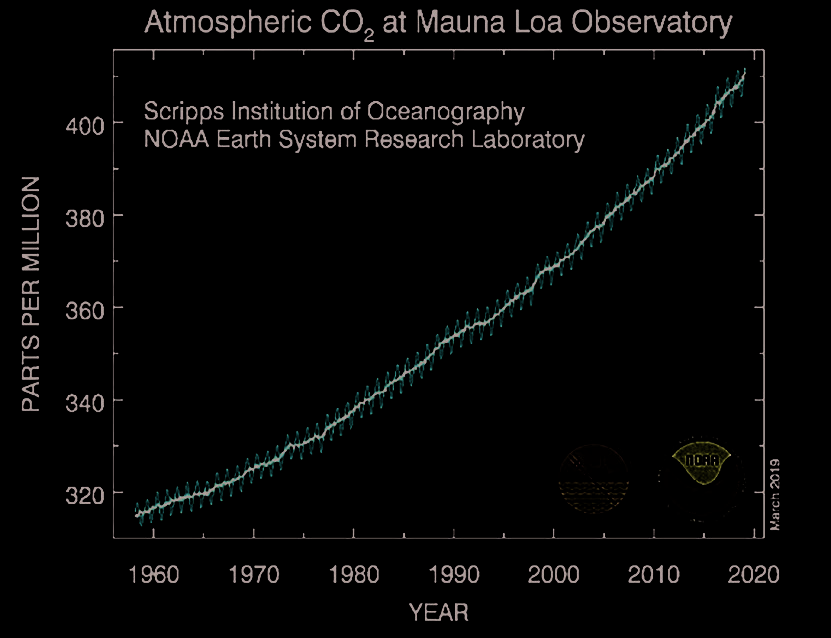
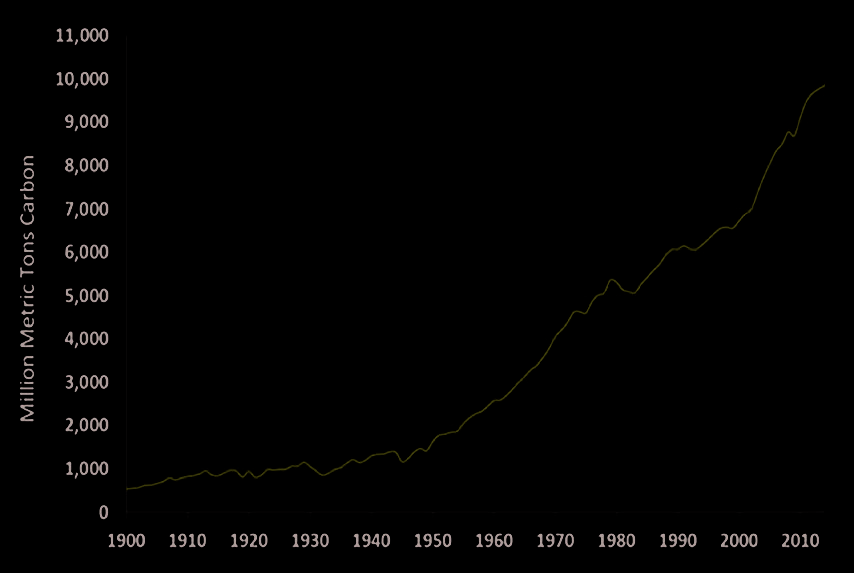
In the NOAA-sourced graphs below, the results obtained from the CO concentration measurements started in the 1950s at the Mauna Loa observatory in the Hawaiian Islands (Figure 1a and Figure 1b) are shown. Depicted in the graphs are changes over a wider time interval starting around 1750, marking the beginning of the first industrial revolution and extending until the present day. Along with the continuous increase in the CO concentration, the amount of CO released into the atmosphere is also shown (Figure 2).
According to measurements and calculations, the current CO gas in the atmosphere is approximately 3.2 trillion tons. Considering that the CO concentration, which was 280 ppm in the pre-industrial period, has reached 420 ppm today, it can be concluded that approximately 1.1 trillion CO gas, which corresponds to one-third of the said quantity, has been emitted in the last 250 years (Lindsey, 2020Lindsey, R. (2020). Climate Change: Atmospheric Carbon 0,4Dioxide.). However, it should be emphasized that there is no common agreement in the calculations based on different assumptions.
Figure 3 shows the change in concentrations of CO and other important greenhouse gases, like methane and nitrous oxide, over the 2000-year time series. It is clear that the increase due to human actions has skyrocketed since the 1700s.
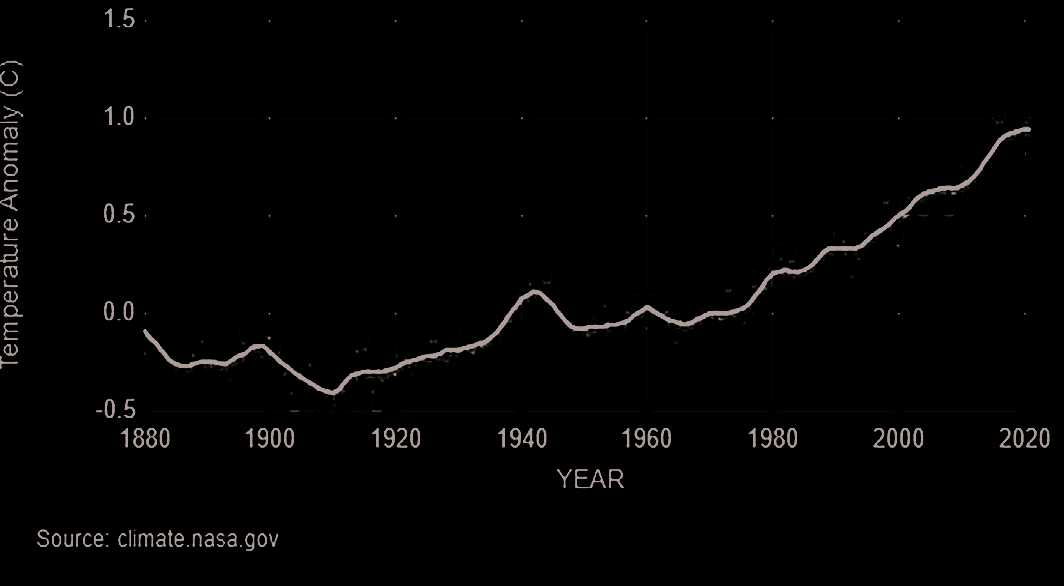
Figure 4 shows the average increase in the earth's temperature between 1880 and 2020. The y-axis on the left of the graph represents the temperature change in Celsius units. Regular measurements reveal that the earth’s temperature has increased by an average of 1.18°C between 1880 and 2020 (World of Change: Global Temperatures, n.d.World of Change: Global Temperatures, (t.y.).).
Meanwhile, only CO concentration measurements are included in the Mauna Loa observatory results. When other greenhouse gases such as methane, nitrous oxide, and HFCs are taken into account, it is remarkable to see that the total greenhouse gas concentration reached 457.0 ppm in 2018 (European Environment Agency, 2022European Environment Agency, (2022). Atmospheric greenhouse gas concentrations).
Promises and wishes listed under the headings of "Zero Carbon Emission" and “Transition to a Low Carbon Economy” were frequently repeated in the 26th UN Climate Change Conference (COP26) held in 2021. In addition, there are claims that a “Carbon Neutral” period will be started in 2050. However, the answer to the question is still open: suppose, for example, if the concentration of CO in the atmosphere reaches 500ppm by 2040, how can we ever know that the "Point of No Return" has not been passed?
The looming danger is that Permafrost (permanently frozen lands, mostly surrounding the Arctic Ocean and exceeding 20.0 million square kilometers) is rapidly thawing. With the accelerating thaw process, tens of billions of tons of methane gas captive within the frozen soil layers will be released into the atmosphere, along with viruses and bacteria that have been hibernating for thousands of years. Nor are we immune to these disease vectors, some of which are perhaps more dangerous than COVID-19. A scenario as such is exactly what “the Point of No Return” means.
Such consequences of Climate Change, which are likely to emerge in the short term, show that instead of ineffective strategies such as Zero Emissions-based formulations that fall short against the current existential threat and vague promises that are of no use, the methods and applications aiming at "Negative Carbon Emission/ Carbon Negative" targets must be implemented with no delay at the global scale. It is mandatory to capture and permanently store more greenhouse gases from the atmosphere than those we emit. So how can this goal be achieved? The answer is a subject of study in itself and should be dealt with separately.
Why Hydrogen Energy?
After giving place to the picture revealed by global warming and the related Climate Change threat in the above section, it should be underlined that the transition to RES is an urgent and overwhelming necessity.
Among the RES types, hydrogen energy has prominent importance and privilege. Backed up by hydrogen-based solutions, RES will be able to replace not only CFF but also nuclear energy completely. However, it is useful to underline the following point: no type of RES is a “silver bullet” (final solution) on its own. In other words, we cannot claim that hydrogen alone or, for example, solar energy (PV or condensed solar) alone can be sufficient to solve the world's energy problem.
However, it would be useful to point out the unique advantages of hydrogen energy compared to other RES types.
The common feature of RES types, including hydrogen, and the major advantage in terms of environmental impact is that they have a "Clean and Inexhaustible" character. Unlike others, hydrogen must be produced indirectly from other sources. Therefore, as mentioned above, hydrogen is classified as an “energy carrier” (IEA, n.d.IEA (t.y.).).
Compared to hydrogen, which has the feature of “Base Load” (7,000+ hours of operation/availability per year), solar (PV) and wind energies (WES) are intermittent because of the limited availability of wind and sunlight. In much the same way as hydrogen, it is worth noting that biomass and geothermal are of base-load character, too. It is obvious that limited and indeterminate (in the case of wind) features are a significant disadvantage.
Establishing an energy transmission network comprising only PV and WES, albeit popular on a global scale, is not possible due to technical constraints, although the established power capacity of both PV and WES is steadily rising. Wind and solar sources are available for use for only about 3,000 hours throughout the year. While the availability of the resource can be predicted to some extent for the PV, it is not possible to make such an estimate for the WES. Local climatic anomalies make the WES estimates uncertain.
Transforming WES and PV into relatively safe sources in terms of energy supply necessitates energy storage. If the energy (electricity) produced in WES and PV facilities is not stored, it must be consumed as soon as it is generated.
With storage, for example, to double the total period of availability to about 6,000 hours of operation in a year, one needs to increase the established capacity by two. A “battery farm” facility should also be established where the electricity generated will be stored.
In this study, we do not mention the increase in the establishment cost of WES and PV energy plants equipped with battery farms aiming to transform WES and PV plants into base load power generation units. This is because we do not consider cost to be the main determining parameter and its minimization in the background is another issue. We give some definitions of metrics regarding the cost factor in the following section.
Another popular type that should be mentioned when energy storage is discussed is Li-Ion batteries.
At this point, the following determination should be underlined: energy storage tools and technologies are still in their infancy. We are still far from the stage of developing these into mature and competent solutions.
Moreover, although wind and sun are plentiful and free, the same is not true for Lithium. Here, special emphasis is placed on Lithium, as it is the main element on which the most frequently cited solutions for energy storage are based. Although proven and probable lithium reserves are far above the current production level and global demand, there is no expectation of a shortage in supply and a jump in prices accordingly in the near and medium-term. It is believed that dependence on a limited number of suppliers may be a potential source of problems (National Minerals Information Center, n.d; Garside, 2022Garside, M. (2022). Leading lithium producing countries worldwide 2021, Statista.).
However, it should be noted that there are intensive studies on many solutions (Sodium-Sulfur, Aluminum-Ion, etc.) as an alternative to the Li-Ion battery type. One of the disadvantages of wind and sun is that the energy production based on them is limited to certain areas with favorable conditions for wind and sunlight. For example, establishing wind and PV energy generation facilities in areas where the wind blows 3,000+ hours per year or where the exposure time to daylight is at this minimum will be appropriate for "process efficiency".
Brief Review of Geothermal and Biomass Compared to Hydrogen
Although Geothermal-based power generation facilities also have a base load function, it should be noted that the areas where the required geothermal resources are available are limited to areas with tectonic risks, where the earth's crust is broken by faults and magma is close to the earth's surface. Although the resource is practically unlimited, the limited geothermal fields are their own disadvantage.
In contrast, when it comes to considering biomass, it stands out as a type of RES that is clean, inexhaustible, portable, storable, and can be found in every area except deserts.
Biomass power plants (BES) can be established to form a distributed system topology as a network of facilities featuring different capacities with base load function over a geographical area. An important and distinctive advantage of BES is that it has the potential to play an integrative role in the solutions of energy and environmental problems as an effective tool in the disposal of organic wastes generated in urban areas. There is also the possibility of producing biofuels from biomass to replace fossil fuels. In terms of the main theme of our study, it should be noted that biomass can also be used as a hydrogen source. We discuss this function of biomass below.
The Importance and Privilege of Hydrogen Energy
Hydrogen is a type of RES with all the advantages and privileges of biomass mentioned above. Using hydrogen as an energy and fuel source, RES will be able to replace CFF completely. This possibility can only be realized with the prominence of hydrogen and biomass.
The target set for RES to replace CFF can also be expressed as “Carbon Zero”/“Net Zero Carbon Emission”. However, the "Carbon Zero" stage is far from the final stage in the fight against Climate Change. The primary target is to rapidly implement “Negative Carbon Emission”/“Negative Carbon” practices so they become widespread globally.
Unlike biomass, since hydrogen is not a direct (primary) energy source, it must be produced from various sources. One of the sources of hydrogen production is biomass. When hydrogen is used for heat and electricity generation or as a fuel in vehicles, only water vapor is released into the atmosphere with absolutely no adverse effect on the natural environment.
There is a "braking distance"; a sort of resistance in the transition from CFF to RES. The transition will not be overnight, from evening to morning. There is inertia working against the changes that need to be realized in a short time frame. Although the players and decision-makers in the energy sector are not against RES, they intend to continue using fossil fuels as long as possible. A common view is to give the use of natural gas (recognized as a lesser evil) a weightier place in the current energy equation. At this point, we can suggest two propositions: 1. As emphasized in the Introduction, even 1.0 cubic meter of CO or any other greenhouse gas should not be released into the atmosphere from now on.
2. It is essential and imperative to develop methods and practices to have natural gas turned into a RES variety and add it to the spectrum of RES. As a concrete recommendation, we may well use natural gas as a source of hydrogen and pure carbon.
It can be foreseen that the “ecological civilization", which will replace the “Old World Order", will be a hydrogen-carbon age. Namely: Natural gas is mostly methane. Decomposition of methane through the pyrolysis process (introduced in a subsequent part of this study) yields carbon and hydrogen, basic components of methane. As a carbon-zero fuel, Hydrogen can be used to generate electricity and heat, while pure carbon can be used to produce advanced materials. In this way, the carbon component of natural gas, which would otherwise be released into the atmosphere when natural gas is directly combusted, will be permanently stored in carbonmade materials while still indirectly making use of natural gas as a source of energy (Meier et al., 2013Meier, D., van de Beld, B., Bridgwater, A, V., Elliott, D. C., Oasmaa, A., Preto, F. (2013). Renewable and Sustainable Energy Reviews,Volume 20.).
Thanks to the natural gas being "tamed" and transitioned to RES, economic concerns that existing natural gas and "Gas Hydrate" reserves will be wasted are also eliminated.
Hydrogen Production Methods
Methane (hence natural gas, gas hydrates, shale gas), biomass, and water are the sources from which hydrogen can be produced.
Hydrogen and carbon can be obtained from natural gas through several methods. One of the methods in widespread use is the “methane reformation".
Steam-Methane Reformation
As a proven method, which dates to 80 years ago, it is the most common hydrogen production technology today. For example, 95 % of the current hydrogen production in the USA is provided through this method from natural gas (Hydrogen and Fuel Cell Technologies Office, n.d.Hydrogen and Fuel Cell Technologies Office, (t.y.), Hydrogen Production: Natural Gas Reforming.). The method is as follows: The methane is processed with hot steam in the temperature range of 700-1000 °C. Carbon monoxide (CO) and hydrogen (H ) are released at the end of the process, during which some catalysts are also used under a pressure of 3.0 to 25.0 bar.
The process expressed with a simple chemical equation is as follows: CH + H O + heat → CO + 3H (Since energy is consumed to evaporate water, the reaction absorbs heat - “endothermic reaction”)
The chemical reaction in the second stage of the process is called “water - gas exchange”: CO + H O → CO + H + a small amount of heat While more hydrogen is produced in the second stage, some CO is also released. The output includes some heat released during the reaction (exothermic reaction). The method can also be applied to methanol and other shortchain hydrocarbons. The key point is that CO and CO formation continue to be a problem in the context of global warming in connection with this method.
Although it is an old and proven method, methane reformation is still being developed today, and research is continuing to find more suitable catalysts to be used in reactions (Chen et al. 2020Chen, L., Qi, Z., Zhang, S., Su, J., & Somorjai, G. A. (2020). Catalytic Hydrogen Production from Methane: A Review on Recent Progress and Prospect. Catalysts, 10(8), 858. MDPI AG.). With this method, CO is released as a by-product. In today's world, although it is the conventional and widely used method, steam reform is a method that can no longer be considered favorable under the conditions of Climate Change and "Carbon Negative" methods and applications.
Partial Combustion-Gasification
Another method for hydrogen production from methane is Partial Combustion Gasification. Besides methane, heavy oil, different petroleum derivatives, and biomass can also be used as raw materials (Zhang & Ruan, 2019Zhang, Y., Ruan, R. (2019). Gasification Technologies and Their Energy Potentials, in Sustainable Resource Recovery and Zero Waste Approaches.). Gasification is the partial combustion of carbon-containing organic material (in this specific case, methane) under conditions where controlled amounts of water vapor and oxygen are supplied to the reactor where the process occurs. The products released at the end of the process are H , CO, and CO. Hydrogen sulfide (H S) in minor amounts can also be an output product depending on the chemical composition of the input material. In the case of methane, the chemical reactions involved are: CH + O → CO + 2H CH + 2O → CO + 2H O CH + H O (in the form of hot vapor) → CO + 3H The gasification process is endothermic (absorbing heat). In this process, the final products are CO, CO and H . The volumetric ratio of H and CO products released in the steam-methane reformation process is 3:1, while this ratio is 1:1 in gasification (Syed, 2021Syed, Mahin B. (2021). Chapter 6 - Technologies for renewable hydrogen production, Bioenergy Resources and Technologies, Academic Press, Pages 157-198.).
There are also gasification methods in which catalysts reduce the process temperature between 1300 and 1500 °C. As a result, the release of CO and CO gases as by-products does not make these methods positive regarding Global Warming. However, when these methods were used to produce H in the distant past, the phenomenon of Climate Change was not a decisive criterion, as it is today.
Hydrogen From Biomass
Biomass and H have remarkably comparable properties in terms of their advantages and flexibility. Both types of RES have the advantage of being portable and storable. Both are independent of the location constraint applicable to WES and PV plants. Biomass is a source of H and carbon and a primary energy source due to its organic origin and its high content of H and carbon.
A wide range of products, from organic-based urban solid wastes, sewage sludge, and scrap vehicle tires to “energy crops” and agricultural and forestry product wastes, are included in the definition of biomass.
Gasification provides the decomposition of biomass into its two components, CO and H (SynGas), through a thermo-chemical process. The process occurs in a gasifier/gasification reactor in a high-pressure environment with an ambient temperature of 800-1000°C. SynGas (mainly CO + H ) obtained here can also be used, in the next step, via the Fischer-Tropsch process, to produce biofuels (biodiesel, bio-gasoline, etc.) and many other materials currently produced in a typical petrochemical plant. Meanwhile, it is known that the plasma gasification method, which is an innovative and newly emerging technology, can also be used in H production (Favas et al., 2017Favas, J., Monteiro, E., Rouboa, A. (2017). Hydrogen production using plasma gasification with steam injection, International Journal of Hydrogen Energy, Volume 42, Issue 16.).
The Relationship Between Hydrogen Production and Climate Change
Hydrogen is a basic ingredient used for various purposes in many industries. In this study, however, the feature of hydrogen as an energy source, as a type of RES that will eventually replace CFF, is taken as the basis (Kalamaras & Efstathiou, 2013Kalamaras, C. M., Efstathiou, A. M. (2013). "Hydrogen Production Technologies: Current State and Future Developments", Conference Papers in Science.).
In the days when the CFF-based energy paradigm was not questioned and the Climate Change phenomenon did not pose a vital threat at today's level, it was seen that hydrogen production through the methods described in the previous section was not critical regarding the by-products such as CO and CO released into the atmosphere at the end of the process.
However, today, Climate Change has become the main criterion and the dominant parameter in all investment and business plans in all fields of activity, especially in the energy sector.
Decarbonized/Clean Hydrogen Production
What should be the means of achieving hydrogen production in such a way as to enable the transition to a "hydrogen economy"?
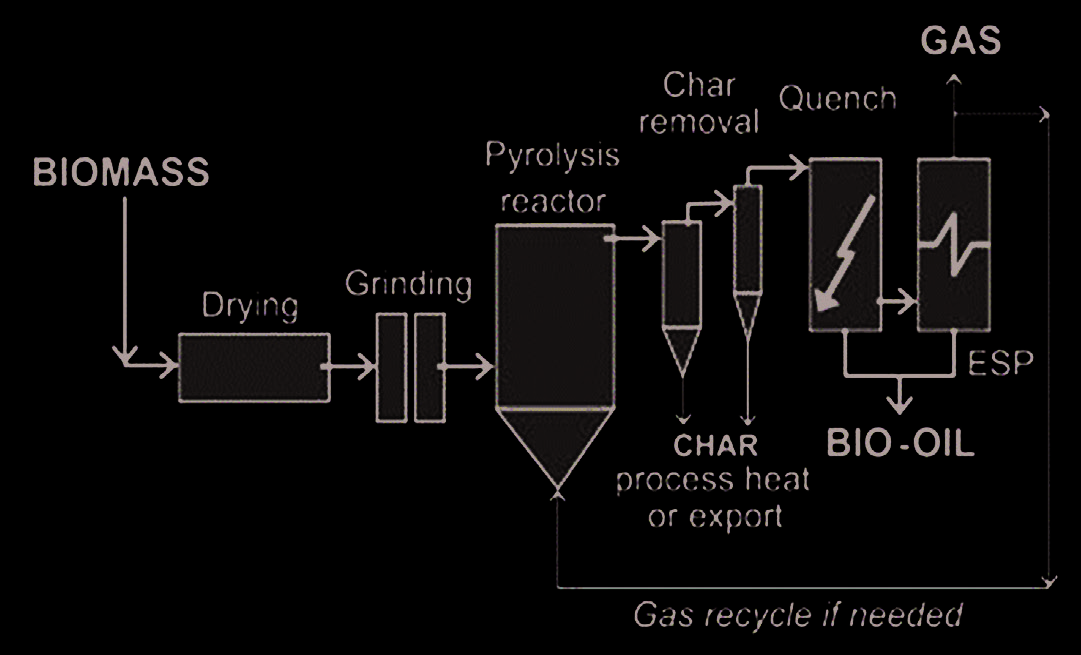
The decomposition of natural gas into carbon and hydrogen components by subjecting it to pyrolysis seems to be a valid method for clean hydrogen production. Pyrolysis decomposes organic materials such as biomass into simpler components by heat treatment in an oxygen-free environment. Products of the pyrolysis process include volatile short-chain gases and pyrolysis oil and coke (Basu, 2018Basu, P. (2018). Biomass Gasification, Pyrolysis and Torrefaction (Third Edition), ISBN 9780128129920.).
Depending on the intended end product, the raw material can be pyrolyzed at high temperatures (800 °C and above) for a relatively short time (for pyrolysis oil production) or a relatively low temperature (500 °C and for a long time for charcoal production). When it comes to methane/natural gas, the final products are hydrogen and carbon.
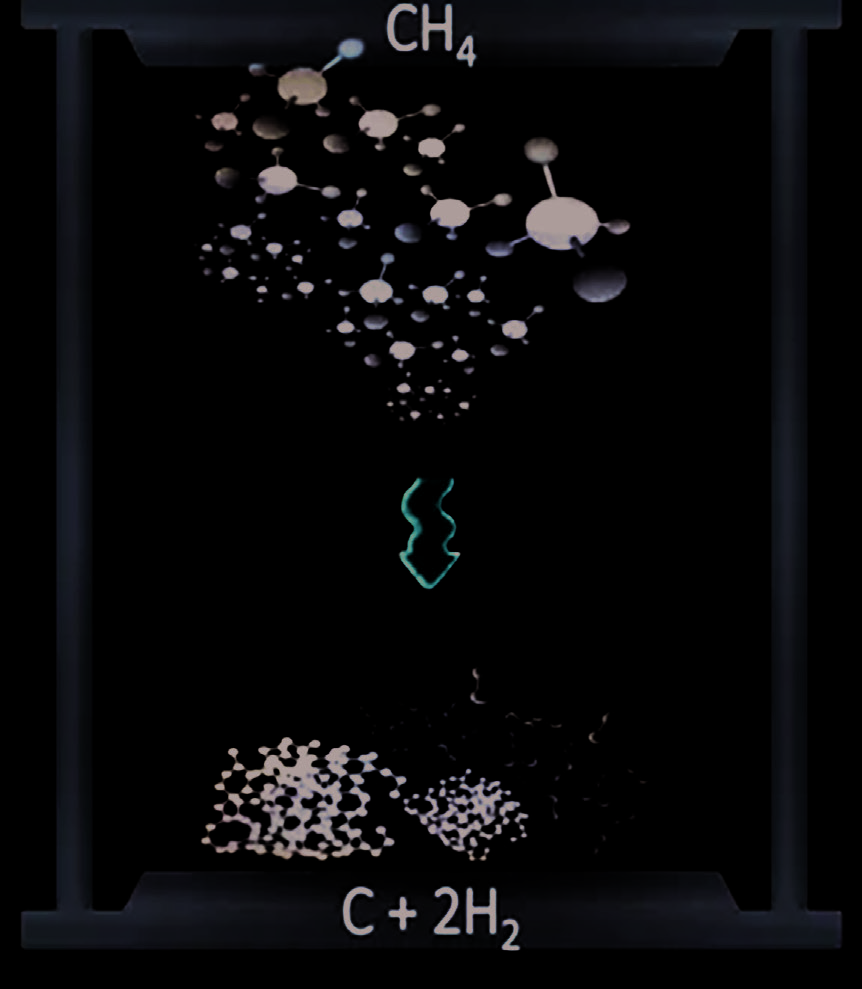
In Figure 5, the “decarbonization” of natural gas is expressed visually. The stages of the pyrolysis process in Figure 6 are a simplified process flow chart in which biomass is generally taken as raw material.
The conversion of natural gas into carbon and hydrogen through the pyrolysis process can also be described as rendering natural gas environmentally friendly through “decarbonization”. Thus, natural gas passes through the ranks of RES indirectly from the ranks of CFF, where it is currently present.
While the hydrogen obtained from the “clean” natural gas through heat treatment (pyrolysis) will be used as raw material and fuel in electricity production, carbon will be used to produce hundreds of advanced materials. As the simplest and most common use, using "black carbon/coke" as a soil improver is possible. Graphene, new generation PV panels, carbon-based semiconductors, and carbon-based building materials are a few of the many uses. In this way, the carbon contained within the chemical structure of natural gas will be permanently captured and stored.
Is that much just explained above enough to avert the "Sixth Mass Extinction"? The short and definitive answer: no. It is also imperative to reduce CO and other greenhouse gases, which have been accumulated in the atmosphere continuously and in increasing amounts over time since the First Industrial Revolution.
It is necessary to apply "Carbon Negative/Negative Carbon Emission" methods on a global scale to reduce the CO and other greenhouse gases already stored in the atmosphere to protect the ecosystem and life on our planet.
It is worthwhile putting a special emphasis on natural gas-related issues. A common view is that natural gas may still be considered a part of future energy strategies, as its carbon footprint is smaller (half or even less) than coal. Due to natural gas as fuel in energy conversion power plants, capturing and storing the existing CO in the flue gas (Carbon Capture and Storage - CCS) is a method frequently mentioned and advocated by many experts. However, it is possible to evaluate the two options together when this is achieved.
The storage of CO gas captured in a natural gas-based power plant in the deep layers of the earth's crust/lithosphere has been the most frequently discussed solution. If the natural gas cycle power plant were located in the Scandinavian Peninsula, a tectonically stable part of the lithosphere, it could be considered a storage solution.
However, this solution (CCS), for example, for a power plant placed in the Aegean Region of Turkey, which is the western gate of the New Silk Road, such a CCS is definitely out of the question. The Anatolian Peninsula, especially Western Anatolia, is faulty and poses high tectonic risks. In a land fragmented with faults, it is impossible to store CO in the stagnant ground layers. As a controversial and very questionable solution: a special pipeline between Aegean Region and the Black Sea Coast can be used to transport the captured CO to deploy in the bottom layers of the Black Sea. This option is fraught with unforeseen risks. So, this is not an option at all, either.
If the CO pipeline heads south towards the Mediterranean, the 4,700-meter-deep Rhodes Trench may also be a site for deployment. However, such a proposal would be a null and void idea. We can conclude that any region where tectonic risks exist cannot be considered a solution.
We point out that the "pyrolysis" method (Schneider et al., 2020Schneider, S., Bajohr, S., Graf, F., Kolb, T. (2020). State of the Art of Hydrogen Production via Pyrolysis of Natural Gas.). has special and primary importance in producing hydrogen from natural gas. In the transition period from CFF to RES, coal seems to be the most easily dispensable type of CFF in the relatively short term. On the other hand, the most resilient CFF type seems to be natural gas. Russia will be the country that will suffer the most from this transformation in the transition from natural gas to alternative fuels. However, it is remarkable that Russia has plans to transition to hydrogen energy (Sharma, 2021Sharma, T. (2021). Russia is preparing for a hydrogen energy future, Mint.).
A striking example marking the tendency to transition to hydrogen is the policy recently adopted by the Russian Government and energy giants of Russia. Having made accurate determinations about the future role of hydrogen energy, Rosatom and Gazprom decided to act jointly to build an energy facility based on hydrogen on Sakhalin Island to the north of Japan (Communications Department of ROSATOM, 2021Communications Department of ROSATOM (2021). Sakhalin Region, ROSATOM and Gazprom Cooperate in Hydrogen Energy.).
A significant development concerning Turkey is that Rosatom, which is building a nuclear power plant in Mersin Akkuyu, and Gazprom, which supplies a large amount of natural gas to Turkey, have formed a solution based on hydrogen energy. This occasion should be sufficient to give an adequate and convincing idea of the direction of current trends in the global energy sector.
Without a doubt, hydrogen is a candidate to be the primary energy source of the future. The main argument in the focus of this study is that by implementing energy policies based on RES, which emphasizes hydrogen (an endless energy source in practice), there will be no need for CFF or even nuclear energy. The importance of hydrogen stems from the fact that it can be used as a fuel and be a source of electricity and heat.
Method
Thanks to hydrogen production from pure water or seawater, hydrogen can become an inexhaustible resource. Many studies are underway to eliminate technical problems such as the cost barrier. It is predicted that using an electrolysis method for hydrogen production will become extremely common (FuelCellWorks, 2022FuelCellWorks, (2022). Electrolysis of Sea Water Could Provide a New Boost for Hydrogen as an Energy Source.).
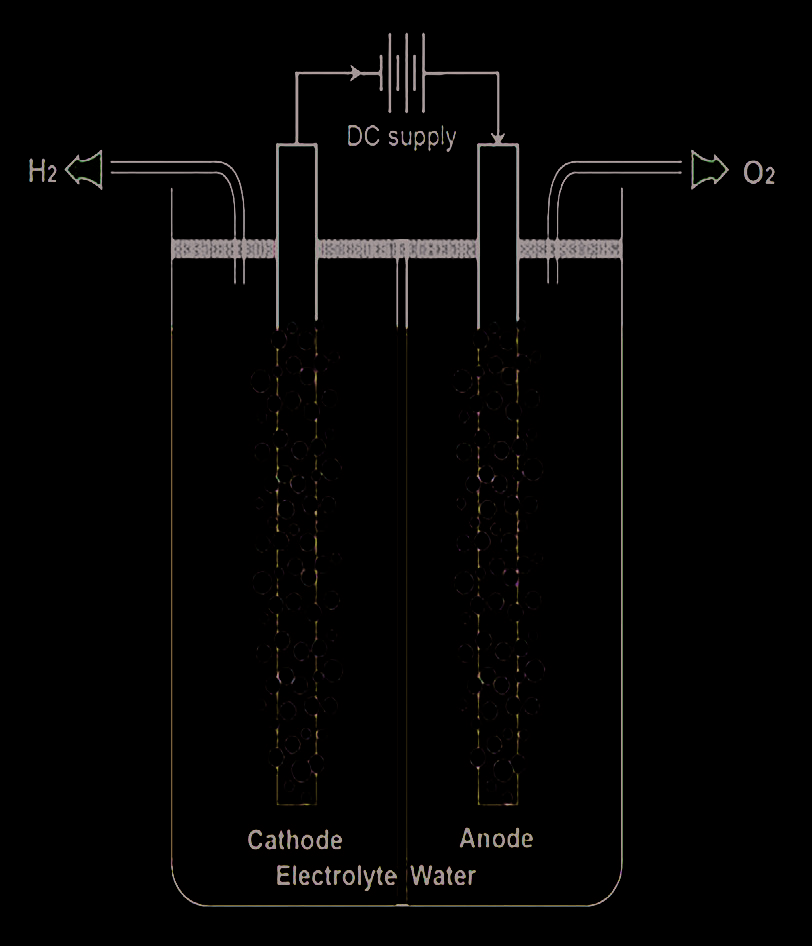
Electrolysis is the process of decomposing water into its components comprising hydrogen and oxygen by applying a certain direct current (DC) voltage in an electrolysis cell containing water. The oxygen (anion) is ionized under direct current voltage and is collected in the positively charged anode conductor. The positive hydrogen ions (cation) pass into the gas phase around the negatively charged cathode conductor.
A very simplified electrolysis scheme is shown in Figure 7.
Using intermittent type RES such as wind (WES) and solar (PV) energies as an energy source in the electrolysis process stands before us as a frequently mentioned and discussed issue. The hydrogen produced in this way is called “Green Hydrogen” in the literature. While electricity is already produced in WES and PV facilities, why should we use the energy for hydrogen production by adding an extra step to the supply chain?
Answers that immediately come to mind: using hydrogen, an energy source that can be stored, transported, and used as fuel, will be obtained. Hydrogen is an energy carrier that can easily replace natural gas, which is almost described as “clean”, as many energy experts argue. For example, hydrogen can be transported over existing natural gas transmission lines.
However, wouldn't Green Hydrogen production add another link to the supply chain, possibly bringing additional technical problems and increasing costs? Although this question may seem appropriate at first glance, it is useful to look at the issue of costs from a different perspective. However, before this topic, it is worth mentioning two issues that are Turkey's only advantage.
A Source of Hydrogen: Hydrogen Sulfide (H₂S) in The Black Sea
The Black Sea, which has the longest coastline and the largest Exclusive Economic Area in Turkey, is a major source of H S within seawater because of its formation's unique factors and processes. Due to this feature, the Black Sea has an unmatched advantage and privilege as a hydrogen source compared to other world seas (Demirbas, 2009Demirbas, A. (2009) Hydrogen Sulfide from the Black Sea for Hydrogen Production, Energy Sources, Part A: Recovery, Utilization, and Environmental Effects, 31:20, 1866-1872.; Yüksel et al., 2021bYüksel, S., Mikhaylov, A., Ubay, G. G., & Uyeh, D. D. (2021b). The role of hydrogen in the Black Sea for the future energy supply security of Turkey.).
In the deep-water layers of the Black Sea, which has an isolated inland sea feature, the H S formation process has been continuing for approximately 7,500 years in the Black Sea, which was formed 9,000 years ago due to the decomposition of organic materials in an oxygen-free environment. We want to point out that the production of H from H S can be accomplished more easily and with a lower energy budget than water, which is an almost unlimited resource. Therefore, the Black Sea is a hydrogen source due to the formation of H S (Haklidir & Kapkin, 2005Haklidir, Mehmet & Kapkin, Şule (2005). Black Sea, A Hydrogen Source.; Baykara et al. 2007Baykara, S. Z., Figen, E. H., Kale, A., Veziroglu, T. N. (2007). Hydrogen from hydrogen sulphide in Black Sea, International Journal of Hydrogen Energy, Volume 32, Issue 9, Pages 1246- 1250.).
As a result of various field studies and measurements, it is calculated that there are 4.6 billion tons of H S at the bottom of the Black Sea (Volkov & Neretin, 2007Volkov, I.I., Neretin, L.N. (2007). Hydrogen Sulfide in the Black Sea. In: Kostianoy, A.G., Kosarev, A.N. (eds) The Black Sea Environment. The Handbook of Environmental Chemistry, vol 5Q. Springer, Berlin, Heidelberg.; Demirbas, 2009Demirbas, A. (2009) Hydrogen Sulfide from the Black Sea for Hydrogen Production, Energy Sources, Part A: Recovery, Utilization, and Environmental Effects, 31:20, 1866-1872.). The water mass in the Black Sea is 90% oxygen-free and contains H S. Scientists state that around ten thousand tons of H S are formed in the Black Sea every day (Baykara et al. 2007Baykara, S. Z., Figen, E. H., Kale, A., Veziroglu, T. N. (2007). Hydrogen from hydrogen sulphide in Black Sea, International Journal of Hydrogen Energy, Volume 32, Issue 9, Pages 1246- 1250.).
In the meantime, we would like to draw attention to the fact that H S, which is highly toxic, poses an increasing environmental threat in the Black Sea. H S. The amount, which is increasing day by day, is rapidly turning the Black Sea into a dead sea area. The water body suitable for life in the Black Sea (the upper layer at a depth of 90 to 200 meters from the surface) decreased by 40% between 1955 and 2015 is alarming (University of Liège. 2016University of Liège (2016). The Black Sea has lost more than a third of its habitable volume. ScienceDaily.). Hydrogen production from a toxic pollutant, H S, will provide a valuable energy source and have a positive environmental impact.
In the production of H from H S, "thermal decomposition/pyrolysis" is performed at a processing temperature of 800-1000°C (Demirbas, 2009Demirbas, A. (2009) Hydrogen Sulfide from the Black Sea for Hydrogen Production, Energy Sources, Part A: Recovery, Utilization, and Environmental Effects, 31:20, 1866-1872.).
In the Black Sea, an environmental disaster, which is inevitable in case of inaction, is prevented, while at the same time, hydrogen production, which is the energy source of the future, creates an area of cooperation among the countries surrounding the Black Sea.
Novel Hydrogen—Sodium Boron Hydride (NaBH₄) Based Technologies
Like every country, Turkey has to use its unique advantages for a competitive advantage. Turkey has more than 70% of the proven boron reserves globally. NaBH is a material that enables brand new hydrogen fuel cell designs and can be a hydrogen carrier. Developing H —NaBH based fuel cells is a challenge for Turkey.
The development of fuel cells based on NaBH is a candidate to play an important role, especially in increasing the adoption rate of vehicles based on H energy across the world (Wee et al., 2006Wee, Jung-Ho, Lee, Kwan-Young & Kim S. H. (2006). Sodium borohydride as the hydrogen supplier for proton exchange membrane fuel cell systems, Fuel Processing Technology, Volume 87, Issue 9, Pages 811-819.). So, there is an important area of cooperation in the Belt and Road Initiative context in this regard.
Transporting Hydrogen
Naturally, the first thing that comes to mind to transport hydrogen is the use of existing natural gas pipelines. It is focused on hydrogen and natural gas transportation, which will gradually be blended at a certain rate via natural gas transmission lines. Of course, this scenario can be valid, assuming that the hydrogen will be converted into energy at the point of use, far distant from the source from which it is produced.
As in the transportation of natural gas, hydrogen transportation by liquefaction is also not a suitable choice from a technical point of view due to unnecessarily high costs and the necessity of keeping it in very thick-walled tubes/pressure vessels. This is because the hydrogen molecule can pass through almost any material used as the wall of the container. The most suitable method would be to deliver the hydrogen compressed under high pressure and still in gaseous form via existing transmission pipes.
Besides NaBH , experts state in the literature that ammonia (NH ) is a hydrogen carrier substance. Saudi ARAMCO and ENEOS of Japan agreed to establish a hydrogen and ammonia-based supply chain (Sampson, 2021Sampson, J. (2021) ENEOS, Saudi Aramco to develop blue hydrogen and blue ammonia supply chains, H View.). Before this agreement, ARAMCO exported the first batch of 40 tons of ammonia to Japan (Saudi Arabian Oil Co., 2020Saudi Arabian Oil Co. (2020). World’s first blue ammonia shipment opens new route to a sustainable future.). It is remarkable that Saudi Arabia, rich in oil and gas, aims to establish a facility to produce and store hydrogen with an investment of 5.0 billion dollars in the city of Neom, which it plans to establish on the Red Sea coast. They also aim to operate this facility with RES (The Japan Times, 2020The Japan Times (2020). Saudi Arabia sends blue ammonia green fuel to Japan in world first).
In addition to using existing pipelines or chemicals for hydrogen transport, there is another valid option: transporting electricity to be produced from hydrogen instead of hydrogen itself.
Electrification of Hydrogen
With the transition to RES, the current structure of the energy transmission and distribution network and how it should evolve into a topological structure (network) in the future should also be emphasized. It is known that the existing national networks are not particularly suitable for the connection of WES and PV, which are intermittent-featured RES types.
As a solution, networks to accommodate WPPs and SPPs should comprise micro-grids locally with DC or HVDC (High Voltage Direct Current) arteries connecting them on a wider geographical scale. In the next stage, establishing a transcontinental and even transoceanic network (a global-scale Super-Grid), where long-distance HVDC lines interconnect national networks, may be the subject of discussion. It is necessary to mention a current trend closely related to the DC Grid issue, which is emerging today and will form the upper floor of national interconnected systems: electrification.
At a conference in New Delhi in July 2019, IEA executive committee director Dr. Fatih Birol stated that electrification will shape the future (CEEW, 2019CEEW (2019) Electrification will shape the future: Dr Fatih Birol at Energy Horizons).
Instead of transferring the hydrogen to be obtained from natural gas or water electrolysis by the pyrolysis method long distances via existing or newly constructed pipelines, it seems to be a reasonable solution to transform the energy in the form of electricity into electrical energy in the cycle plants established at the location where they are produced and deliver the energy in the form of electricity to the end consumer via DC/ HVDC lines.
The electricity to be produced in hydrogen power plants, for example, can provide the energy required for heat pump systems to be installed for district heating-cooling in urban areas. It is in this context that the electrification of hydrogen finds its place. A DC/HVDC Grid compatible with RES types will create a suitable infrastructure for transporting electrical energy produced from hydrogen long distances. It would be useful to mention the DESERTEC project, which was designed as a regional Grid, to make the subject under consideration here clear.
DESERTEC, whose concept plan originated in the early 2000s, was formulated as a DC GRID project aiming to integrate Middle East and North Africa (MENA) and EU countries through High Voltage DC (HVDC) lines.
While Figure 8 shows the geographical area that the project is envisaged to cover, Figure 9 symbolically depicts the electricity to be produced in MENA, mainly to be produced in the PV as well as in the WES power plants, transmitted to the European Union (EU) via Southern European countries over HVDC transmission network.
DESERTEC is based on the idea that deserts have a huge energy potential. Considering that this region is located at the same longitudes as Europe when bordered by the Sahara Desert, it does indeed have a huge PV potential, but it does not seem to gain a significant advantage in terms of utilization time (availability).
However, when the Middle East countries, including Iran, are taken into account, it is noteworthy that the solar energy utilization time will increase significantly during the day (day and night) utilizing the PV (and WES) facilities to be connected to DESERTEC DC GRID. In Iran's geographical area (60 east longitude in the east of Iran), it is possible to benefit from solar energy within a 6-hour period. An important conclusion regarding this situation is that a DC GRID/SUPER GRID spanning in an East-West direction will also function as a backup tool for RES types with intermittent and indeterministic features such as sun and wind.
In the first years of the DESERTEC project, the main emphasis was PV, with little attention on RES. At that time, the issue of transmitting hydrogen or hydrogen energy to the EU by connecting to GRID was seldom on the agenda. Implementing the original DESERTEC and subsequent renewed idea plans was not possible. Recently, a new version called DESERTEC 3.0 has been introduced. DII (Desert Industrial Initiative) consortium was established in 2009 by the DESERTEC foundation, which was established in the early 2000s to gather companies active in the energy sector and accelerate the transition to RES with an effective and strong structure (DE- SERTEC Foundation, n.d.DESERTEC Foundation (t.y.).).
In the approach adopted by DII and the current definition, DESERTEC version 3.0 highlights the hydrogen energy. Accordingly, "Green Hydrogen", which will be produced mainly by PV and WES, will be delivered to EU countries via natural gas pipelines laid on the Mediterranean floor (for example, Algeria - France connection).
Costs Related to RES and Hydrogen Energy
A very common issue in discussions on RES is the establishment and operating costs of RES types. Keeping the cost criterion in the foreground stems from a 20th-century thinking habit. For a long time, cost has ceased to be a determining parameter when comparing RES - CFF. First, RES is getting cheaper day by day. Moreover, we are at a crossroads where the prevailing political and social system and the traditional energy paradigm based on CFF have brought our world to the edge of catastrophe.
We have to make a definitive and final decision between death and life. If death is cheap and life is expensive, which one are we supposed to choose? If CFF is cheap and RES is expensive, which way should we choose? For one thing, CFF is not cheap. On the brink of the "Sixth Mass Extinction", there are no more choices. Necessities impose themselves for the sake of preserving life on our planet.
If there is an increased cost due to RES for industrial and commercial organizations, public places and households, not reflecting this should be among the principal duties of the states. Moreover, isn't the main task of governments to increase the income and welfare of households while growing their country's economies? If the incomes remain at a level to cover the increasing energy costs by regulating the distribution, this will not burden individuals and organizations.
It is also necessary to look at the othr side of the coin regarding the cost of fossil fuels (CFF). According to a report published by the IMF in September 2021 (Parry et al., 2021Parry,I., Black, S.; Vernon, N. (2021). Still Not Getting Energy Prices Right: A Global and Country Update of Fossil Fuel Subsidies.), subsidies applied to fossil fuels amounted to $5.9 trillion, corresponding to 6.8% of global GNP, as of 2020, when external (indirect) costs are also taken into account. It is estimated that this rate will increase to 7.4% in 2025 Apart from the indirect (external) costs such as diseases caused by environmental pollution, labor losses, and health expenses, we observe that between 2017 and 2019, fifty-two developed and developing countries supported fossil fuels directly with subsidies of approximately 600 billion dollars annually (Timperley, 2021Timperley, J. (2021). Why fossil fuel subsidies are so hard to kill, Nature 598, 403-405.; Geddes et al., 2020Geddes, A, Gerasimchuk, I, Viswanathan, B., Suharsono, A., Corkal, V., Roth, J., Picciariello, A., Tucker, B., Doukas, A., Gençsü, İ. (2020). Doubling Back and Doubling Down: G20 scorecard on fossil fuel funding.). This amount temporarily decreased in 2020 due to the Coronavirus pandemic.
According to the IMF report, there is also a cost of life that human beings are paying due to the phenomenon of Climate Change, for which it is impossible to assign a cost in monetary terms. Every year, approximately 900 thousand people lose their lives indirectly due to adverse environmental conditions caused by Climate Change.
Based on the data above, the conclusion and the first thought that comes to mind is as follows: we may well use the aforementioned subsidies for the necessary financial incentives during the transition to RES. In a UNDP-sourced study, it was noted that the subsidies for fossil fuels exceed the resources used to fight poverty on a global scale (UNDP, 2021UNDP (2021). More spent on fossil fuel subsidies than fighting poverty.).
Conclusion
Today, when the transition from fossil fuels to RES completely and as soon as possible has gained existential importance and urgency, the transformation towards Hydrogen, or as stated in more general terms, a hydrogen-carbon society, and a radical paradigm shift in this direction have emerged as a necessity. We also observe that Hydrogen becomes increasingly prominent in energy strategies based on RES. As a clean and inexhaustible energy source, Hydrogen combined with other RES types is a candidate to replace both CFF and nuclear energy. Hydrogen, which is portable and storable for electricity generation, will also have widespread use in transportation thanks to Hydrogen Fuel Cells, which are poised to revolutionize transport technology.
With a transformation of energy paradigm and policies in a radical way that will leave its mark on Ecological Civilization, we consider that a new era, "A New World Order," is ahead of us. Ecological Civilization, a synonym of the New World Order, will be characterized and identified with RES, featuring hydrogen as the main actor.