Introduction
By accomplishing the aims of the United Nation’s 2030 Agenda for Sustainable Development 10 years ago, the People’s Republic of China has demonstrated the strength of its economy as a global leader (Solmaz, 2021Solmaz, A. (2021). Çin’in Yoksullukla Mücadele Tarihçesi. Teori, 379, 63-69.). China’s rise is acknowledged by many countries and, as a result, has inevitably spurred the field of Chinese Studies. Indeed, the dominant role of the Chinese language in socio-economic and socio-cultural aspects has also energized the field of Sinology – the study of Chinese language, history, customs, and politics.
Engaging with Chinese Studies and conducting original research will undoubtedly benefit Turkey’s national interests. This is a time that gives rise to, not only economic and commercial concerns, but also security, strategic, and cultural pressures as part of the symptoms of rising multipolarity. However, there are two major problems faced by Turkey concerning Chinese Studies: a) researchers often obtain information from Western sources, b) the field in Turkey has not reached maturity yet. These two problems hinder Turkey’s ability to understand China and cause research to be disconnected from China’s realities. Western-centric studies have ignited anti-Chinese sentiments in Turkey, which distorts Turkey’s perception of China.
The current situation in Chinese Studies and the predominance of research that lacks a sound scientific basis necessitate the need for a new beginning in this field. At this point, one could argue that the Sinology and Chinese Studies Symposium, which focuses on Turkey’s interests and scientific rigor, has created a new platform in this field and responded to the strategic needs in Turkey. In this article, I will try to explain the importance, benefits, and shortcomings of the Symposium by discussing and making suggestions for the future of this event, which aims to establish itself as a tradition.
The First Sinology and Chinese Studies Symposium
The foundations of the Symposium were first laid out at the Sunday Talks 1 meetings of the Turkish Student Association (TÖB), which was formed by Turkish students in China. The leaders of this union, who temporarily returned to Turkey due to the pandemic, continued its activities in Turkey. They held online seminars 2 with scholars from leading departments of Sinology, Chinese Language and Literature, and Chinese Translation and Interpretation in Turkey, as well as institutions such as Shanghai University, which has lately emerged as a pioneer of Turkish Studies in China. These events, which brought Turkey and China together, revealed the need for further developing the field of Chinese Studies in Turkey.
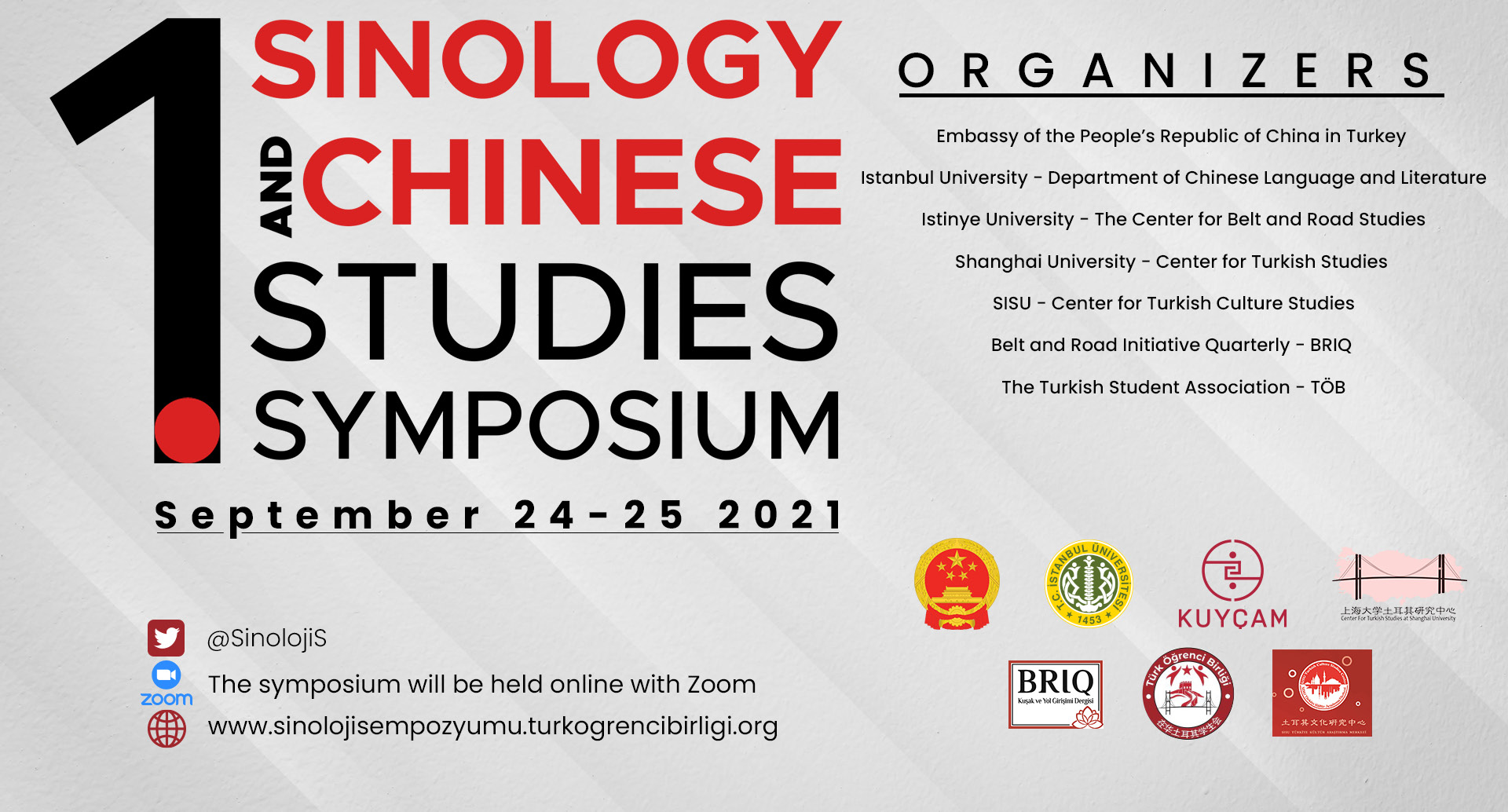
Thereupon, the TÖB, the Belt & Road Initiative Quarterly (BRIQ), the Istinye University Center for Belt & Road Studies, and the Istanbul University Chinese Language and Literature Department formed the core staff and initiated the First Sinology and Chinese Studies Symposium in Turkey. The number of co-organizers was later increased to include the Embassy of the People’s Republic of China in Turkey and Shanghai International Studies University.
The Organizing and Scientific Committee
The Organizing Committee is the body that best proves the unifying and inclusive character of the Symposium. In particular, the heads of departments in well-established and leading universities in Turkey conducting Sinology and Chinese Studies were invited to the organizing committee. Inclusiveness was ensured by inviting competent scholars from other universities to the scientific committee. The Organizing Committee of the First Sinology and Chinese Studies Symposium is as follows;
• Mehmet Adnan AKFIRAT, Chairman of the BRIQ Administrative Board
• Ruilin SHİ, Undersecretary of Culture, The PRC Ankara Embassy
• Prof. Dr. Eyüp SARITAŞ, Head of the Department of Chinese Language and Literature at Istanbul University
• Assoc. Prof. Gürhan Kırilen, Head of Department of Sinology at Ankara University DTCF
• Assoc. Prof. Efe Can GÜRCAN, Chairman of the Center for Belt and Road Studies at Istinye University
• Dr. Nurcan KALKIR, Head of the Department of Chinese Language and Literature at Erciyes University
• Mustafa ALTINKAYA, Chairman of TÖB Beijing
• Anıl SOLMAZ, Chairman of TÖB Shanghai
The Scientific Committee, under the chairmanship of Prof. Dr. Eyüp SARITAŞ, consists of fifteen scholars from Turkey and China covering a wide range of specializations, including Sinology, Chinese Language and Literature, Chinese Translation and Interpretation, International Relations, Sociology, and History. 3
With the Scientific Committee, which includes scholars from Ankara Hacı Bayram Veli University and Okan University, the Symposium has brought together rooted and leading institutions dealing with China and Chinese in Turkey. This is an important step for the first Symposium, but it is necessary to further expand the scientific committee, make greater use of universities in China, and attract scholars from Europe and the Americas. These aims should be included in the success criteria for future studies.
Participants and Proceedings
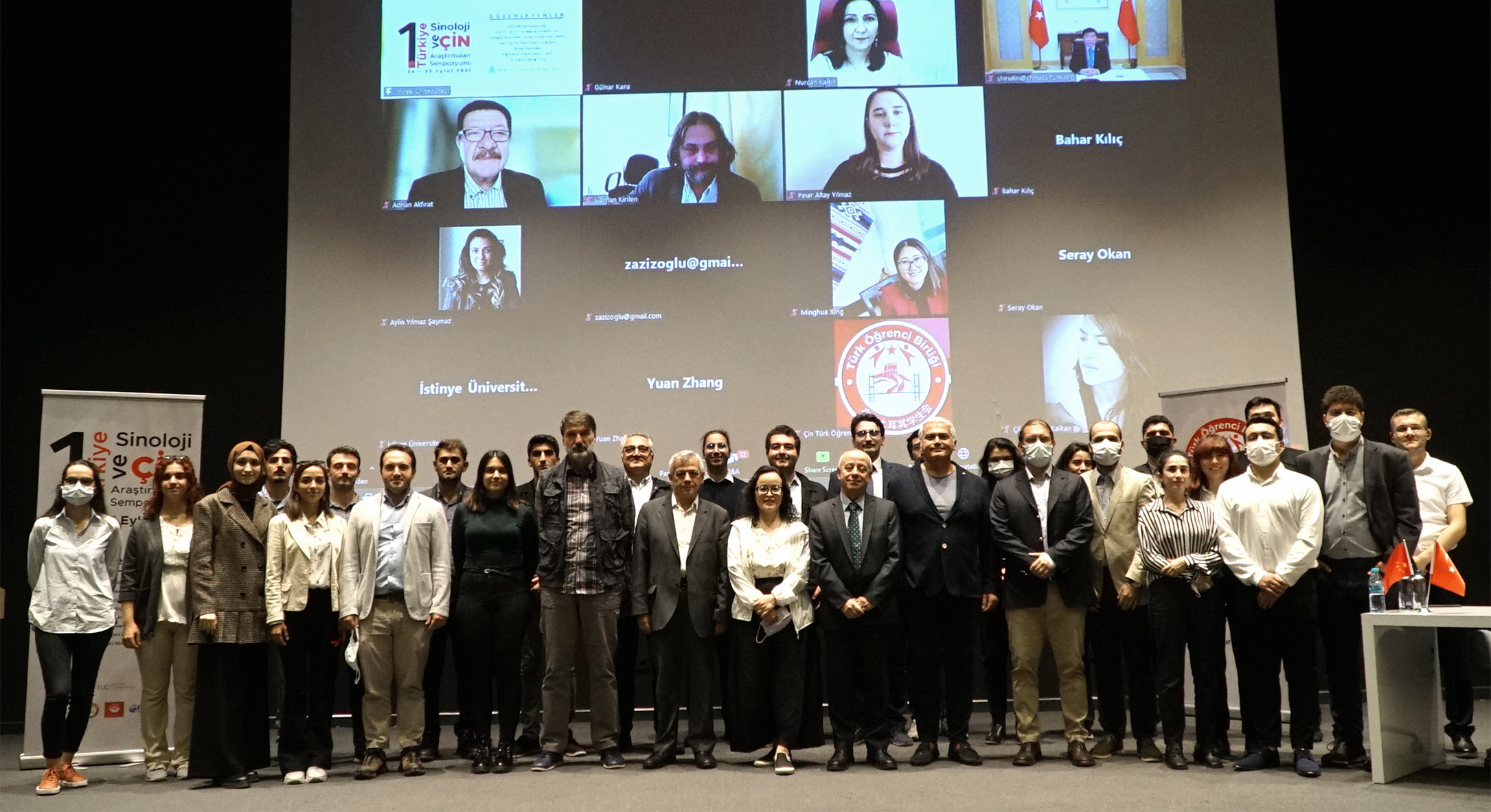
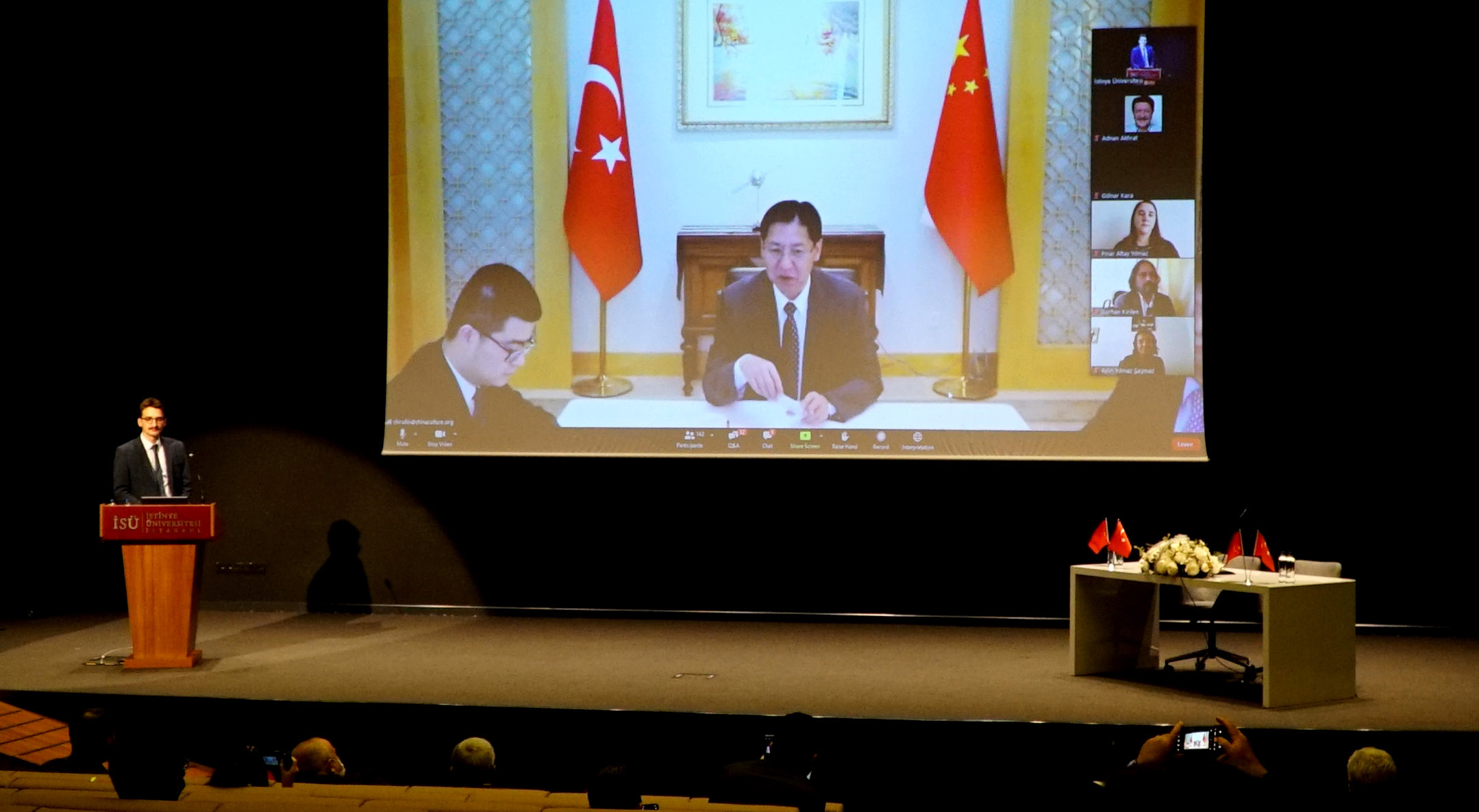
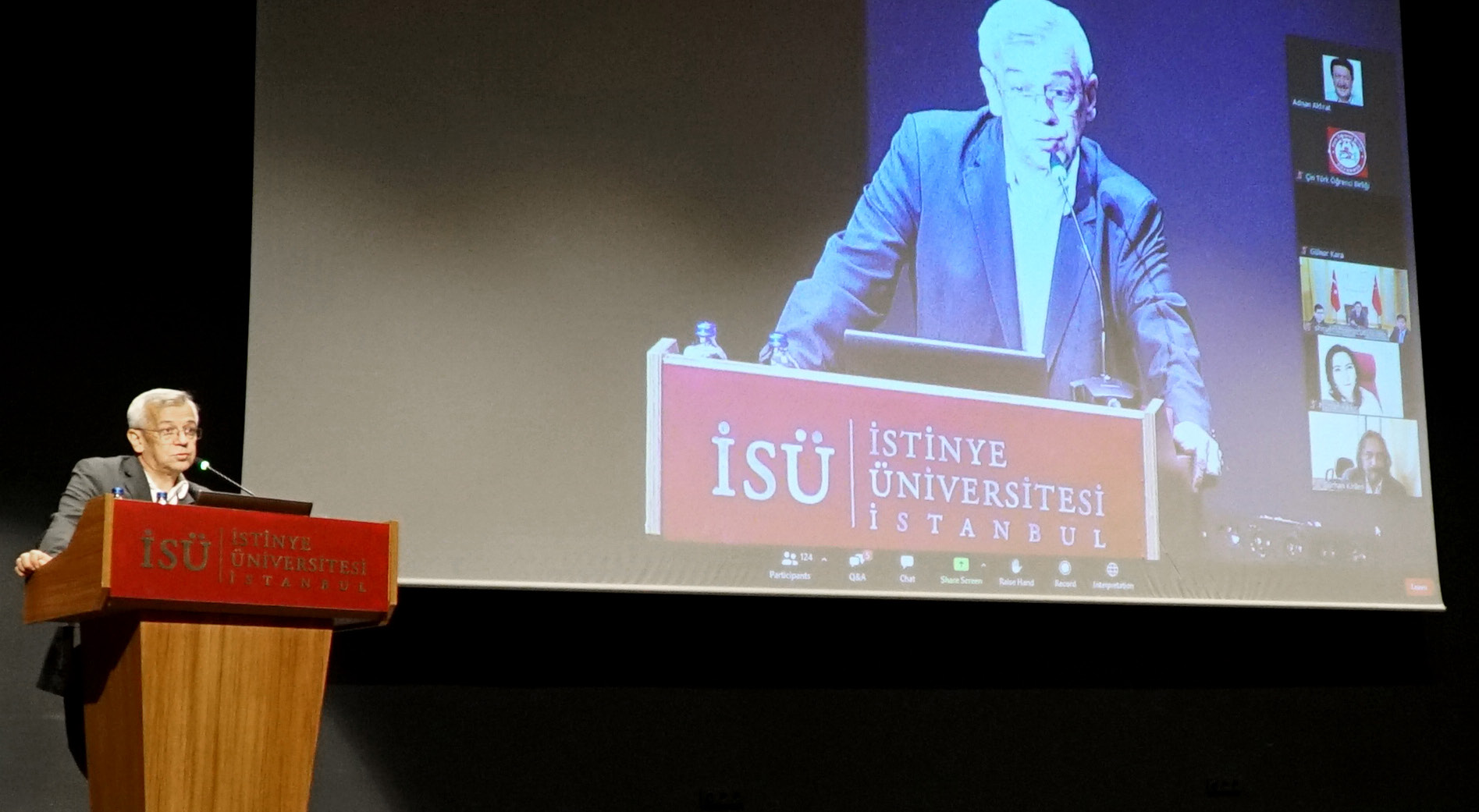
Four hundred and ninety-seven applications were made to attend the two-day symposium, which was organized as a “hybrid” of face-to-face attendance at the Istinye University Congress Center in Istanbul and online attendance on Zoom on 24-25 September 2021. There were also guests from Germany, America, Azerbaijan, India, and the Netherlands, though most attended from Turkey and China. Such diversity is undoubtedly a success for a symposium held for the first time - it became an international event.
Another feature of the Symposium was the quality of the opening speeches. China’s Ambassador to Ankara and Turkey’s Ambassador to Beijing acknowledged the significance of the Symposium in their speeches. They emphasized how important this symposium is for the two countries to get to know each other on a scientific level and emphasized the importance of joint work. Furthermore, the presented papers discussed a broad spectrum of topics, including the Turkic languages spoken in China, Wolfharm Eberhard and Turkish Sinology, the geopolitical economy of China’s peaceful development, and the North Pacific Ocean Strategy concerning China. A total of fifteen proceedings were presented and discussed in four sessions moderated by Assoc. Prof. Gurhan Kirilen, Prof. Dr. Giray Fidan, Prof. Dr. Caner Karavit, and Dr. Nurcan Kalkır, respectively.
The Importance of the Symposium for Turkey And China Studies The Course of Chinese Studies in Turkey
With the recent acceleration of diplomatic and commercial relations, Turkey’s interest in Chinese Studies has increased. This is also thanks to becoming the second-largest economy in the world. Our historical and intersecting ties, exhibited by the findings of Pre-Islamic Turkish history from the Chinese pages, trace Chinese Studies in Turkey back even further than we thought. However, the field of Chinese Studies in Turkey owes its current status to the pioneering studies of Wolfram Eberhard. His work, History of China (Eberhard, 1947Eberhard (1947). The source article does not provide a separate full bibliographic entry for this citation.), published by the Turkish Historical Society, is his best-known work alongside his articles and lectures. After leaving Turkey for the University of California in 1949, he continued his studies in the United States. After this period, Chinese Studies in Turkey went into stagnation.
Though, it would not be correct to say that the Chinese studies in Turkey came to an end with Eberhard’s departure to the United States. Today, Chinese Studies are kept alive thanks to the proliferation of academic events and research centers in Turkey. Although most of the studies carried out in Turkey after Eberhard fall within the domain of Classical Chinese Studies, China’s socio-economic and socio-cultural achievements have pushed Contemporary China Studies to the fore. The departments of Sinology and Chinese Language and Literature, which are included in universities such as Ankara University and Istanbul University, contribute to this field. In addition to these, Turkish universities are trying to meet the needs of this field by establishing Chinese Research Centers (see Istanbul Aydın University). Recently, the field of International Relations has focused on China and started to examine Chinese movements such as the Belt and Road Initiative. A case in point is the Istinye University Center for Belt & Road Studies, which is the first research center to focus its efforts on the Belt and Road in Turkey.
Undoubtedly, the number of such initiatives in China Studies will increase as Turkey’s foreign policy increasingly focuses on Asia. At this point, the most important task is to consolidate the field of Chinese Studies, which offers a systematic and solid philosophy.
The New Perspective offered by the Symposium into China Studies
At this point, the First Symposium of Sinology and Chinese Studies has built a new unity by bringing Sinology and Chinese Studies together. A ship, whose route was not drawn by experts and could not successfully take the wind behind it, would not reach the targeted place. The Symposium’s Organizing and Scientific Committee will be the new route and wind for the field of Chinese Studies in Turkey. The main philosophy of the Symposium is to explain China to Turkey and Turkey to China from the authentic and primary sources and to enable both countries to benefit from each other using scientific methods. It has refreshed the field of Contemporary Chinese Studies in Turkey by refuting the arguments of research centers that have become tools for political purposes and institutions that imitate the West. This movement is unifying and integrating, which will ensure a sound future for China Studies.
Another important element is the feature of the Symposium that appeals to China. Given that the field of Turkish Studies in China has just started to mature, it is an indisputable fact that China also needs to reach first-hand sources and especially the “authentic” sources. When such sources are examined, it will be revealed that much false information has been published about Turkey in line with the information obtained from secondary (and Western-centric) sources. A misleading picture has been drawn about Turkey in Chinese public opinion. In consideration of this problem, the Symposium’s close contact with the Chinese Embassy and the Turkish Studies Consortium in China will have a positive impact on the research of the two countries. In this respect, the Symposium is not only an important platform for Turkish researchers who are involved in Chinese Studies but also a wider channel where valuable researchers conducting Turkey Studies in China can convey their views.
Conclusion
The First Symposium of Sinology and Chinese Studies has been a breath of fresh air in Contemporary China Studies in Turkey with its technical and scientific aspects. It is the first and most important step taken for the institutionalization required in Turkish Sinology and Chinese Studies. With the international status it has gained, the Symposium has also laid the foundation and qualifications necessary to broadcast Turkey’s accumulated knowledge in Contemporary Chinese Studies to the world.
The Symposium has demonstrated theoretical knowledge by bringing together experts from Turkey and China as part of the Organizing and Scientific Committee. The most important task ahead is to expand the scope of academic discussions by including everyone who are involved in Chinese Studies on this platform. For researchers from Turkey to reach first-hand sources on China, it should act as a mediator in creating opportunities for field and archive studies in China. It should form a journal that will publish these studies and root this journal for scientific purposes.
The First Symposium on Sinology and Chinese Studies was concluded successfully. We left behind a historical milestone in the field of Chinese Studies in Turkey. The period we are in is critical for Turkey to better recognize and understand China’s national aspirations. This makes it necessary for all valuable Chinese researchers in Turkey to make use of this symposium with the highest efficiency. See you at the next symposium!