What is the current state of relations between Türkiye and African countries? How many countries are we in relation with, and at what level? Are there any particularly prominent countries or sub-regions?
Prof. Dr. Ahmet Kavas: The relations that the Republic of Türkiye has established with African countries, most of which gained independence in the 1960s, remained very limited until 2005. I still remember a frequently repeated phrase during conversations in different contexts in the 1990s: “What business do we have in Africa?” This wasn’t a deliberately constructed sentence. It turned into a commonly repeated phrase as if it was being widely used by someone. This artificial perception in our country didn’t start to change until the beginning of the 2000s, but even so, we don’t closely know the opinion of every segment of our society, and we might still unexpectedly encounter such phrases these days. Nevertheless, our relations started to improve rapidly with a significant momentum based on our new understanding. When the influence of the colonial attitudes of seven European countries waned, states eager to be active on the continent seemed to be looking for new opportunities, suddenly becoming active in various sub-regions of Africa. India, initially leveraged its diaspora, a majority of whom were brought to the continent as workers by the British colonial administration, during the months that followed the collapse of the Soviet Union in 1991, but it soon fell to second place behind China. “As Europe’s neocolonial influence over Africa began to wane, new actors eager to become active on the continent started to establish spheres of influence in different regions of Africa. Many countries acted earlier than Türkiye in establishing contact with Africa. Türkiye began expanding its diplomatic representation network in Africa at the beginning of 2008. Thanks to these efforts, new embassies were opened in 2009. Currently, Türkiye has diplomatic representation in 44 African countries. Following China, the USA, and France, Türkiye is among the countries with the
since 2005. The growing Türkiye-Africa relations can be understood as Türkiye balancing its
export markets for Türkiye. Turkish companies are establishing and operating some of the largest facilities in Africa in the textile and food industries, as well as in the iron-steel and heavy industries,
currencies, and socio-cultural and economic lifestyles in Africa have been largely shaped by the West and continue to exert their influence. It is clear that reversing this influence will take time. It is not easy for African countries to align with China, Russia, the USA, or India. Instead of opposing
The competition between Japan’s close neighbours, South and North Korea, also drew them into this arena. While the USA tended to keep a distance from this geography in the 1990s, Brazil’s interest increased in some areas as part of its South-South policy. Cuba engaged with many countries on the continent in the health sector. New actors like Australia, Malaysia, Indonesia, Gulf Arab countries, Iran, Switzerland, and Israel acted earlier than Türkiye. Türkiye responded most rapidly and expansively to the Africa Union’s global outreach action policy adopted in 2005. Over the course of approximately 80 years since the 1920s, the number of African countries with which we established direct diplomatic contacts did not exceed 12. Our network expanded to include Ethiopia, Egypt, Libya, Tunisia, Morocco, Algeria, Sudan, and Senegal. In Sub-Saharan Africa, countries like Nigeria, South Africa, the Democratic Republic of Congo, Kenya, Ghana, Somalia, and Tanzania were added to our network within 50 years between 1960-2009, although the last three were very short-lived. Thanks to efforts initiated in 2008 to expand our diplomatic representation network in Africa, new embassies started opening in 2009, and currently, Türkiye is in fourth place with representation in 44 countries, following China with 52, the USA with 50, and France with 47.
How would you describe the main axis of Türkiye’s Africa policy? What are the priorities for Türkiye, and what issues are being focused on?
Prof. Dr. Ahmet Kavas: Türkiye’s relations with Africa does not represent a shift of axis, but rather can be understood as balancing our position between Asia and Europe through engagement with Africa. This resembles the policy followed by the Ottoman Empire at its peak in the 16th century. Türkiye is expanding its dominance and influence established in nearly half of Africa and across Asian territories, extending to Eastern Europe, Anatolia, the Arabian Peninsula, and the Caucasus, with strong ties in modern international relations. This has also become a desired process for African statesmen. Türkiye, with its geostrategic position capable of responding to this desire, holds a key position due to its geostrategic location between three continents and its rich historical background.
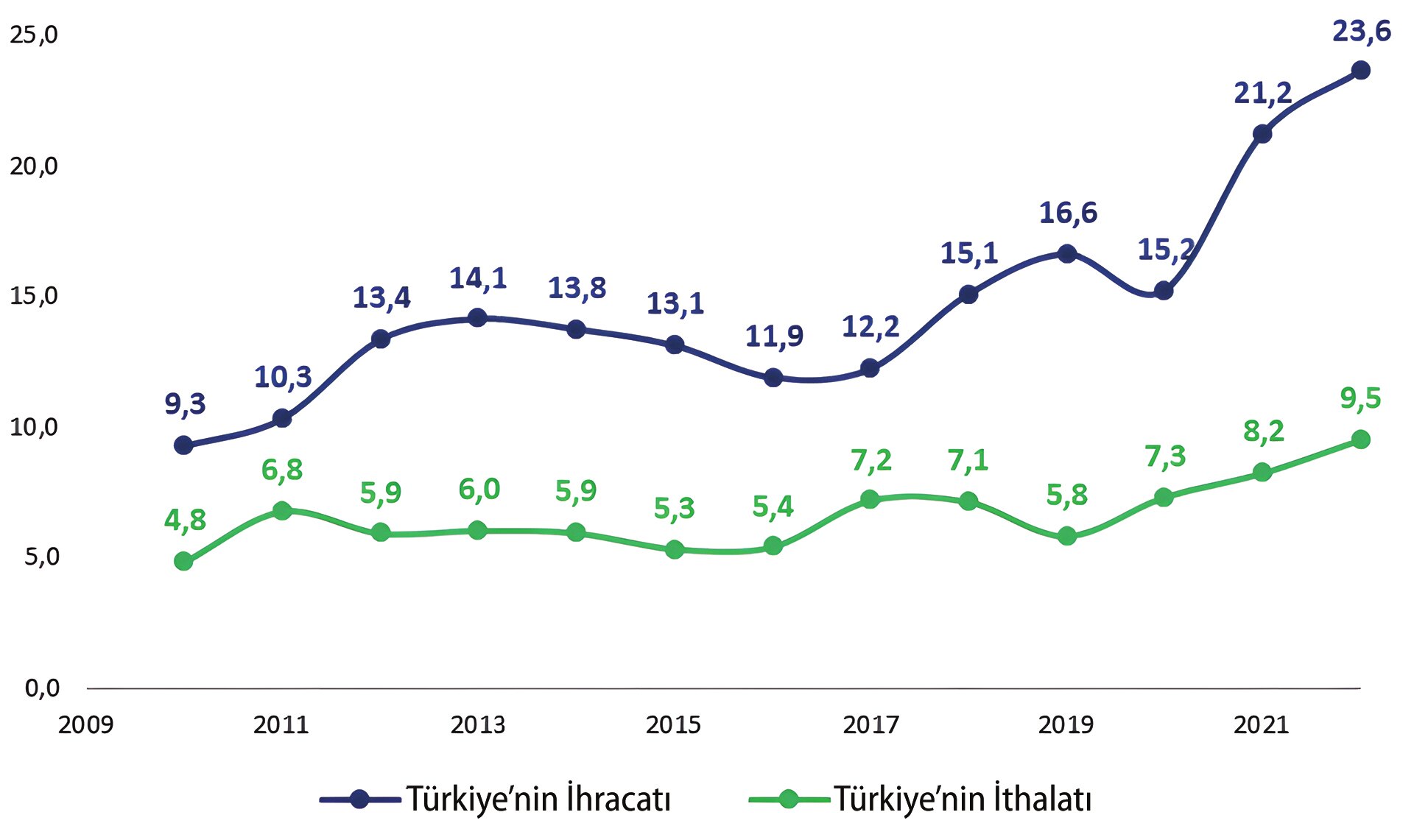
Since 2005, Türkiye’s Africa policy has become increasingly evident on its agenda. Initially, emphasis was placed on bilateral political relations and diplomatic contacts to expand on the continent. The contacts that started during the Türkiye-Africa Summit in Istanbul in 2008 have turned into effective collaborations. The Africa Strategy Document adopted by the Prime Ministry in March 2010 promoted cooperation in defining and executing contacts with the African Union. Türkiye’s Observer Member status in the African Union and its application for membership in the African Development Bank Group, approved in 2008, were officially accepted among the total 78 members, 53 from the continent and 25 from outside, on October 29, 2013. As political and diplomatic relations increased, trade relations, which were at a low level before 2000, have increased about tenfold in the last 20 years. This exceeds the expectations of both African countries and Türkiye. Overseas contracting activities, which started in the 1970s with Libya, have now spread across this vast geography. Infrastructure works, including airports, port constructions, public buildings, roads and sports complexes, and educational and healthcare facilities, have expanded into a wide area. Institutions such as TİKA, General Staff, MAARİF Foundation, Diyanet Foundation, YTB (Presidency for Turks Abroad and Related Communities), AFAD, KIZILAY, Yunus Emre Institute, especially THY, alongside almost every ministry, have established units related to Africa to closely monitor mutual relations. Humanitarian aid organizations are quickly responding to the needs of people in distress in relevant countries, according to their own set goals.
The terrible toll of colonialism, which started in the late 19th century by seven European states (primarily the United Kingdom and France, along with Portugal, Belgium, Italy, Germany, and Spain) and ended in the 1960s, informally continued until the 2000s. However, the significant increase in Türkiye’s capabilities in all areas since the 2000s, following about 80 years of mostly tense foreign relations with its close neighbors, constitutes a turning point.
In the last 20 years, as African countries have been able to act more freely and independently, it has been easier for us to improve our interactions in development, education, health, defense, humanitarian aid, and socio-cultural issues. In terms of international relations, Africa-Türkiye relations have gained significant momentum in a positive direction, especially under the umbrella of the United Nations, where decisions are made with the votes of all countries. In fact, the vote of 51 African countries was decisive in our country’s election to the Security Council’s Temporary Membership in 2008.
In my personal opinion, education is one of the foremost priority areas. As we enter 2024, more than 60,000 of the 340,000 international students in our universities come from various countries of the African continent. African youth are receiving education in almost every branch of science in our country in certain proportions. The MAARİF Foundation’s most extensive network is in this continent. Tens of thousands of students at preschool, primary, secondary, and high school levels are now receiving education in Africa for future generations. The Turkish language, widely used in Egypt and North African countries in the first half of the 20th century as a legacy of the Ottoman period, had almost completely fallen out of use and could not be taught by the second half of the same century. Nowadays, hundreds of thousands of young people across the continent are learning and speaking our language.
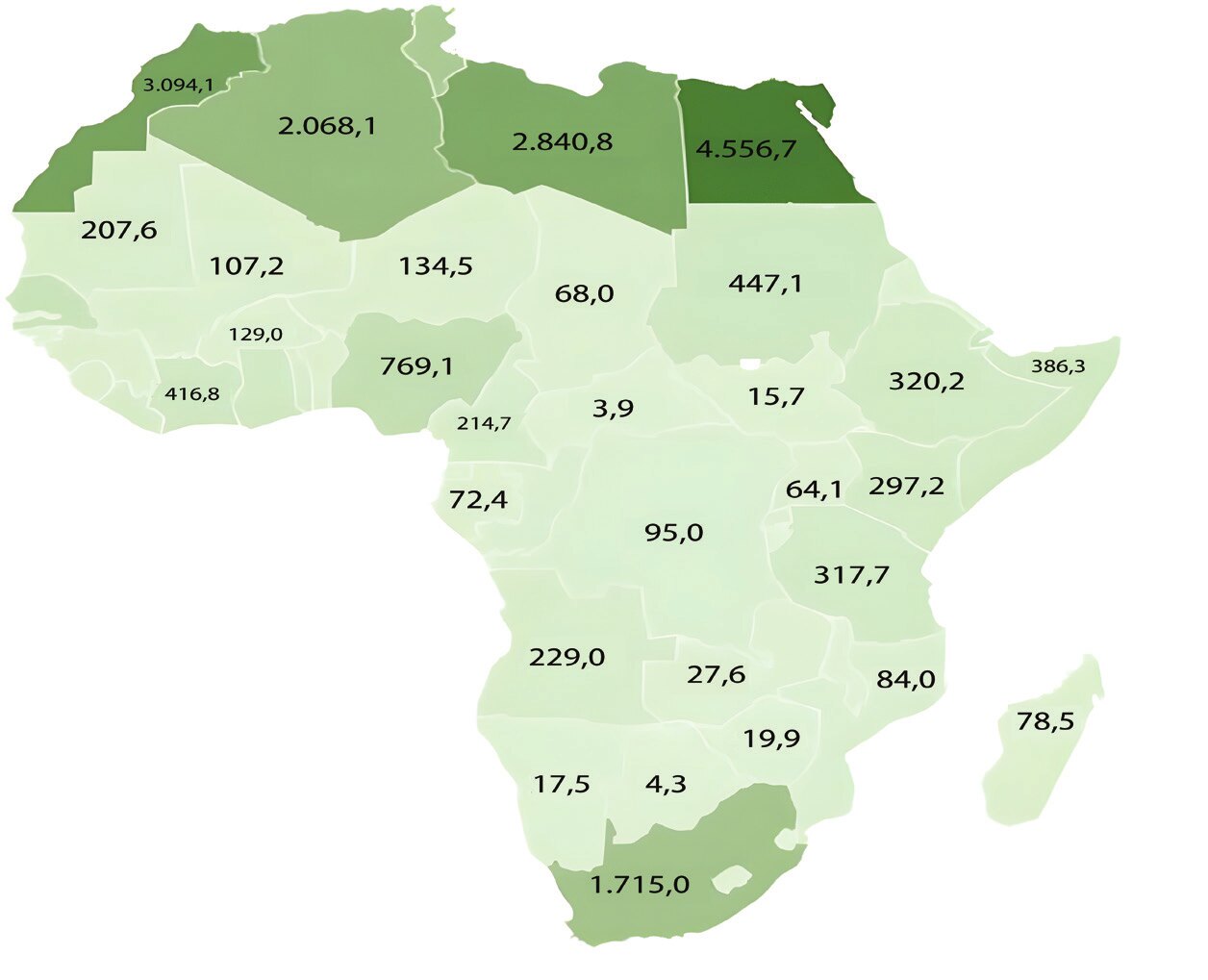
African countries, generally consumers, will be among Türkiye’s most important export markets until they achieve a significantly productive position. Most of our trade with the continent is made up of exports, but we’re still importing a significant amount of hydrocarbon products from some countries. Some of our companies have started exporting products both within the continent and to other continents from the countries where they have opened production facilities.
What are the opportunities for economic cooperation and joint projects between Türkiye and African countries, particularly in industry, agriculture, and mining?
Prof. Dr. Ahmet Kavas: Certain specific areas concerning our economic relations, such as investments in food, industry, and agriculture, do not attract much attention on the continent. Though not numerous in Africa, our companies are part of the Fourth Industrial Revolution in different countries. In the textile and food industry, factories in Algeria, Egypt, Ethiopia, and Senegal are at levels comparable to those in developed countries. Similarly, in iron-steel and heavy industry, as in Algeria, they are establishing and operating some of the largest facilities in both the country and the continent, even generating significant foreign exchange income. Among these, some operate with their own resources, while others are set up and operated jointly, either through build-operate-transfer models or with public support from governments. Particularly, our entrepreneurs in airports, ports, and hotel areas give much importance to this. In joint projects, a considerable number of projects have been completed and launched by taking advantage of both Turkish Eximbank and credit sources from many European countries, depending on the conditions of the invested country.
From the mid-1970s to the 2020s, over about half a century, Turkish businessmen initially turned Libya into a “school” until the early 1990s, and nowadays, hundreds of businessmen are transforming the continent into a network.
Investors from outside Africa, especially from China, bring almost everything, from their own top executives to cooks and drivers, and even the food for thousands of their employees is shipped from their own countries. In contrast, Turkish companies procure almost all their needs except for a limited number of white-collar jobs, craftsmen, and professions requiring specific skills, from local subcontractors. Particularly in many branches of construction, locals are employed. Within a few years, thousands of people become professionals in their own countries, fulfilling the needs of their societies.
In recent times, many African countries seem to be moving away from Western influence and dominance. What does this mean for Türkiye, and what advantages or disadvantages does it create for Türkiye?
moving away from Western influence and dominance.
Prof. Dr. Ahmet Kavas: Since the 1990s, African countries have begun to emerge from the dominant influence of European countries. In the 2000s, they sought cooperation opportunities with new actor states in Asia and America. Türkiye soon became a preferred partner and a privileged country in this regard. Especially when they [the Africans] learned about our country’s development model, they saw it as applicable to themselves. Rather than completely breaking away from European countries, they may temporarily distance themselves in certain areas, but many dependencies dating back to the past will continue, whether they want it or not. In the last century, the official languages, currencies, socio-cultural, and economic lifestyles in these countries have been largely shaped by the West, which are still influential. To disregard these and to try to replace them with something of their own or bring from outside will take a significant amount of time. It is not easy for them to adopt many aspects of other countries like China, Russia, the USA, or India. Türkiye, instead of opposing the Europeans in Africa, acts according to the suitability of current conditions. In MAARİF Foundation schools, if the country’s official language is English or French, education is provided in these languages, while Turkish is also taught. We see that Turkish companies work together with Europeans in Africa in some major tenders. However, in the near future, it would be a repetition of history if the African states, throughout the 21st century, fell under the patronage of any foreign country, as was the case in the last century. Our country’s business circles, while transferring their own experiences to Africa via mutual relations, not only provide daily subsistence opportunities for the locals but also teach them professions to serve their needs when necessary. First, they enable them to earn, and then they earn themselves. In the famous win-win policy, actually, both sides do not gain equally. The greater benefit tends to favor the countries coming from outside the continent with their own credits. Among Türkiye’s disadvantages, especially in bilateral trade, we witness that it does not achieve the desired results in balanced trade with the countries it deals with. As in the case of Senegal, we are exporting over 95% and importing only about 5%. We have not yet reached the desired level in sourcing raw materials or products of African origin directly from the continent, such as coffee, gum arabic, cocoa, which are turned into semi-finished products in Europe. Another significant disadvantage is the lack of a sufficient number of our citizens who are well-acquainted with the continent and familiar with its languages, customs, and traditions. China’s monopoly in every field it touches is one of the most serious deadlocks facing our companies. Although we have some presence in every country, we have almost no presence in extremely important areas like banking. Despite the rapid development of our relations with Africa since their inception over a quarter of a century ago, most of our diplomats, officials from our public institutions, and even representatives of non-governmental organizations, with few exceptions, prefer short-term assignments. If the number of those who make the continent their home increases, our country’s effectiveness can become more permanent.