Paul Klee
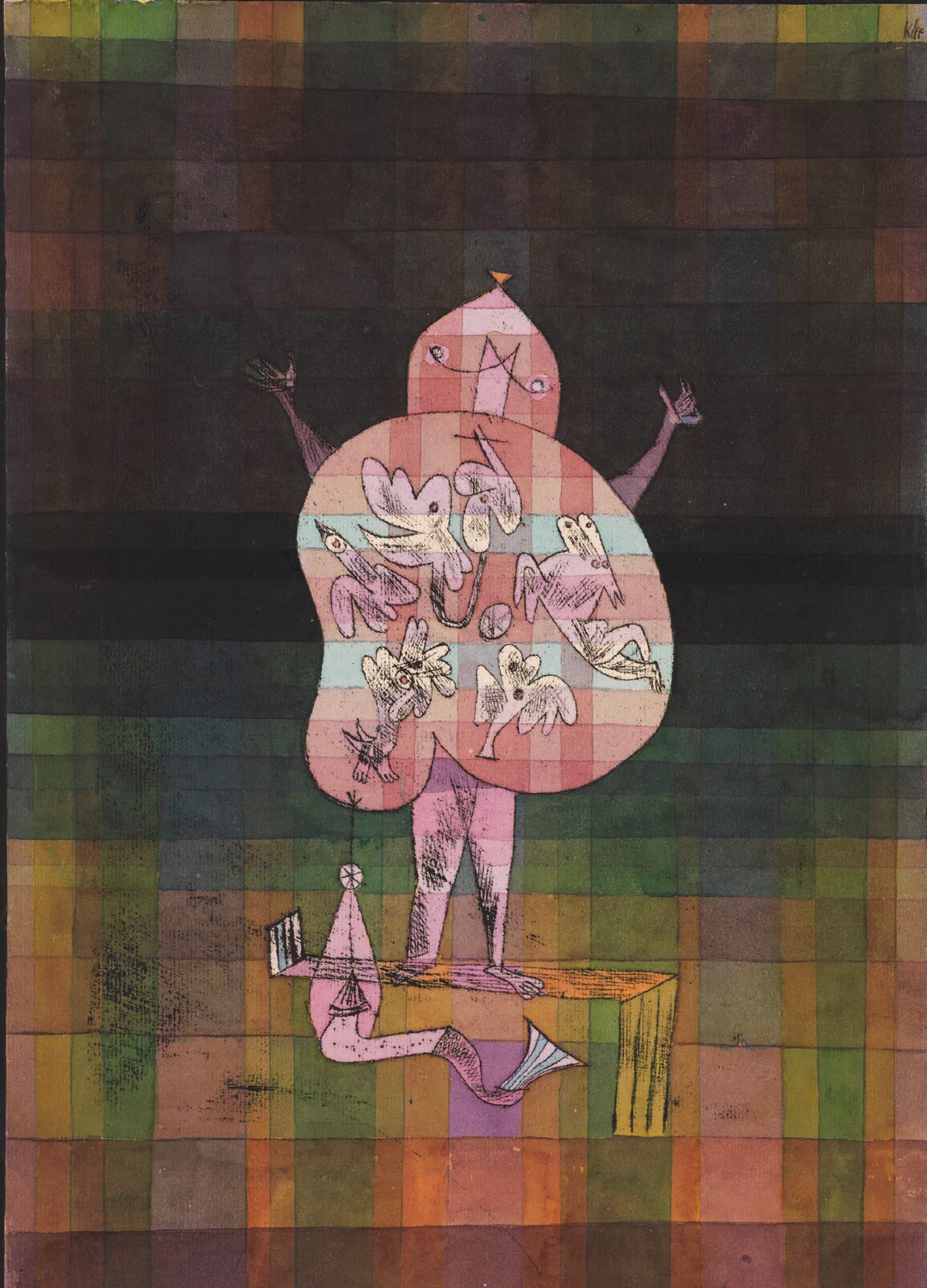
The aesthetics of traditional African sculpture became a powerful influence among European artists who formed an avant-garde in the development of modern art. Paul Klee was also one of them. Klee created transcendental symbolic images while German Expressionist painters referenced African aesthetics through calm colour tones and dynamic, unorthodox formal approaches to depict the anxieties of modern life. He developed a very special abstract style in which mystical connotations are arouse, in paintings like his Ventriloquist and Crier in the Moor; Every detail of the figure stands out like a collage with the driving force of the ‘grid’ background consisting of earth tones. Imaginary beasts float within a transparent ventriloquist who appears to be all belly. This creatures, we see in the ventriloquist, most likely to symbolise the bizarre voices feels like rise out of him. And a stray fish, looks like it’s about to enter the ventriloquist, as if impressed by the revelry above it.