Could you briefly summarise Türkiye’s approach to science, technology and innovation policies in recent years and the concrete results achieved?
Prof. Dr. Orhan Aydın: Our approach to science, technology and innovation policies is based on the Twelfth Development Plan of Türkiye for the year 2024-2028. This plan puts forth the vision of being “A stable, strong and prosperous Türkiye that is environmentally friendly, resilient to disasters, produces high value with advanced technology and shares income fairly in the Century of Türkiye.” The R&D and innovation ecosystem will shape the pathway of realizing this clear vision and TÜBİTAK, together with the Ministry of Industry and Technology, are taking leading steps in guiding this direction. As an innovative, direction-setting, and cooperating institution working together with and guiding the R&D and innovation ecosystem, TÜBİTAK is a pioneering institution in our 61th anniversary year and beyond. As Türkiye takes determined steps in the scope of a green and digital transition towards our net-zero emissions target for the year 2053, TÜBİTAK will ensure the mobilization of the R&D and innovation ecosystem for this target in the context of sustainable development. Through this vision, we are creating opportunities and synergies for producing more sustainable, resilient, and efficient impacts for the future. We have a key role in mobilizing the R&D and innovation ecosystem of Türkiye to succeed in addressing important challenges. The need to address climate change, ensure a sustainable and healthy environment, and increase resource efficiency and societal wellbeing is of critical importance. Let me give examples to share with you some of the concrete results that are achieved.
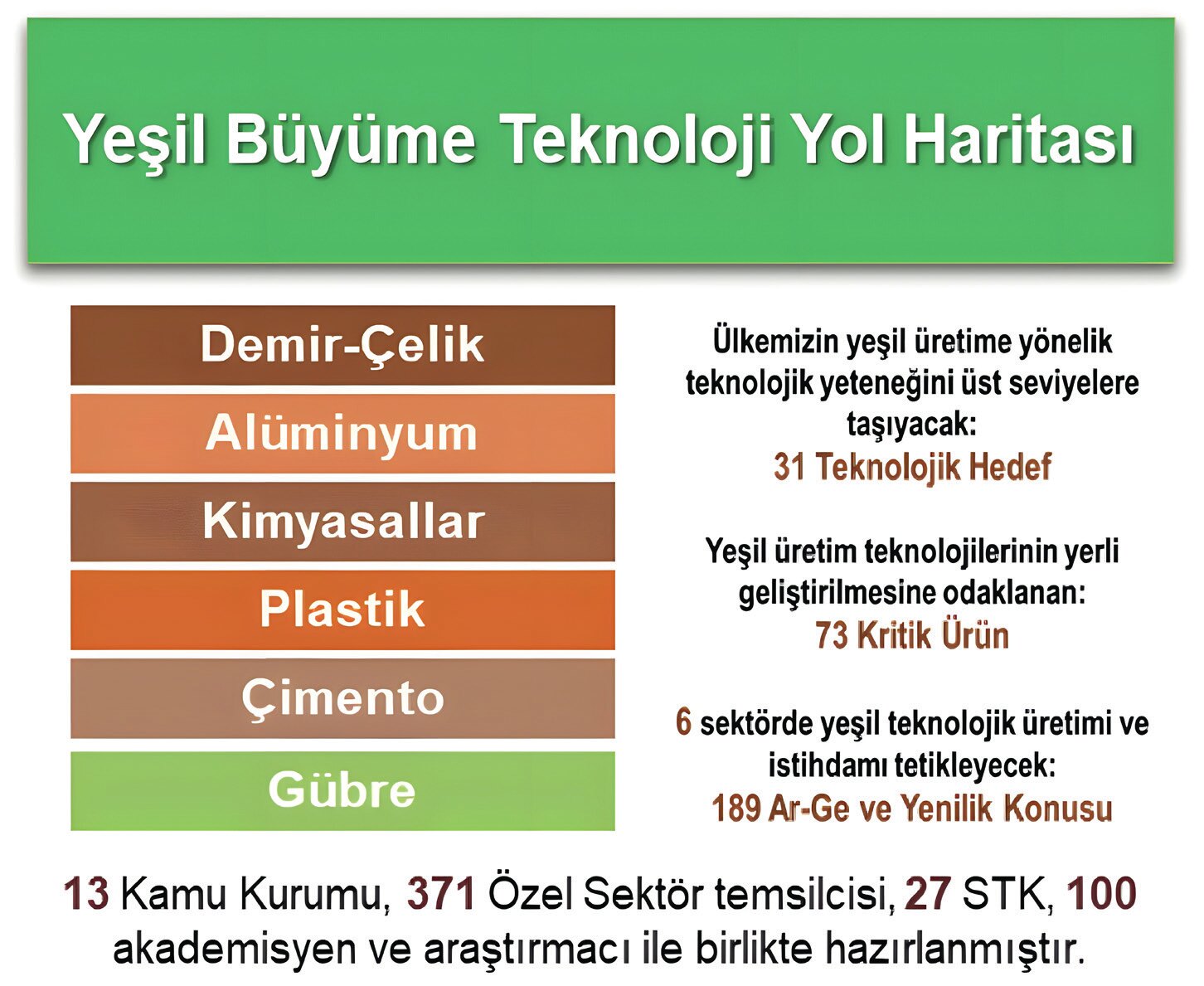
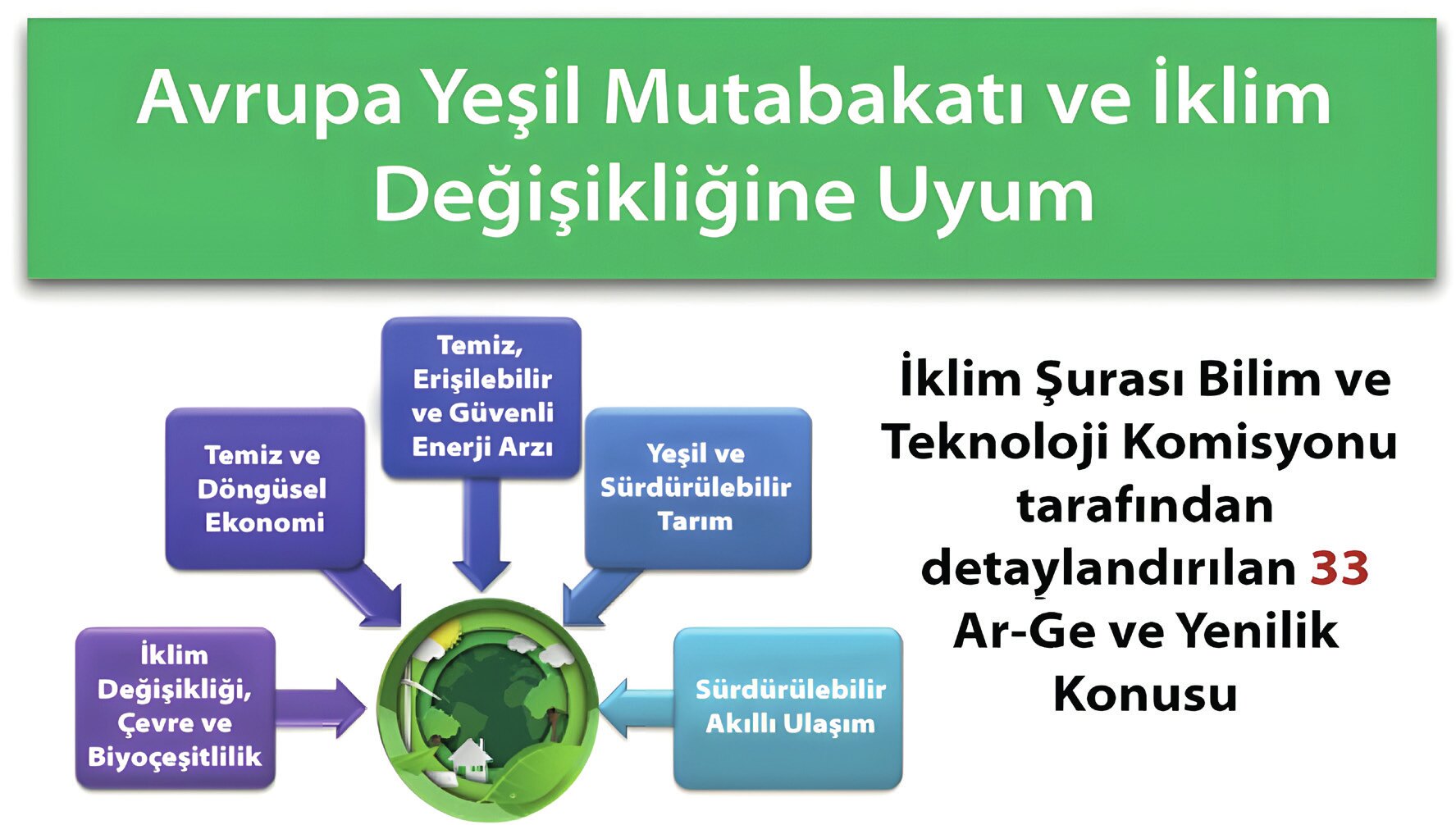
In 2024, TÜBİTAK is currently providing 8.4 billion TL support to 9,700 projects of 185 universities and 2,750 companies. These projects involve 14,300 scholarship holders. Our most important innovation was the design of support programmes where platform structures can be created that bring together all stakeholders in the relevant technological fields based on the needs of our country and global problems. We support High Technology and Industry Innovation Networks platforms, where we bring together the private sector, universities, research infrastructure and public R&D centres. Within the scope of the Centre of Excellence Support Programme, we brought together 40 universities, 4 public R&D centres, 5 research infrastructures and 44 private sector organizations in 20 High Technology Platforms. A total of 252 projects are being carried out under these platforms. Under the roof of these platforms, projects are carried out in many fields such as smart home products, smart cities, additive manufacturing, health products, target-specific drugs in cancer, high efficiency silicon-based solar cell production, nanomaterials, avionic display technologies, cellular therapy products and clinical applications. Most recently, we opened the High Technology Platforms - Green Transformation Call to focus on priority R&D and Innovation topics in line with our country’s 2053 net zero emission target. We received 31 applications to our call. The evaluation processes of the applications are ongoing.
R&D and Innovation Networks for Industry are formed as a technology ecosystem for the development of high value-added products or product groups that will contribute to the growth of our country by creating innovation platforms in cooperation with the private sector, universities and the public sector. As a result of the 2020 call within the scope of SAYEM, 38 capital companies, 19 of which are SMEs and 19 large-scale enterprises, 15 universities and 2 research centres and 1 public research institute are involved in 4 platforms. Under these platforms, a total of 78 projects are being carried out in areas such as smart home products, smart cities, additive manufacturing and health products. We aim for these platforms and innovation networks to have a permanent and sustainable structure as technology production centres and technology-based innovation / product development centres of our country in the relevant fields.
In addition to platform structures, we support scientific research projects aimed at generating new knowledge, developing innovative approaches, presenting the current situation and problems with evidence-based scientific data and developing solution proposals in all fields with our university and public support. As TÜBİTAK, we attach importance to cooperation with our public institutions in areas that our country needs, and we open special calls developed with the co-financing model. In 2024, we opened special calls with the Disaster and Emergency Management Presidency (AFAD), Ministry of Agriculture and Forestry General Directorate of Agricultural Research and Policies (TAGEM), Ministry of Interior General Directorate of Civil Society Relations, Ministry of Youth and Sports, Ministry of Family and Social Services and Social Security Institution within the framework of the cooperation protocols we signed with our institutions. Our R&D-based collaborations with public institutions will continue.
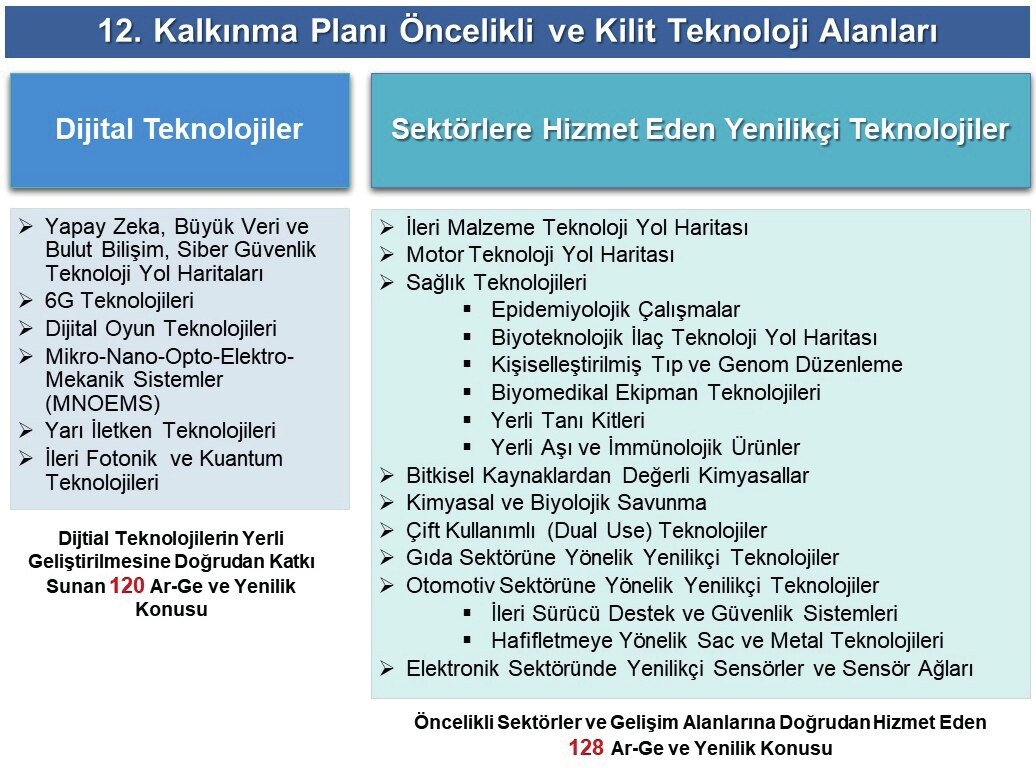
TÜBİTAK Research Centres and Institutes further develop advanced technology and domestic products in priority, critical and strategic areas for our country. Our Research Centres and Institutes produce know-how and develop new technologies in critical areas, continue to support the industry by transferring this know-how to the private sector and act as a catalyst in the R&D and Innovation ecosystem. Our institutes and centres, which carry out their activities in the fields of software and electronic hardware, semiconductor and chip technologies, cyber security, blockchain technologies, next generation communication, digital technologies such as artificial intelligence; health technologies; smart transportation technologies including next generation railway and rail transit technologies; defence, aviation and space technologies; civil security technologies; environment, food and climate technologies; and basic sciences, will play a much more active role in the R&D and innovation ecosystem of our country in the coming period. In the coming period, we are transforming the business models of TÜBİTAK Research Centres and Institutes to put open innovation at the centre. Our newest institutes include the TÜBİTAK Clean Energy, Climate Change and Sustainability Research Institute in support of the 2053 net-zero emissions target of Türkiye. In addition, the TÜBİTAK Artificial Intelligence Institute plays a pioneering role in the ecosystem for a green and digital transition. In this context, 28 projects were supported with a budget of 76.6 million TL through the Artificial Intelligence Ecosystem Calls launched in 2022. Within the scope of these projects, 28 SME-scale technology developing companies, 21 universities, and TÜBİTAK Marmara Research Centre (MAM) are working together to meet the needs of 17 large-scale and 10 SME-scale customer organizations in the ecosystem.
Support Programs to Prevent Brain Drain Are the announced and implemented science and technology policies effective in reducing brain drain to a large extent? If there are factors that prevent them from being more effective, could you summarize them?
Prof. Dr. Orhan Aydın: First of all, investing in human resources is a necessity for a sustainable future. We continue our support for our qualified human resources that will build the bright future of our country and lead us to our future vision. In 2024, we provided 3 billion TL support to more than 91 thousand scientists and young people with our scholarship and support programmes.
To contribute to the projects to be carried out in research areas of strategic importance for our country, we continue to carry out the International Leading Researchers Programme and the International Young Researchers Programme in order to encourage leading researchers who have distinguished themselves with their high-level scientific and/or technological studies in their fields and who have experience working abroad to come to our country. In the first calls of our International Leading and Young International Researchers Programmes, 213 International Leading and Young International Researchers from 26 countries have received support to come to our country. Each of the supported qualified researchers are training five master’s/doctoral students. To date, 1,290 students and researchers, including 416 PhD students, have taken part in the projects we have supported. We also completed the evaluation processes for the 1st period call for 2024. Of the 60 researchers who applied, 40 researchers have been awarded to initiate their research projects in Türkiye. We also opened the new call for applications. We continue to carry out the National Leading Researchers and National Young Leaders Programmes to support domestic scientists who will carry out projects with the potential to make important discoveries or inventions, which include goals to achieve groundbreaking developments for our country in all fields of science and technology. We enabled them to include up to 5 PhD students and postdoctoral researchers in their project teams. This year, the number of National Leader and Young Researchers increased to 135. We support more than 700 scholars in these projects.
From these perspectives, the potential of science and technology policies to significantly reduce brain drain is directly related to the scope and continuity of the policies implemented. Various programmes implemented by TÜBİTAK are attracting attention and interest in these programmes is constantly increasing. Other prominent examples include the International Experienced Researcher Circulation Support Programme and the Support Programme for Scientists on Visiting or Academic Leave (Sabbatical). These programmes aim to attract qualified researchers to Türkiye. We are very pleased with the increasing interest in these programmes every year. We are trying to promote these programmes on different international platforms to further increase this interest. Furthermore, we contribute to increasing the attractiveness of our country’s research ecosystem by diversifying and increasing our support for qualified and successful researchers working in our country. European Research Council (ERC) Projects Strengthening Support Programme also has a role in this process. In addition, investments and incentives in research and innovation infrastructure constitute the main elements of these policies, and programmes to increase international cooperation and mobility are also carried out by TÜBİTAK. Examples can be given from the Research Scholarship Programme for Doctoral Research Abroad, Research Scholarship Programme for Postdoctoral Research Abroad, and Research Scholarship Programmes for International Researchers.
Support for High School and University Students in Scientific Studies What do you do as TÜBİTAK to support the success of young people at high school and university level in the international arena?
Prof. Dr. Orhan Aydın: In this scope, we continue to embrace all segments of society with TÜBİ- TAK’s science and society activities. This year, we opened 10 Science Centres, bringing the number of Science Centres to 33. In the last year, we have brought together more than 4 million visitors with science and technology in our science centres. By the end of the year, we plan to put 5 more Science Centres into service. In addition to the support for the establishment of science centres, we will provide sustainability and capacity increase support to our science centres.
We also offer various programmes to encourage international scientific achievements of students. We provide support to our students in this field by encouraging participation in international and regional olympiads, especially in Science Olympiads. We aim to improve both their academic and technical skills through the training provided to them. Within the scope of TÜBİTAK Science Olympics Programme, we won 73 medals, including 17 gold medals, in international and regional science olympiads in 2024. In addition, with the guidance of TÜBİTAK, we ensure that our students take part in the International Science and Engineering Fair (ISEF) and the European Union Young Scientists Competition (EUCYS). In this way, our young people have the opportunity to show themselves in the international arena and increase their interaction with their peers.
The TEKNOFEST Technology and Aerospace Festival is another remarkable opportunity for young human resources. The competitions in this year’s TEKNOFEST Festival spanned a total of 49 categories and 127 sub-categories that attracted 1.65 million competitors. Among the main competitions of TEKNOFEST, TÜBİTAK organized over 15 competitions, including competitions for electric vehicles, unmanned aerial vehicles, artificial intelligence in transport, robotaxi, vertical landing rockets, electronic chips, hyperloop technology, blockchain technology, biotechnology, a quantum computing hackathon, advances for the national Pardus operating system, climate change, polar research, and a comprehensive research project competition for university students in thematic areas, including energy and the environment. The competitions for electric vehicles and unmanned aerial vehicles are organized both at the international level and high school levels.
Beyond these programmes and initiatives, we also have programmes at high school and university level, which enable students to gain experience abroad and participation in scientific education activities abroad. Programme for Supporting Participation in Scientific Education Activities Abroad and Programme for Supporting Participation in Scientific Activities Abroad within the Framework of International Agreements are important in this respect. Through such programmes and initiatives, Türkiye’s young scientific talents are becoming internationally recognised and contributing to science. Participation in scientific events and international collaborations play a key role in the development of our young researchers.
Technoparks and Support for Technology- Based Entrepreneurship How do you evaluate the contribution of the technopark policy implemented in Türkiye to the economic development of our country? In order to increase this effect in the future, what qualitative development is needed in addition to quantitative development?
Prof. Dr. Orhan Aydın: Technoparks, as technology development zones are called in practice, make significant contributions to industry, academia, regional and national economy. Technoparks encourage the creation of new employment areas and the utilisation of national and international resources by academicians and entrepreneurs through the technology transfer offices within their structure. It is possible to transform the knowledge obtained as a result of academic studies at universities into commercial value needed by the industry. In addition, with the incubation services offered to enterprises, R&D activities are transformed into production activities, contributing to both universities and the national economy.
As part of the incubation services offered to start-ups, the first phase of the TÜBİTAK Investment-Based Entrepreneurship Support (BiGG Investment) Programme is carried out by Implementing Organisations. Implementing organisations provide technical expert support in the evaluation of business ideas and then business plans, technical consultant support in accelerator activities, promotion and dissemination, additional financing for pre-incubation activities, access to cooperation networks and access to financing resources. For this purpose, they are expected to cooperate with large-scale companies, universities, non-governmental organisations, cooperatives and relevant public institutions/organisations. Of the 149 organisations involved in 37 projects supported as Implementing Organisations, 43 are Technology Development Zones. In order for entrepreneurs to benefit more from the incubation services provided for entrepreneurs and entrepreneurs to benefit more from public resources, it is necessary to develop the necessary human resources and managerial organisations to increase the quality and efficiency of these services.
The role of entrepreneurship in transforming research and technology development activities into economic and social added value is indisputable. Since 2012, TÜBİTAK has been providing grants to the activities of entrepreneurs from the idea stage to the market within the scope of the Entrepreneurship Support Programme known as BİGG. To date, 2,370 technology initiatives have been established within the scope of this support. With the change made in the structure of the programme in 2023, an investment-based support mechanism was introduced with BIGG Investment and BIGG Fund was established. In 2024, TL 900,000, which is the support amount for 117 entrepreneurs who received the seal of excellence within the scope of the BIGG Investment Programme, is transferred as an investment in return for a 3% share. In the first nine months of 2024, Türkiye ranked first in Europe in seed stage investments with the impact of TÜBİTAK BiGG Fund we established last year. During this period, a total of 247 seed investments were made in Türkiye, 228 of which were funded by TÜBİTAK BiGG Fund.
As seen in successful examples around the world, technology-based early-stage start-ups mostly emerge from universities, research centres and technoparks and are supported by funds established in these institutions for the purpose of investing in technology-based start-ups. The Venture Capital Support Programme (Tech-InvesTR) was established by TÜBİTAK to encourage funds to invest in technology-based early-stage start-ups that will provide added value to the Turkish economy and to develop the venture capital ecosystem. A Cooperation Agreement was signed between TÜBİTAK and the Ministry of Treasury and Finance to ensure the sustainable operation of the programme. Within the scope of the Tech-InvesTR Programme, five funds, three of which were established abroad and two in Türkiye, were established and started their investments. Five technoparks participated in these funds. It is aimed that at least one staff member from the participating institutions will take part in the activities of the funds and that these people will gain experience in fund management, company valuation, legal proceedings, and commercialisation, among others, and transfer these experiences to the ecosystem. An amount 241 times the size of TÜBİTAK’s contribution has been mobilised to invest in technology-based initiatives.
In order to facilitate the commercialisation processes of the outputs of the projects it supports, TÜBİTAK carries out the BİGG+ SME Mentor Interface Programme, which includes mentoring services to increase the business development and innovation capacities of start-ups and SMEs that have benefited from TEYDEB supports in the last 10 years. In the 2022 call opened within the scope of the BİGG+ Programme, 12 of the 18 organisations whose support process continues as Mentor Interface Organisations are technoparks. Within the scope of the programme, technoparks can use their existing expertise and know-how to increase the commercialisation and innovation capacities of SMEs and start-ups, as well as improve their own institutional capacities by working with different mentors and SMEs.
In order to encourage our innovative start-ups and SMEs to open up to the global market by getting more support from the networks and funds that they may need in their internationalisation processes, various awards have been defined to BİGG+ Mentor Interface organisations in proportion to the progress made in the application stages for start-ups and SMEs that they will prepare for the European Innovation Council’s Accelerator (EIC Accelerator) Programme. In addition, additional mentoring on sustainability has been provided.
Türkiye Green Industry Project Are domestic companies that develop commercialisable products as a result of R&D supported by public funds able to compete with large international companies that benefit from economies of scale? What measures have been taken and can be taken to ensure their survival in competition?
Prof. Dr. Orhan Aydın: In this important process, we are providing opportunities for industrial innovation to be upscaled successfully. In this respect, we aim to support the research-technology development and innovation activities of private sector organisations in Türkiye, to support entrepreneurship and university-industry cooperation, and to contribute to increasing the research-technology development capability, innovative culture and competitiveness of the Turkish industry. We design and execute support programmes to direct organisations to research and technology development activities in priority and value-added areas in order to help them become pioneers or followers in global competition.
R&D projects supported by public funds provide an important opportunity to increase the ability to compete with large international companies. The International Industry R&D Projects Support Programme plays a critical role in this regard. The programme aims to increase technical competence and accelerate technology transfer and original technology development processes by encouraging Turkish companies to participate in international projects under Eureka platforms.
The support provided to Turkish companies participating in the Eureka programme stands out as one of the main factors to increase competitiveness. Within the scope of this programme, large-scale companies can receive grant support at the rate of 60% of their project expenditures, while SMEs can receive grant support at the rate of 75%. Thus, companies can allocate more resources to R&D projects and develop innovative products that can compete with international companies. In addition, platforms such as Eureka Network projects enable Turkish companies to take part in international consortia, thereby enabling access to international know-how and technology transfer. The technological know-how and experience gained as a result of these projects contribute to the development of indigenous technologies by domestic firms and to the commercialisation of these technologies to compete in international markets.
Measures taken include enabling domestic firms to reach the same level with global firms through technology transfer, sharing information and developing joint projects with specialised R&D consortia, and increasing public support. Thematic calls such as applied quantum technologies, mitigation technologies and disaster resilience within the Eureka Network are strategic areas to gain competitive advantage. In addition, prospective studies are being carried out on the Globalstars and Cluster tools to enable domestic companies to take place in international markets.
In the process of transforming the outputs of publicly funded R&D projects into national economic value and enabling innovative companies to achieve and maintain national and international competitive power, it is necessary to carry out company-specific competence and road map studies, to make the right product-market matching, to analyse the deficiencies and to formulate commercialisation strategies accordingly. SMEs and start-ups need to both increase their commercial performance and increase their innovation capacity, which is the basis of their competitive power in the global market. These studies are addressed within the scope of BİGG+ SME Mentor Interface Programme.
In addition, we improve the R&D capacity of our SMEs and support our entrepreneurs to transform their ideas into products. We have implemented the Türkiye Green Industry Project to strengthen the productivity and competitiveness of our industrialists, entrepreneurs and SMEs by realising their green transformation. Within the scope of the Türkiye Green Industry Project, we support companies engaged in green innovation activities, including the development of new green technologies, products or processes that will take place in Türkiye or other markets, with a budget of 175 million USD within TÜBİTAK. Technology-based start-up companies, SMEs and large companies, as well as universities, research infrastructures and public research centres, can develop technological solutions focused on green transformation with these supports. We support projects for R&D, prototype development, standard development and new product or process development that contribute to green production, higher energy and resource efficiency.
In our national R&D and innovation ecosystem, it is also of great importance for large companies with high R&D capabilities to focus on basic research. For this purpose, within the scope of the Support Programme for Frontier R&D Laboratories, the technologies of the future are being developed in frontier R&D laboratories. In the laboratories of Turkish Aerospace Industries (TAI), Arçelik, Turkcell, ASELSAN, BTS Group, KORDSA, General Electric, AVL and Ericsson, research activities are carried out on frontier research topics such as advanced composite materials, additive manufacturing, 6G, artificial intelligence and hydrogen storage and transfer. Thus, our country is moving steadily towards becoming not only a production base but also a country where the technologies of the future are developed.
Monitoring and Evaluation Process of Supported Projects Can the transformation of the resources spent within the framework of technology roadmaps prepared for priority and key technologies into economic/social benefits be monitored?
Prof. Dr. Orhan Aydın: Technology roadmaps that are determined for priority and key technologies with a view of environmental, economic and social benefits are implemented by a variety of ecosystem actors. As TÜBİTAK, we have also adopted an output and impact-oriented approach in the design and evaluation processes of support programmes with the aim of transforming our R&D and innovation support into technology-oriented products and services.
Within the scope of programmes that support private sector R&D and innovation projects within TÜBİTAK, we meticulously examine the extent to which companies achieve commercial success of the products of their projects previously supported by TÜBİTAK. We have a Commercialisation Monitoring Process to measure the commercial success of companies in their completed projects. Within the scope of the Commercialisation Monitoring Process, when a project is completed, it submits a Commercialisation Plan to TÜBİTAK, and then we receive a Commercialisation Report to evaluate the stage reached 1, 3 and 5 years after the completion of the project in line with the plan submitted. We use the commercialisation success of the supported projects as additional points in the evaluation process of the subsequent project applications of the relevant company.
In addition, we support Technology Platforms and Industry Innovation Networks to develop domestic products that can compete in the international market in cooperation with the private sector and universities instead of high-tech imported products. In this respect, we attach importance to R&D consortium projects with high impact potential and large budgets. In our High Technology Platforms, we prioritise the execution of social impact projects within the platforms, in which the social impact of the developed technologies will be examined simultaneously. We expect the platforms to carry out a detailed analysis of the social impact of the activities to be carried out within the scope of the research programme and the technology-based strategic objectives within the scope of the Technology Acquisition Roadmap, including the social, ecological, cultural, and economic sub-dimensions.
We also have direct output-oriented programmes to respond directly to the needs of end-users. We bring end-users and technology providers together in the same projects through SME support calls for order-based R&D projects. With TÜBİTAK Patent Licensing calls, we aim to commercialise the patent portfolios of technology providers. In this way, we support projects with high output and significant impact with a commercialisation perspective based on achieving together.
International Cooperation in Science and Technology Do we have a vision to establish research areas similar to the European Research Area in geographical regions where our country is influential or part of?
Prof. Dr. Orhan Aydın: Efforts are underway to develop scientific and technological co-operation in the geographical regions in which Türkiye has an influence or is part of, which, although not exactly similar to the ‘European Research Area’, contain similar elements. These initiatives aim to increase Türkiye’s effectiveness in these areas by involving joint projects and funding mechanisms that promote regional research and innovation activities.
Within the framework of the Organization of Turkic States (OTS), under the leadership of TÜBİTAK, important steps are being taken to support joint R&D and innovation projects among member states. Adopted in 2021, the ‘Vision of the Turkic World - 2040’ document envisages the establishment of a financing mechanism to promote scientific and technological cooperation among member and observer states. In this context, it was decided to support multilateral projects in strategic areas such as artificial intelligence and green energy. In addition, the establishment of scholarship and support programmes for the development of qualified human resources is also among these initiatives. In cooperation with the Turkic Academy, we held a workshop with the relevant organiza-