An eroding perception of maritime peace worldwide and radical questioning of global sea hegemony have emerged as a rapidly growing trend in global politics amidst the demise of Pax Americana and the rise of multipolarity. With US global hegemony in decline, China has developed into a leading actor to reignite international cooperation based on the Belt and Road Initiative (BRI). In this environment, there arises a strong need for a closer reading of the changing character of maritime geopolitics within the context of BRI. To address this need, the present article aims to offer a comparative study of recently escalating tensions in the South China Sea and the Eastern Mediterranean. Drawing on a neo-Mahanian conception of maritime geopolitics, this article seeks to answer the following questions: How are South China Sea and Eastern Mediterranean geopolitics shaped by the multipolarization of world politics? What are the key dynamics leading to these changes? How do such changes in one region condition those in another? In what respects are Turkey and China’s geostrategic imperatives affected in this situation? The 21st Century Maritime Silk Road (MSR) represents the maritime route of BRI, whose starting point is located in the South China Sea and whose final destination is the Eastern Mediterranean, conceived of as a strategic bridge between China and Europe. It follows that BRI’s maritime economic potential primarily relies on South China Sea and Eastern Mediterranean security, i.e. both ends of MSR, whose prospects are intertwined together. One could observe that both Turkey and China suffer from increasing US interventionism at first hand and they have developed similar geostrategic doctrines embodied in the Turkish “Blue Homeland” doctrine and the Chinese “Blue National Soil” doctrine. China and Turkey’s shared geopolitical imperatives and geostrategic conformity are to be better grasped by policy-makers for the future success of BRI.
Keywords
Eastern MediterraneanGeopoliticsGeostrategySea PowerSouth China Sea
Full Text
A Neo-Mahanian Reading of Turkey and China’s Changing Maritime Geopolitics
It is difficult to overestimate the importance of maritime geopolitics in the study of international relations, even for the simple fact that the oceans cover 71% of the earth’s surface. Acquiring sea power and controlling inland waterways for both economic and diplomatic supremacy have always been of indispensable value to those states seeking world domination in the history of international relations. It would not be an understatement to argue that all historical periods of global hegemony that have shaped the course of world history such as Pax Romana, Pax Britannica, and Pax Americana were rooted in a so-called “universal naval peace” (Reynolds, 1974Reynolds, C. G. (1974). Command of the sea: The history and strategy of maritime empires.New York: Morrow.).
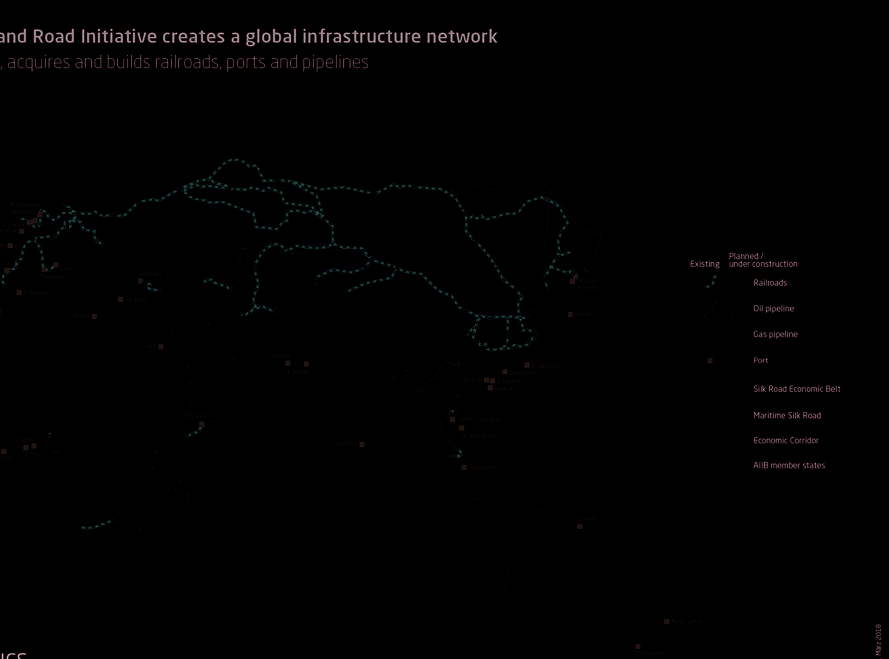
On the other hand, one of the strongest responses to the crisis of hegemonic global governance has come from China, which launched the Belt and Road Initiative (BRI) to reignite international cooperation. Though often designated by the West as a China-owned infrastructure and investment project, BRI seeks the collective leadership and active participation of all countries involved. At the heart of BRI’s logic lies the concept of shared development, which represents values centered on the principles of respect to diversity and national sovereignty. BRI has now acquired the status of world history’s largest and most comprehensive initiative for development and trade cooperation, with 152 countries having already signed up. In such an environment, there is a need for a comparative reading of maritime geopolitics in the context of BRI.
Figure 1. Mapping the Belt and Road Initiative: This is where we stand, (Mercator Institute for China Studies- MERICS, 2018). https://merics.org/en/analysis/mapping-belt-and-road-initiative-where-we-stand
Finally, the real potential of these geographical/physical, territorial, and demographic advantages can only be realized if a country aspiring to become a true sea power possesses an enabling cultural foundation and political environment. In cultural terms, sea powers are to thrive on a deeply ingrained love of money and trading skills coupled with an inclination and ability to build overseas posts. Moreover, Mahan (1999Mahan, A. T. (1999). The influence of sea power upon history, 1660-1783. In D. Jablonsky (Ed.), Roots of strategy vol. 4 (pp. 43-148). Mechanicsburg: Stackpole Books.) insists that these cultural characteristics are also to be combined with persistent state policies that accord due importance to naval power and maritime trade.
Geographical Position and Conformation in the South China Sea and the Eastern Mediterranean
It is possible to assess China and Turkey’s potential of maritime power based on a Corbett-inspired neo-Mahanian framework, as was depicted in the previous section. In terms of geographical position and conformation, both countries hold the advantage of access to open seas. For instance, Turkey has the longest coastlines (1577 km) in the Mediterranean Sea. Located in the Mediterranean, Mersin and İskenderun Ports are close to Turkey’s economic centers and assume an important role in regional trade and energy traffic. This being said, the strategic importance of these ports can only be fully appreciated when taken in the larger context of East Mediterranean geopolitics. Firstly, the Mediterranean Sea represents a highly strategic intersection point between Asia, Africa, and Europe, which connects the Atlantic and Indian Oceans. Adding to this is the fact that the Mediterranean Sea provides the shortest route that connects the Far East to Europe and the Atlantic. As such, one could argue that the command of the Mediterranean is of extreme importance to control energy traffic and international migratory flows towards Europe (TESSAM, 2008TESSAM. (2008). Kıbrıs’ın jeostratejik ve jeopolitik ö nemi. İstanbul: TESSAM Kültür Yayınları.; Çomak & Şeker, 2019Çomak, H. & Şeker, B. Ş. (2019). Akdeniz jeopolitiği (volume 1). Ankara: Nobel Yayınları.). About 70% of European energy imports are transported through the Mediterranean Sea. In this region, the Eastern Mediterranean is strategically located to control migratory flows and energy traffic given its proximity to the Suez Canal.
In this respect, Cyprus Island assumes a strategic role in controlling not only the flow of international trade and energy traffic from the Caspian Basin, the Persian Gulf, and the Suez Canal but also any future military operation to be conducted in the entire region. For these reasons, it is not surprising to know that the South Cyprus government harbors the largest number of military troops by surface area and the largest number of intelligence personnel by population size in the world. The South Cyprus government has become one of the most important bases of Britain and the US aiming to encircle Eurasian powers such as China, Russia, Iran, and Turkey (TESSAM, 2008TESSAM. (2008). Kıbrıs’ın jeostratejik ve jeopolitik ö nemi. İstanbul: TESSAM Kültür Yayınları.; Çomak & Şeker, 2019Çomak, H. & Şeker, B. Ş. (2019). Akdeniz jeopolitiği (volume 1). Ankara: Nobel Yayınları.). Several joint drills by Israel, the US, France, Greece, and South Cyprus such as Noble Dina, Nemesis, and Eunomia are aimed at not only containing Turkey, but also undermining China, Russia, and Iran.
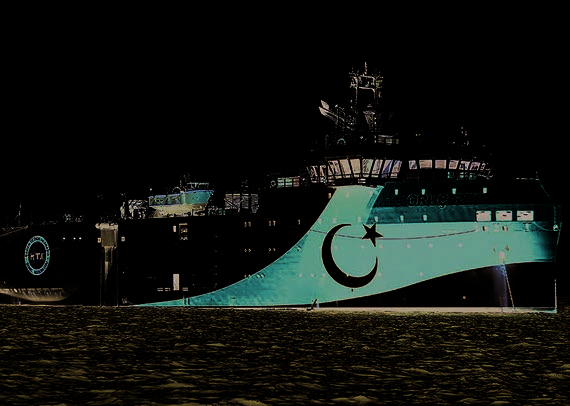
Figure 2. Turkish seismic research vessel Oruç Reis will x-ray the Mediterranean (Republic of Turkey Ministry of Energy and Natural Resources, 2020)
Particularly, US authorities have officially asserted their support for Greek energy policies at Turkey’s expense and framed Turkey’s Mediterranean demands as a “unilateral show of force” (Berberakis, 2020Berberakis, S. (2020). ABD Dışişleri Bakanı Pompeo: Yunanistan’la ilişkilerimiz en üst düzeyde.). US interventionism in the Mediterranean will likely take on an even greater weight if the Eastern Mediterranean Security and Energy Partnership Act is passed by the full Senate and the House of Representatives thanks to bipartisan support. This act aims to improve cooperation between the US, Israel, Greece, and the South Cyprus government as well as removing the ban on arms sales to the South Cyprus government, increasing US military assistance, and limiting US military cooperation with Turkey, if Turco-Russian rapproche ment were to be further deepened (Litsas, 2020Litsas, S. N. (2020). US foreign policy in the Eastern Mediterranean: Power politics and ıdeology under the sun. New York: Springer.). Certainly, this partnership will be most detrimental to China’s regional strategic interests in the longer term given that the Mediterranean is of vital importance to the continuation and de velopment of MSR.
Considering the strategic location of Cyprus Island in the Mediterranean, the South Cyprus government and Western military elements dominating the island will also assume a key role in limiting the Mediterranean access of Eurasian powers such as China, Russia, and Iran. Inversely, a stronger Turkey and Turkish Republic of Northern Cyprus hold the potential to facilitate Eurasian access to the Mediterranean. However, the West has been devoting special efforts to locking Turkey’s maritime zone to only a small area around Antalya Province despite Turkey having the longest coastlines in the Mediterranean Sea. These malicious efforts are symbolized in the so-called “Seville Map”, a European-made map that is often used as an official pretext by both the Greek and the South Cyprus governments. Eventually, the successful implementation of the Seville Map would endanger Mediterranean stability alongside MSR’s prospects given Turkey’s dominant geographical location in the Mediterranean Sea. Furthermore, Turkey constitutes MSR’s strongest partner from a geostrategic point of view. To the difference of Turkey, which has increasingly been adopting a more independent foreign-policy approach, pro-Western countries where China holds BRI-related investments, such as Greece and Israel (Litsas, 2020Litsas, S. N. (2020). US foreign policy in the Eastern Mediterranean: Power politics and ıdeology under the sun. New York: Springer.), are not likely to abandon the Western alliance in the long term.
China and Turkey’s Territorial Size, Demographic Structure, and Maritime Policies Under the Threat of US Interventionism
As was discussed in the previous section, Turkey and China’s geographical location and conformation offer potential advantages for improving maritime cooperation along MSR. However, this potential cannot be fully realized until certain conditions have been met. From a neo-Mahanian perspective, sea power also derives from demographic, territorial, and political-cultural factors conducive to economic dynamism and maritime expansion. In the case of Turkey, the Turkish economy has been going through a period of marked decline since 2009, which would in turn constrain its maritime potential. Meanwhile, Turkey also inspires ample optimism about its maritime potential as one of the largest and most dynamic Middle Eastern economies. Furthermore, Turkey ranks third in the list of the largest Middle Eastern countries by surface area and those with the highest performance in human capital and innovation after Israel and the United Arab Emirates (World Bank, 2020: 27World Bank. (2020). The human capital index 2020 update: Human capital in the time of covid-19.; Global Innovation Index, 2020: 16Global Innovation Index. (2020). Global innovation index 2020: Who will finance innovation?). Turkey’s name is also mentioned among the world’s top 10 ship-building countries including China, South Korea, and Japan, even though Turkey’s position is fast regressing due to a combination of several factors including a general lack of public funding and excessive domination of the private sector in such a strategic industry as the ship-building industry (OECD, 2011OECD. (2011). The Shipbuilding Industry in Turkey.). These factors speak to Turkey’s maritime potential as a country surrounded by sea on three sides, regardless of its recently arising economic challenges. Certainly, Turkey cannot match China’s potential as the world’s largest country by population size, fourth-largest country by surface area, and second-largest economy. Though China is on par with Turkey when it comes to its performance in human capital, it ranks among the world’s top 15 countries in the field of innovation. China’s maritime potential can also be assessed based on the fact that it possesses the world’s largest navy and third-largest diaspora (World Bank, 2020: 27World Bank. (2020). The human capital index 2020 update: Human capital in the time of covid-19.; Global Innovation Index, 2020: 16Global Innovation Index. (2020). Global innovation index 2020: Who will finance innovation?; Lye, 2020Lye, H. (2020). China boasts world’s largest navy: US DoD report.).
The deepening and durability of such empowering arrangements are contingent on the development of a strong political-cultural base, especially for Turkey. Certainly, China has inherited a strong maritime tradition since ancient times. In imperial times, moreover, China was able to pursue strong maritime policies under the rule of powerful emperors since the Han dynasty era (Kane, 2002Kane, T. (2002). Chinese grand strategy and maritime power. London: Psychology Press.). This being said, China’s current successful efforts at improving its sea power also owes to external factors, which find their sharpest expression in rising US interventionism in Asia.
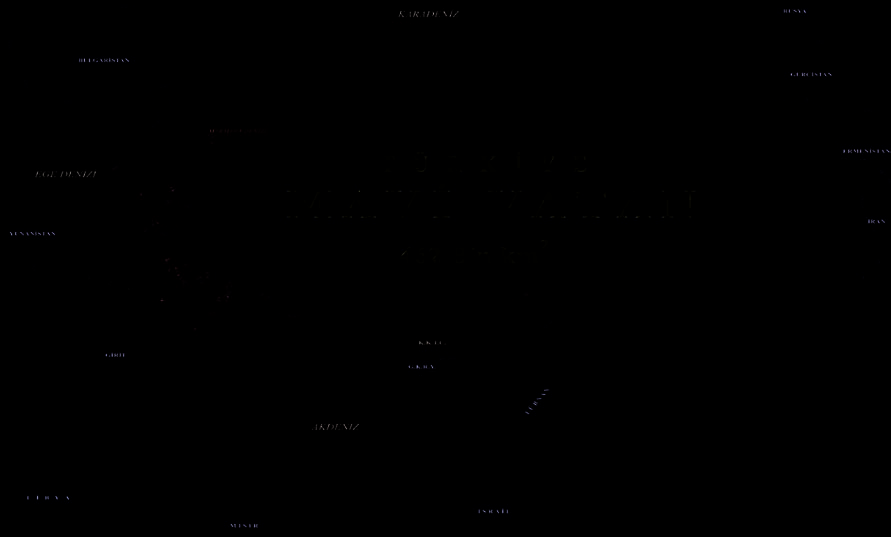
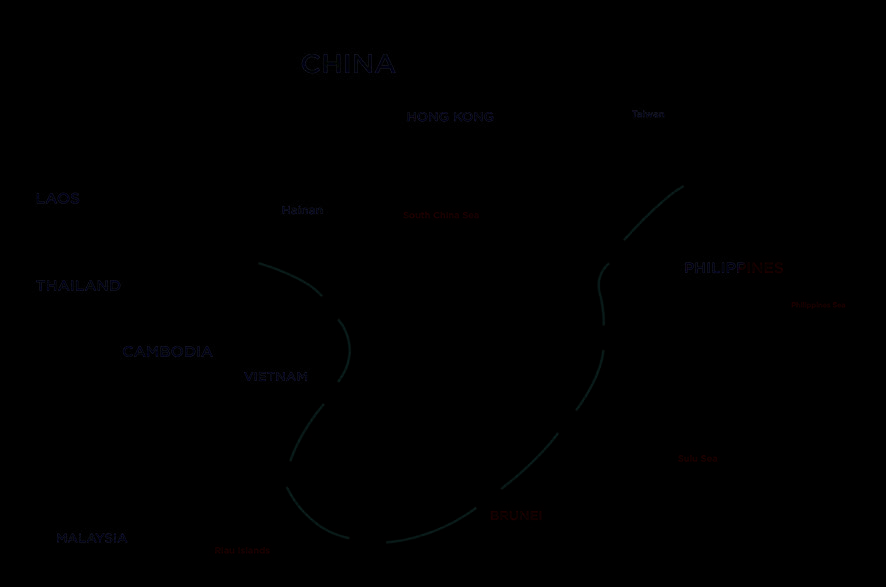
Figure 3. The map of Blue Homeland is prepared by resigned RADM Cihat Yaycı. This map is shared here by the courtesy of Mr. Yaycı.Figure 4. Nine-Dash Line (Map: BRIQ)
To the difference of China, Turkey has inherited a weak maritime legacy. As Cem Gürdeniz, a retired Turkish admiral, argues, both the Ottoman Empire and the Republic of Turkey were shut off from maritime civilization due to domestic policy failures and external pressures, which explains the current state of Turkey’s maritime power (Gürdeniz, 2020Gürdeniz, C. (2020). Mavi vatan Türk deniz jeopolitiği.). Worthy of note in this regard is that Turkey’s maritime trade fleet globally regressed from the 18 th to the 22 nd rank in the period 2000-2012 (Kanat, 2016Kanat, M.H. (Ed.). (2016). Türkiye coğrafyası ve jeopolitiği. Ankara: Nobel.). This being said, Turkey’s “Blue Homeland” doctrine presents a new homeland imaginary whose reach extends to its inland waters, continental shelves, and exclusive economic zones.
Initiated at China’s initiative in 2013, BRI has emerged as a strong force amidst the crisis of US-led hegemonic governance and the deepening of global economic and military chaos. However, BRI’s real potential cannot be realized without maritime security along MSR. Turkey and China appear as key actors in ensuring maritime security, whose mutual ties are increasingly being consolidated in the context of rising multipolarity. The present article has examined the consolidation of these objective ties from a neo-Mahanian perspective. This analysis reveals that maritime security in the South China Sea –as MSR’s starting point– and in the East Mediterranean –as MSR’s final destination until it reaches Europe– are mutually conditioned and contingent on each other for the development and prospects of BRI. Both countries constitute the key players in their respective maritime regions connected through BRI and therefore have a vested interest in providing mutual support for enhancing maritime security. Certainly, Turkey assumes a critical role as part of MSR given its status as a Mediterranean country that has the longest coastlines and possesses strong demographic and economic dynamism in its vast territory. In the meantime, both Turkey and China suffer from increasing US interventionism at first hand. In the Mediterranean case, US interventionism is further consolidated through a stronger pro-Western alliance that includes Israel, France, Greece and the South Cyprus government. This is an important risk factor that threatens to contain the peaceful development of China in the longer term. Under these conditions, one could observe that China and Turkey have developed similar geostrategic doctrines embodied in the Turkish “Blue Homeland” doctrine and the Chinese “Blue National Soil” doctrine. China and Turkey’s shared geopolitical imperatives and geostrategic conformity are to be better grasped by policy-makers for the future success of BRI.
Visuals and tables4
Figures
Figure 1Mapping the Belt and Road Initiative: This is where we stand, (Mercator Institute for China Studies- MERICS, 2018). https://merics.org/en/analysis/mapping-belt-and-road-initiative-where-we-stand
Bateman, S. & Emmers, R. (Eds.). (2008). Security and international politics in the South China Sea: Towards a co-operative management regime. New York: Routledge.
Behrendt, P. (2019). South China Sea: A multifaceted conflict. In K. Żakowski & B. Kowalski (Ed.), Power shifts in East Asia and their ımplications for Asia– Europe relations (pp.39-50). Łódź: Wydawnictwo Uniwersytetu Łódzkiego.
Corbett, J. (1999). Some principles of maritime strategy. In D. Jablonsky (Ed.), Roots of strategy Vol. 4 (pp. 149-262). Mechanicsburg: Stackpole Books.
Çomak, H. & Şeker, B. Ş. (2019). Akdeniz jeopolitiği (volume 1). Ankara: Nobel Yayınları.
Fels, E. & Vu, T. H. (Eds.). (2016). Power politics in Asia’s contested waters: territorial disputes in the South China Sea. New York: Springer.
Gürcan, E. C. (2019). Political geography of Turkey’s intervention in Syria: Underlying causes and consequences (2011-2016). Journal of Aggression, Conflict and Peace Research, 11(1), 1–10.
Hashmi, S. (2016). China’s approach towards territorial disputes: Lessons and prospects. New Delhi: KW Publishers.
Hattendorf, J.B. & Jordand, R.S. (Eds.). (1989). Maritime strategy and the balance of power: Britain and America in the twentieth century. New York: Palgrave Macmillan.
Huang, J. & Billo, A. (Eds.). (2015). Territorial disputes in the South China Sea: Navigating rough waters. New York: Palgrave Macmillan.
İşeri, E. & Bartan, A.Ç. (2019). Turkey’s geostrategic vision and energy concerns in the Eastern Mediterranean security architecture: A view from Ankara. In Z. Tziarras (Ed.), The New geopolitics of the Eastern Mediterranean: Trilateral partnerships and regional security (pp. 111-124). Nicosia: PRIO Cyprus Centre
Kanat, M.H. (Ed.). (2016). Türkiye coğrafyası ve jeopolitiği. Ankara: Nobel.
Kane, T. (2002). Chinese grand strategy and maritime power. London: Psychology Press.
Kraska, J. (2011). Maritime power and the law of the sea: Expeditionary operations in world politics. Oxford: Oxford University Press.
Lanteigne, M. (2016). The South China Sea after ‘Philippines v. China’: Summer of our discontent? Norwegian Institute for International Affairs (NUPI), 25, 1-4.
Le, Q.A., Tran, V.A. & Duc, B.L.N. (2019). The Belt and Road Initiative and its perceived impacts on the textile and garment industry of Vietnam. Journal of Open Innovation: Technology, Market, and Complexity, 5(59), 1-14.
Litsas, S. N. (2020). US foreign policy in the Eastern Mediterranean: Power politics and ıdeology under the sun. New York: Springer.
Mahan, A. T. (1999). The influence of sea power upon history, 1660-1783. In D. Jablonsky (Ed.), Roots of strategy vol. 4 (pp. 43-148). Mechanicsburg: Stackpole Books.
McMichael, P. (1990). Incorporating comparison within a world-historical perspective: An alternative comparative method. American Sociological Review, 55(3), 385-397.
McMichael, P. (2000). World-systems analysis, globalization, and incorporated comparison. Journal of World-Systems Research, 6(3), 385-397.
Pencea, S. (2018). China-Europe BRI connectivity: What’s wrong, what’s next. Global Economic Observer, 6(2), 190-211.
Reynolds, C. G. (1974). Command of the sea: The history and strategy of maritime empires.New York: Morrow.
Richardson, P. (2015). ‘Blue national soil’and the unwelcome return of ‘classical’geopolitics. Global Change, Peace & Security, 27(2), 229-236.
Stavridis, J.G. (2018). Sea power: The history and geopolitics of the world’s oceans. New York: Penguin Books.
TESSAM. (2008). Kıbrıs’ın jeostratejik ve jeopolitik ö nemi. İstanbul: TESSAM Kültür Yayınları.
Turcsányi, R.Q. (2018). Chinese assertiveness in the South China Sea: Power sources, domestic politics, and reactive foreign policy. New York: Springer.