The Reform and Opening-Up Strategy in the Post-Mao Era
The policymakers of the early phase of the Chinese Revolution were experienced revolutionaries who had successfully carried out a protracted revolutionary struggle, but they lacked experience and knowledge in political and economic statecraft. Mistakes were thus unavoidable in the process of exploration through trial and error. Indeed, it is difficult to over-emphasize the substantial gains from the big push strategy, which served as a springboard for the Chinese economic miracle to build a strong physical and hu-man infrastructure for socialist construction. In the late 1970s, however, it became apparent that policymakers’ tendency towards impetuosity and rash advances for rapid industrialization was not sustainable in the longer term. Moreover, the late 1970s and early 1980s testified to the exhaustion of the Soviet model of development due to a stagnating Soviet economy coupled with the alienating effects of the Sino-Soviet split, which made the Chinese question the feasibility of continuing a Soviet-modeled system. In this context, Chinese policymakers grew a stronger awareness that China is still in the early phases of socialist construction and that this situation will last longer than expected due to several constraints, including the long-term retreat of the international communist movement and the advent of capitalist globalization under the Third Industrial Revolution. Relatedly, China’s new leadership forged around Deng required an entirely novel framework to mobilize the economy by taking advantage of globalization and ensuring the legitimacy of the economic model after the power vacuum created by Mao’s death. According to Chinese policymakers, this was a viable alternative to rapidly surpass the Soviet Union and catch up with the West without sacrificing domestic stability.
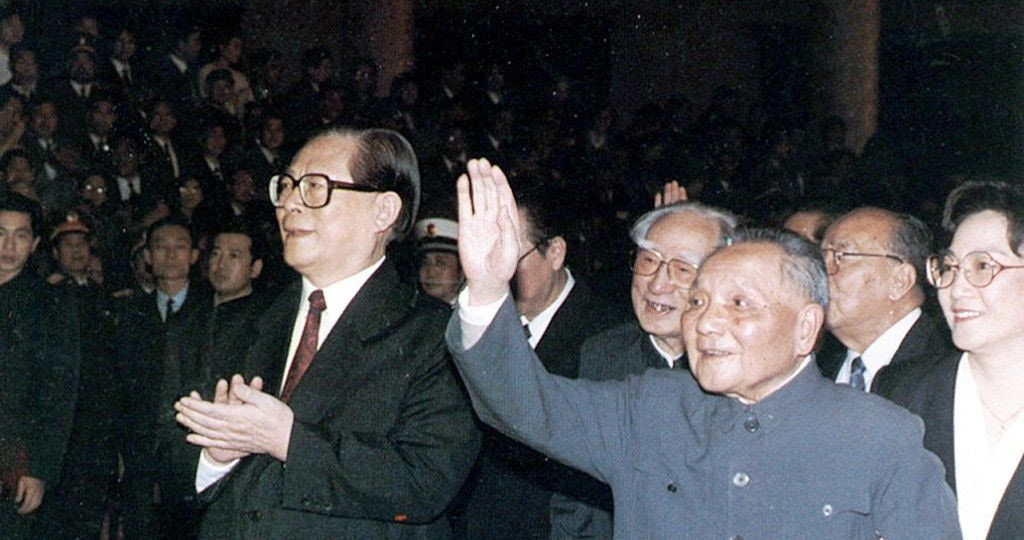
In the late 1970s, Deng proposed digging deeper into Mao’s theoretical contributions to “socialism with Chinese characteristics” and preparing a blueprint for China’s modernization by shifting the focus from class struggle to the fundamental task of expanding the country’s productive forces, which are viewed as the “foundation” of Chinese socialism (Deng, 1987: 17Deng, X. (1987). Fundamental Issues in President Day China. Beijing: Foreign Languages Press.; Gürcan, 2021bGürcan, E. C. (2021a). On the development of China’s environmental policies towards an ecological civilization. Belt & Road Initiative Quarterly, 2(3): 7-25.). As originally conceived, this blueprint proceeds from the argument that “economic development is our primary objective, and everything else must be subordinated to it,” drawing on Mao’s subsequent formula offered in A Critique of Soviet Economics (Deng, 1987:116Deng, X. (1987). Fundamental Issues in President Day China. Beijing: Foreign Languages Press.; Mao, 1977Mao, Z., (1977). A Critique of Soviet Economics. New York: Monthly Review Press.). Worthy of note here is that this formula provides an earlier framework for state capitalism and modernization: “In addition to modernizing industry and agriculture, science and culture, we have to modernize national defense” (Mao, 1977: 65Mao, Z., (1977). A Critique of Soviet Economics. New York: Monthly Review Press.). Following Mao’s teachings on the Four Modernizations, Deng’s blueprint consists of “one focus” (economic construction centred on the development of agriculture, industry, defence, and science and technology, otherwise known as the “Four Modernizations”) and “two basic points”, i.e. (a) upholding the “four cardinal principles” (upholding socialism, the people’s democratic dictatorship, the CPC leadership and Mao Zedong Thought) and (b) the policy of reform and opening towards a system of market socialism integrated with the world economy (Deng, 1984: 187-188Deng, X. (1984). Selected Works Vol. III. Beijing: Foreign Languages Press.; Wu, 1996Wu, J. (1996). On Deng Xiaoping Thought. Peking: Foreign Languages Press.; CPC, 1991CPC, Communist Party of China. (1991). Major Documents of the People’s Republic of China (1978-1989). Peking: Foreign Languages Press.; Gürcan, 2021bGürcan, E. C. (2021a). On the development of China’s environmental policies towards an ecological civilization. Belt & Road Initiative Quarterly, 2(3): 7-25.).
It is important to emphasize that Deng’s re-
form strategy does not stem from a neoliberal perspective of market fundamentalism. With common prosperity and the state’s guidance of the economy in mind, Deng rather advocated for the acceleration of “foreign investment capital in a planned way… [by] serving the development of the socialist economy as a whole” (Deng, 1984: 96Deng, X. (1984). Selected Works Vol. III. Beijing: Foreign Languages Press.). He thus followed Mao’s (1961: 413Mao, Z., (1961). Selected Works IV. Peking: Foreign Languages Press.) motto “only modernization could save China, only learning from foreign countries could modernize China.” Similarly, he refuted the idea “that the market is capitalist and only planning is socialist” (Deng, 1984: 136Deng, X. (1984). Selected Works Vol. III. Beijing: Foreign Languages Press.). Instead, he insisted that both planning and markets could be used to serve the socialist system, whose essence lies in the “liberation and development of the productive forces, elimination of exploitation and polarization, and the ultimate achievement of prosperity for all” (Deng, 1984: 243Deng, X. (1984). Selected Works Vol. III. Beijing: Foreign Languages Press.). However, these objectives can only be realized “step by step” despite complexities and contradictions along the way: “Where conditions permit, some areas may develop faster than others; those that develop faster can help promote the progress of those that lag behind, until all become prosperous” (Deng, 1984: 244Deng, X. (1984). Selected Works Vol. III. Beijing: Foreign Languages Press.).
Deng realized that China’s size was too large for central planning to be effectively implemented in every area of the economy, which called for a less centralized system of planning (Naughton, 2018Naughton, B.J. (2018). The Chinese Economy: Adaptation and Growth (second edition). Cambridge: MIT Press.). Within this framework, China initiated the era of reform and opening up by decentralizing agriculture and gradually allowing for the privatization of the industry while “open[ing] up [China’s] industrial base to foreign contractors… [based on] very stringent guidelines that foreign contractors had to follow” (Marino, 2018:42Marino, R. (2018). Chinese Trade: Trade Deficits, State Subsidies and the Rise of China. London: Routledge.). The idea was to benefit from foreign direct investments to transfer capital and technological knowledge in the longer term by pursuing export-driven strategies (Marino, 2018Marino, R. (2018). Chinese Trade: Trade Deficits, State Subsidies and the Rise of China. London: Routledge.). As such, reform and opening up were used as vehicles for implementing an autocentric model of state-guided development without giving up to market fundamentalism and economic dependency on the West.
The Jiang era (1993–2002Jiang, Z. (2002). On the” three Represents.”. Peking: Foreign Languages Press.) coincided with a period in which globalization was in full swing and faced with the unipolarization of world politics under the US initiative (Gürcan, 2019Gürcan, E. C. (2019). Multipolarization, south-south cooperation and the rise of post-hegemonic governance. London: Routledge.; Gürcan, 2021bGürcan, E. C. (2021a). On the development of China’s environmental policies towards an ecological civilization. Belt & Road Initiative Quarterly, 2(3): 7-25.). According to the KOF Index of Globalisation—which takes into account the economic, social and political aspects of globalization—the world’s globalization scores underwent an almost steady increase from 38.43 in 1970 to 53.37 in 2002 (KOF Globalisation, 2020KOF Globalisation (2020). The source article does not provide a separate full bibliographic entry for this citation.). In this era, China’s political and economic framework was shaped by Jiang’s “Three Represents” theory, which professes to represent “the requirements of the development of China’s advanced productive forces, the orientation of the development of China’s advanced culture, and the fundamental interests of the broadest masses of the Chinese people” (Jiang, 2002: 8Jiang, Z. (2002). On the” three Represents.”. Peking: Foreign Languages Press.). The “advanced productive forces” component of the “Three Represents Theory” takes off from Mao and Deng’s vision of modernization (Jiang, 2002: 183Jiang, Z. (2002). On the” three Represents.”. Peking: Foreign Languages Press.). In line with Jiang’s theory, the Chinese economy moved towards a socialist market economy with public ownership as the main form. Here, public ownership encompasses a broader scope than mere state ownership, including not only state-owned enterprises (SOEs) but also collectively-owned enterprises (COEs) and various forms of mixed ownership, such as cooperative enterprises and “equity shares in private and foreign firms that are held by SOEs and (COEs)” (Wang, 2011: 459Wang, Q. K. (2011). The Rise of Neoclassical Economics and China's WTO Agreement with the United States in 1999. Journal of Contemporary China, 20(70), 449-465.). In 2000, therefore, China launched a going-out strategy “with the aim of establishing Chinese firms as global players, including SOEs and the state-owned commercial banks” (Yueh, 2018: 114Yueh, L. (2018). Evolution of market reforms. The SAGE Handbook of Contemporary China, 101.).
Regarding the “advanced culture” component, Jiang envisioned the development of a national culture that “provide[s] spiritual and intellectual support for economic development” in line with such values as self-reliance, competition, efficiency, democracy and innovation (Jiang, 2002:188-189Jiang, Z. (2002). On the” three Represents.”. Peking: Foreign Languages Press.). Finally, when it comes to the “broadest masses” component of the “Three Represents Theory”, Jiang’s vision aimed to “bring the vast fields of society and a growing market under solid and effective Party leadership” (Jiang, 2002: 16Jiang, Z. (2002). On the” three Represents.”. Peking: Foreign Languages Press.). According to Ji-ang, this vision was to be realized by encouraging “party building in non-state enterprises” and extending these efforts towards “private business owners” (Jiang, 2002: 21-23Jiang, Z. (2002). On the” three Represents.”. Peking: Foreign Languages Press.).
In this period, China witnessed rapid economic growth and industrialization, which al-lowed for reversing income inequality, remedying environmental damage, and improving social welfare by the end of the 1990s. For one thing, China’s estimated GINI scores had changed from 0.33 in 1980 to 0.35 in 1990 and 0.4 in 2000 (Chen et al., 2010: 20Chen, J., Dai, D., Pu, M., Hou, W., & Feng, Q. (2010). The trend of the Gini coefficient of China. Brooks World Poverty Institute Working Paper, (109).; Gürcan, 2021bGürcan, E. C. (2021a). On the development of China’s environmental policies towards an ecological civilization. Belt & Road Initiative Quarterly, 2(3): 7-25.). To face such challenges, the Tenth Five Year Plan (2001–2005) targeted regional disparities, improving the quality of education, expanding forest coverage, increasing disposable income, accelerating infrastructure development, and bettering medical services (China Daily, 2011China Daily. (2011). The 10th Five-Year Plan (2001-2005)). One should also emphasize that the Tenth Five Year Plan imposed a stronger emphasis on the public sector: “The ownership system needs to be further improved. We need to uphold the dominance of the public sector of the economy, let the state-owned sector play the leading role, develop various forms of collective undertakings, and support, encourage and guide the healthy development of private and individual sectors of the economy (Zhu, 2001Zhu, R. (2001). Report on the Outline of the Tenth Five-Year Plan for National Economic and Social Development (2001).).” In the me-antime, China targeted a total of 120 strategic corporations for state support. These corporations were conceived of as “national champions” who would soon become “global players”, mostly operating in strategic areas such as electricity, coal, automobiles, electronic appliances, pharmaceuticals, transportation, aviation, and information technology (Kiely, 2015Kiely, R.(2015). The BRICs, US ‘Decline’and Global Transformations. London: Palgrave Macmillan.).
From Balanced and All-Round Development to the Chinese Dream of National Rejuvenation: Towards a Higher Phase of Socialism in the Hu Jintao and Xi Jinping Eras
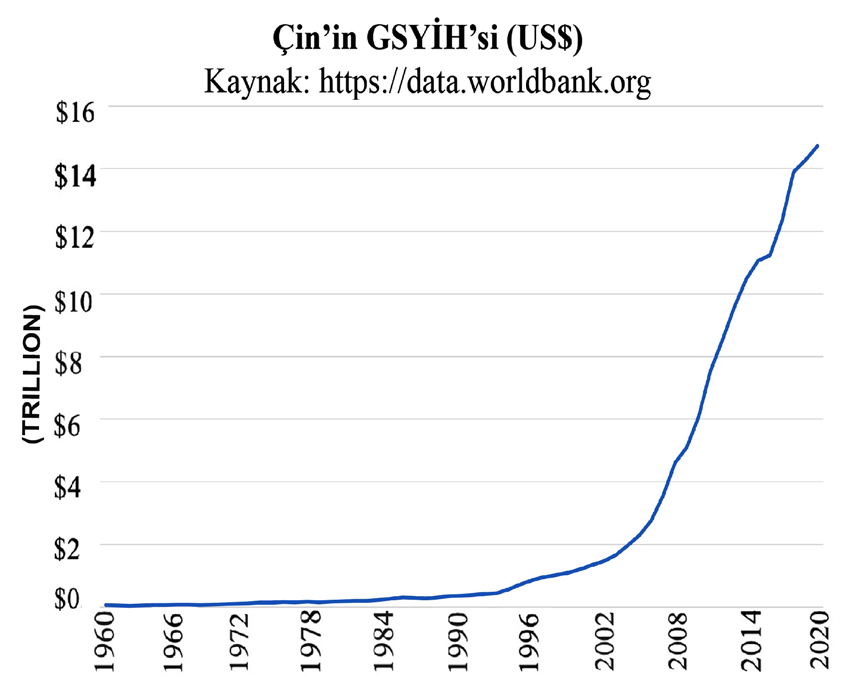
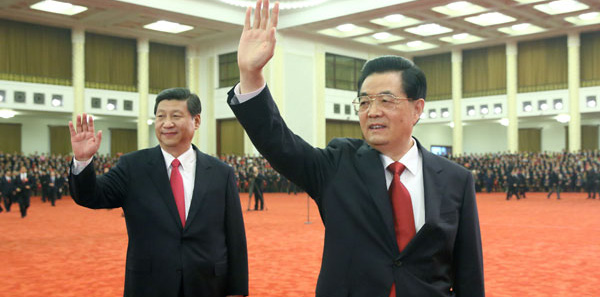
When the Hu administration (2002-2012) came into office, China’s productive forces had already attained a degree of maturity that made it possible to focus on the fight against exploitation and polarization. GDP can be used as a basic indicator of the level of development of productive forces, and the data on China’s GDP point to significant achievements in the 2000s (See Figure 1). Formulated in response to the rising tide of social unrest and taking advantage of China’s increased level of economic maturity, Hu’s theory of “harmonious so-ciety” provided a policy framework that targets the smoothing of popular unrest.
In this context, the 10th Five Year Plan prioritized improving China’s social security system and state-owned enterprises, whilst the 12th Five Year Plan focused on environmental protection as part of Hu’s harmonious development blueprint while also developing education, science, and technology (CGTN, 2020CGTN. (2020). Five-Year Plans map out China's future development.). Hu’s new policy framework had a strong effect on the inauguration of Labour Contract Law (LCL) in 2008 and noticeable increases in the minimum wage by local governments. The LCL ensures registered employment along with contract renewal guarantees, social security funds, and wage standards (Gürcan & Mete, 2017: 12-13Gürcan, E. C., & Mete, B. (2017). Neoliberalism and the changing face of unionism: the combined and uneven development of class capacities in Turkey. London: Springer.).
According to Hu, “social harmony is an
essential attribute of socialism with Chinese characteristics” (Hu, 2007Hu, J. (2007). Hu Jintao’s report at 17th Party Congress.). His vision of so-cial harmony was not limited to promoting “social equity and justice”. It finds its fullest expression in “balance[ing] urban and rural development, development among regions, economic and social development, relations between man and nature, and domestic de-velopment and opening to the outside world” (Hu, 2007Hu, J. (2007). Hu Jintao’s report at 17th Party Congress.). One cannot help but notice that Hu’s vision strongly echoes Mao’s speech entitled On the Ten Relationships, where he makes a case for balanced development in conformity with the concrete reality of China (Mao, 1974Mao, Z., (1974). Mao Tse-tung Unrehearsed: Talks and Letters, 1956-71. Harmondsworth: Penguin.). In achieving social harmony, moreover, Hu brings the “Scientific Outlook on Development” to the centre of his policy framework, which consists of making full use of the guidance of science and education to promote a balanced, all-round, and sustainable model of development that puts people first (Hu, 2007Hu, J. (2007). Hu Jintao’s report at 17th Party Congress.; Gürcan, 2021bGürcan, E. C. (2021a). On the development of China’s environmental policies towards an ecological civilization. Belt & Road Initiative Quarterly, 2(3): 7-25.). Therefore, Hu’s vision of building a “moderately prosperous society in all respects” led him to emphasize “running the administration for the sake of the people” and “seeking harmony in the mi-dst of differences” (Hu, 2007Hu, J. (2007). Hu Jintao’s report at 17th Party Congress.).
In this context, the Hu administration ac-celerated social policies, state-guided policies, and large-scale infrastructure investments, which the Xi administration later deepened. The Eleventh Five Year Plan (2006-2010) laid an even stronger emphasis on the public se-ctor. It thus sought to “push the government capital to concentrate in the important in-dustries and key fields critical to the national safety and national economic arteries, optimize state-owned economic distribution, reinforce the controlling force, influence and driving force of the state-owned economy and exert its leading function... develop big company and big enterprise groups with relatively strong competitive power... continue to deepen collective enterprise reform and develop multi-form collective economy (PRC, 2006PRC, People’s Republic of China. (2006). 11th Five-Year Plan (2006-2010) for National Economic and Social Development.).” This plan also accentuated the task of building an independent base of manufacturing and innovation abilities (PRC, 2006PRC, People’s Republic of China. (2006). 11th Five-Year Plan (2006-2010) for National Economic and Social Development.).
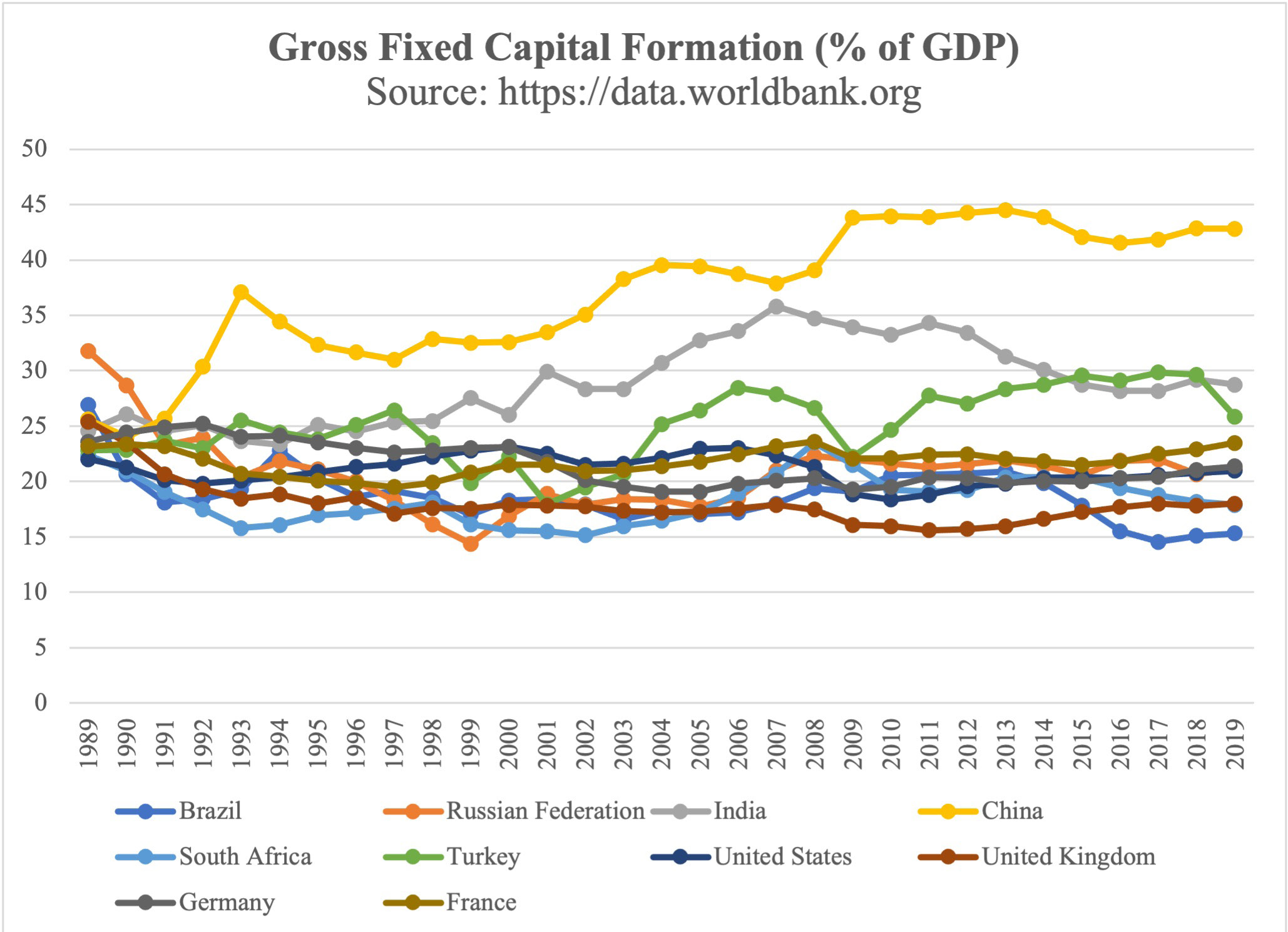
Based on the context depicted above, gross fixed capital formation may be considered a basic indicator for infrastructure development. It includes not only land improvements, plant, machinery, and equipment purchase but also the construction of roads, railways, schools, offices, hospitals, private residential dwellings, and commercial and industrial buildings. Available data indicate that China’s gross fixed capital formation grew by around 7.85 percentage points in 1989-2001. Between 2002 and 2012, this growth was recorded at 9.19 percentage points under the Hu administration. Worthy of note here is that China’s state-guided economic development model allowed the Chinese gross fixed capital formation to outscore imperialist countries such as the US, the United Kingdom, Germany, and France (See Figure 2).
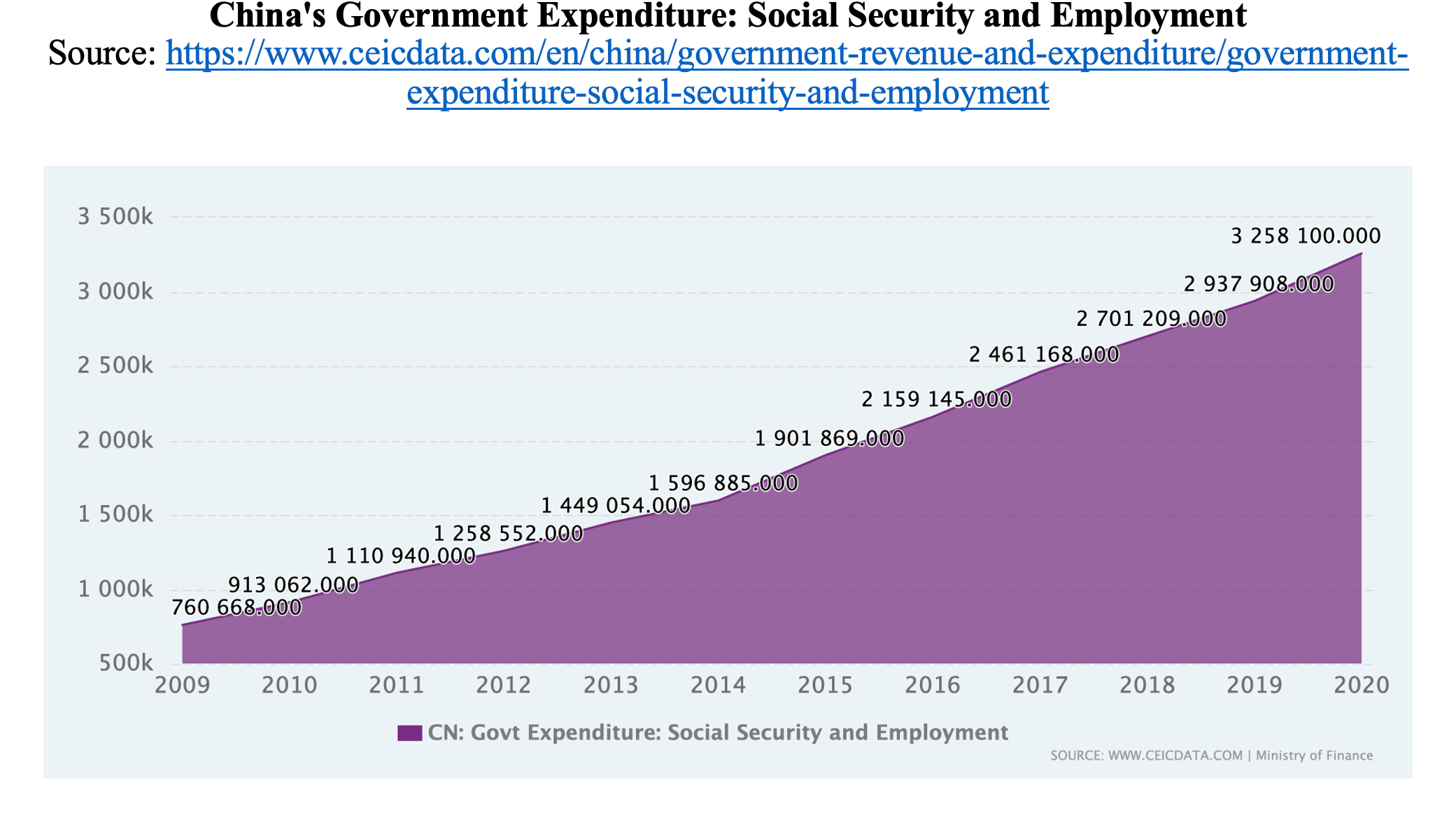
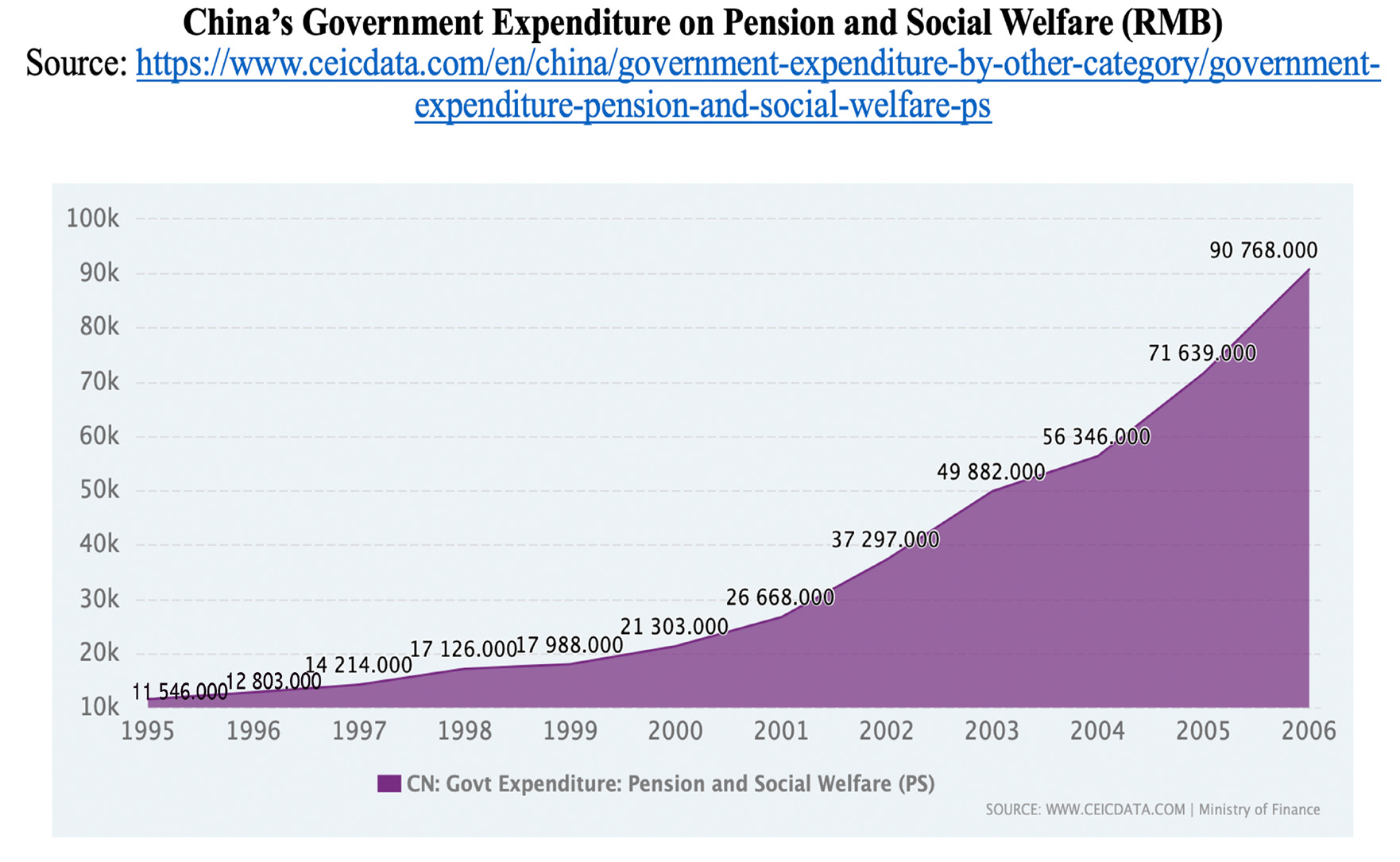
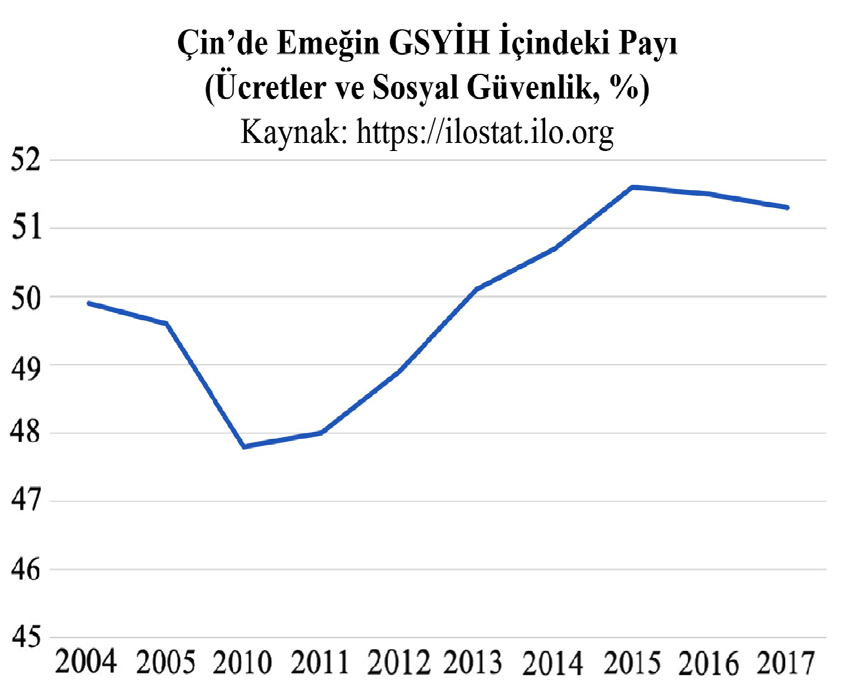
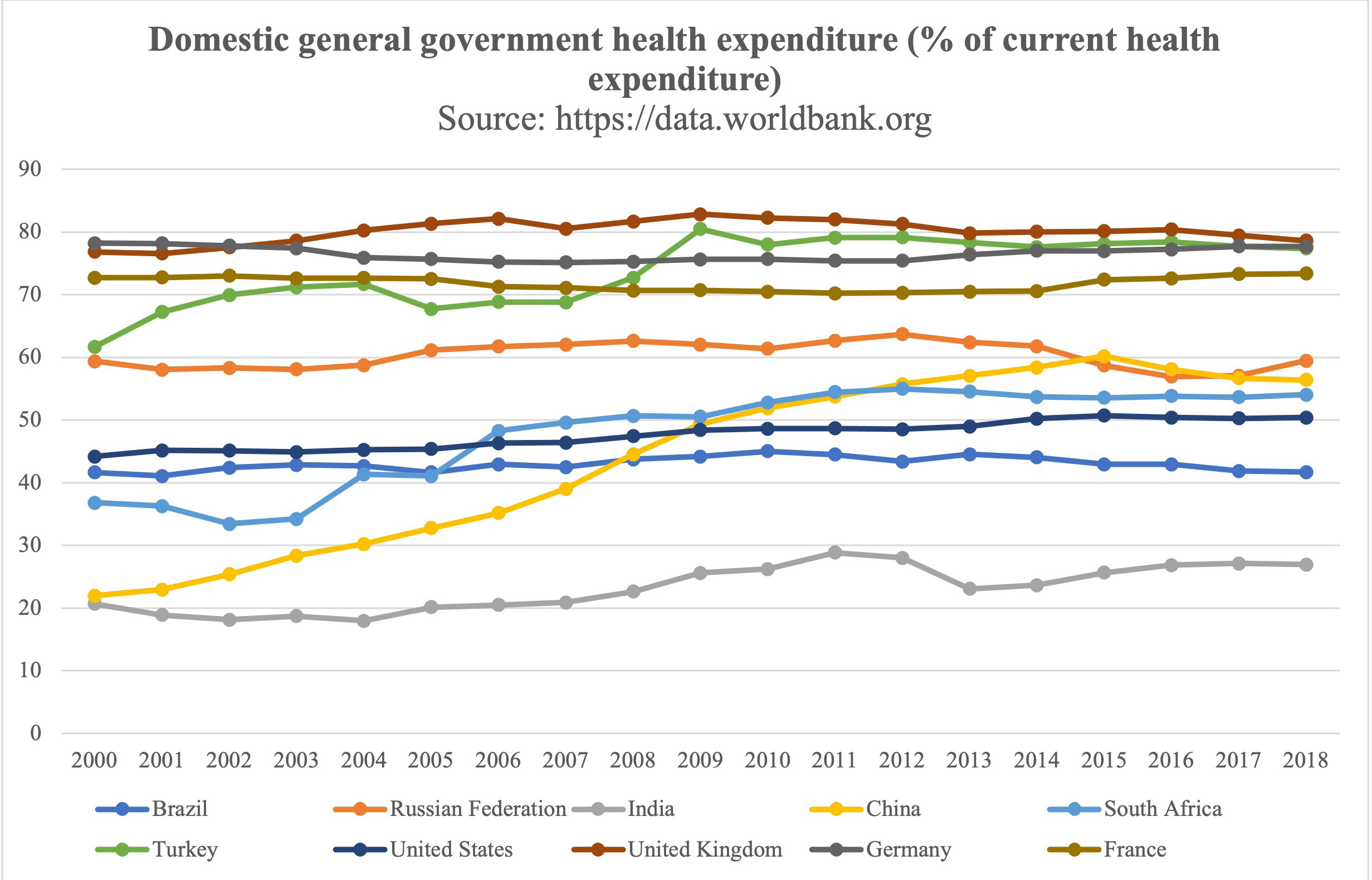
The expansion of China’s social policies can be assessed by reference to data on “public expenditure on social security and employment”, “government expenditure pension and social welfare”, and “domestic general government health expenditure as a percentage of current health expenditure”. Regarding social security and employment, China’s public expenditure witnessed a significant increase, which amounts to a rate of over 328% (see Figure 3). This situation is no different from China’s expenditure on pension and social welfare, having soared by more than 686% in the period 1995-2006 alone (see Figure 4). Not surprisingly, this is reflected in the increasing labor share of GDP in China, which accelerated in 2010 and reached 51.3% by 2017 (see Figure 5). In 2000, moreover, China was the second-worst performer in our sample of imperialist and developing countries in the area of general government health expenditure. However, the 2000s testified to a spectacular increase in the ratio of China’s ge-neral government health expenditure to total health expenditure, which rose by nearly 34.5 percentage points.
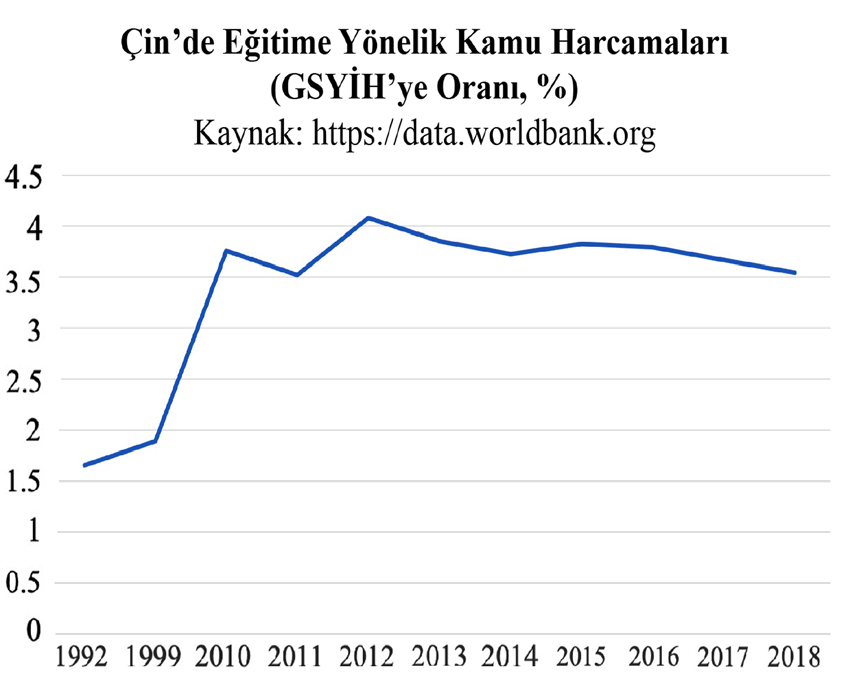
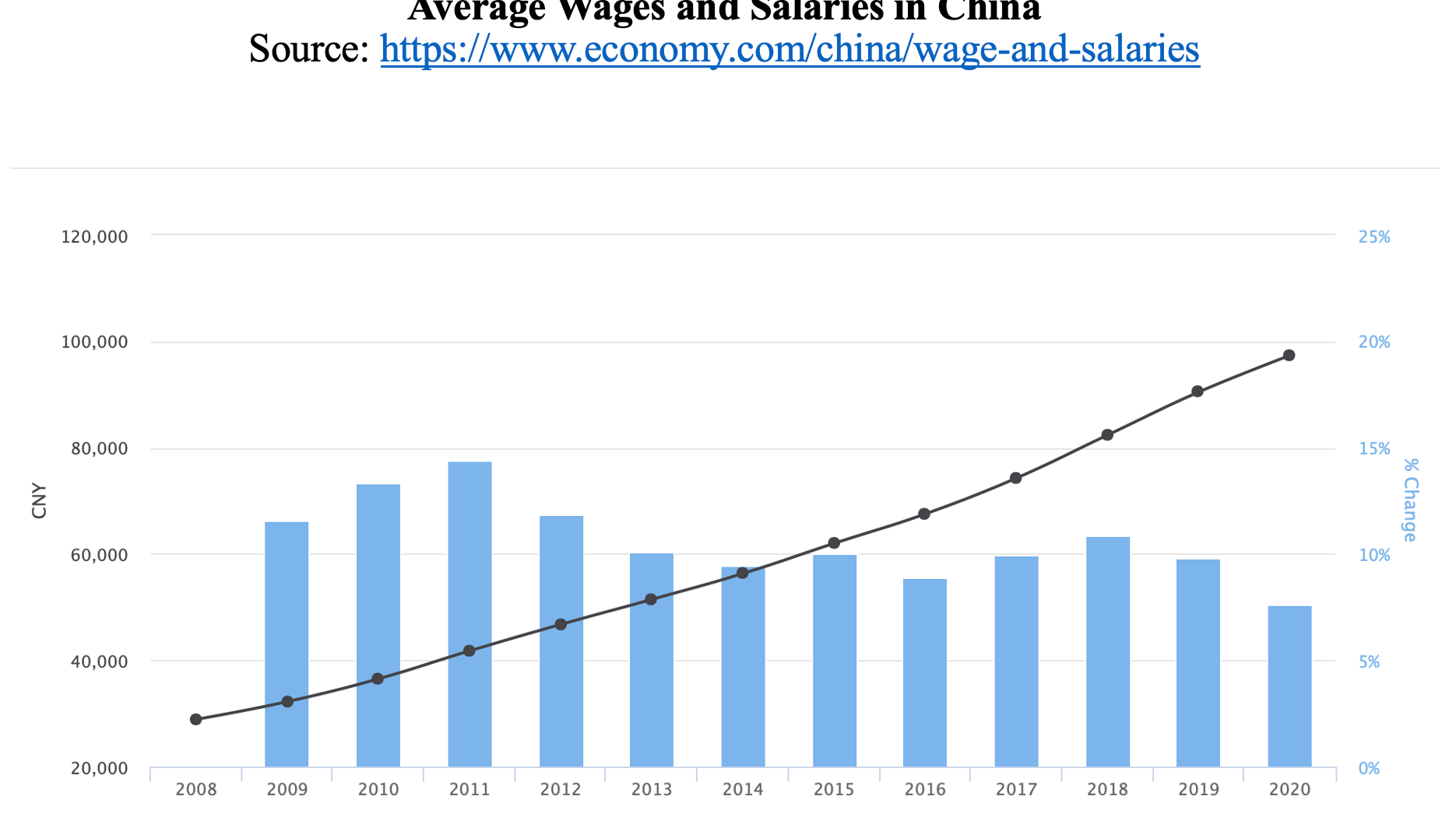
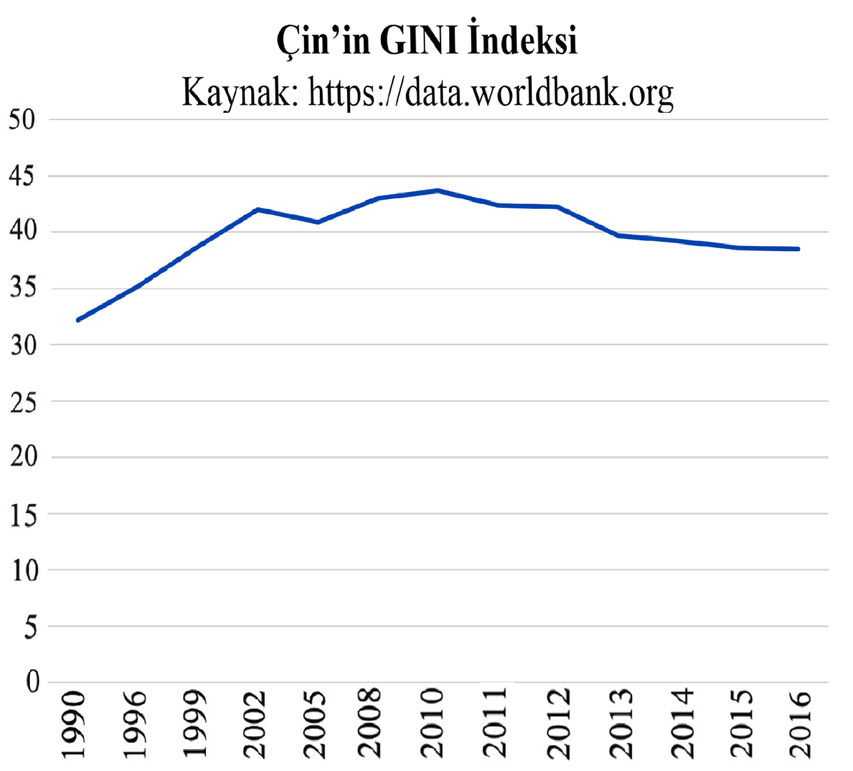
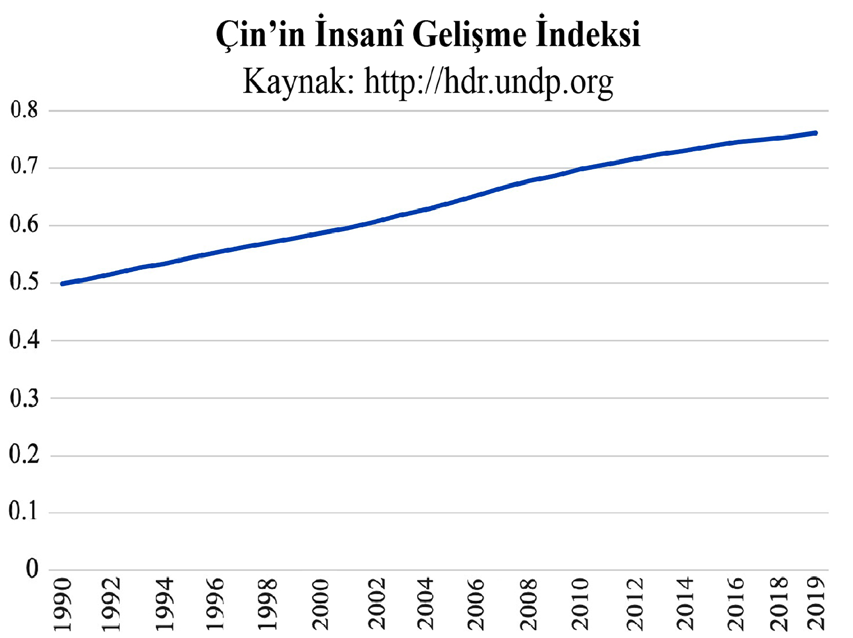
It thus seems that China exhibited the hi-ghest rate of increase in our sample, only to accelerate under the Hu and Xi administrations. Available data indicate that public he-alth expenditure reached a level above 50% of total health expenditure, starting with the year 2010 (see Figure 6). A similar situation goes for China’s government expenditure on education (as a % of GDP), which rose from 1.88% in 1999 to over 3.75% in 2010 (see Fi-gure 7). An upward trend is also observable in China’s average wages. They rose by almost 237% under low inflation conditions (see Fi-gure 8). All of these developments were reflected in the reduction of the GINI index, or in-come inequality since 2010, mainly thanks to Hu’s all-round development strategy, as well as Xi’s diligent efforts later. At this point, it be-ars underscoring that China’s GINI index re-veals China’s social advances in the 2000s (see Figure 9). China exhibited similar performance in its Human Development Index (HDI). HDI is a tool that measures human development in health, education, and the standard of living. Overall, there has been a constant increase in China’s HDI in the period 1990-2019, which amounts to an increase of 0.262 points in total (see Figure 10). In the final analysis, one could argue that these socioeconomic ac-hievements clearly demonstrate the success of China’s model of development.
China’s shift to a more people-oriented economic policy framework gained significant pace under the Xi administration. This administration has continued Hu’s vision of core socialist values, deepened the struggle against corruption and inequality, and achieved no-table successes in eliminating pro-American elements from the state as a continuation of Hu’s diligent efforts (Martin, et al., 2021Martin, P., Jacobs, J. & Wadhams, N. (2021). China Is Evading U.S.Spies — and the White House Is Worried. Bloomberg.; Dorfman, 2018Dorfman, Z. (2018). Botched CIA communications system helped blow cover of Chinese agents. Foreign Policy.). In a world characterised by the decline of US global hegemony and the multipolarization of global politics (Gürcan, 2019Gürcan, E. C. (2019). Multipolarization, south-south cooperation and the rise of post-hegemonic governance. London: Routledge.; Gürcan, 2021bGürcan, E. C. (2021a). On the development of China’s environmental policies towards an ecological civilization. Belt & Road Initiative Quarterly, 2(3): 7-25.), Xi strives to restore China’s self-confidence and wealth, which finds its fullest expression in the notions of the doctrine of “Four Matters of Confidence” and the “Chinese Dream”. The origins of the “Four Matters of Confidence” can be traced back to a speech delivered by Hu at the 18th CPC Party Congress, where he pointed to the importance of maintaining confidence in the future of socialism, the scientific nature of socialism as a theory, and the superiority of socialism as a system. In 2014, Xi added a fourth component, which stresses confidence in the value and vitality of Chinese culture. China’s growing self-confidence, driven by in-tensifying geopolitical rivalry and the country’s sustained economic success, also finds its expression in the notion of the “Chinese Dream” (Gürcan, 2021bGürcan, E. C. (2021a). On the development of China’s environmental policies towards an ecological civilization. Belt & Road Initiative Quarterly, 2(3): 7-25.; China Research Center, 2012China Research Center. (2012). The 18th Party Congress: A Turning Point in Chinese Politics?). Xi describes the Chinese Dream as:
“A dream cherished and aspired to by the Chinese people and nation, a dream of building China into a well-off society in an all-round way and rejuvenating the Chinese na-tion, a dream for everyone to make his own dream come true, a dream that the whole na-tion strives for, and a dream to show the world China’s commitment to making a greater contribution to the peace and development of mankind” (Xi, 2014a: 179Xi, J. (2014a). The governance of China. Peking: Foreign Languages Press.).
As such, the Chinese Dream calls for the rejuvenation of the Chinese nation by further deepening Hu’s vision of equitability and sustainability, without however losing sight of Deng’s modernisation plan:
“We will continue to give top priority to de-velopment; put people first; persist in reform and opening up; comprehensively promote economic, political, cultural, social, and ecological progress; and spur coordinated progress of every aspect of the modernization drive” (Xi, 2014b: 8-12Xi, J. (2014a). The governance of China. Peking: Foreign Languages Press.).
For what came to be known as Xi Jinping Thought, the keys to such rejuvenation are “better education, more stable jobs, more satisfactory income, greater social security benefits, better medical and health services, more comfortable living conditions and a more beautiful environment” (Xi, 2014b: 16Xi, J. (2014a). The governance of China. Peking: Foreign Languages Press.). Worthy of special emphasis in this regard is how Xi frames the working class as the “main force for finishing building a moderately prosperous society” (Xi, 2014b: 56Xi, J. (2014a). The governance of China. Peking: Foreign Languages Press.; Gürcan, 2021bGürcan, E. C. (2021a). On the development of China’s environmental policies towards an ecological civilization. Belt & Road Initiative Quarterly, 2(3): 7-25.).
Under the Xi administration, China’s state-guided economic development model – where the state determines the general course of economic development based on long-term plans and strategies– attained a higher degree of maturity. This level of maturity finds its expression in the Decision of the Central Committee of the Communist Party of China on Some Major Issues Concerning Comprehensively Deepening the Reform:
"The basic economic system with public ownership playing a dominant role and different economic sectors developing side by side is an important pillar of the socialist system with Chinese characteristics and is the foundation of the socialist market economy. Both the public and non-public sectors are key components of the socialist market economy, and are important bases for the economic and social development of China. We must unswervingly consolidate and develop the public economy, persist in the dominant position of public ownership, give full play to the leading role of the state-owned sector, and continuously increase its vitality, controlling force and influence. We must unwaveringly encourage, support and guide the development of the non-public sector, and stimulate its dynamism and creativity (CPC, 2014CPC, Communist Party of China. (2014). Decision of the Central Committee of the Communist Party of China on Some Major Issues Concerning Comprehensively Deepening the Reform, 19 May 2016)".
Therefore, one could deduce that in China’s economic development model, public ownership plays a dominant role with due regard for the balance between economic and socio-environmental development and harmony between the public and non-public sectors.
In this context, it is no coincidence that the Chinese economy and its success continue to heavily rely on state-owned enterprises (SOEs), which accounted for 40% of China’s GDP in 2020 (Guluzade, 2020Guluzade, A. (2020). How reform has made China’s state-owned enterprises stronger. In World Economic Forum, May (Vol. 21).). The main function of SOEs as the engine of the Chinese economy lies in supporting capital-intensive industries and large undertakings beyond the means of free market actors, contributing to the public goods beyond the sole profit motive, and correcting market failures (Tay, 2013, Lin, et al., 2020Tay, S. S. (2013). Asian model of development: from crises to transformation. In International development: ideas, experience, and prospects. Currie-Alder, B., Kanbur, R., Malone, D. M., & Medhora, R. (Eds.). Oxford: Oxford University Press.; Wu & Fan, 2014: 69Wu, J., & Fan, S. (2014). China’s Economic Reform–Processes, Issues, and Prospects (1978–2012). Routledge Handbook of the Chinese Economy, New York: Routledge, 55-75.). Under reform and opening up, SOEs gained greater autonomy, where the responsibilities of central and local governments were expanded alongside those of outside directors. In the 2010s, greater support was also granted to commercial SOEs operating in strategic sectors that are deemed important for national security (Lin, et al., 2020Lin, K. J., Lu, X., Zhang, J., & Zheng, Y. (2020). State-owned enterprises in China: A review of 40 years of research and practice. China Journal of Accounting Research, 13(1), 31-55.). Even though the reform and opening up led to a reduction in SOEs from 262,000 in 1997 to 173,000 in 2016, their assets soared from around 12.5 trillion RMB to 155 trillion RMB.
Similarly, the net income of SOEs witnessed a significant increase, from nearly 79.12 billion RMB to 2.5 trillion RMB (Lin, et al., 2020: 4Lin, K. J., Lu, X., Zhang, J., & Zheng, Y. (2020). State-owned enterprises in China: A review of 40 years of research and practice. China Journal of Accounting Research, 13(1), 31-55.). An overwhelming majority of revenues by SOEs is derived from the strategic or top-tier sectors comprising defense, electricity, oil, gas, telecommunications, coal, shipping, aviation, and rail. A substantial part of SOE revenues is also generated by the pillar or middle-tier in-dustries comprising automobiles, chemicals, construction, electronics, equipment manufacturing, nonferrous metals, prospecting, steel, and technology. Lately, biotechnology and alternative energy manufacturing have been included in the middle-tier industries (Asia Society Policy Institute, 2021Asia Society Policy Institute. (2021). State-Owned Enterprise: State-Owned Enterprise Policy Reform.; Pearson, 2015Pearson, M. M. (2015). State-owned business and party-state regulation in China’s modern political economy. State capitalism, institutional adaptation, and the Chinese miracle, 27-45.). Moreover, it is also important to note that “private companies, whether individual, small/medium-sized or hi-tech start-ups are not ‘free’, since they are heavily dependent on local party members” (De Rambures, 2014: 4De Rambures, D. (2014). The China development model: between the state and the market. Springer.). Equally important is how large private companies such as Huawei enjoy substantial government support and forge organic relations with the People’s Liberation Army (De Rambures, 2014De Rambures, D. (2014). The China development model: between the state and the market. Springer.). Such examples reveal that socialism and state-guided development do not necessarily contradict the private sector.
More can be said about the increasing importance of China’s state-guided economic development model despite reform and opening up. In 1995, the CPC launched an initiative called “retain the large; release the small” (fangxiao) through sales and merger and acquisition activity, which resulted in a more limited number of highly mega-firms emerged” with greater economic and political power (Wu & Frazier, 2018: 132Wu, W., & Frazier, M. (Eds.). (2018). The SAGE Handbook of Contemporary China. London: SAGE.; Pearson, 2015Pearson, M. M. (2015). State-owned business and party-state regulation in China’s modern political economy. State capitalism, institutional adaptation, and the Chinese miracle, 27-45.). Large SOEs still maintain a dominant position in the economy, e.g. “computers (Lenovo), petroleum (Petrochina, Sinopec), chemicals (Sinochem), public works (Sandy), aerospace (AVIC), shipyards (Ronsheng), steel (Baosteel), appliances (Haier)” (De Rambures, 2014: 34De Rambures, D. (2014). The China development model: between the state and the market. Springer.). Furthermore, 19 out of China’s 20 largest companies are state-owned or state-controlled companies that determine the course of the economy. These companies are among the top 150 corporations ranked by Fortune Global 500 and mostly operate in the oil, chemicals, utilities, banking, insurance, construction, telecommunications, and automotive industries (Wu & Frazier, 2018Wu, W., & Frazier, M. (Eds.). (2018). The SAGE Handbook of Contemporary China. London: SAGE.). The world’s four largest banks –as the main engine of China’s economic development– belong to China’s public sector (i.e. the Industrial & Commercial Bank of China, the China Construction Bank, the Agricultural Bank of China, and the Bank of China). Therefore, they exert a strong influence on the Chinese economy and global economic change. Worthy of note here is that the number of SOEs listed in Fortune Global 500 witnessed an upward trend in the 2000s, with their number increasing from 49 in 2005 to 102 in 2017 (Wu & Frazier, 2018Wu, W., & Frazier, M. (Eds.). (2018). The SAGE Handbook of Contemporary China. London: SAGE.).
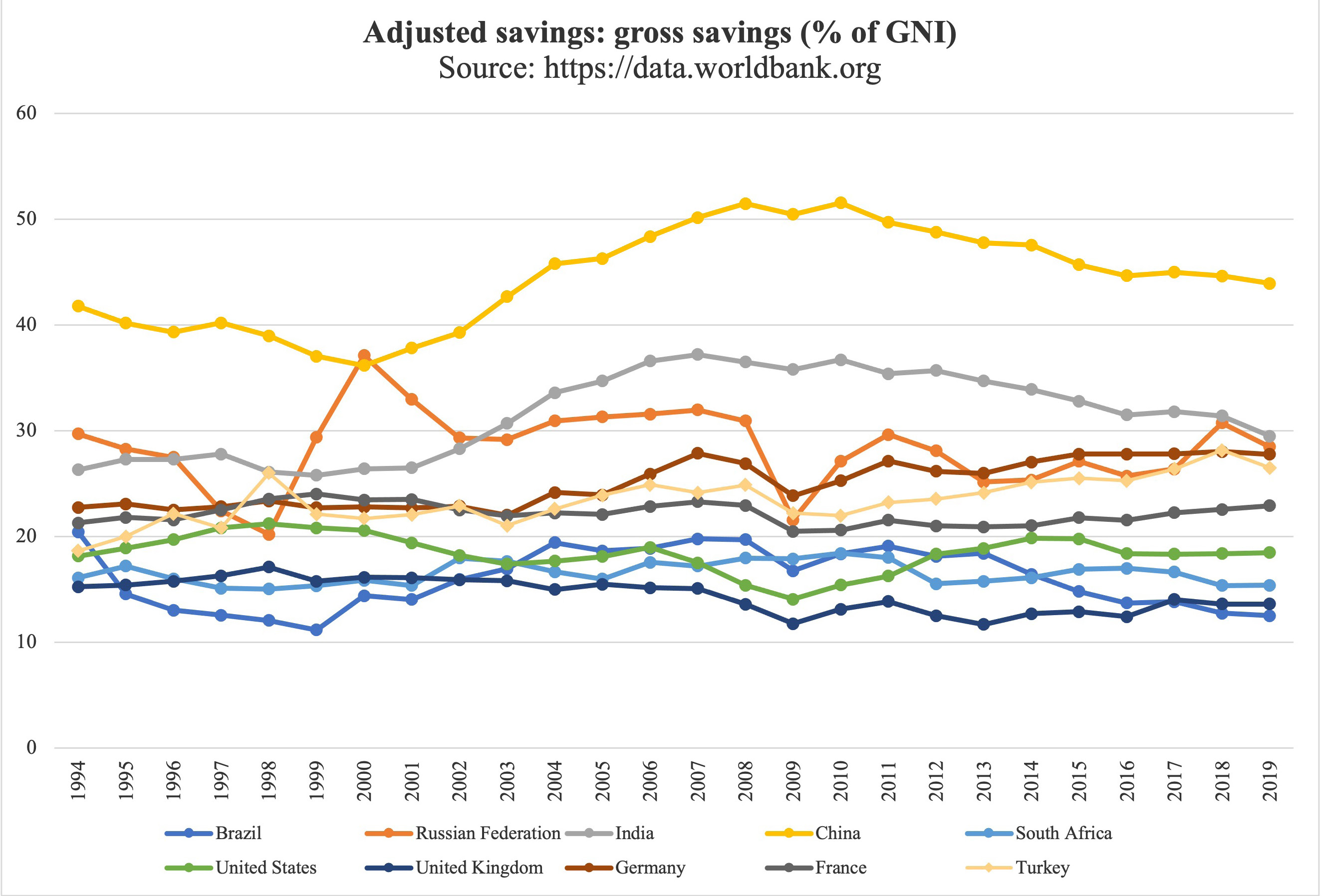
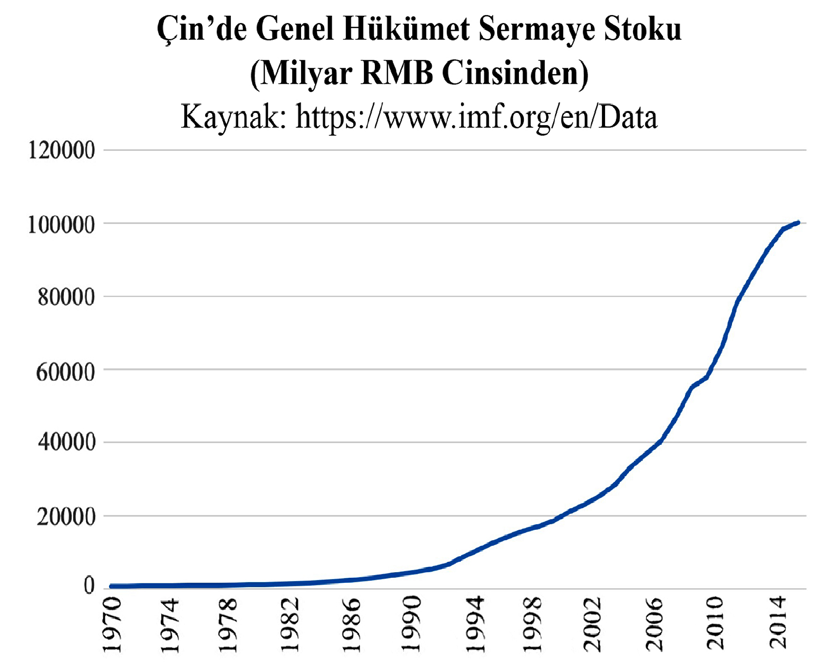
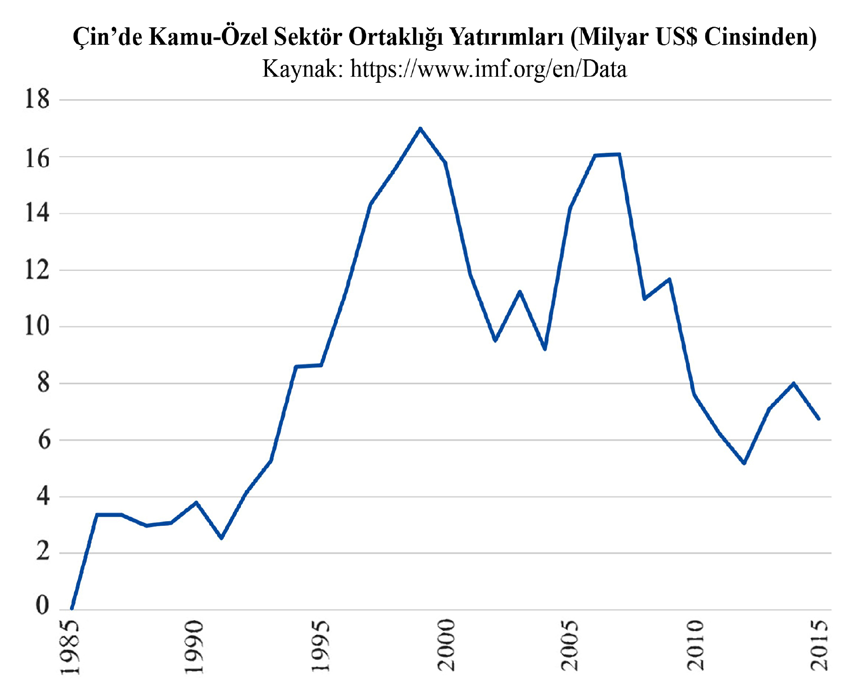
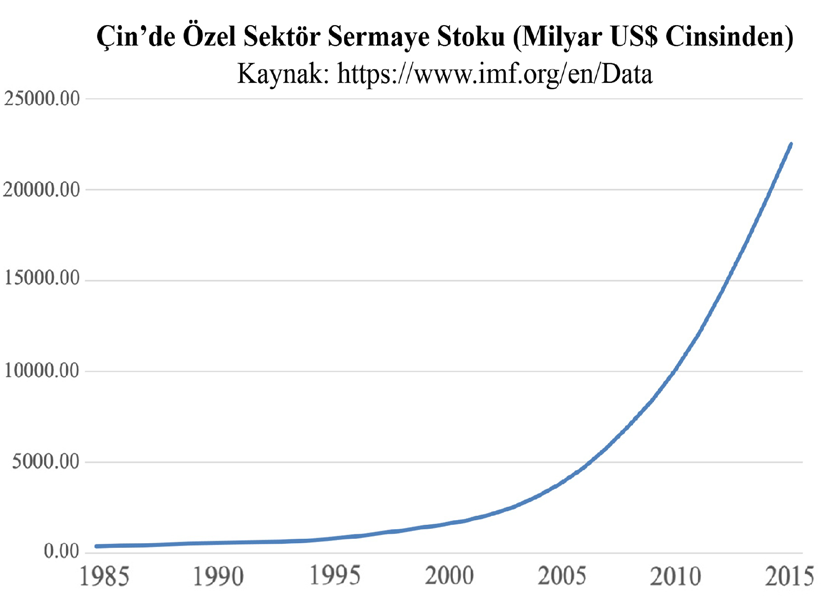
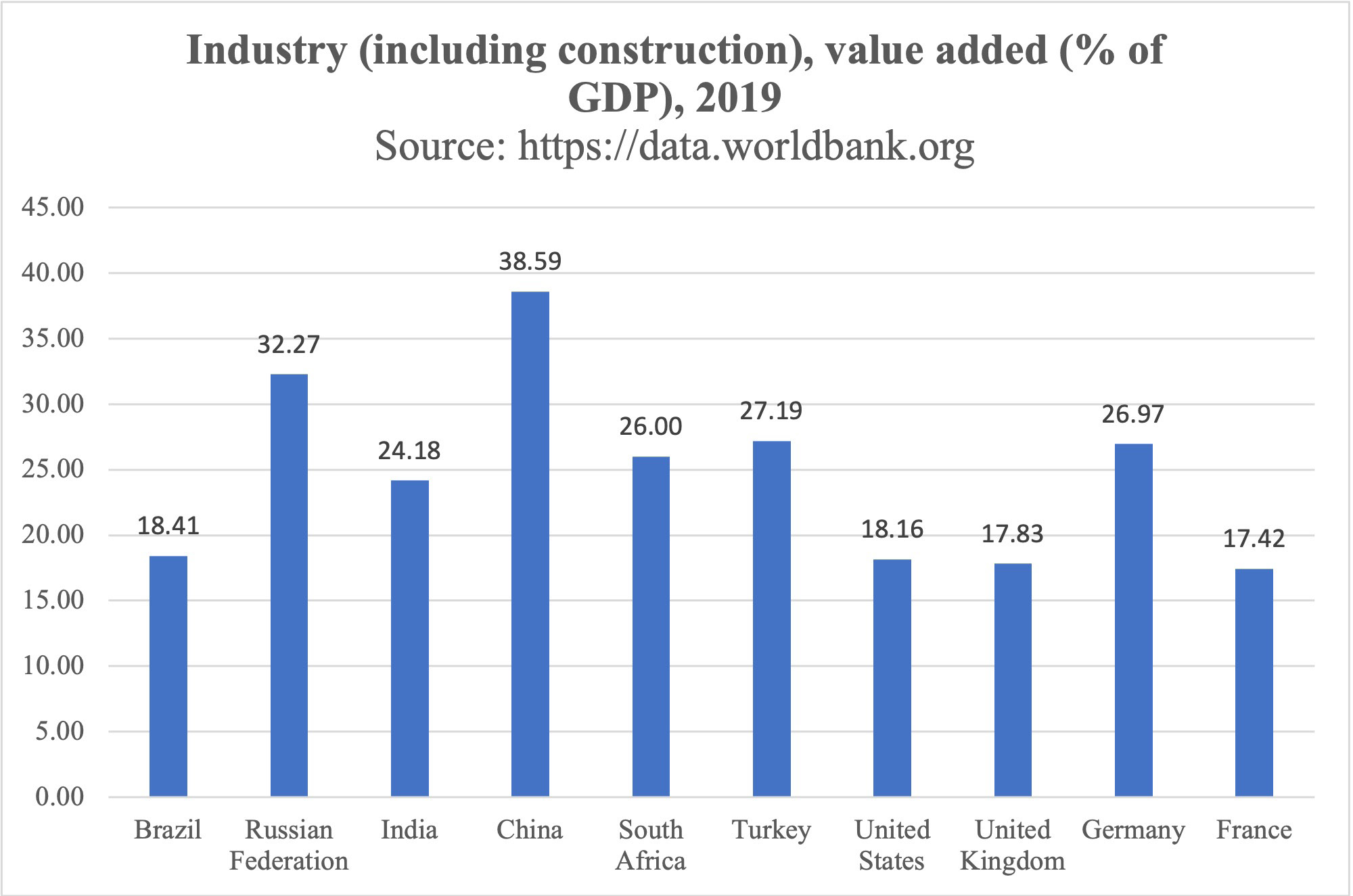
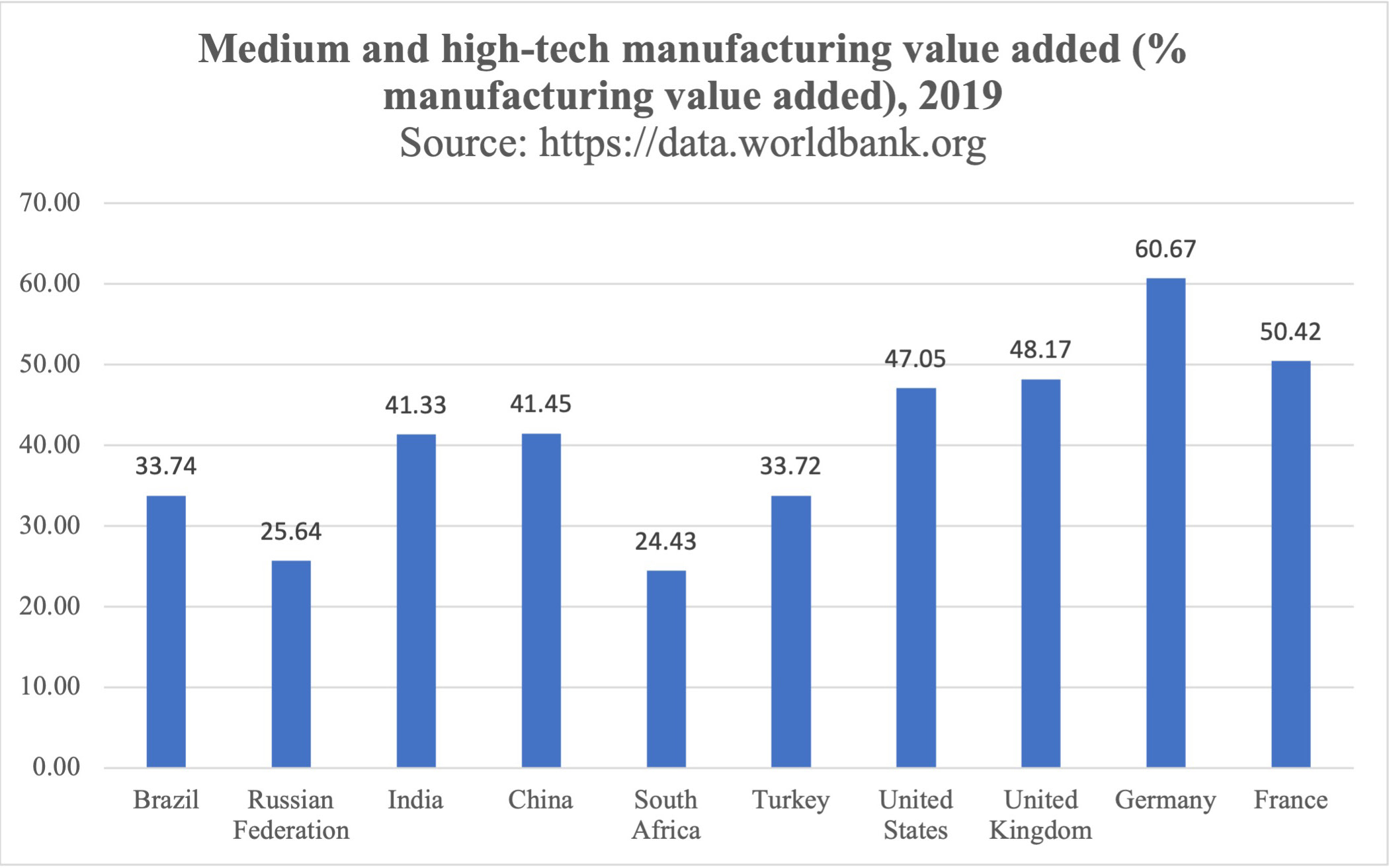
The main characteristic of the Chinese mo-del of economic development lies in that “the market is ‘driven’ by a strong government, and the state sector guides the national economy” (Wu & Fan, 2014: 69Wu, J., & Fan, S. (2014). China’s Economic Reform–Processes, Issues, and Prospects (1978–2012). Routledge Handbook of the Chinese Economy, New York: Routledge, 55-75.). State guidance on the economy allowed China to accumulate large amounts of capital and strategically mobilize this accumulated wealth to support the ex-pansion of a productive economy (Yongding, 2014Yongding, Y. (2014). Macroeconomic management of the Chinese economy since the 1990s. In Routledge handbook of the Chinese economy (pp. 158-176). London: Routledge.). As such, China stands out as the top performer in gross savings (as a % of Gross National Income, or GNI) among the leading imperialist and developing countries such as the BRICS grouping (i.e. Brazil, Russia, India, South Africa) and Turkey. China’s performance exceeded 50% of its GNI in the 2007-2010 period (see Figure 11). This is also reflected in the spectacular rise of general government capital stocks, public-private partnership in-vestments, and private capital stocks (see Fi-gures 12-14). In the 2000-2015 period alone, general government capital stocks witnessed an over 374.5% increase (See Figure 12). This led China to develop the largest industry (as a% of GDP) in our entire sample and become the top performer in medium- and high-tech manufacturing (as a % of manufacturing, va-lue added) among developing countries (see Figures 15-16).
The mere growth of capital stocks does not automatically serve the goals of permanent and long-term economic development un-less they are mobilized to trigger technological progress and innovation. For developing countries, the scale of mobilization required to enable targeted advances necessitates strong state guidance and strategic planning, given that the spontaneous functioning of free markets cannot satisfy such requirements. This also applies to China, whose national science and innovation system was created at the 1978 National Conference on Science and Technology Work convened by the Central Committee of the CPC. In this conference, Deng declared science and technology as part of productive forces. The 6th Five-Year Plan in 1982 launched China’s first National Program for Science and Technology Projects, which paved the way for the National Technological Transformation Plan in 1982, the National Key Scientific and Technological Breakthrough Plan in 1982, the National Key Laboratory Construction Plan in 1984, the National Hi-gh-Technology Development Plan in 1986, and the Spark Program (Zheng, et al., 2020Lin, K. J., Lu, X., Zhang, J., & Zheng, Y. (2020). State-owned enterprises in China: A review of 40 years of research and practice. China Journal of Accounting Research, 13(1), 31-55.). The year 1988 marked the creation of national development zones for new and high-technology industries. An important landmark in developing China’s national science and innovation system is the adoption of the Law on Scientific and Technological Progress in 1993, which promotes the progress of science and technology as foundations of economic construction and social development (Zheng, et al., 2020Lin, K. J., Lu, X., Zhang, J., & Zheng, Y. (2020). State-owned enterprises in China: A review of 40 years of research and practice. China Journal of Accounting Research, 13(1), 31-55.). This legal environment provided new momentum for implementing national programs in the 1990s and the early 2000s, including the National Basic Research Program, the Knowledge Innovation Program, and the National Science and Technology Innovation Program. Two important landmarks in the late 2000s and the 2010s were the implementation of the National Medium- to Long-Term Plan for the Development of Science and Te-chnology and the formulation of the Outline of National Innovation-Driven Development Strategy (Zheng, et al., 2020Lin, K. J., Lu, X., Zhang, J., & Zheng, Y. (2020). State-owned enterprises in China: A review of 40 years of research and practice. China Journal of Accounting Research, 13(1), 31-55.). The former is a 15-year plan for the period 2006-2020, which calls for “indigenous innovation” (zizhu chuangxin) based on a strong synergy between firms, universities, and research institutes. It encourages indigenous innovation through government-funded R&D and state-guided megaprojects in strategic industries (Naughton, 2018Naughton, B.J. (2018). The Chinese Economy: Adaptation and Growth (second edition). Cambridge: MIT Press.). The latter provides a strategic ro-admap for China’s scientific and technological development in three steps:
This outline identifies strategic areas to include smart and green manufacturing and energy technologies, humanlike ma-chine intelligence, natural interaction and virtual reality, microelectronics and optoelectronics, broadband mobile Internet, cloud computing, the Internet of things, Big Data, high-performance computing, mobile intelligent terminals, independent hardware and software products and network security technology, modern agricultural technology, and marine, space, and medical technologies (CSET, 2019CSET. (2019). Outline of the National Innovation-Driven Development Strategy,[中共中央 国务院印发《国家创新 驱动发展战略纲要》], Xinhua News Agency.).
China views science and technology as a complementary pillar of its economic development. This is the main reason why China’s industrial strategies also reflect a science- and technology-driven approach. A case in point is Made in China 2025, China’s national strategic plan for industrial policy as part of “Industry 4.0”. Launched in 2015, this plan calls for integrating new technologies into the economy and developing a national industrial base led by indigenous innovation. It thus provides a general framework to mobilize state support for key industries such as information, technology, robotics, green energy, sustainable transportation, aerospace technology, ocean engineering and high-tech ships, railway equipment, new materials, and pioneering medical and agricultural technologies. High-tech companies operating in these industries are to be supported through tax incentives, subsidies, low-interest loans, R&D funding, and assistance for acquisitions of foreign technology companies (Huimin, et al. 2018Huimin, M., Wu, X., Yan, L., Huang, H., Wu, H., Xiong, J., & Zhang, J. (2018). Strategic Plan of “Made in China 2025” and Its Implementation. In Analyzing the Impacts of Industry 4.0 in Modern Business Environments (pp. 1-23). IGI Global.; US Chamber of Commerce, 2017US Chamber of Commerce. (2017). Made in China 2025: Global Ambitions Build on Local Protections.). Another plan launched in 2015 is an action plan called Internet Plus, which aims to use, through fiscal and tax policies, state resources to encourage the application of mobile and digital technologies into the economy, particularly to manufacturing, commerce, finance, medical sectors, government, and agriculture. This plan brands mobile Internet, cloud computing, big data, and the Internet of Things as the driving technologies of the Chinese economy (China Daily, 2015China Daily. (2015). China Unveils ‘Internet Plus’ Action Plan to Fuel Growth.).
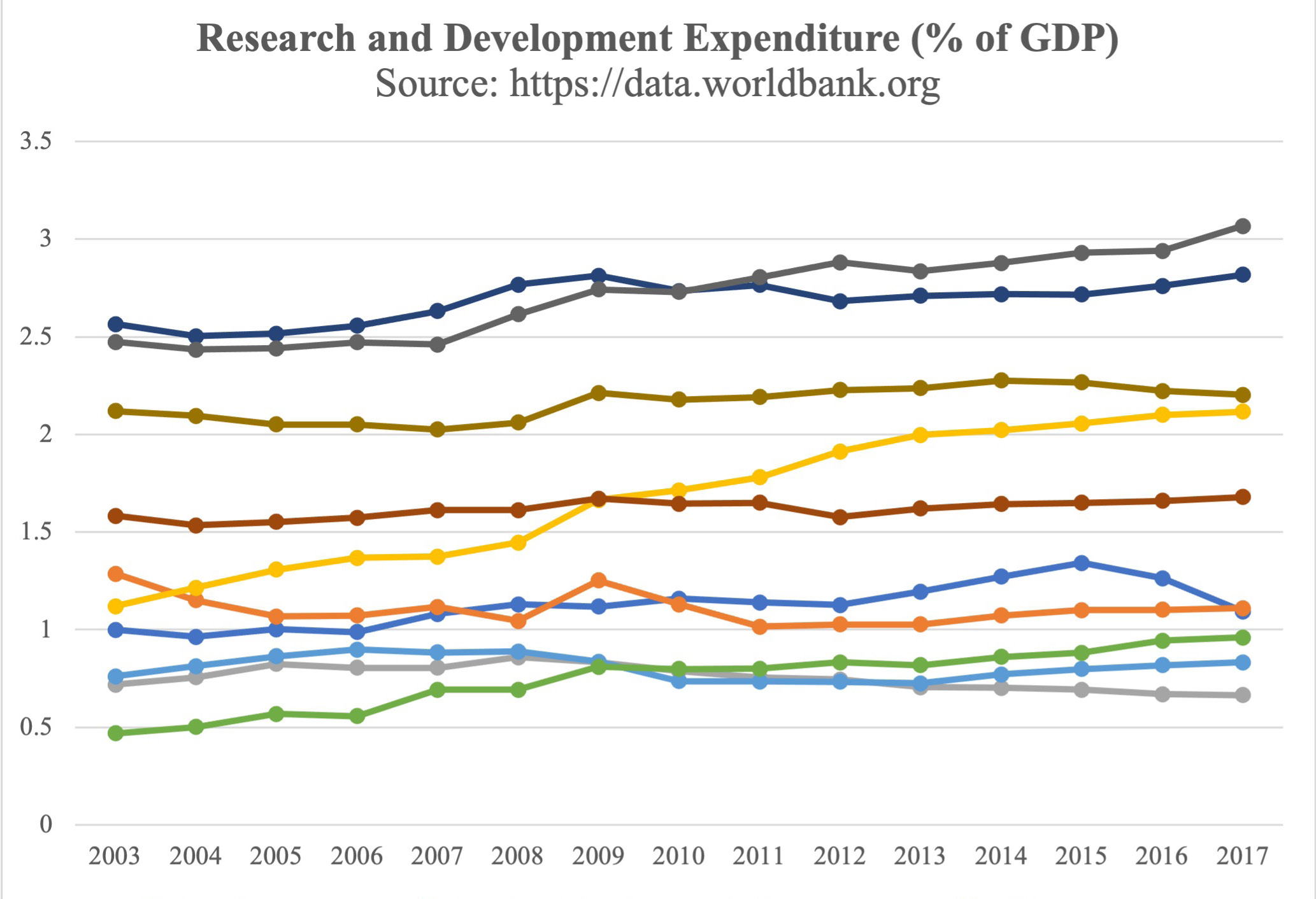
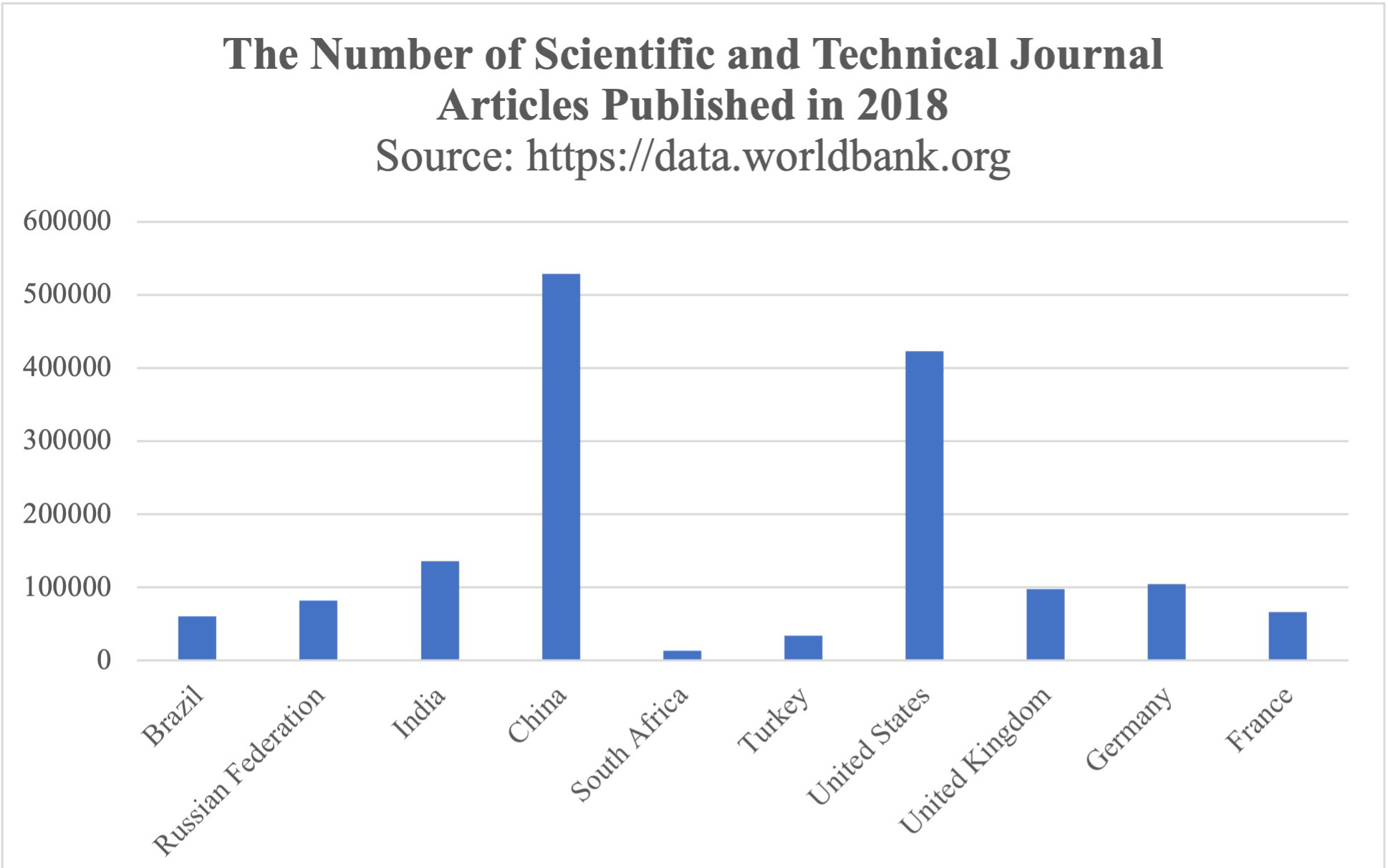
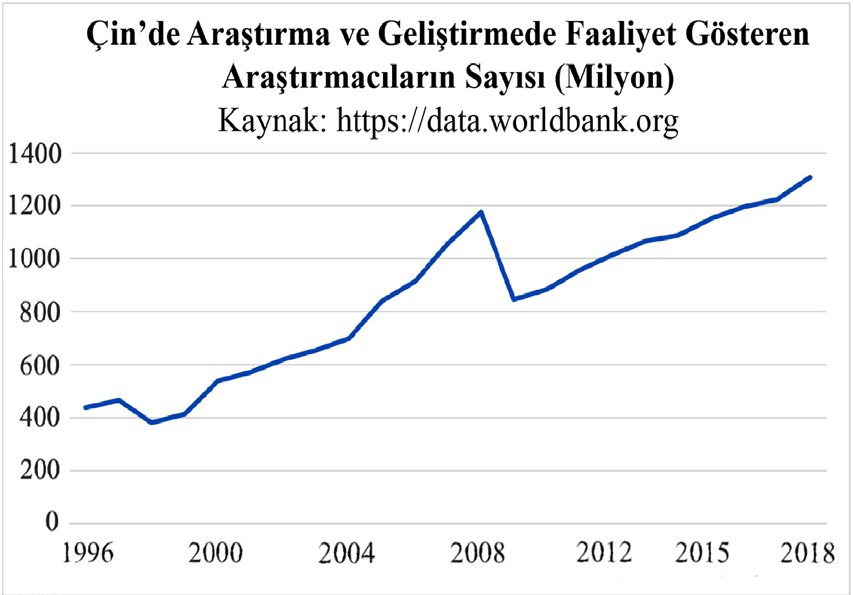
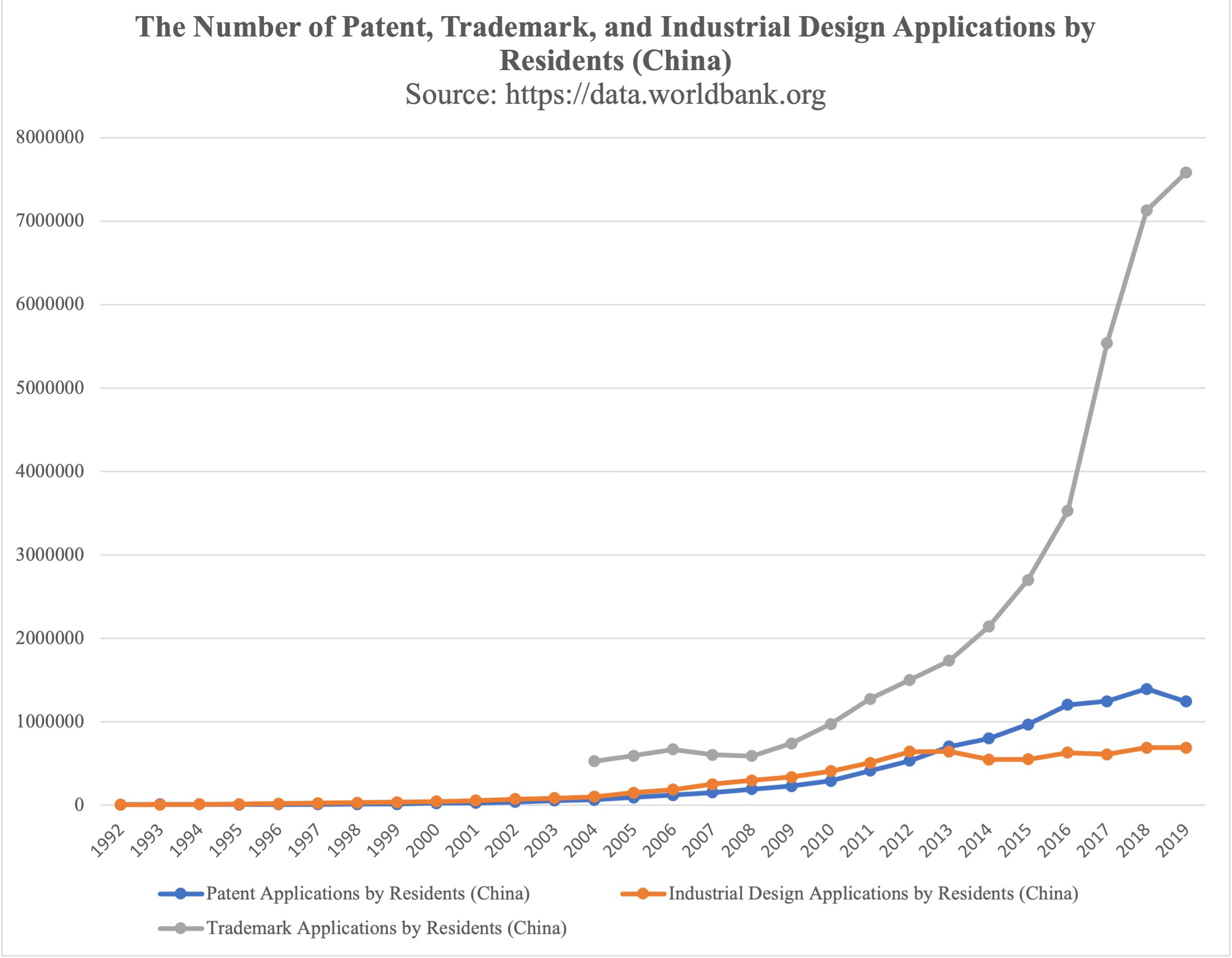
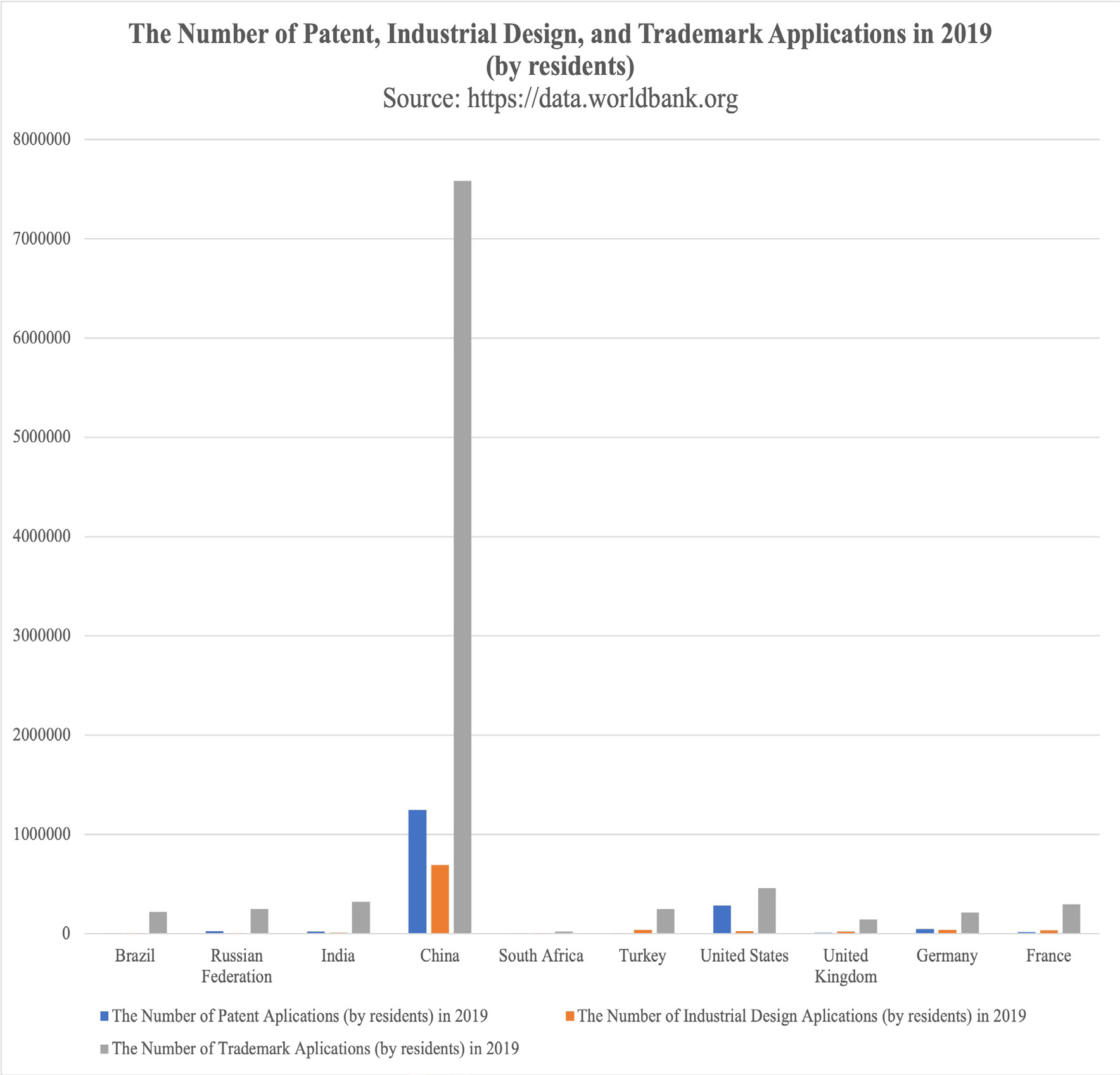
Within such policy frameworks, China has devoted its efforts to increase its R&D expenditure (as a % of GDP), which rose from 0.56% in 1996 to 2.14% in 2018. This makes China one of the world’s top performers in R&D expenditure, which is mainly driven by government funds (see Figure 17; Zheng, et al., 2020Lin, K. J., Lu, X., Zhang, J., & Zheng, Y. (2020). State-owned enterprises in China: A review of 40 years of research and practice. China Journal of Accounting Research, 13(1), 31-55.). Moreover, China’s strong state guidance and strategic planning yielded significant results in its performance related to several important indicators, including the publication of scientific and technical articles, the number of researchers engaged in R&D, and patents, trademarks, and industrial applications by residents. For one thing, available data reveal that China has become the world’s leading country in scientific publications, having overtaken the United States in 2016 (see Figure 18). In a similar vein, the number of researchers engaged in China’s R&D rose by almost 200%, from around 437 million persons in 1996 to 1.3 billion persons in 2018 (see Figure 19). China also witnessed impressive growth in the number of patents, industrial design, and trademark applications by residents. This points to an increase of over 12308% for patent applications and 9040% for in-dustrial design applications between 1992 and 2019. In the period 2004-2019, China’s increase in trademark applications amounted to 1337%.
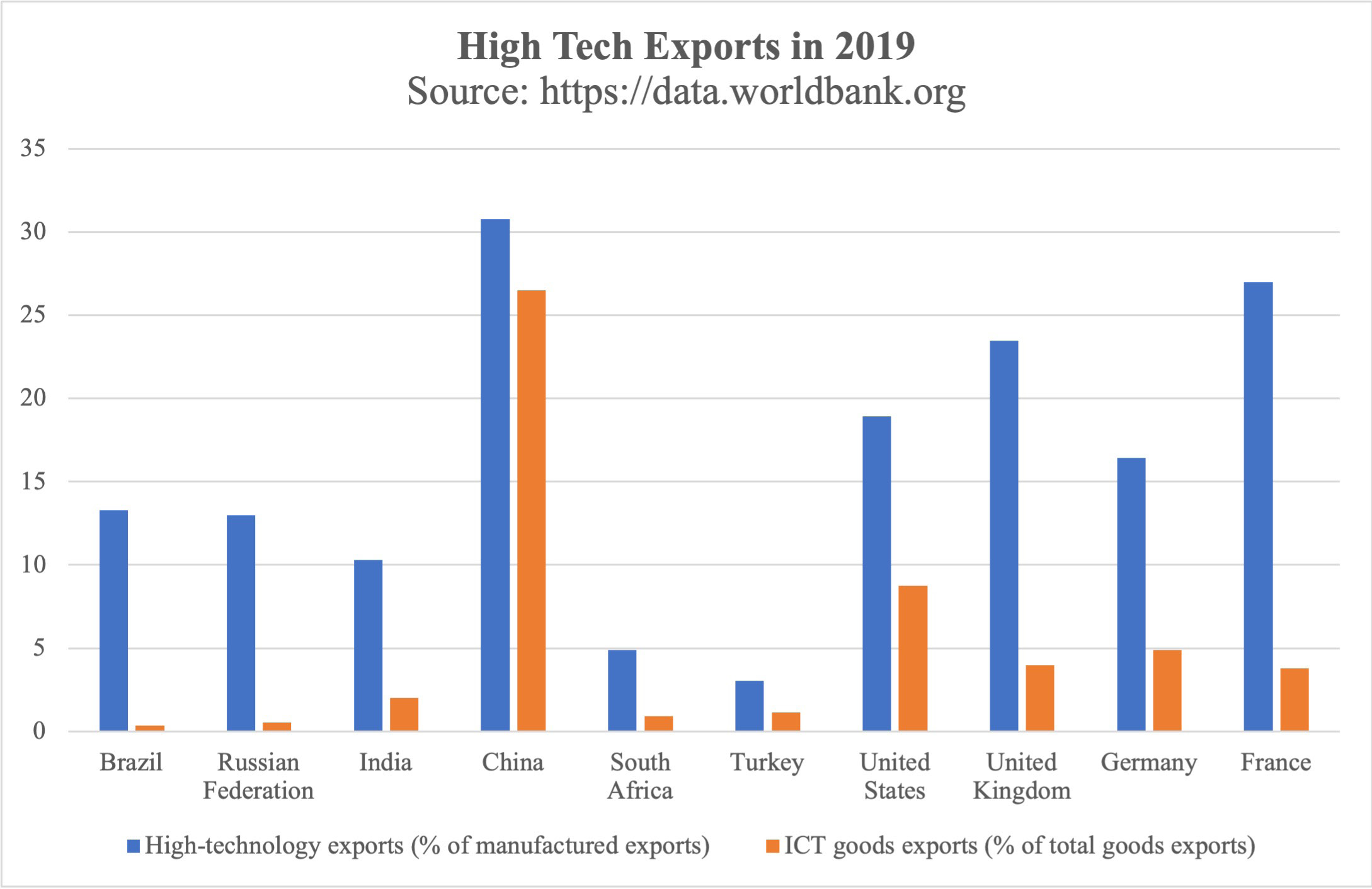
Consequently, 2019 data show that China has become the world’s leading nation in patent, industrial design, and trade-mark applications (e.g. See Figures 19-21). Eventually, the mobilization of capital stocks to support technological progress and innovation under strong state guidance has transformed China’s international trade. 2019 data reveal that China is now a country with the world’s largest share of informational and communication technology (ICT) goods exports in total goods exports and high technology exports in total manufactured exports (see Figure 22). Here, ICT goods include information and technology goods, such as computers, communication equipment, consumer electronic equipment, electronic components, whereas high-technology exports involve a longer list of items that supplement ICT goods, including aerospace, pharmaceuticals, scientific instruments, and electrical machinery.
A final word is needed regarding the relationship between the Chinese economic miracle and the Belt & Road Initiative (BRI). Eventually, the success of the Chinese economic model has allowed China to gain the status of an “agenda-setter” and “norm-maker” in international politics with the rise of China-led initiatives such as the BRI. The BRI focuses on five primary areas: intergovernmental political cooperation and consensus building, infrastructural and technological connectivity, commercial connectivity, financial integration, and people-to-people exchange for cultural cooperation. While the term “belt” indicates land pipelines, roads, and railways, the term “road” is used to define offshore lines, harbors, and other maritime facilities. La-unched in 2013 on China’s initiative, the BRI aims at establishing broad networks related to infrastructure, natural resources, and investments in more than 152 countries across Asia, Europe, Africa, the Middle East, and the Americas. Today, the BRI covers over 70 countries, corresponding to more than 65% of the world population, one-third of the global GDP, and a quarter of world trade. This suggests that the BRI has become the most comprehensive development and trade cooperation scheme in history (Gürcan, 2020Gürcan, E. C. 2020. Uluslararası işbirliğinde yeni bir döneme doğru paylaşarak gelişme konsepti. EwskDKM.&st=2).
Two crucial observations are worth hi-ghlighting at this point. First, the BRI itself reflects China’s state-guided economic ap-proach. For example, Chinese state-owned banks and the Silk Road Fund, created by the collective efforts of these banks, constitute the engine of the BRI’s financial in-tegration and infrastructure investments. Second, the BRI encourages participant countries to adopt a state-guided economy that values infrastructure development and environmental sustainability. A case in point is the Asian Infrastructure Investment Bank (AIIB) as the BRI’s fi-nancial locomotive, which started to operate in 2016 under China’s initiative as “the world’s first multilateral development bank (MDB) dedicated to infrastructure” (Wilson, 2017Wilson, J. D. 2017. What does China want from the Asian Infrastructure Investment Bank? (Report). USAsia Centre. 9 August 2021.). In the Second Belt and Road Forum for International Cooperation, moreover, the BRI publicly announced its principles for green investment, which later led to the creation of several initiatives for sustainability, such as the International Coalition for Green Development, Sustainable Cities Alliance, Climate Change Cooperation Initiative, Environmental Technology Exchange and Transfer Center, Environmental Big Data Platform, and Green Investment Fund. As part of the Green Belt project, the BRI thus promotes green finance, sustainable energy, green agriculture, eco-urbanization, and social sustainability (Gürcan, 2021aGürcan, E. C. (2021a). On the development of China’s environmental policies towards an ecological civilization. Belt & Road Initiative Quarterly, 2(3): 7-25.).