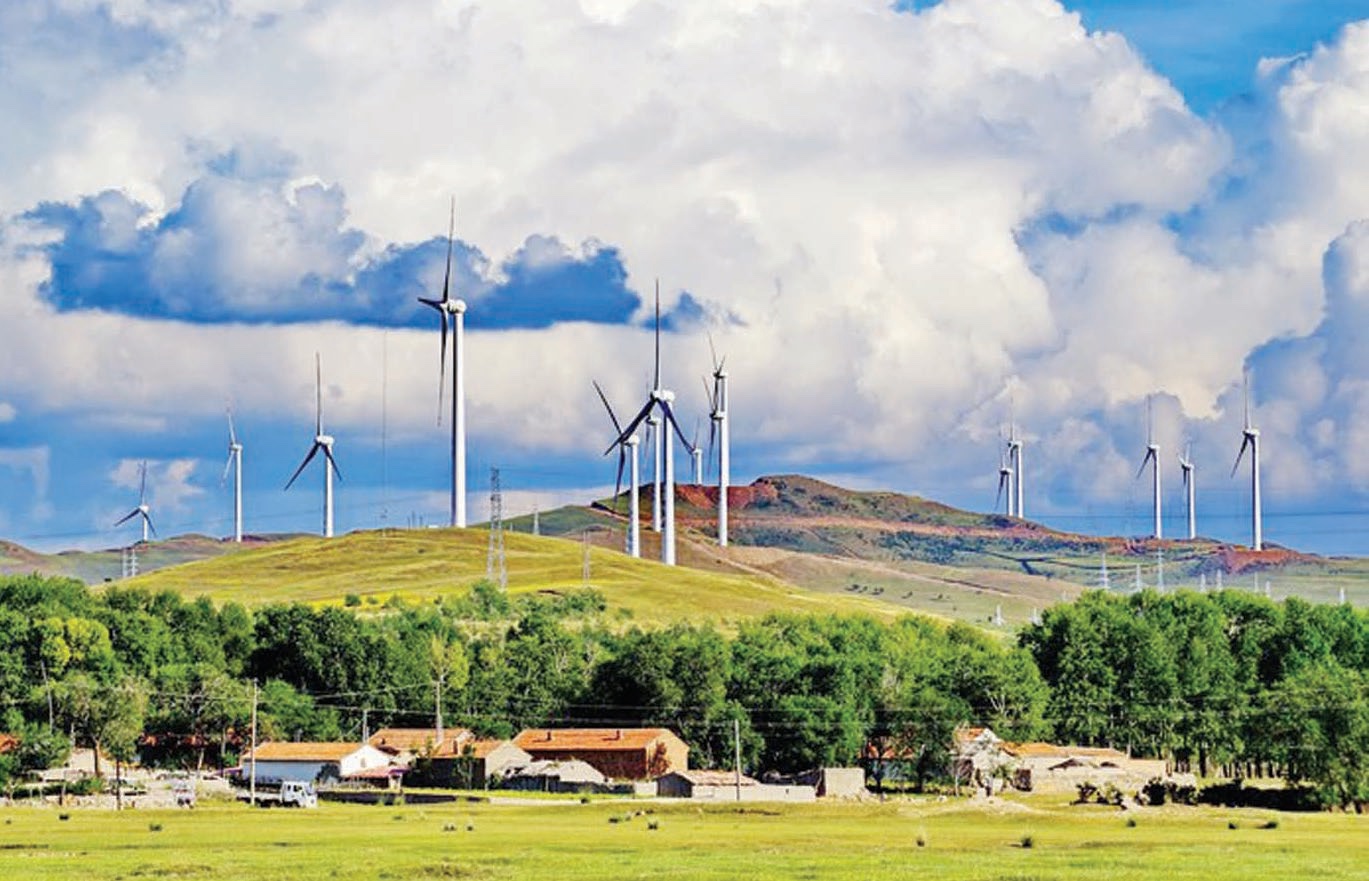
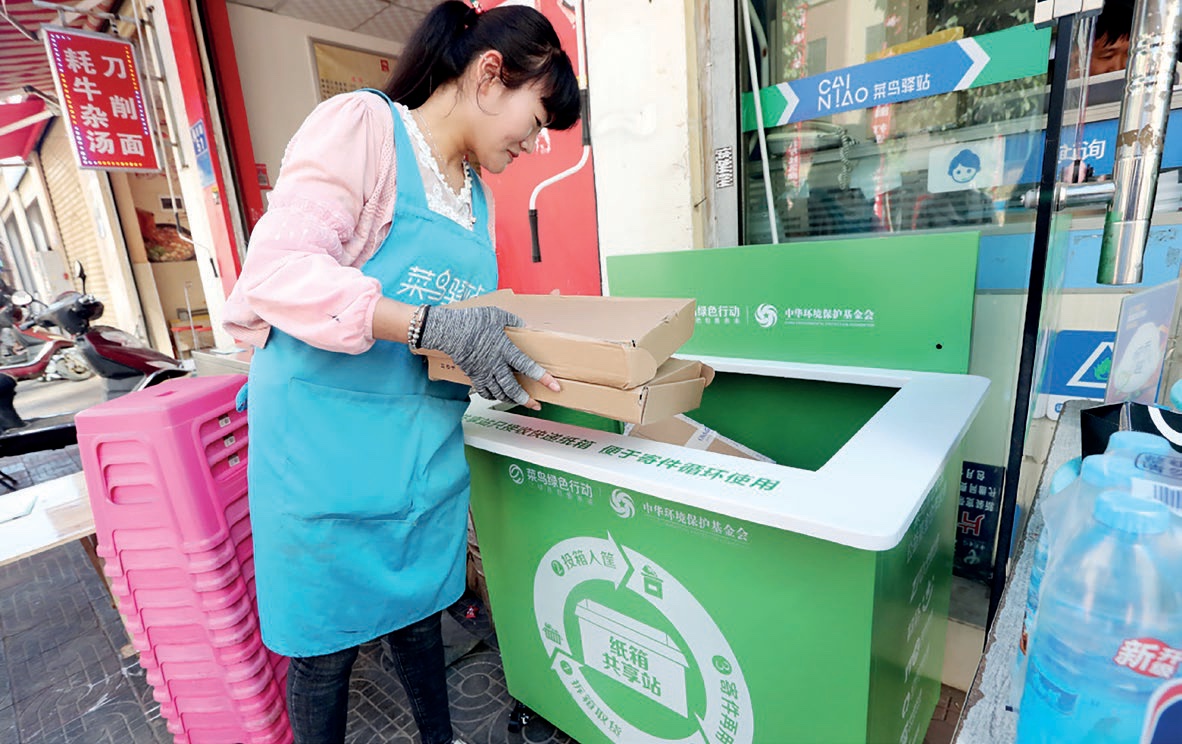
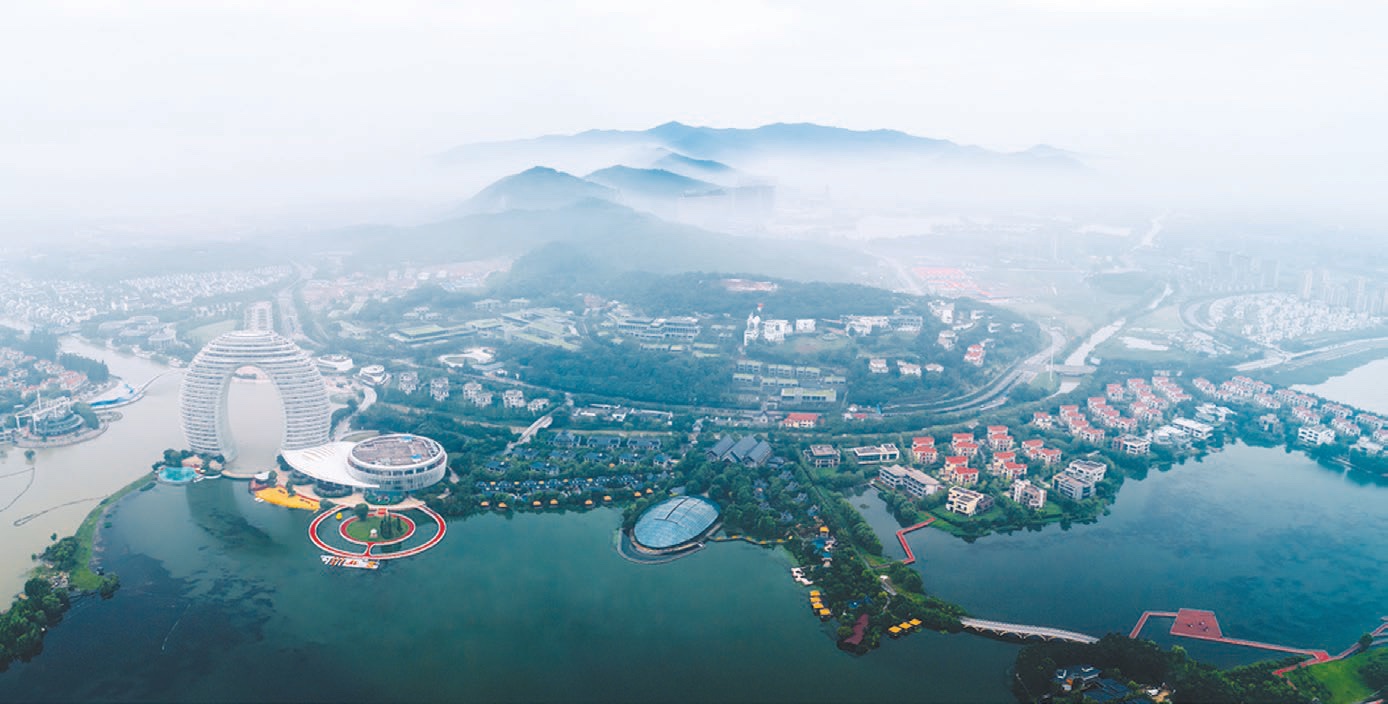
What environmental issues occupy China’s main development agenda? How does China address these crucial issues? In what direction are China’s environmental policies evolving? The present article uses process tracing to answer these questions and argue that China has already developed a firm understanding of its environmental problems and their severity to the extent that it now frames them as a “matter of survival” and has brought these issues to the centre of its revised national security strategy. China’s strategy is predicated on an alternative proposal for “ecological civilization”, which may potentially lead to the reversal of “ecological imperialism”. China is in the early stages of building an ecological civilization and requires a lot of work to reach a high level of ecological development. China’s key achievements on the path towards ecological civilization involve a series of three unfolding and mutually conditioning revolutionary processes that also lead the way in international environmental cooperation, as embodied in China’s role in ASEAN, the Asian Infrastructure Investment Bank, and the Green Silk Road. They include a clean energy revolution, a sustainable agricultural revolution, and a green urban revolution. China has already become a global leader in green finance. It leads the eco-city movement, with over 43% of the world’s eco-cities being Chinese, and is the second leader in sustainable architecture, next to Canada. Many Chinese cities have dropped down or out of the list of the most polluted cities, leaving India and Pakistan at the top. China’s cities have also joined the ranks of those with the strongest sewage treatment capacity in the world. In addition, China has the most electric vehicles, bikes, and efficient public transportation. China is considered to be not only the world’s centre of electric bus production and consumption but also as having cities with the world’s longest subway systems. From 2013 onwards, the share of coal in China’s total energy consumption has seen a noticeable decline, accompanied by the increasing share of renewable resources in total energy consumption as a result of conscious efforts at a clean energy revolution. Key to this revolution in the making is China’s strong reputation as the world’s top investor in clean energy. As such, it has succeeded in creating the world’s largest wind, solar, and hydroelectric systems for power generation. Finally, concerning China’s unfolding revolution in sustainable agriculture, one should acknowledge, not only its adoption of green food standards and the expansion of its agricultural area under certified organic farming but especially the fact that, as a world leader in green agriculture, it now ranks third in the list of countries with the largest agricultural area under organic farming.
China is the world’s largest country by population size and fourth-largest by surface area. Combined with the excessive demographic and geographic size is the continued legacy of Western imperialism in China as a former semi-colony, whose negative effects are amplified by current Western efforts in geopolitical and geo-economic containment. This adds to China’s resource scarcity that acts as another structural adversity constraining its development potential. China possesses only 7% of the world’s arable land and freshwater resources and 8% of the world’s natural resources, even though its population represents 22% of the world’s population. Furthermore, only 19% of its surface area is suitable for human habitation and 65% of its surface area is rugged, which severely cripples China’s farming capabilities and facilitates ethnic heterogeneity as a potential impediment to political cohesion (Morton, 2006Morton, K. (2006). International Aid and China's Environment: Taming the Yellow Dragon. London: Routledge.; Naughton, 2018Naughton, B.J. (2018). The Chinese Economy: Adaptation and Growth (second edition). Cambridge: MIT Press.).
Despite such adversities, China has come to develop an exemplary model of economic development that inspires much of the developing world. The 1979-2018 period testified to an average growth rate of 9.4% in the lead of the Communist Party of China (CPC), which made China the world’s second-largest economy, top producer, and the leading exporter of technological goods (X. Hu, 2020Hu, X. (2020). Forecast of China’s Average Annual Economic Growth Rate Based on BP Neural Network. J. Phys.: Conf. Ser. 1629 012040.). By 2015, China came to assume the global production of 40% of washing machines, 50% of textiles, 60% of buttons, 70% of shoes, 80% of televisions, and 90% of toys. Recently, China has made significant progress in the production of added higher-value products in computer, aviation, and medical technology sectors, among others. Besides its historic success in economic growth, industrial production and technological development, the Chinese economic miracle is credited for 70% of global poverty eradication between 1990 and 2015 (Gardner, 2018Gardner, D. K. (2018). Environmental Pollution in China: What Everyone Needs to Know. New York: Oxford University Press.).
Global environmental indicators provide a general picture of the environmental question’s severity in China. To elaborate, the Environmental Performance Index (EPI) is a popular indicator to assess the impact of national policies on the environment. EPI is made up of two major components: environmental health and ecosystem vitality. Environmental health looks at the negative impact of environmental pollution on human health as well as air and water quality and sanitation. In turn, ecosystem vitality focuses on variables such as carbon intensity, biodiversity, fish stocks, forest cover, wastewater treatment, and nitrogen balance (Environmental Performance Index, 2020aEnvironmental Performance Index. (2020a). Global Metrics for the Environment: Ranking Country Performance on Sustainability Issues.).
Table 1. Environmental performance index
Environmental Performance Index (EPI) Scores in 2020
10-Year Change in EPI Scores
2020 EPI Ranking (out of 180 countries)
China
37.3
8.4
120
Brazil
51.2
4.9
55
Russia
50.5
3.9
58
India
27.6
0
168
South Africa
43.1
8.5
95
United States
69.3
2.9
24
China’s EPI can be compared to other BRICS (Brazil, Russia, India, China, South Africa) countries, representative of the leading developing countries, and the United States (US), as the hegemonic leader of the capitalist-imperialist system. A comparison for the period 2010-2020 shows that China has achieved the second-largest increase in EPI scores (8.4 EPI points) after South Africa (8.5 EPI points), which testifies to China’s successful efforts at improving its environmental standing (Table 1). In the same 10-year period, India has recorded no visible improvements, while the increase in EPI scores for Brazil, Russia, and the US are 4.9, 3.9 and 2.9, respectively. In the meantime, one should note that China’s 2020 standing is 120 out of all the 180 countries included in EPI. China’s 2020 score is 37.3, which outranks India with an EPI score of 27.6. However, China is outranked by Brazil, Russia, South Africa, and the US, whose annual scores are 51.2, 50.5, 43.1, and 69.3, respectively (Table 1). Overall, this comparison reveals that China has exhibited a strong environmental will and achieved policy success between 2010 and 2020, even though it continues to struggle with severe environmental problems (Environmental Performance Index, 2020bEnvironmental Performance Index. (2020a). Global Metrics for the Environment: Ranking Country Performance on Sustainability Issues.).
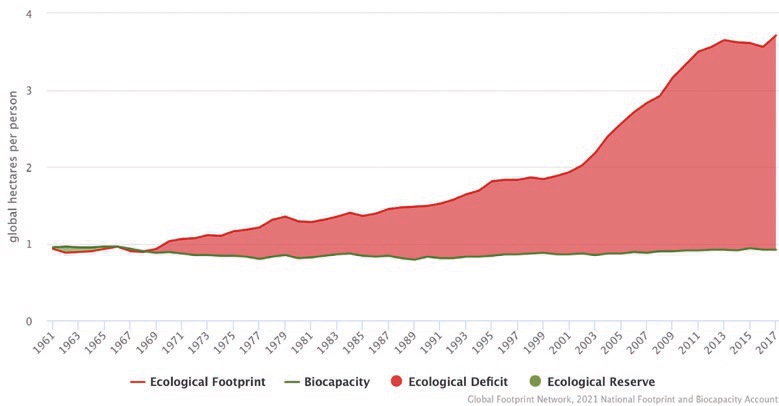
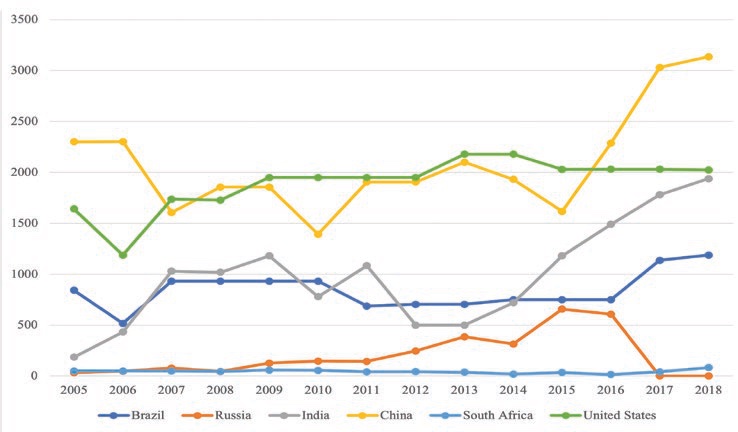
Ecological footprint is another global environmental indicator. It is popularly used to assess the human impact on an environment by by reference to changing natural resource demands for countries across the world. With ecological footprint, the use of ecological resources is compared with the size of biologically productive land and sea area to estimate the earth’s capacity to renew the natural resources and absorb waste (Robbins, 2007:509-10Robbins, P. (ed.). (2007). Encyclopedia of Environment and Society. London: SAGE.). Not surprisingly, the ecological footprint of China –as a rapidly developing country– has known a constant increase, particularly in the 2000s (Figure 3).
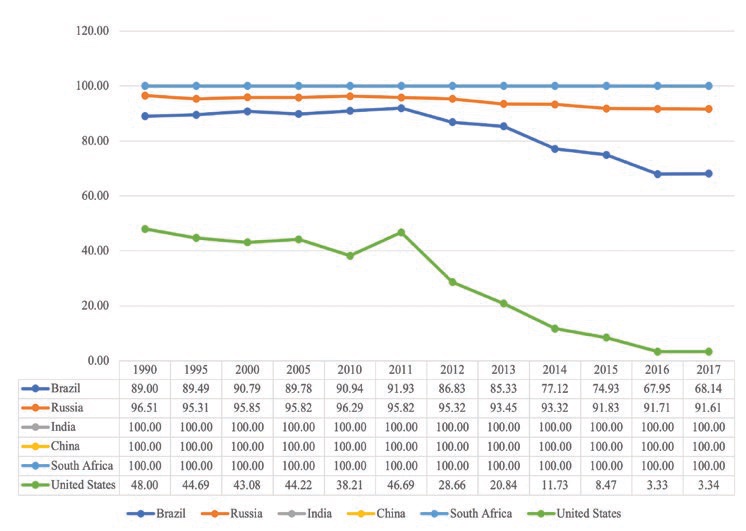
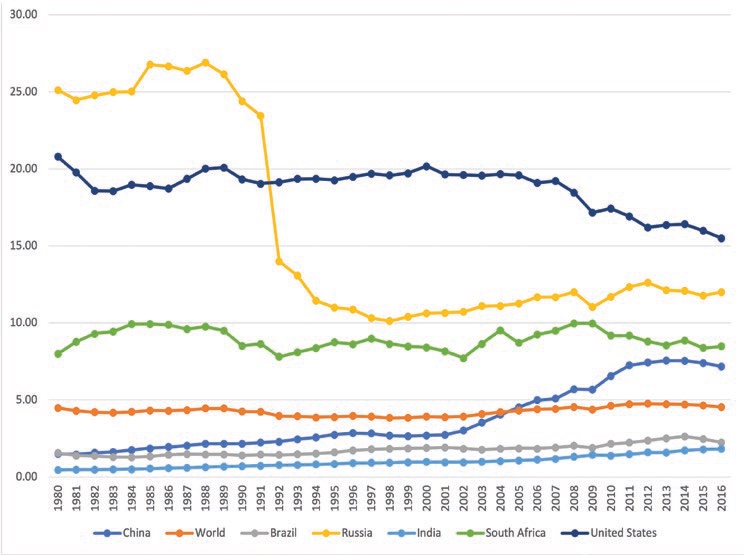
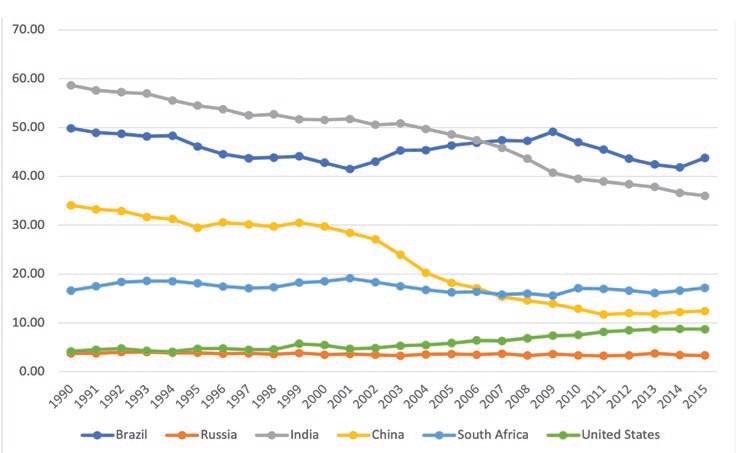
Air pollution stands out, perhaps, as the most visible environmental strain in China, which is why it is worth supplementing our analysis of EPI and ecological footprint with what is popularly known as fine particles, or particulate matter 2.5 (PM2.5). Available data allow us to comparatively assess the performance of the BRICS countries and the US concerning the percentage of the national population exposed to PM2.5 levels exceeding the World Health Organization (WHO) guideline value. One striking fact that emerges from this comparison is the successful performance of the US and Brazil, unlike China and other countries in our sample. The US and Brazil’s PM2.5 performance declined from 91.92% and 46.68% and from 68.12% and 3.34%, respectively (World Bank, 2021, Figure 4World Bank. (2021). Database.). Even though China failed to exhibit a successful performance by 2017, its post-2017 performance offers promising prospects. Recently, for example, Chinese cities used to occupy the forefront of the list of the world’s most polluted cities. Looking at the 2020 list of the fifteen most polluted cities, however, it is now being occupied by Indian and Pakistani cities. The only Chinese city that is ranked among the top fifteen polluted cities is Hotan (Earth.Org, 2021, IQAir, 2021Earth.Org. (2021). 15 Most Polluted Cities in the World.; Zhang, 2014Zhang, J. (2014). Foreign Direct Investment: Regional Dimensions. New York: Palgrave Macmillan.).
Evidently, China’s world-leading environmental achievements go unnoticed due to the prevailing discourse of “ecological imperialism” in environmental politics. Ecological imperialism describes the shift of axis in global labour and natural resource exploitation to the developing world at the expense of grave human and ecological suffering. The economic and ecological burden of this axis shift is placed on the shoulders of the developing world by Western metropoles, which essentially seek to reduce the cost of production and resource extraction (Gürcan, Kahraman, & Yanmaz, 2021Gürcan, E. C., Kahraman, Ö. E. & Yanmaz, S. (2021). COVID-19 and the Future of Capitalism: Postcapitalist Horizons Beyond Neo-Liberalism. Nova Scotia: Fernwood Publishing.). Indeed, this phenomenon has been a defining feature in the entire history of capitalism. However, the dominance of neoliberalism as a global policy paradigm since the 1970s gave a new impetus to ecological imperialism, where China emerged as the main target. This being said, China has refused to be victimised by such policies and actively took advantage of the changing policy environment without fully abandoning its socialist system, albeit at grave ecological and socioeconomic costs in the medium term. In this period, China relied on the state’s strong guidance on reform and opening-up to build the “Chinese dream” of socialist welfare through gradual technology transfers and joint ventures in the longer term.
It is common knowledge that Western capitalism globalised through exploration and colonisation at the expense of grave human and ecological costs. These globalising efforts were amplified by the Industrial Revolutions, which eventually evolved into imperialist rivalries for spheres of influence and world wars. A subsequent wave of globalisation began in the 1970s as the world’s axis of production shifted to Asia, based on neoliberal policies that sought to take advantage of Asia’s cheap labour supply and other resources in the absence of strict political and environmental regulations. For some time, Western metropoles remained content with China’s accommodating policies, only until it succeeded in using the “privilege of backwardness” to consolidate its national economy rather than become a mere US colony governed by the World Bank and the International Monetary Fund (IMF). Upon China’s historic economic success and the continuation of the rule of the Communist Party of China (CPC), it seems that Western metropoles ended up developing a false sense of threat against their global hegemony, which prompted them to launch a global campaign of imperialist propaganda framing China as an environmentally irresponsible villain versus the West as the virtuous watchdog of environmental values.
This article seeks to transcend Western-centric ecological-imperialist biases towards China’s environmental policies and provide a more balanced perspective. What environmental issues occupy China’s main development agenda? How does China address these crucial issues? In what direction are China’s environmental policies evolving? The present article uses process tracing to answer these questions and argue that China has already developed a firm understanding of its environmental problems and their severity to the extent that it now frames them as a “matter of survival” and has brought these issues to the centre of its revised national security strategy, particularly under the Hu Jintao and Xi Jinping administrations. China’s strategy is predicated on an alternative proposal for “ecological civilization” (shengtai wenming, 生态 文明), which may lead to the reversal of “ecological imperialism”. Particularly noticeable in this regard is China’s ongoing clean energy revolution as well as its strong leadership in green agriculture, urbanisation, and multilateral environmental cooperation. Accordingly, the present article is structured into three sections. The first focuses on the political and ideological background of China’s “ecological civilization” project and the second sheds light on China’s clean energy revolution. The article concludes with the third section on China’s achievements in green agriculture and ecological urbanisation, explaining how they are reflected in multilateral environmental cooperation.
The Political and Ideological Background of Ecological Civilization
Hu (2007Hu, J. (2007). Hu Jintao's report at 17th Party Congress. China Daily.) proposed a “Scientific Outlook on Development”, where harmonious society can be achieved with a sustainable development model that puts people and the environment first by mobilising science, technology, and education. According to Hu, energy conservation and sustainable development are central to improving the Chinese population’s quality of life. In this framework, Hu developed a “five-in-one” strategy (五位一体) that combines the task of economic, political, cultural, and social construction with that of ecological civilization. This strategy emphasises how ecological sustainability and other tasks complement each other.
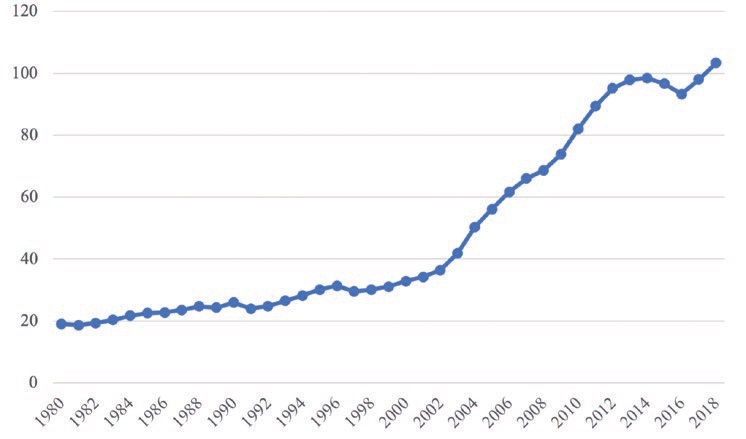
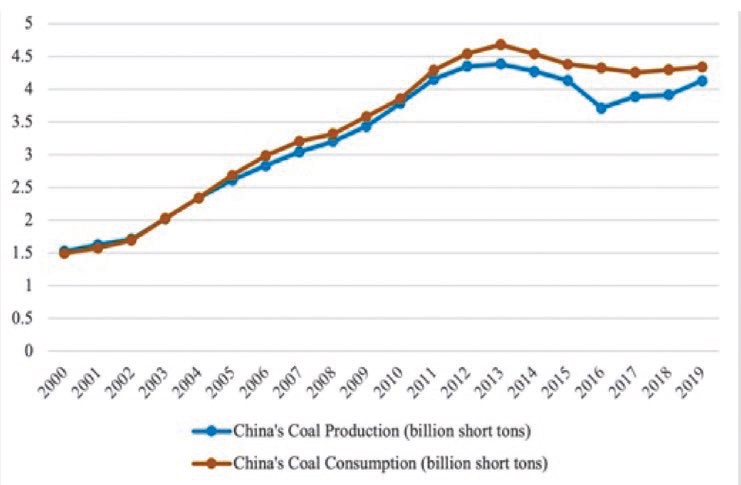
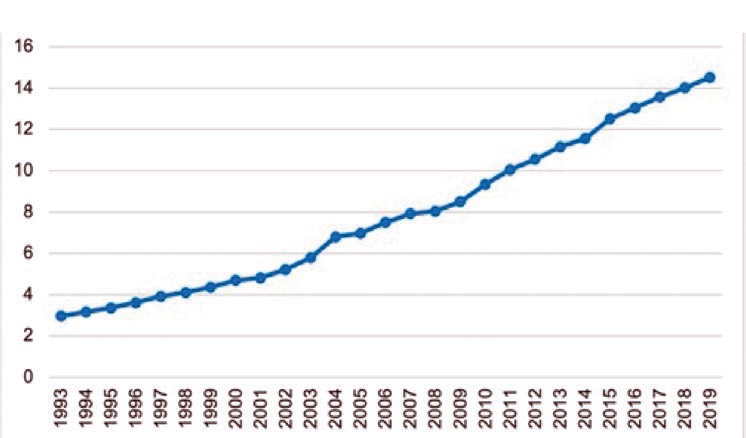
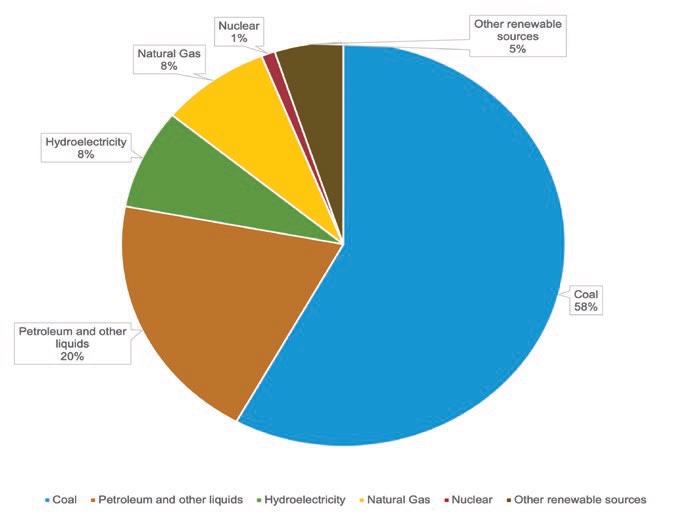
Energy intensity is an indicator that reflects per capita energy consumption. One could observe that China’s energy intensity has been rapidly increasing, particularly since 1997. The 1997-2018 period alone testified to an over 250% rise (EIA, 2021EIA. (2021). Database.; Figure 6). Indeed, coal represents the main source of China’s energy consumption, though China’s coal production and consumption have been visibly decreasing since 2013. Between 2013-2019, China’s coal production and consumption have decreased from 4.4 and 4.7 billion short tonnes to 4.1 and 4.3 billion short tonnes, respectively. This corresponds to a 7% decline in coal production and an 8.5% decline in coal consumption (EIA, 2021EIA. (2021). Database.; Figure 7). However, China’s oil consumption has been rising since 2013. The 2013-2019 period alone recorded a 29.5% increase (EIA, 2021EIA. (2021). Database.; Figure 8). According to 2019 estimates, coal consumption makes up 58% of China’s energy consumption and remains its largest source. In China’s electricity production, the share of coal consumption is more than 65.3%. Oil and other liquids account for the second-largest share of China’s total energy consumption with a share of 20%. Finally, the share of hydroelectric energy and other sustainable sources of energy has reached 13% (EIA, 2021EIA. (2021). Database.; Figure 9).
As a locomotive of multilateral environmental cooperation, China has extended its leading role to the Association of Southeast Asian Nations (ASEAN). In 2009, China and ASEAN signed the Strategy on Environmental Cooperation, which later contributed to the creation of the China-ASEAN Environmental Cooperation Centre. This was followed by the China-ASEAN Environmental Cooperation Action Plans for 2011-2013 and 2014-2015 as well as the 2016-2020 Strategy on Environmental Cooperation. These strategies and action plans sought to improve regional efforts in research & development and eco-city construction. Also included in such efforts is the Green Silk Road Envoys Program, which sought to develop staff training, scientific exchange, and political dialogue on matters of sustainability, green innovation and entrepreneurship, biodiversity, and ecological protection (China-ASEAN Environmental Cooperation, 2018:viiiChina-ASEAN Environmental Cooperation. (2018). China-ASEAN Environment Outlook 1 (CAEO-1): Towards Green Development. 2018. Singapore: Springer.).
China’s initiative has led the AIIB to adopt a strong stand on ecological civilization. In 2016, the AIIB adopted the Environmental and Social Framework (ESF), which encourages financed development projects to target social and environmental sustainability in tandem, including green economy, gender equality, and labor rights. As regards environmental sustainability, the ESF places a strong emphasis on balanced development, decreasing fossil fuel consumption, environmental resilience, energy conservation, and biodiversity (Gabusi, 2019Gabusi, G. (2019). Global Standards in the Asian Infrastructure Investment Bank: The Contribution of the European Members. Global Policy.). In its second annual meeting held in South Korea in 2016, the AIIB adopted the Sustainable Energy for Asia Strategy and approved its first loan for a project that seeks to reduce coal use in China. The AIIB’s fourth meeting was held in Luxembourg in 2019, where the bank reiterated its commitment to supporting green economy (Altay & Zeynepcan, 2020Altay, A., & Zeycepcan A. (2020). China's Relationship with the Liberal International Order: The Case of the Asian Infrastructure Investment Ban. Marmara University Journal of Political Science.). The AIIB’s new funds that target social and environmental sustainability include “the $75 million Tata Cleantech Sustainable Infrastructure On-Lending Facility (India), US$75 million Asia Investment Fund (Asia-wide), US$100 million L&T Green Infrastructure On-Lending Facility to finance wind and solar energy projects (India), US$200 million TSKB Sustainable Energy and Infrastructure On-Lending Facility (Turkey), and US$150 million to the India Infrastructure Fund to finance infrastructure projects including renewable energy (India)... [as well as] a US$500 million AIIB Asia ESG Enhanced Credit Managed Portfolio (Asia-wide) with Aberdeen Standard Investments, to partner on developing debt capital markets for infrastructure... [and the] US$ 500 million fund, the Asia Climate Bond Portfolio, to accelerate climate action in the Bank’s members, and spur the development of the climate bond market.” (Vazquez & Chin, 2019: 598Vazquez, K. C., & Chin, G. T. (2019). The AIIB and Sustainable Infrastructure: A Hybrid Layered Approach. Global Policy, 10(4), 593-603.) Besides energy and infrastructure, the AIIB’s green framework extends to sustainable urbanization, green transportation, and rural sustainability. These efforts are clearly exemplified in a US$329 million loan for India’s Gujarat Rural Roads Project, a US$335 million loan for India’s Metro Line Project, a US$140 million loan for India’s Madhya Pradesh Rural Connectivity Project, a US$445 million loan for India's Andhra Pradesh Rural Roads Project, a US$40 million loan for Laos' National Road 13 Improvement and Maintenance Project, a US$216.5 million loan for Indonesia's National Slum Upgrading Project, a US$270.6 million loan for the Philippines’ Metro Manila Flood Management Project, a US$400 million loan for India's Andhra Pradesh Urban Water Supply and Septage Management Improvement Project, a US$200 million loan for Sri Lanka's Colombo Urban Regeneration Project, and a US$100 million loan for Bangladesh's Municipal Water Supply and Sanitation Project (Vazquez & Chin, 2019Vazquez, K. C., & Chin, G. T. (2019). The AIIB and Sustainable Infrastructure: A Hybrid Layered Approach. Global Policy, 10(4), 593-603.).
Finally, a word of caution: it is too early to estimate the future of the AIIB and BRI’s contributions to ecological civilization, given that the Green Silk Road project was only put into action in 2019, whilst the AIIB started to operate in 2016. However, there is room for optimism considering that China has already become a leading country in multilateral environmental cooperation.
As a strong expression of ecological imperialism, prompted by neoliberal globalisation and the Third Industrial Revolution, Western metropoles initiated the shift in axis for global production to Asia. This enabled Western metropoles to take advantage of cheap labour supplies and access natural resources in the absence of strict environmental regulations (Gürcan, Kahraman & Yanmaz, 2021Gürcan, E. C., Kahraman, Ö. E. & Yanmaz, S. (2021). COVID-19 and the Future of Capitalism: Postcapitalist Horizons Beyond Neo-Liberalism. Nova Scotia: Fernwood Publishing.). China was the main target of these pillaging efforts. However, it managed to benefit from these neoliberal assaults by utilising public-driven policies, which, despite a number of liberal compromises, served to protect itself from becoming a neo-colony. Public-driven policies also served to build a strong economy driven by national interests, thus generating grave concerns for Western metropoles whose global hegemony was challenged. As a result, Western metropoles now resort to an ecological-imperialist campaign that blames environmental degradation on developing countries, particularly China, whose leading environmental efforts –as the locomotive of global welfare and the greatest enemy of global poverty– are often undermined by this Western-centric campaign.
China has already developed a firm awareness of its environmental problems, which are realised in its revised national security strategy that incorporates the concept of “ecological civilization”. China is in the early stages of building an ecological civilization and still has a long way to go before it reaches a high level of ecological development. Perhaps the most immediate threat to ecological civilization stems from the growing aggression of US imperialism in the form of geopolitical containment strategies, techno-economic wars against China, and other factors related to the COVID-19 pandemic such as Western-fueled Sinophobia and pandemic-related economic strains (Gürcan, 2019Gürcan, E. C. (2019). Multipolarization, south-south cooperation and the rise of post-hegemonic governance. New York: Routledge.; Gürcan, Kahraman & Yanmaz, 2021Gürcan, E. C., Kahraman, Ö. E. & Yanmaz, S. (2021). COVID-19 and the Future of Capitalism: Postcapitalist Horizons Beyond Neo-Liberalism. Nova Scotia: Fernwood Publishing.). Nevertheless, China’s key achievements on the path towards ecological civilization involve a series of three unfolding and mutually conditioning revolutionary processes that also lead the way in international environmental cooperation, as embodied in China’s role in ASEAN, the AIIB, and the Green Silk Road. They include a clean energy revolution, a sustainable agricultural revolution, and a green urban revolution.
China has already become a global leader in green finance. It leads the eco-city movement with over 43% of the world’s eco-cities being Chinese and is the second leader in sustainable architecture, next to Canada. Many Chinese cities have dropped down or out of the list of the most polluted cities, leaving India and Pakistan at the top. China’s cities have also joined the ranks of those with the strongest sewage treatment capacity in the world. Another point worth mentioning is that China has the most electric vehicles, bikes, and efficient public transportation. China is considered, not only as the world’s centre of electric bus production and consumption but also as having cities with the world’s longest subway systems. From 2013 onwards, the share of coal in China’s total energy consumption has seen a noticeable decline, accompanied by the increasing share of renewable resources in total energy consumption as a result of conscious efforts at a clean energy revolution. Key to this revolution in the making is China’s strong reputation as the world’s top investor in clean energy. As such, it has succeeded in creating the world’s largest wind, solar, and hydroelectric systems for power generation. Finally, concerning China’s unfolding revolution in sustainable agriculture, one should acknowledge its adoption of green food standards, the expansion of its agricultural area under certified organic farming, and especially the fact that, as a world leader in green agriculture, it now has the third-largest agricultural area under organic farming. Ultimately, the continuation and amplification of all these achievements are predicated on the future determination of the Xi Jinping administration (and its successors) to build ecological civilization while facing imperialist aggression.
Visuals and tables15
Figures
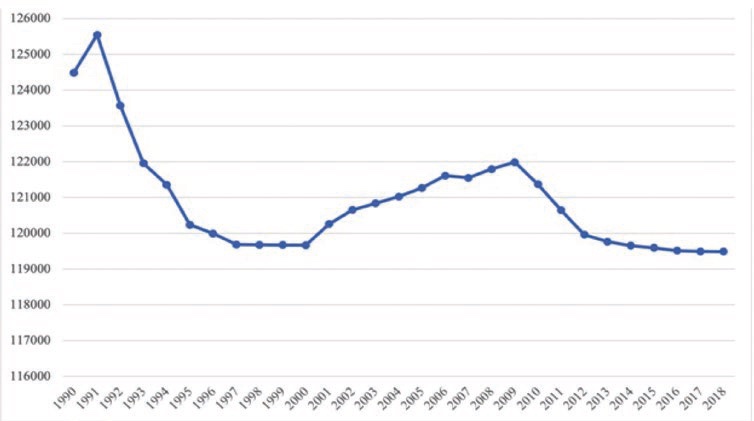
Figure 1China’s arable land (1000 ha) http://www.fao.org/faostat/en/#data/RL
A separate funding statement is not available in the source record for this article.
Conflict of Interest
No conflict of interest was declared by the author(s).
Cite this articleAPA 7
Formatted citationAPA 7
Gürcan, E. C. (2021). On the development of China’s environmental policies towards an ecological civilization. Belt & Road Initiative Quarterly, 2(3).7-25.
Altay, A., & Zeycepcan A. (2020). China's Relationship with the Liberal International Order: The Case of the Asian Infrastructure Investment Ban. Marmara University Journal of Political Science. https://doi.org/10.14782/marmarasbd.784428
BP. (2019). China’s Energy Market in 2018. BP Statistical Review 2019.
Bustillo, R., Andoni, M. (2018). China, the EU and Multilateralism: The Asian Infrastructure Investment Bank. Revista Brasileira de Politica Internacional, 61(1): 1–19.
Cai, K G. (2018). The One Belt One Road and the Asian Infrastructure Investment Bank: Beijing’s New Strategy of Geoeconomics and Geopolitics. Journal of Contemporary China, 27(114): 831–847.Campbell, R. J. (2014). China and the United States: A Comparison of Green Energy Programs and Policies. R41748. Congressional Research Service.
Chen, I. T. (2019). China’s Status Deficit and the Debut of the Asian Infrastructure Investment Bank. The Pacific Review, 1–31: 697–727.
Chernysheva, N. A., Perskaya, V. V., Petrov, A. M., & Bakulina, A. A. (2019). Green Energy for Belt and Road Initiative: Economic Aspects Today and in the Future. International Journal of Energy Economics and Policy 9(5):178-85.
Cheung, F. M., & Hong, Y. (Eds.). (2021). Green Finance, Sustainable Development and the Belt and Road Initiative. London: Routledge.
China-ASEAN Environmental Cooperation. (2018). China-ASEAN Environment Outlook 1 (CAEO-1): Towards Green Development. 2018. Singapore: Springer.
Corff, O. (2018). Rich Country, Strong Army”: China’s Comprehen- sive National Security. Federal Academy for Security Policy.
Gabusi, G. (2019). Global Standards in the Asian Infrastructure Investment Bank: The Contribution of the European Members. Global Policy.
Gardner, D. K. (2018). Environmental Pollution in China: What Everyone Needs to Know. New York: Oxford University Press.
Garey, L., & Ladislaw, S. (20199. Chinese Multilateralism and the Promise of a Green Belt and Road. CSIS Briefs. Center for Strategic & International Studies.
Goron, C. (2018). Ecological Civilization and the Political Limits of a Chinese Concept of Sustainability. China Perspectives, (4):39-52. https://doi.org/10.4000/chinaperspectives.8463
Guo, X., & Marinova, D. (2014). Environmental Protection and Sustainability Strategies in China: Towards a Green Economy. In S. Yao & M. J. Herrerias, (ed.) Energy Security and Sustainable Economic Growth in China, pp. 286-301. New York: Palgrave Macmillan.
Gürcan, E. C. (2019). Multipolarization, south-south cooperation and the rise of post-hegemonic governance. New York: Routledge.
Gürcan, E. C. (2020). The construction of “post-hegemonic multipolarity” in Eurasia: A comparative perspective, The Japanese Political Economy, 46(2-3), 127-151. https://doi.org/10.1080/2329194X.2020.1839911
Gürcan, E. C., Kahraman, Ö. E. & Yanmaz, S. (2021). COVID-19 and the Future of Capitalism: Postcapitalist Horizons Beyond Neo-Liberalism. Nova Scotia: Fernwood Publishing.
Harlan, T. (2021). Green Development or Greenwashing? A Political Ecology Perspective on China’s Green Belt and Road. Eurasian Geography and Economics 62(2):202-26. https://doi.org/10.1080/15387216.2020.1795700
Hu, W., Liu, J. & Sun, W. (ed.). (2017). The Development of Eco Cities in China. Singapore: Springer.
Hu, X. (2020). Forecast of China’s Average Annual Economic Growth Rate Based on BP Neural Network. J. Phys.: Conf. Ser. 1629 012040.
Ikenberry, G. J., & Lim, D. J. (2017). China’s Emerging Institutional Statecraft: The Asian Infrastructure Investment Bank and the Prospects for Counter-Hegemony. Brookings.
INSG. (2014). The Global E-bike Market. Briefing Paper. 23.
Kitagawa, H. (ed.). (2016a). Environmental Policy and Governance in China. New York: Springer.
Kitagawa, H. (2016b). Environmental Policy Under President Xi Jinping Leadership: The Changing Environmental Norms. In H. Kitagawa, (ed.), Environmental policy and governance in China, pp. 1-15. New York: Springer.
Liu, C., Wang, F., Gao, X. & Smith, H. (2021). Exploring Solutions to Improve the Evaluation of Development of Rural Villages: A Case Study of the Application of the Evaluation for the Construction of Beautiful Villages (ECBV) in a Village in South China. Sustainability 13(2):1-23.
Liu, J., & Wang, J. (2010). China’s Environment. Beijing: China International Press.
Liu, M., & Lo, K. (2021). Governing Eco-Cities in China: Urban Climate Experimentation, International Cooperation, and Multilevel Governance. Geoforum, (121), 12-22. https://doi.org/10.1016/j.geoforum.2021.02.017
Ma, H., et al. (2018). Strategic Plan of Made in China 2025 and Its Implementations. Analysing the Impacts of Industry 4.0 in Modern Business Environments, pp. 1-23. Singapore: IGI Global.
Mao, Z. (1974). Mao Tse-Tung Unrehearsed: Talks and Letters, 1956-71. S. R. Schram, (Ed.). Harmondsworth: Penguin.
MarketsandMarkets. (2021). Electric Bus Market by Propulsion (BEV, PHEV & FCEV), Application (Intercity & Intra-City), Consumer Segment (Fleet Operators & Government), Range, Length of Bus, Power Output, Battery Capacity, Component, Battery Type & Region - Global Forecast to 2027. Retrieved from https://secure.livechatinc.com/
Mathews, J. A., & Tan, H. (2015). China’s Renewable Energy Revolution. New York: Palgrave Macmillan.
Morton, K. (2006). International Aid and China's Environment: Taming the Yellow Dragon. London: Routledge.
Naughton, B.J. (2018). The Chinese Economy: Adaptation and Growth (second edition). Cambridge: MIT Press.
Pan, J. (2016). China’s Environmental Governing and Ecological Civilization. Heidelberg: Springer.
Raik, K., Aaltola, M., Kallio, J., & Pynnöniemi, K. (2018). The Security Strategies of the US, China, Russia and the EU: Living in Different Worlds. Helsinki: Finnish Institute of International Affairs.
Rana, R. (2019), Asian Infrastructure Investment Bank, New Development Bank and the Reshaping of Global Economic Order: Unfolding Trends and Perceptions in Sino-Indian Economic Relations, International Journal of China Studies, 10(2):273–290.
Robbins, P. (ed.). (2007). Encyclopedia of Environment and Society. London: SAGE.
Sanjuan, T. (2018). Atlas de la Chine: Les Nouvelles Échelles de la Puissance. Paris: Autrement.
Scott, S., Si, Z., Schumilas, T., & Chen, A. (2018). Organic Food and Farming in China: Top-down and Bottom-up Ecological Initiatives. New York: Routledge.
Wang, X. (2018). Tomorrow’s Eco-City in China: Improving Eco-City Development Though a Culture of Collaborative Communication. Unpublished Ph.D. Thesis. University of Liverpool, School of Environmental Science Department of Geography and Planning.
Xi, J. (2018). The Governance of China (I). C. 1. Pekin: Beijing Book Co. Inc.
Vazquez, K. C., & Chin, G. T. (2019). The AIIB and Sustainable Infrastructure: A Hybrid Layered Approach. Global Policy, 10(4), 593-603.
Yang, J. (2018). Construction of "Beautiful Village" Landscapes from the Perspective of Ecological Civilization: A Case Study of Zizhulin Village in Yanshan County. Journal of Landscape Research, 10(4),120-22. https://doi.org/10.16785/j.issn1943-989x.2018.4.027
Zhang, J. (2014). Foreign Direct Investment: Regional Dimensions. New York: Palgrave Macmillan.
Zhou, N., He, G., & Williams, C. (2012). China’s Development of Low-Carbon Eco-Cities and Associated Indicator Systems. LBNL-5873E, 1172952. U.S. Department of Energy: Office of Scientific and Technical Information.
Campbell (2014). The source article does not provide a separate full bibliographic entry for this citation.