Introduction
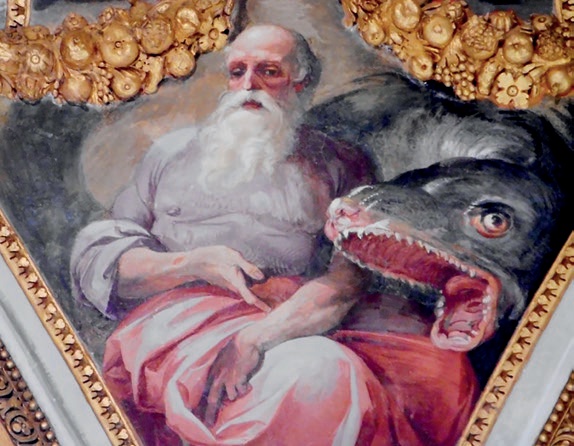
Yûnus is a turkish variant of the name ‘Jonah’/‘Ionas’, the prophet who finds himself out of divine goodness on the shore of a landing between one sea and another, after a journey and a stay in the belly of a whale. “Our Yunus” (Yunus Emre), according to the most widespread rumour about his origins, was born in central Anatolia, in Sarıköy / Eskişehir, in the second half of the 13th century and died in 1321. He is known for always finding himself on the “lip” between one coast and another. On the lip between the opposite shores of two worlds, but, specifically, on the land of Anatolia that in his time suffered so many upheavals: the disruptive coming of the Mongols (1243), the weakening of the Seljuk Turks (who arrived from the south-eastern shores of the Caspian, through Iran, 11th-12th centuries), and the collapse, now begun, of the Byzantines.
For the Turks/the Turkmen, it was a troubled time. Arriving in Anatolia, they imposed a demanding presence on the local populations, who were based there for centuries as subjects, first to the emperors of Byzantium, then to new local princes. In the process of settlement, the Turks suffered the shocks and consequences caused by raids and invasions. They were dominant, of course, during the process of Turkishization and Islamization of that area, but still found companionship through misfortune with the local people and Christians.
Yunus Emre, the “troubadour”, believed in God and was agitated by passion. To remedy this, he sung with the passion of his own wanderings through the territories and through the itineraries of his faith. According to the custom of the adepts, he carried out humble tasks for the brotherhoods at the convent of Taptuk Emre. After forty years of service at the convent, he evolved and got emancipated by the master Taptuk. Freed from the service, his language melted, disseminated sounds and grains of poetry, until everything became fixed on paper sheets. According to the tradition, these sheets were set on fire by jealous rivals. Conceivably, it is in that thick smoke of his own burnt verses that Yunus finds himself immersed, as he sighs in one of his verses:
“(...) Let me burn in a thick smoke, and that in that smoke I sing like a nightingale,
And let me appear in the friendly garden, always open, and never faded, never ...”
(Toprak, 1960: 67Toprak, B. (1960). Yunus Emre Divanı. İstanbul: İnkılap Kitabevi.)
There are two works attributed to Yunus: a Dîvân / “Canzoniere” and a “Book of Advice”, Risâletü'n Nuskhiyye, which can be placed around 1307. From this last work we quote the opening and follow it with an essay elaborating on how the formal and expressive setting differs from that of the hymns chosen below:
“In the name of God, the Clement, the Merciful:
See the arcane prodigy, it is the work of the Lord,
To fire and water and earth and air he said “be!”.
In the name of God he ruled, and land is ready there,
And behold the mountain erupts and immediately rises.
Of earth and water he kneads a rudiment at the base,
And he names him, he imposes the name of Adam on him.
A breath of wind, a shiver runs through the dough,
From there comes, you know, the offspring of Adam.
And He comes, places it to cook, and when
It is cooked well, the spirit is infused into that body,
With the injunction that the soul penetrate it:
Supreme order is that, ethereal care!
The soul takes on an effigy, it is filled with light,
And the semblance proclaims itself grateful, and deferential.
Praise be to that majestic Power:
You know and you can do a thousand others just like me.
There are four intrinsic qualities of clay:
Firmness, good disposition, trust in God, and benefit.
Four states that came with water:
Purity, profusion, grace in unity ...”
The “Book of Advice” is didactic by nature and by genre, and in it we do not find those thrills so abundant in the hymns to Love. Both are composite books, open to continuous insertions, variations, and external “contributions”. It is a corpus that is poetic, physical, ardent, indefinite, and leavening. We can see a kind of mysticism animated by Neo-Platonism, which receives and captures the reflections, the Light of God in creation, in the phenomenal world. From here, the poor dervish, cultivating himself, is seeking himself in an inner journey under the guidance of the Master and aspires to divine Beauty and Love as mirrors to each other. He is always obeying the Law and proceeding on the Way, the one that leads to Knowledge and draws on the mysterious supreme Truth with immersion and self-forgetfulness.
Yunus’ journey takes place among the disasters, events, and general struggles of the Turks and populations who live and suffer in those places he travelled. He embraces the pain and sorrow of human beings: creating a universal drama rather than an exaltation of Turkishness and Islam, at that time surely victorious and fighting for expansion.
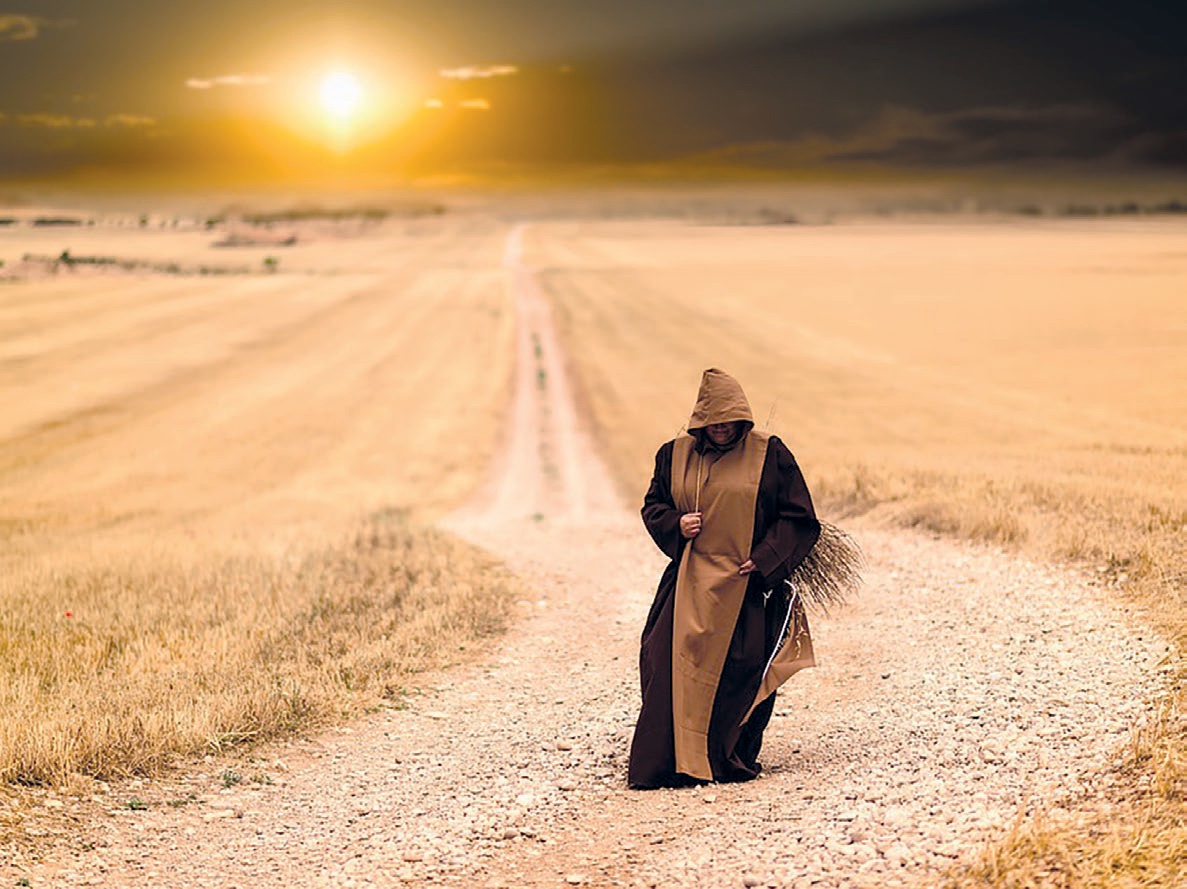
“Travails” are a polysemous concept that in some hegemonic idioms means “journey”. Similarly, a Turkish exhortation says, “the traveller must set out on his way”, on such a journey where the only companion along the hard way is fatigue, which remains faithful until the loss of one’s own shadow. The way is not drawn straight, it is traced in a tortuous way and the destination is reached by narrow paths.
Along those rough paths, one could meet other people, equally lost and disoriented. The verses speak as if they were disoriented themselves – they embody an existential and human condition expressed in verse, in lines, in stylistic registers, in human languages. Languages differ in words, but not so much in the foreshortening of language, which follows curves, road sections, which are by fate and mind summoned to touch and cross each other. Finally, the meanings convey into common furrows:
“We now were going over the lonely plain
as one who to a road he lost returns
and, till he find it, seems to go in vain.”
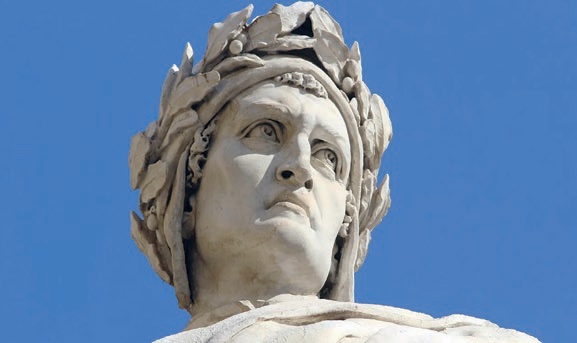
In those times, poets shared more than a few analogies. Thus, the images of Yunus and Dante can be compared and (depending on the parameters, alignments, and weights attributed, with the measures applied to the judgments on their personalities) projected onto each other as earthly and sanguine human beings, at least for this verse that articulates the breakthrough between asceticism and moralism.
Both wander in exile on a mission. They are pilgrims, sharing tensions and intentions of the terrestrial and earthly language, which provides life and meaning to the soul, allowing them to physically furrow it by marking and marking it. They teach the soul to speak a language that is alive and “vernacular”.
Yunus’ language can appear simple, but it is not deprived of concepts or imagery capable to perceive precisely sensitive figures. He is not only conceptual either, for he is an interpreter and a composer of prayers, poems, and invocations. He avoids euphemisms, the flattening of discourse, by using rough-spoken language infused with precise terminology, technicality, and philosophical conceptuality. His high hymns are raised on a harsh path leaning towards doctrinaire models already made solemn in Arabic and Persian, standing alternative to them and able to thrive, fluently, in their own lexicon, the Turkish linguistic lineage that dates back to saint Ahmed Yasevi’s (Central Asia, 12th century) textual and poetic applications.
Our Yunus Emre is quite modern in this sense; he gathers and welcome other “Emre” under his cloak, following a practice of Islamic propaganda of religion, but, even more, of a faith. In recent Turkish history, Yunus has become a flexible bow, bent to different directions of the arrow: nationalistic, republican (for the “pure” language, not corrupted by Arab-Persian formulations, which were once thought to be “foreign” to authentic Turkishness), secular, humanistic, and Islamic.
For the supporters of this essential religious aspect, Yunus’ humanism does not and must not resemble Western humanism, in which love for man is limited to man, making it blasphemous and incomplete through its failure to recognise the true Love for the Friend, the Lord, the Truth! In fact, Yunus dissolves the literary language of Western Turkish, of Rûm / Rome (the second Rome, once Byzantine, then Ottoman, Rûm; Anatolia was renamed Rûm from Arabs and Persians, neighbours of the Greek-Roman “Romei”, and later of the Turkish-Ottoman “Rûmîs”), and the affectionate references, the tributes of gratitude, of immediate sympathy expressed to him by the greatest contemporary poets that are symptomatic, explicit.
On our side, we remain fixed to observe the sign, or the omen of a new celestial vault, compared to this one here, as old as the mutable, treacherous, and elusive earth. The sky, even in these Turkish verses of Yunus, protects and envelops in faith, redemption, and remission the derelict bodies of pilgrims, orthodox, tinged with heresy or linked to Haji Bektash-i Veli (mystical master of the 13th century). In that great flowing of good, ideas of the “kavşak” - a word that has its roots in “reuniting” after the detachment - there are many lost and stunned dervish-singers.
At the crossroads of journeys where thoughts take off, where plenty are the meetings and gatherings, and where perhaps a woman appears to help the needy (“moon that rises from the earth”, says Yunus) -the image of the moon rising from the earth translates Yunus’ yearning for a higher love.
“Give me a love, oh my Lord, that where I am, my sense will kidnap me, on the spot,
Let me lose myself, let me go round and round looking for myself, without being able to find myself again,
To me, take myself away, make me empty, and in the meantime fill me with yourself ... ”
(Toprak, 1960Toprak, B. (1960). Yunus Emre Divanı. İstanbul: İnkılap Kitabevi.)
This we read in one of his vows, expressed between purification, intoxication, and reward. Now, could it not also be that in this portentous transmutation of semblances, invoked by certain poets, mystics or not, we end up increasingly resembling each other, men and God, earth and heaven? In short, when that heavy and now cleansed “I” comes out of itself, does it lighten so much it is able to join the other “I” of purified brothers to stand together on the steps of a Staircase?1 Once the ancient, decrepit, and worn-out features have been lost and transmuted, wouldn’t it be possible to find oneself under, or with, longed-for shared features? Those that would be found in the confusion and bewilderment of minds?
That would be a clumsy approach, almost an imitation of Yunus’ language in the echo of a very high Dante: both “unable” - mixed with a multitude of followers and self-styled aphasics - to express the metaphysics of divine light, made blessed through their inability to express “vulgarly” or popularly the metaphysics of divine light:
“Even such was I at that new apparition;
I wished to see how the image to the circle
Conformed itself, and how it there finds place;
But my own wings were not enough for this,
Had it not been that then my mind there smote
A flash of lightning, wherein came its wish.
Here vigour failed the lofty fantasy:”
(Dante, Paradise, Canto XXXIII, line: 136-142, see Dante, 2013: 1007
Therefore, Dante’s height and Yunus’s poetic impulses demonstrate the qualities of humility and humbleness required when dealing with the divine revelation: they both belong to a monotheistic inheritance. Just when the weakening of the imagination is declared, the strength to approach the most difficult expressions related to the contemplation of the essence of God take place:
“O how all speech is feeble and falls short
Of my conceit, and this to what I saw is such
’tis not enough to call it little!”
After all, even though Dante paints a murky picture of the Prophet of Islam, he knew, in that cultural climate, how to outline his own discourse by following and considering the thoughts of the philosophers and Muslim poets who return to the tested sensibilities and reworked what they borrowed from Christians and the first Jewish monotheists. In this case, as already mentioned, we refer to the path traced of the nocturnal ascents to heaven, to Paradise, on the Staircase structured by the steps on which the angels stand out in order. Yunus’ leaps of love move along the air streams of this earthly climate where moral re-education takes place from the very modest yet shiny sod.
They are poetic leaps towards God who fills with immensity the meaning of the inadequate word, the meaning of the language of love spoken down here on earth, from the earth. His poetic raving, sensible even in his raptures, is never in vain: for they flow like an intricate path, troubled, leading far away. The meeting of the dazzling thoughts, of the enlightened essences of such individuals (who walk on the thin and sharp bridge that connects the journey to exile and climb the ladder that rests on the ground, on the rock, rising to the sky), would have occurred along the lines of the vision of poets. With fixed gaze, they aimed at God and, when struck by lightning, resembled and blended in with the divine.
“That Circle which appeared to be conceived within Thyself as a Reflected Light,
when somewhat contemplated by mine eyes, within Itself, of Its own very colour,
to me seemed painted with our Human Form; whence wholly set upon It was my gaze”
Immersed in the light, which is colouring them with its own uniquely composed colour, the poets were transfigured by its own essence, as they continued to talk to each other about Love, calling us to listen.
Thus, Jonah / Ionas, the prophet who finds himself out of divine goodness on the shore of a landing between one sea and another, after a journey and a stay in the belly of the whale, would come to colour himself of the same light that colours Yunus and Dante.
For “That Circle which appeared to be conceived within Thyself as a Reflected Light,
when somewhat contemplated by mine eyes, within Itself, of Its own very colour,
to me seemed painted with our Human Form; whence wholly set upon It was my gaze”
Now let’s move on to some Choices from the Songbook. (Mini-Antoloji)