Introduction
In 2022, the outbreak of the russia- Ukrainian War led to the freezing of Russia’s foreign exchange reserves by Europe and the United States, causing the international community to question the security of assets denominated in the U.S. dollar within the global financialization system. As a result, countries worldwide began to seek to hold reserves in assets such as gold and commodities. At this juncture, countries holding significant amounts of U.S. dollar reserves have two ways to safeguard their interests. One approach is to sell foreign exchange assets and purchase commodities from countries like Russia. The other approach involves implementing quantitative easing policies to buy foreign commodities with their currencies, which would lead to inflation of the U.S. dollar.
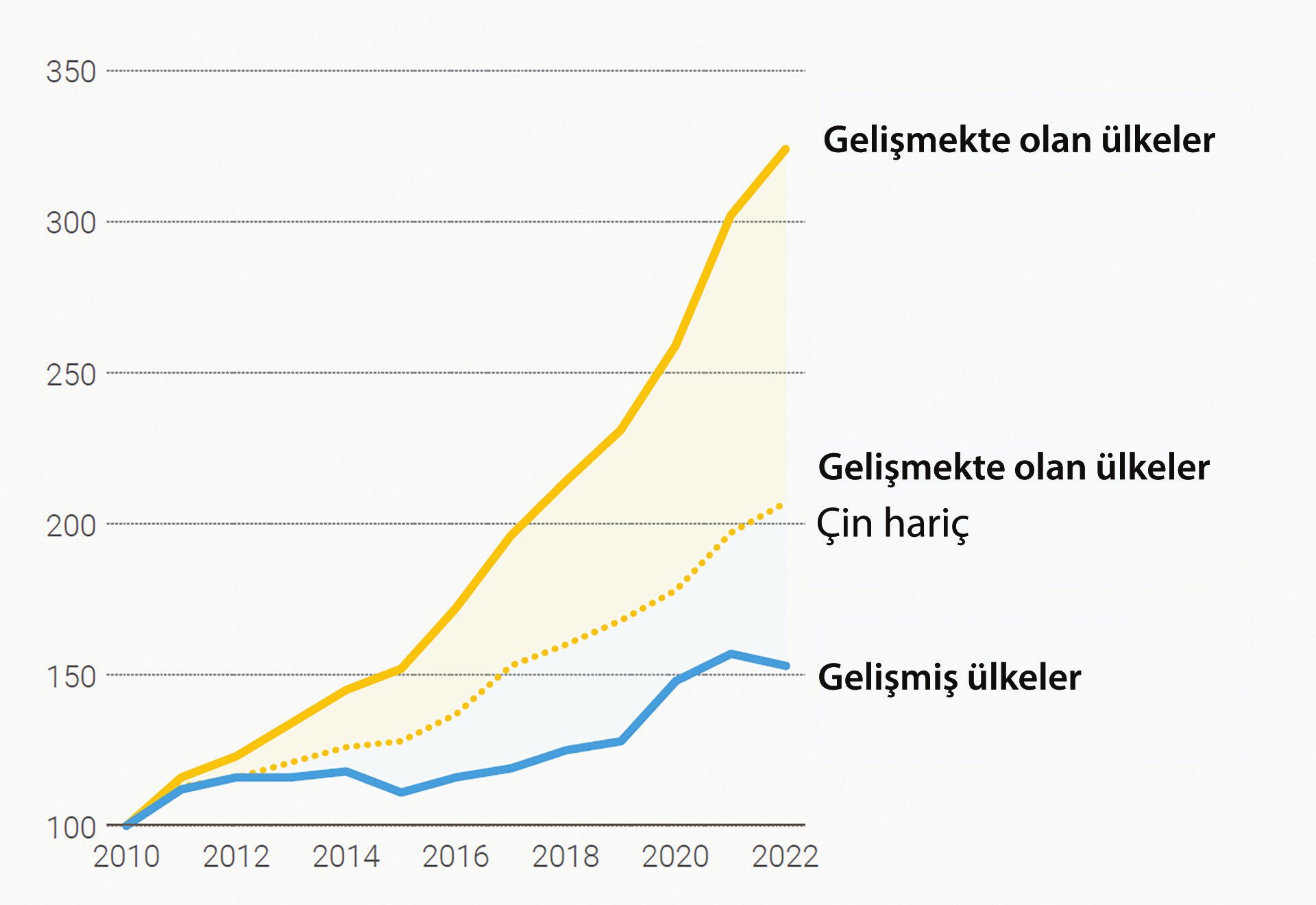
Consequently, dollarized countries may suffer losses from two perspectives. On one hand, they will directly bear the consequences of U.S. dollar inflation. On the other hand, the anti-inflation policies implemented by the United States will directly impact the economic development of dollarized countries. In fact, there have already been numerous studies on dollarization and its effects.
The dollarization phenomenon first appeared in the late 18th century, with typical cases occurring in Latin American countries during the 1970s. Based on the extent of the influence of the U.S. dollar, dollarization can take various forms and be categorized into de facto dollarization, de facto process of dollarization, and de facto policy of dollarization (Zhang, 1999: 17-25Zhang, Y. (1999). Dollarization: Reality, Theory, and Policy Implications. World Economy, (09).). From the perspective of currency substitution, dollarization can be classified into three levels: currency substitution, fixed exchange rate, and legal tender currency (Song, 2006Song, W. (2006). Research on Dollarization Issues. Research on Finance and Economics, (08):.). From a functional perspective, there are transaction dollarization, asset dollarization, deposit dollarization, etc. (Li & Huang, 1999Li, Y., Huang, J. (1999). Research on Dollarization Issues. Journal of Financial Research, (09): 56-6,81.; Reinhart, et al.; 2003; Mwase & Kumah, 2015Mwase, N., Kumah, F.Y. (2015). Revisiting the Concept of Dollarization: The Global Financial Crisis and Dollarization in Low- Income Countries. IMF Working Paper, WP/15/12,1:3.), and dollarization resulting from arbitrage (Geng et al., 2018: 5-21Geng, N., Scutaru, T., Wiegand, J. (2018). Carry Trade vs. Deposit- Driven Euroization. IMF Working Papers, W.P./18/58, 3.). Depending on the dominant entity, dollarization can be categorized as official, semiofficial, and unofficial (Cai & Yi, 2003: 5-10Cai, H., Yi, G. (2003) Advantages and Disadvantages of Dollarization and the Attitude of the United States. International Economic Review, (02).).
The degree of dollarization can be divided into full and partial dollarization, as well as high, medium, and low levels of dollarization (Husain, 2006: 13Husain, M.A. (2006). To Peg or Not to Peg: A Template for Assessing the Nobler. IMF Working Paper, WP/06/54, (2):13.). Most Western economists view that dollarization serves the function of reducing inflation and stabilizing financial markets in small and mediumsized developing countries, such as Argentina and Ecuador (Mary, 2008: 335-355Mary, Q. (2008).Neoliberal Restructuring, Financialisation and Socio-political Competition in Argentina: the Convertibility System and the Contradictory Outcomes of Dollarisation 1989-2001. Contemporary Politics, 14.), and contributes to stabilizing economic policies and enhancing the efficiency of financial markets in emerging economies (Naceur et al., 2015: 4Naceur, S.B., Hosny, A., Hadjian, G. (2015). How to De-Dollarize Financial Systems in the Caucasus and Central Asia?. IMF Working Paper, WP/15/203, 9: 4.; Mendoza et al., 2017: 2-10Mendoza, E.G., Rojas, E. (2017). Liability Dollarization, Sudden Stops & Optimal Financial Policy. NBER Working Papers, 10: 2-10.).
Scholars have researched the reasons for dollarization from perspectives such as inflation, external shocks, and exchange rate fluctuations. Through case studies of dollarization in Latin American countries, it is found that loan dollarization and deposit dollarization influence each other, with deposit dollarization promoting loan dollarization (Luca et al., 2008Luca, A., Petrova, I. (2008).What drives credit dollarization in transition economies?. Journal of Banking & Finance,32(5).; Nendis, 2009Nendis (2009). The source article does not provide a separate full bibliographic entry for this citation.; Isakova, 2010Isakova, A. (2010) Financial Sector Development and Dollarization in the Economies of Central Asia. Final Report, Grant No.RRC IX 69.; Escribano, 2011Escribano (2011). The source article does not provide a separate full bibliographic entry for this citation.). Throughout the transformation of the international monetary system, the global standing of the U.S. dollar has been steadily increasing. Concurrently, severe inflation and significant currency devaluation in peripheral countries have led to a phenomenon known as dollarization, where these countries adopt the U.S. dollar as their preferred currency (He & Lianj, 2015: 31-36He, C., Lianj, J. (2015). Research on Currency Internationalization Path: A Case Study of Dollarization in ASEAN Countries. Southeast Asia Survey, (02): 31-36.). External market shocks can significantly impact the dollarization of economies, and fluctuations in commodity prices play a crucial role in promoting dollarization, particularly in resource-rich countries (Catão & Terrones, 2016Catão, L., Terrones, M. (2016). Financial De-Dollarization: A Global Perspective and the Peruvian Experience. IMF Working Papers, 097.). Some scholars have analyzed using portfolio models and found that the reasons for dollarization in some European or Central Asian economies are driven by investor arbitrage (Geng et al., 2018: 5-21Geng, N., Scutaru, T., Wiegand, J. (2018). Carry Trade vs. Deposit- Driven Euroization. IMF Working Papers, W.P./18/58, 3.). For Central Asian countries, the direct reason for their high degree of dollarization is the economic recession caused by the disintegration of the Soviet Union (Wang et al., 2018: 74-83Wang, S., Fang, L., Li, J. (2018). Analysis of the Macroeconomic Effects of Dollarization Based on the DSGE Model: The Case of Cambodia, Laos, and Vietnam. Journal of Finance and Economics Theory, (03): 86-98.; 2019: 109-118).
From the perspective of the formation mechanism, Western economists, under the assumption of a free market system, use the theory of money demand to construct models such as the cash reserve model and transaction cost model to study the various mechanisms of mutual substitution among different currencies in the circulation field. They point out that the key to dollarization is the long-term high yield from holding dollar assets (Wei & Fang, 2003: 66-80Wei, W., Fang, W. (2003). Definition, Formation Mechanism, Costs, and Benefits of Dollarization: A Literature Review. World Economic Papers, (01).).In contrast to the view of Western economists that dollarization costs are short-term but can yield medium to long-term profits, Marxist economists point out through the construction of a stockflow consistency model that dollarized countries are unable to use exchange rate policies to correct payment imbalances, resulting in a deterioration of the current account and leading to a decline in GDP and fiscal revenue (Izurieta, 2003Izurieta, A. (2003). Dollarization as a Tight Rein on the Fiscal Stance. In Dollarization. Lessons from Europe and the Americas, edited by L. P. Rochon and M. Seccareccia. London: Routledge.).
Analysis of a dollarized economy growth model based on Thirlwall’s model shows that the steadystate economic growth rate of dollarized countries is lower than that of countries with sovereign currencies, and the economic growth of dollarized countries is quite unstable. Under unchanged conditions, dollarized countries are more prone to falling into a debt trap (Missaglia, 2021: 656-686Missaglia, M. (2021). Understanding Dollarisation: A Keynesian/Kaleckian Perspective, Review of Political Economy, 33.). Most Marxist scholars believe that dollarization is the main way for the expansion of the power of the U.S. dollar as an international currency. The United States exacerbates the plight of dollarized countries through economic policies such as fiscal deficit monetization (Ren & Cheng, 2021: 5-20Ren, C., Cheng, E. (2021). A Political Economy Analysis of Fiscal Deficit Monetization and the U.S. Financial Crisis. Shanghai Journal of Economics, (03):.; Gong & Zhao, 2021: 87-104Gong, X., Zhao, M. (2021). Is the Belt and Road Initiative a Debt Trap for Underdeveloped Countries? - An Analysis Based on Political Economy. Journal of Economics of Shanghai School, 19(03): 87-104.). Before the Russia-Ukrainian War, “de-dollarization” had become a global topic due to the subprime crisis. It is generally believed that de-dollarization weakens or eliminates the effectiveness of a country’s monetary and exchange rate policies, leading to financial instability and increased financial risks, thus raising the probability of a financial crisis. Therefore, economies with favorable conditions should strive to achieve dedollarization as soon as possible (Kokenyne et al., 2010Kokenyne, A., Ley, J., and Veyrune, R. (2010). Dedollarization. IMF Working Paper, WP/10/188, (8):19.). Regarding the Asian region, research has found that the Chinese yuan plays a significant role in influencing exchange rate fluctuations in Asia and could become an important pole in the international currency system’s diversification.
Consequently, it becomes one of the optional international reserves after de-dollarization (Fratzscher & Mehl, 2013: 1343-1370Fratzscher, M., Mehl, A. (2013). China’s Dominance Hypothesis and the Emergence of A TriPolar Global Currency System. The Economic Journal, (12).). Studies focusing on emerging economies indicate that the abuse of the dollar’s privilege in the current international monetary system is a significant reason for financial crises. Therefore, achieving currency diversification for reserves is crucial as soon as possible (Fratzscher & Mehl, 2013: 1343- 1370Fratzscher, M., Mehl, A. (2013). China’s Dominance Hypothesis and the Emergence of A TriPolar Global Currency System. The Economic Journal, (12).).
Some scholars focus on de-dollarization in dollarized countries. Research shows that over a dozen countries1 have completely or partially achieved de-dollarization through macroeconomic policies such as relaxing exchange rate floating ranges, expanding the spread between domestic and foreign currency deposit rates, and raising foreign exchange loan rates, in addition to microeconomic measures such as raising the criteria for using foreign currency and foreign currency deposit insurance premiums (Kokenyne et al., 2010Kokenyne, A., Ley, J., and Veyrune, R. (2010). Dedollarization. IMF Working Paper, WP/10/188, (8):19.). Southeast Asian2 countries are implementing measures to promote the use of their domestic currencies and reduce their dependence on the U.S. dollar to achieve de-dollarization rapidly (Kubo, 2017Kubo, K. (2017). Dollarization and De-dollarization in Transitional Economies of Southeast Asia. Palgrave Macmillan.). Some “Belt and Road Initiative” participating countries are progressively adopting local currency pricing for diverse transactions through currency cooperation with China, thus paving the way for de-dollarization (Linn &Zucker, 2019Linn, J.F., Zucker, L. (2019). An “Insideout” Perspective on the Impact of the Belt and Road Initiative in Central Asia and the South Caucasus: How to Maximize its Benefits and Manage its Risks. 2019 Eurasia Meeting Emerging Markets Forum Background Paper, 10-14.). Remarkably, research examining the influence of dollarization on China indicates that its presence in international economic exchanges exerts a considerably adverse impact on China’s economy and social welfare. By reducing the level of dollarization, China can fortify itself against external shocks, foster the growth of its domestic real economy, and substantially enhance social welfare (Wang et al., 2022: 79-136Wang, S., Xiao, Z., Liu, W., Wu, Y. (2022). Dollarization and Monetary Policy Spillover Effects. World Economy Studies, (06):.).
Existing literature on dollarization predominantly delves into its significance, root causes, evolutionary trajectory, and ramifications using case studies and empirical analyses. These studies primarily employ Western economic methodologies, making it challenging to truly delve into the essence of dollarization, particularly when researching its formation mechanism. They are merely grounded in extreme assumptions such as rational economic agents and fail to account for social and environmental changes, leading to their conclusions frequently diverging from reality. This paper commences by delving into the Marxist financialization theory, thoroughly examining the essence and formation mechanism of dollarization. The findings hold valuable insights for the selection of de-dollarization strategies.
Marxist Theory of Currency Internationalization
The foundation of dollarization lies in the internationalization of the U.S. dollar. Karl Marx held the view that the internationalization of currency is manifested as the internationalization of monetary functions, and its essence resides in the internationalization of monetary power. As a matter of fact, dollarization is the primary means of expanding international monetary power.
According to the principle of the dual nature of labor, concrete labor produces use value, and abstract labor produces exchange value. Value represents social relations between individuals in the production process and is abstract and intangible. This abstract and intangible value needs tangible carriers to exist, with different carriers reflecting different forms of value. The primary form of value is the use value, the second form is the exchange value (i.e., the exchange of goods), and the third form is currency (i.e., the general equivalent). The transformation of value carriers occurs through transactions: during the exchange of goods, the value is carried by the use value of the exchanged object. During monetary transactions, the value is carried by currency, the “general equivalent”. Therefore, currency is the carrier of value.
Value carries a dual meaning. First, it pertains to the role and significance of value created by labor to others. Second, it involves the dependence that others develop on this labor. This dependency gives rise to the power to control the labor of others, meaning “others must provide their labor in exchange for the goods and services provided by this labor” (Journalist, 2018: 19-28Journalist. (2018). Development of the Currency Power System and Contemporary Historical Processes - An Interview with Senior Professor Lu Pinyue of Shanghai University of Finance and Economics. Studies on Marxism, (12).). Consequently, currency, as the carrier of value, possesses this power. “Each individual exercises the power to dominate others or control social wealth by being an owner of exchange value or currency. The social power and connection with society are contained in their pockets.” (Marx and Engels Collected Works, 2009: 51Marx and Engels Collected Works: Volume 8. (2009). Beijing: People’s Publishing House, 51.). Therefore, money not only embodies the social value of labor that serves others but also becomes a symbol of the power that individuals possess to control social resources. However, the current sovereign currency (paper money, digital currency, etc.) lacks intrinsic use value. Nevertheless, the state absorbs labor value through political power by issuing sovereign currency. Hence, sovereign currency is a product of political and economic power.
To become a world currency, a sovereign currency must meet certain requirements from both the supply and demand sides. From the supply perspective, the currency’s value should be stable and widely accepted as a carrier of value. From the demand perspective, international trade should be limited to using that currency, forcing laborers from different countries to use it as a carrier of labor value (Yuan, 2021: 58-69Yuan, H. (2021) Marxist Critique and Transcendence of Modern Monetary Theory. Chinese Journal of Political Economics, (04).). Once a sovereign currency becomes a world currency, its monetary power expands to the international level, becoming a symbol controlling the world’s social resources. The U.S. dollar exemplifies this international currency. Based on its strong economic and military power, the United States demands global commodity transactions to be settled in U.S. dollars, thus exploiting labor value worldwide (Lu, 2018Lu (2018). The source article does not provide a separate full bibliographic entry for this citation.).
Marxism views that currency, as the carrier of value, reflects social relations among individuals and possesses the power to control the labor of others, while financialization can enhance this power. Firstly, financialization elevates the power and capacity of currency. Financialization is a phenomenon where financial instruments are further derived (i.e., currency futures, currency options, etc.), extending control and enhancing the influence of the currency.
Secondly, currency power is derived through commodity financialization. Financialization tightly links various commodities and assets with currency, extending currency power to commodities and assets. Especially with commodity financialization, it not only strengthens currency’s control over such commodities due to improved tradability, but also imbues the financialized commodities with certain monetary characteristics (i.e., value storage). As a result, financialized commodities gain additional power from sovereign currency (i.e., the ability to control other labor). This additional power does not divide the power of sovereign currency but emerges from the commodity value transformation after financialization. Essentially, it is a derivative power built upon the foundation of the original power of sovereign currency. Consequently, commodity financialization enhances the power of sovereign currency.
From the perspective of value anchoring, the internationalization of the U.S. dollar has gone through three stages: gold-anchored internationalization, oilanchored internationalization, and neoliberal systemanchored internationalization. Correspondingly, the international monetary system since World War II can be divided into the gold-dollar system (the Bretton Woods system), the oil-dollar system (the Jamaica system), and the system-dollar system (the financialization system).
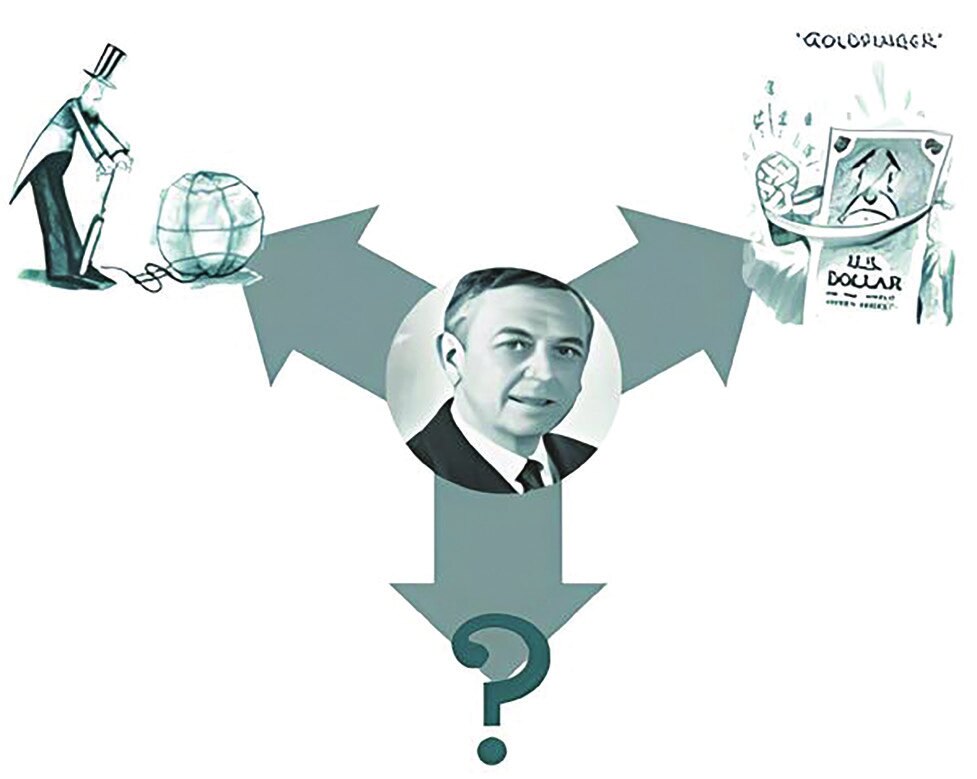
The gold-dollar system originated from the Bretton Woods Conference and was essentially a gold exchange standard. The U.S. dollar was directly convertible to gold. Other countries’ sovereign currencies could be exchanged for gold through the U.S. dollar. This led countries worldwide to hold U.S. dollars as settlement and reserve currency, forming the basis for the dollar’s internationalization. The international monetary power of the U.S. dollar depended on the natural monetary status of gold. However, the “Triffin Dilemma” led the United States to abandon the commitment to convertibility between the U.S. dollar and gold. Gold was no longer the basis for the internationalization of the U.S. dollar.
To maintain the international monetary power of the U.S. dollar, the United States found a new anchor for value: oil, which was essential for industrialization worldwide. The U.S. agreed to provide military assistance and protection to Saudi Arabia. In return, Saudi Arabia agreed to settle all its oil transactions in U.S. dollars, known as the “petrodollar agreement”.3 As Saudi Arabia was the largest oil-producing country in OPEC and the largest oil-exporting country, other countries quickly adopted the U.S. dollar for oil transactions, establishing the oil-dollar system. After commodities like oil were financialized, the international financial market formed a pricing and settlement cycle centered around the U.S. dollar as a credit currency, known as the global financialization system (Lu, 2021Lu, C. (2021). The Theoretical Mechanism and Practice of Economic Financialization - Based on the Perspective of Capital Accumulation Theory. Shandong Social Sciences, (08): 130-136.).
The institutional-dollar system originated from the Washington Consensus. It was essentially an international monetary system⁴ where sovereign currencies of various countries were linked to the U.S. dollar through the neoliberal system built upon the financialization of commodities like oil. A key feature of this system was the symbolization of sovereign currencies anchored to the U.S. dollar, increasing their interchangeability. As a result, alternative currencies (i.e., various quasi-currencies) measured by liquidity flooded the developed financial markets. Simultaneously, various financialized goods and assets from various countries were introduced into the international financial market, turning it into the dominant center power of global commodities, with the U.S. dollar as the hegemon of monetary power. Of course, the U.S. dollar is also a sovereign currency, and the global financialization system centered around it essentially falls under the will of the United States.
Once a sovereign currency becomes internationalized and widely used in international trade by most countries, it acquires a public attribute. However, it cannot shed its inherent sovereign attribute as a specific country’s currency. As a result, while an international currency performs monetary functions globally (e.g., a measure of value, medium of exchange, and store of value), it plays the same function domestically. Therefore, the issuing country of the international currency must implement a series of measures to ensure the return of the currency from the international market to meet the needs of its domestic economy. This return mechanism can be achieved initially through international trade in goods or formal agreements (i.e., the Bretton Woods Agreement). However, with the expansion and globalization of capitalism and the increasing demand for more internationalized currencies in global trade, a global financial system emerges to tackle the “Triffin dilemma” while generating substantial seigniorage revenue.
This financial system revolves around financialization and financial liberalization. Financialization involves amplifying the financial attributes of various goods and introducing them into the financial market, including mechanisms for price formation and transactions. Through commodity assetization and asset securitization, it closely links economic activities such as production and consumption with financial activities, creating channels for the return of internationalized currencies. It enables swiftly channeling the returned currency into the domestic economy, achieving seamless integration between the returned currency and domestic economy, and allowing the surplus value absorbed worldwide to be conveyed to domestic capital, leading to comprehensive benefits for the domestic capital. Compared to other forms like commodity trade, the liberalization of financial transactions in the global financial system is more conducive to maintaining the sovereign attributes of a world currency. It not only meets the domestic economic needs with the returned currency but also effectively integrates domestic capital circulation with international capital circulation, enabling the control of the global economy by domestic economic policies through institutional design.
Dollarization is the deepening of the power of the U.S. dollar after its internationalization, representing a substitution of power for other sovereign currencies. At this stage, the U.S. dollar not only wields its sovereign currency power domestically but also extends its influence extensively into other countries’ economies and financial systems. As a country experiences financialization, its currency becomes increasingly susceptible to being supplanted by the U.S. dollar, and its resources become more exposed to potential U.S. control. The global financialization system, shaped by the Washington Consensus, represents a prominent phase of dollarization, wherein the U.S. dollar is extensively embraced globally. A substantial volume of U.S. dollars permeates various international domains, displacing certain or even all functions of other countries’ sovereign currencies. These functions include pricing, circulation, investment, reserves, and acting as a currency anchor in peripheral countries.
During global financialization, approximately 95% of global commodities are priced in U.S. dollars, and the U.S. dollar accounts for over 85% of international trade settlements and foreign exchange transactions, leaving other countries as price takers. Following the disintegration of the Bretton Woods system, the share of the U.S. dollar as global international reserves experienced a decline to approximately 45%. However, this proportion consistently remained above 60% throughout the financialization era and often exceeded 70%. Furthermore, nearly one-third of the member countries of the International Monetary Fund (IMF) chose to peg their currencies to the U.S. dollar directly. These phenomena indicate a growing trend among countries within the global financialization system, wherein an increasing number of them are adopting their currencies as partial or complete substitutes for the U.S. dollar to fulfill various functions.
Establishing the global neoliberal financialization system has bolstered the international standing of the credit dollar, concurrently driving the dollarization of sovereign countries. Within this currency system, the credit dollar achieves dollarization through three levels of financialization: The first level involves the financialization of bulk commodities, where the original currency anchor becomes integrated into the financial system, enabling easier circulation, trading, and speculation of commodities. The second level is characterized by technological financialization, where digital capital converges with financial capital, fostering the growth of digital financial instruments and facilitating more efficient aggregation, concentration, and monopolization. The third level is institutional financialization, accomplishing dollarization through the liberalization, privatization, and marketization (LPM) reform, integrating financially driven commodities and technologies into the global financial market, and forming a global circulation system for the U.S. dollar.
Commodity Financialization is the Basis of Global Dollarization
Commodity financialization enhances the status of the U.S. dollar as an international currency, attracting more countries to replace certain functions of their currencies with the U.S. dollar and U.S. dollar-denominated assets, further expanding the U.S. dollar’s international currency power.
Securing the pricing power for major commodities is the foundation of the dollar’s internationalization. The United States has exerted control over oil trading by strategically influencing the Middle East and, in turn, has fostered the dollarization of major commodities through the oil-dollar system. By controlling major commodity pricing, it wields the power to influence the exchange rate by regulating commodity prices, thereby shaping international trade dynamics. Simultaneously, by retaining control over pricing major commodities, it can leverage the ability to export dollars while importing major commodities. This enables the promotion of cross-border use of the dollar and facilitates the dollarization of various assets. Currently, the U.S. dollar serves as a credit currency, replacing gold as the anchor against major commodities and gaining global recognition as the preferred transaction currency.
After establishing the pricing power for spot commodities, the U.S. has successfully implemented a futures pricing system for major commodities, denominated in dollars and standardized in design, effectively achieving the financialization of these commodities⁵. The United States has established commodity futures pricing systems by setting up futures trading markets. These futures trading markets have maintained the status of the U.S. dollar as an international pricing currency and strengthened control over the spot market for major commodities. In addition to establishing futures exchanges domestically, the U.S., through the Marshall Plan, mandated the establishment of dollar-denominated futures exchanges in Europe, eventually forming major commodity pricing centers such as the precious metal pricing center (New York Mercantile Exchange), industrial metal pricing center (London Metal Exchange, New York Commercial Exchange), energy commodity pricing center (New York Commercial Exchange), and agricultural product pricing center (Chicago Mercantile Exchange, London Intercontinental Exchange). These pivotal centers now determine major commodity prices based on the U.S. dollar, directly influencing the choice of currency in international transactions of other countries.
The process of commodities financialization not only enhances the role of the U.S. dollar as a dominant currency for international trade settlements and pricing but also fosters the growth of the dollar as a significant international investment currency. On the one hand, the U.S. dollar has evolved into a crucial financial trading instrument, serving as a significant investment tool, with dollar futures, dollar options, and other currency derivatives emerging as primary hedging mechanisms within the international financial market. On the other hand, the dollar’s progression from pricing commodities to pricing financial assets has greatly promoted the development of the international financial market. Simultaneously, for trading, settling, investing, and hedging purposes, a certain reserve of dollars is required globally, bolstering the dollar’s status as an international reserve currency and further displacing the reserve function of peripheral sovereign currencies.
The Financialization of Technology is the Catalyst for Global Dollarization
Technological financialization manifests across four distinct levels: Firstly, emerging technologies function as instruments that expedite the accumulation of financial capital, serving the financial sector’s interests. Secondly, the research and development of these new technologies rely on investments from financial capital. Thirdly, technological progress paves the way for the financialization of digital capital. Lastly, the financialization of digital capital enhances the global prominence of the dollar, expediting the displacement of other national currencies.
In the contemporary world, the rapid advancement of information technology and artificial intelligence has led to a profound integration of finance with various technological domains. Information technology has been instrumental in reducing the cost of financial transactions, extending the reach and availability of financial services, broadening the scope of financial activities, and seamlessly integrating finance into all facets of the economy and society. As a result, this not only fosters the comprehensive financialization of the economy but also paves the way for social financialization.
Firstly, advancing modern communication technology can effectively mitigate information asymmetry, alleviating corporate financing challenges and enhancing the efficiency of financial resource allocation. The integration of information technology in network searches optimizes evaluation efficiency and streamlines transaction services, reducing consumer costs and attracting a substantial influx of consumers into the financial market. Secondly, the platform-based development of finance based on information technology, facilitated by mobile internet, brings financial activities into real-life scenarios. The integration seamlessly and instantaneously aligns ordinary people’s financial behaviors, including financing, investment, and payment. As a result, finance becomes intricately connected with individuals’ day-to-day lives, ensuring a smooth and cohesive interface between financial transactions and personal activities. Thirdly, building upon the aforementioned advancements, the intersection of finance and technology has given rise to the autonomous emergence of the Fintech industry. This dynamic sector exerts an enduring and all-encompassing influence on product design, business processes, organizational structures, and business models within the financial domain, thus significantly propelling the overall financialization process of society.
Every stage of the technological innovation process demands capital, particularly in the case of the highly advanced and risky developments within the information industry. This increasing level of risk underscores the industry’s heightened reliance on venture capital. On the one hand, the process of invention and creation demands increasing levels of team collaboration and financial support, while the likelihood of individual innovation is diminishing, gradually being eclipsed by market forces. On the other hand, new technology can only generate profits for capitalists when it is extensively adopted as a capital asset within the industry. Therefore, technological advancements that profoundly impact the economy and society are inherently linked to investments from financial capital. This phenomenon makes the capital market gradually replace bank capital as the incubator for industry innovation and development.
According to Marxist scholars, the extensive adoption of information technology in financial markets is an inevitable outcome of the development of capitalism to a particular stage, signifying the ascendancy of virtual capital over production (Liu & Cheng, 2022Liu Y., Cheng E. (2022). Opposing American Cyber Hegemony, Defending Our National Cyber Sovereignty and Security. Chinese Journal of Political Economics, (01): 183-184.). Digital transactions based on information technology have accelerated the circulation of global financial products, leading to the proliferation of financial derivatives and subsequently complicating the financial landscape, introducing novel uncertainties.
Firstly, the digital revolution of big data, artificial intelligence, and related technologies has created a networked economic model. This model significantly lowers production and transaction costs, seamlessly integrating all economic entities into a networked framework for production and trade. Consequently, resource allocation efficiency and socialization reach new heights, surpassing the economic paradigms of the industrial and financial capital eras. As a result, it is aptly referred to as the development model of digital capital, boasting enhanced surplus value. Secondly, within the digital capital model, currency plays an active and dominant role in the entire process of capital multiplication. The influence of digital technology allows for a more virtual form of capital accumulation. The organizational structure of digital platforms empowers socialized mass production of capitalism with unparalleled flexibility and freedom, surmounting temporal and spatial barriers that once hindered the movement of capital value. Gradually dissociating from the traditional production process, this model facilitates the boundless multiplication of virtual value for digital capital in circulation. Thirdly, the process of digital capital multiplication described above represents the re-virtualization of the original virtual capital through the fusion of digital capital and financial capital, highlighting a significant characteristic of digital capital’s financialization. This re-virtualization enables the value cycle to further detach from the real economy, bypassing lengthy production cycles and facilitating the potential for substantial immediate profits.
In the age of industrial and financial capital, the U.S. dollar has assumed the role of an international currency for pricing, settlement, and reserve purposes. The development of information technology has driven both industrial and financial capital toward digital transformation, fostering a seamless fusion of technology and finance. This convergence has enabled digital capital to spearhead the progressive evolution of the capitalist realm. As the predominant currency within this capitalist world, the U.S. dollar has experienced an amplified and extensive global influence due to digital and financial capital integration. Consequently, it stands a greater chance of supplanting peripheral national sovereign currencies in fulfilling various currency-related functions.
Firstly, digital technology drives the digitization of diverse products and services, manifesting in valuable data information. This data, once commodified, becomes a crucial factor in present-day capitalism, serving as a vital source of surplus value for digital capitalists and a catalyst for the multiplication of digital capital. The amalgamation of digital capital with financial capital leads to the financialization of data information commodities, a process intricately linked to global information channels, with the U.S. dollar and other international currencies playing a pivotal role in this financialization journey. Secondly, the financialization of information data commodities removes temporal and spatial barriers, leading to reduced costs in the flow of various factors. This, in turn, accelerates the worldwide proliferation of capital and amplifies the influence of capital in trade, finance, production, consumption, and other domains. It particularly strengthens the level of capital financialization in these sectors, broadening the range of goods that can be assessed and controlled by the U.S. dollar and other international currencies. Thirdly, the rise of digital capital has led to increased and frequent transactions, contributing to the wider adoption of the dollar and reinforcing its status as a dominant settlement currency. Notably, the proliferation of financial activities like high-frequency trading, quantitative investment, and smart investment advisory services relying on digital technology has significantly amplified the scale and frequency of dollar transactions within the financial markets. Moreover, the emergence of various digital currencies, including digital stable coins pegged to the dollar, further intertwines digital transactions with the dollar, expanding the dollar’s sphere of influence in pricing. This expansion of the pricing scope, coupled with the growing prominence of the dollar as a settlement currency, reinforces its reserve value.
Institutional Financialization Is the Foundation of Global Dollarization
It is evident that the financialization of commodities and technology has bolstered the international monetary power of the U.S. dollar, thereby strengthening the U.S. government’s control over the global economy through dollarization. Nonetheless, this development is contingent upon a series of favorable institutional arrangements that support the financialization, which can be referred to as institutional financialization. The adoption of a financialized institutional design plays a pivotal role in safeguarding the attainment of global dollarization.
Following the collapse of the Bretton Woods system and the development of the Jamaica system, international currencies have experienced greater diversity. Consequently, the U.S. dollar has lost its status as the sole settlement currency for major commodities, leading to a decline in international prominence. In response, the United States secured the status of its primary international currency through institutional financialization, ushering in the era of global financialization⁶.
Institutional financialization refers to a series of mechanisms that uphold and promote financial liberalization, and it is grounded in the ideology of neoliberalism. Neoliberalism is a prevailing ideology advocated by the concentration of financial power in monopoly capital. The global financialization system is central to sustaining this ideology, an intricate institutional framework that serves as its backbone. This institutional arrangement not only reinforces the principles of neoliberalism but also plays a pivotal role in preserving the international dominance of the U.S. dollar.
Neoliberalism, a prominent economic and political ideology, gained traction during the global stagflation crisis in the mid-1970s and found its early advocates in the United States and United Kingdom. This ideology centers on core principles that significantly influenced policies worldwide. These principles encompass privatization, liberalization, marketization, and internationalization. The global financialization system is firmly established upon the principles of private ownership and liberalization, bolstering the international prominence of the U.S. dollar as the dominant reserve currency (Li & Sun, 2020Li, X., Sun, L. (2020). “Neoliberalism” in the Mirror of European and American Anti-epidemic Practices and Dilemmas. Journal of Economics of Shanghai School, 18(02): 171-185.). Free market thinkers like Milton Friedman, who played a significant role in shaping the financialization system, espoused the belief that a country’s economic development rests upon the pillars of “absolute liberalization,” “thorough privatization,” and “comprehensive marketization” (commonly known as the “LPM” mechanism).
Firstly, they passionately underscored the imperative of liberalizing international economic exchanges and ensuring equitable treatment for domestic and foreign transactions. Achieving this vision necessitated eliminating non-tariff barriers, substantially reducing tariffs, and simplifying tax regulations. Secondly, they diligently pursued privatization policies to divest state-owned assets, effectively privatizing all state-owned enterprises and other valuable properties. This comprehensive privatization approach involved strategic joint ventures, leasing arrangements, share sales, and the complete transfer of property rights. Thirdly, they advocated comprehensive market-oriented reforms in the financial sector, including privatization of stateowned assets in the financial sector, liberalization of interest rates and exchange rates, increased openness of capital markets, free convertibility of capital accounts, and the introduction of short selling mechanisms.
Since the 1980s, many developing countries have undertaken significant “LPM” reforms to remove barriers and restrictions. These reforms have effectively facilitated the global integration of the U.S. dollar and other sovereign currencies, enabling them to harness the labor value from around the world and exert considerable influence over the labor markets in other nations. Consequently, these reforms have played a pivotal role in elevating the international standing and prominence of the U.S. dollar.
The economic stagflation that emerged in capitalist countries during the 1970s was essentially due to the contradiction of capital accumulation, leading to an overabundance of goods and capital, with surplus value that could not be fully realized in the circulation sector. Consequently, financialization in the circulation sector was promoted, encompassing goods and various forms of productive capital. This shift towards financialization led to the rapid dominance of financial monopoly capital in the global economy. The financialization of goods here mainly refers to bulk commodities with typical financial attributes.
Firstly, the pricing of bulk commodities is determined by market mechanisms. The price of goods is jointly determined by their intrinsic value and the forces of market supply and demand, with prices fluctuating around the value. Nonfinancialized goods, lacking investment value, typically experience minimal price fluctuations since their value is primarily derived from their use value. However, financialized bulk commodities acquire investment value in addition to their original use value. Consequently, their transactions become more speculative, aiming to generate capital gains. This shift in focus moves the pricing of these commodities away from being determined solely by the spot market’s supply and demand relationship and towards being influenced by the investment relations of the futures market. American financial capitalists have established standardized futures trading mechanisms in response to this financialization, adhering to financial market trading rules. This development has substantially accelerated the speed of capital turnover and increased the rate of capital profit. It is essential to note that whether it is spot trading or futures trading, American financial capitalists predominantly set the rules governing these markets. Additionally, any currency used to complete the capital cycle must be denominated in dollars due to the significant influence and dominance of the United States in the global financial landscape.
Secondly, the international transmission of bulk commodity prices is determined by market mechanisms. Under the principles of the free flow of capital, the foreign exchange market mechanism determines the international transmission of bulk commodity prices. This mechanism relinquishes the control of countries over the exchange rates between their currency and international currencies such as the U.S. dollar. Consequently, it amplifies the volatility of commodity futures prices in the global financial market. This process enables financial capital to seek profits through speculation and grants developed countries’ financial systems the capacity to enter other countries’ markets, extracting surplus value at will through the financial market. This increases the frequency of dollar transactions in global markets, expanding the scale of international market transactions.
In technological development, the substantial intervention of capital can serve as a catalyst, offering effective assurances for the continual reproduction of the labor force among innovative workers. This, in turn, acts as a magnet, drawing more labor into the innovative domain and amplifying the likelihood of successful technological innovation. While innovation is undoubtedly important, it is crucial to recognize that the primary objective of capital is not solely focused on innovation but on maximizing profits. Therefore, a significant portion of the outcomes stemming from information technology innovation is directed toward expediting capital circulation and achieving profits. One area where this effect is particularly pronounced is using instant communication technology in financial transactions. This technology has played a pivotal role in promoting the financialization of various goods and capital by enabling the completion of financial transactions in mere seconds.
Once capital is financialized, it undergoes a transformative process enabling it to generate continuous profits and self-replicate through perpetual circulation within the financial sector. The “LPM” policy facilitates technology standardization by streamlining its design, packaging, and valuation processes. This standardized technology is then made available for sale through roadshows. Eventually, the technology transforms into a financial product, enabling it to be freely traded on the financial market, providing opportunities for investors to participate and potentially benefit from its performance and growth.
At this point, technology transforms into a crucial intermediary in the circulation of financial capital. Instead of envisioning long-term profits derived from the industrialization of technology, financial capital, predominantly in the form of venture capital, now prioritizes immediate gains through collateralization, mortgaging, and equity transfer. The phenomenon of financialization within the technology sector has not only fueled the extensive growth of the financial industry but has also accelerated the overall process of economic financialization. Furthermore, it has broadened the realm of the U.S. dollar and other international currencies, making them more indispensable in global markets.
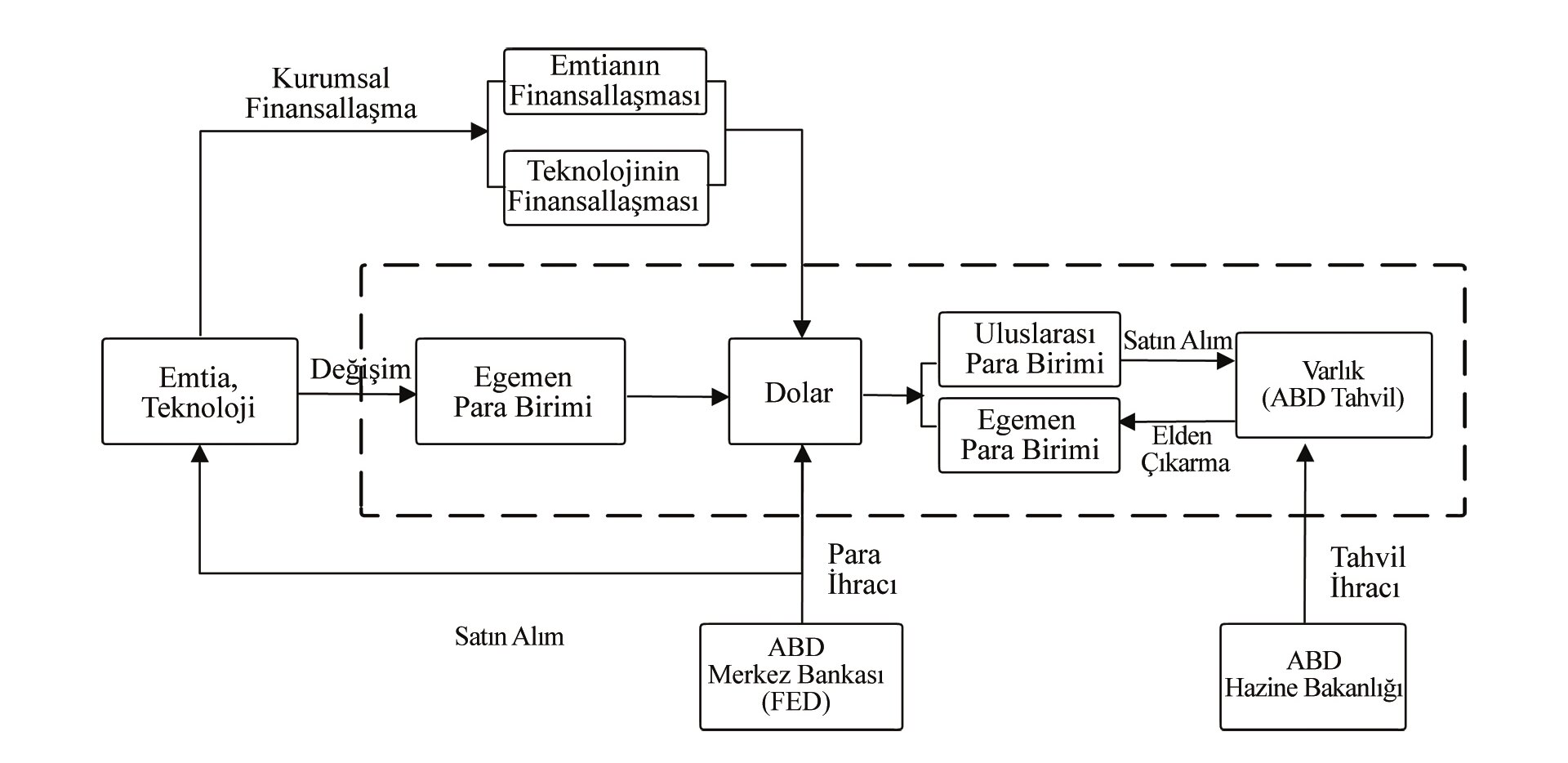
Privatization, liberalization, and marketization form the bedrock of neoliberal globalization. The unfettered opening of global trade, currency, capital, and talent markets establishes the institutional framework for seamless connections between economies worldwide. Building on this foundation, the application of information technology eliminates the physical distance and barrier between markets, greatly reducing the cost of spatial transfer of financial capital and infinitely expanding its activity space on a global scale, collecting profits from local labor productions. Therefore, the development of globalization fosters the progressive advancement of globalization and the consolidation and monopolization of financial capital, with the specific intention of maximizing the surplus value generated on a global scale. Consequently, globalization has played a pivotal role in facilitating the widespread circulation of the U.S. dollar, culminating in the establishment of a global financial currency system primarily reliant on credit dollars. This phenomenon has led to the dominance of the U.S. dollar, commonly referred to as “dollar hegemony”, achieved through a process known as dollarization. In essence, the progression of international market dollar circulation unfolds as follows: The Federal Reserve’s issuance of U.S. dollars establishes its role as a global currency. Other countries acquire U.S. dollars through currency exchange or selling goods internationally. As a result, the U.S. dollar becomes an international currency, exerting influence over other countries’ currencies, financialized goods, and technology. After economic entities in these countries acquire dollars, they return these funds to the United States by acquiring dollar-denominated assets, primarily in the form of bonds. This flow of dollars enables U.S. citizens to purchase goods in the global commodity market for consumption, as the dollar acts as a dominant sovereign currency facilitating international trade transactions. This creates a scenario in which a selected group of monetary policy leaders in the U.S. hold the power to obtain global commodities effortlessly by essentially printing more dollars, as depicted in Figure 2. This phenomenon exemplifies the concept of “dollar hegemony”, wherein the U.S. dollar dominates as the world’s primary reserve currency. The U.S. can unilaterally alter the dollar’s value based on its interests through the Federal Reserve’s monetary policy. Consequently, this grants the U.S. a significant advantage in international trade and finance.
The Adverse Effects of U.S. Interest-First Monetary Policy and De-Dollarization Measures
“Under the “LPM” mechanism, the Federal Reserve’s interest rate policy adjustments significantly affect the global economy. For example, the Latin American debt crisis in the 1980s, the Mexican currency crisis in 1994, the Asian financial crisis in 1997, the U.S. subprime crisis in 2007, and the subsequent European debt crisis were affected by interest rate policy adjustments. Starting in 2015, the U.S. interest rate surge led to a substantial capital outflow from certain emerging economies, such as Argentina, resulting in economic recessions.
The U.S. dollar’s immense influence and destructive power stem from its international currency status founded on the “LPM” mechanism. When the Federal Reserve raises interest rates to combat inflation and alleviate labor-capital conflicts, it also increases the yields of dollar-denominated assets globally. The cost of dollar-denominated debt also rises accordingly.
Consequently, entities facing a dollar shortage curtail dollar financing or repay dollar loans. In contrast, those with dollar surpluses redirect their investments into bolstering their holdings of dollar-denominated assets, such as U.S. Treasury bonds. These economic behaviors result in the repatriation of dollars to the U.S., intensifying capital concentration and consolidation, thereby reinforcing the monopoly grip of financial capitalists.
In peripheral countries, this leads to capital flight, and in severe cases, it triggers financial crises marked by currency devaluation, asset collapses, economic recession, and widespread hardships for the economy. When domestic labor-capital conflicts temporarily ease and financial capitalists reap profit, the U.S. implements quantitative easing through interest rate cuts. The Federal Reserve engages in extensive currency issuance, flooding the global market with a substantial supply of dollars to fulfill the demand for an international reserve currency. During this period, financial capitalists can acquire highquality assets from peripheral countries at significantly discounted prices through frequent speculation, potentially leading to asset bubbles or an accumulation of excessive debt in these nations. Historically, this process repeats cyclically, ultimately resulting in the value created by labor in peripheral countries gradually transferring into the hands of financial capitalists centered around the United States.
In 2022, the Federal Reserve initiated a series of interest rate hikes, raising rates seven times by the end of December, resulting in a cumulative increase of 4.25%. This time, the interest rate hike was prompted by the surge in inflation resulting from the COVID-19 pandemic and the Russia-Ukraine conflict. However, emerging economies confronted the additional challenge of high inflation and mounting debts, exacerbating the situation of capital outflows. The U.S. prioritizes the dollar’s domestic role but overlooks its global currency function. The high-frequency and large-scale interest rate hikes will have devastating consequences for peripheral countries and erode the U.S. dollar’s international currency status.
According to statistics, more than 90 financial regulatory authorities worldwide implemented interest rate hikes, influenced by the Federal Reserve’s policy, resulting in over 300 times of interest rate increases. These significant interest rate hikes have resulted in higher funding costs, serving as an ominous signal for the onset of economic recessions and indicating potential crises many countries may soon confront. Argentina, once with a high per capita GDP, has been plagued by recurrent economic and financial crises and social unrest following its adoption of privatization and market-oriented reforms rooted in neoliberal economic theory for emerging market countries.
Alongside the detrimental effects of monetary policy adjustments, the U.S. federal debt had reached nearly $31.4 trillion by the end of 2022, approaching its debt ceiling and accounting for 122% of its annual GDP. Over the past three decades, the purchasing power of the U.S. dollar has depreciated by more than 60%. Approximately 40 countries have been undertaking the process of de-dollarization, employing blockchain technology or currency swaps to circumvent the U.S. dollar in trade and settlement. Indeed, de-dollarization challenges the dominant power of the U.S. and cannot be accomplished overnight. We believe that the related countries can effectively advance the de-dollarization process by prioritizing the following aspects: First, rationally allocate international reserves, with eligible countries seeking to increase their gold reserves to improve the structure of international reserves and weaken the U.S. monopoly on gold. Additionally, countries should promptly reduce excessive holdings of U.S. dollar bonds and diversify their international asset allocation. Second, increase holdings of international currencies other than the U.S. dollar and currencies of emerging economies with significant potential to reduce reliance on the U.S. dollar. Third, sign standing swap agreements with closely related trading partners to enhance the use of domestic currencies in trade and finance, thereby stabilizing domestic trade and financial markets. Fourth, actively construct new currency payment systems, building upon existing systems such as the European INSTEX, China’s CIPS, and BRICS Pay, and jointly creating, improving, or establishing new international payment systems to compete with SWIFT, ensuring payment independence and security.
Financialization, particularly the formation and development of digital financial capital, is crucial for the U.S. to strengthen its international position in the future. Countries should proactively take measures to address this trend. Firstly, strengthen government regulation to reduce or restrict market investments in purely financial technologies, guiding capital towards research and development of production technologies. Secondly, ensure that advanced technologies developed domestically or introduced from abroad are utilized to develop the manufacturing sector and other real economies, preventing them from becoming speculative financial instruments in the financial domain.
Lastly, regulate the development of digital capital, represented by digital platforms, to curb financialization activities within these platforms, preventing the formation of highly monopolistic and U.S.-controlled digital financial capital.
Firstly, countries worldwide, especially emerging economies, should address excessive privatization within their domestic economies and increase the proportion of state-owned enterprises in their overall national economy to effectively control reliance on foreign capital. Secondly, implement moderately liberalized policies for foreign trade, actively engage in industrial adjustments, reduce the scale of export-oriented industries, and lower the economy’s external dependence. Implement foreign exchange control policies to limit abnormal capital flows from international financial monopolies. Lastly, key industries vital to the country’s well-being should not be fully marketized but directly managed by the government, serving as the foundation for maintaining social stability. This approach helps mitigate the impact of the global financialization system and reduces the shocks caused by adjustments in U.S. monetary policy.
According to the general definition of dollarization, China has also been a dollarized country, holding substantial amounts of the U.S. dollar reserve. Given the current geopolitical situation and the frequent sanctions on Chinese companies imposed by the U.S. government, dedollarization can be a strategic choice for China to guard against significant financial risks and ensure financial security. Based on the mechanisms of dollarization and the experiences of countries that have undergone de-dollarization, China needs to prioritize the following three aspects: First, exercising control over financial power is fundamental for achieving de-dollarization. Since the reform and opening-up, massive U.S. dollar reserves have been accumulated thanks to the rapid development of China’s export-oriented economy. Consequently, the currency issuance and asset pricing power had to be partially relinquished. In such a context, privatizing most financial assets could potentially lead to the domination of Wall Street-centered financial capital, posing a severe threat to China’s financial security.
Firstly, we should learn from the lessons of “LPM” reform in emerging economies like Argentina and prioritize national economic and financial security in the reform and opening-up. Secondly, financial power as the lifeline of the national economy should not be concentrated in the hands of a few people. During financial reform and development, the dominant position of the public sector in the financial system should be ensured, thereby guaranteeing the supervision and management of financial assets by the broad masses of the people. Lastly, private financial institutions, with their creativity and flexibility, play a crucial role in developing China’s financial system. Therefore, they can complement and enhance state-owned financial institutions, jointly becoming a force to safeguard national financial security through strengthening guidance and effective supervision.
Secondly, high-quality economic development is a solid foundation for achieving dedollarization. De-dollarization undermines the fundamental interests of American financial capitalists. Only through achieving high-quality economic development can we fundamentally respond to pressures from various aspects of the United States and achieve true de-dollarization. China should guard against the domestic economy “abandoning reality for the virtual”. The financialization of commodities, technology, and other areas has increased profit margins but has not promoted domestic economic growth. Lowquality development is prone to be preyed upon by Wall Street-centered financial capital.
Furthermore, China should enhance basic research capabilities to achieve breakthroughs in critical core technologies, which drive high-quality economic development. Talent is fundamental for technological innovation. In the long term, China should continue to support domestic universities and research institutes in talent cultivation. In the short term, China can encourage leading Chinese scientists worldwide to return to China while actively attracting outstanding foreign talents from various countries, including Russia, the European Union, and even Sri Lanka, to live in China and engage in advanced scientific research.
Finally, China should promote the application of high technology in the real economy. Financial development and technological innovation are mutually reinforcing. However, both should serve the real economy to promote high-quality development. For example, China can support the development of real industries based on high-tech such as artificial intelligence, big data, blockchain, and quantum communication by establishing industrial funds and cultivating business managers, making emerging industries the growth point of high-quality economic development.
Thirdly, the Renminbi internationalization is a significant step towards achieving dedollarization. First, increase the proportion of the Renminbi in international pricing and settlement. Both Marxist currency theory and Western financial theory concur that sovereign currencies are not viable as a sustainable longterm international reserve currency. Therefore, the internationalization of the Renminbi should focus on its role in pricing and settlement in international business (Liu & Cheng, 2020Liu, W., Cheng, E. (2020). An Analysis of the Strategic Choice for Renminbi Internationalization: Based on Marxist Theory of Money. Shanghai Journal of Economics, (07): 5-14.). This can be achieved by promoting digital Renminbi transactions in regions like the Belt and Road Initiative, forming a regionalized network of digital Renminbi, and then expanding it to other relevant regions. Second, approach capital account opening with caution. The internationalization of the Renminbi necessitates some level of capital account opening, which entails integration into the U.S.-dominated global financial system (Cheng & Sun, 2015Cheng, E., Sun, Y. (2015). The “Impossible Trinity” and New Considerations for China’s Capital Account Liberalization. Journal of Liaoning University (Philosophy and Social Sciences Edition), 43(05):.). This process should implement a prudent and gradual approach. During the capital account opening process, international capital inflows and outflows may be magnified several or even dozens of times due to adjustments in international and domestic policies or economic fluctuations. If speculative capital becomes predominant, it can significantly impact China’s economy. To counter this, implementing measures such as Tobin taxes and non-refundable reserves can effectively curb speculative capital flows.
Conclusion
In summary, this article drew on Marxist monetary theory to explore the mechanisms of dollarization, its practical consequences, and alternative policies. Viewing through the lens of financialization, the global monetary system, commanded by the U.S. dollar, has traversed through three phases: the gold-dollar framework, the oil-dollar structure, and the institution-dollar scheme. The institutiondollar system, alternatively termed the global financialization system, represents a merging of commodity and financial markets and domestic and international markets realized through neoliberal institutionalization. This has further facilitated the amplification of the international monetary influence of the U.S. dollar.
Overall, financialization potentially amplifies the strength of the sovereign currency, quickens the pace of the international monetary cycle, and advances the global reach of the U.S. dollar through credit and additional tools. From a technological stance, the digitization of capitalism has also expedited this process. Since the 1970s, neoliberalism has been instrumental in both financialization and the internationalization of the U.S. dollar. Major pricing centers, including the New York Mercantile Exchange, London Metal Exchange, New York Commercial Exchange, Chicago Mercantile Exchange, and London Intercontinental Exchange, have the power to determine commodity prices in U.S. dollars, thereby directly swaying the currency choice in other countries’ international dealings.
This being said, one could observe a burgeoning movement towards de-dollarization, enabled by blockchain technology and currency swaps that sidestep the U.S. dollar in trade and settlements. This progression can be hastened if many countries abandon the LPM reforms. Such countries, including China, should amplify their financial security and stability by bolstering state oversight and efficient regulation, championing high-caliber economic growth backed by a robust technological framework, curbing technological financialization, and suggesting alternatives to the U.S. dollar, such as the promotion of international monetary diversification and the internationalization of the Renminbi.