Global Public Goods
Conceptually, global public goods are identified as enablers of “international economic stability, international security (political stability), the international environment, international humanitarian assistance and knowledge” (Kaul, Grunberg, & Stern, 1999Kaul, I., Grunberg, I., & Stern, M. A. (1999). Global Public Goods: International Cooperation in the 21st Century. New York, NY: Oxford Univ. Press.).
Further, Kaul, Grunberg, & Stern (1999Kaul, I., Grunberg, I., & Stern, M. A. (1999). Global Public Goods: International Cooperation in the 21st Century. New York, NY: Oxford Univ. Press.) state that global public goods must satisfy two essential criteria. Firstly, their benefits must exhibit pronounced qualities of publicness, characterized by nonrivalry in consumption and nonexcludability, thereby classifying them within the broader category of public goods. Secondly, these benefits should demonstrate quasi-universality, encompassing multiple countries, catering to diverse population groups, and extending across generations. This attribute designates humanity as the collective beneficiary, rendering the entirety of humanity as the publicum of global public goods.
Similarly, Nye (2017Nye, J. S. (2017). The Kindleberger Trap. Retrieved October 10, 2023 from) observed that “in domestic politics, governments produce public goods such as policing or a clean environment, from which all citizens can benefit and none are excluded. At the global level, public goods – such as a stable climate, financial stability, or freedom of the seas – are provided by coalitions led by the largest powers”. Nye’s observation is in tandem with China’s offer of public goods to provide a central rationale for global collective action to secure a future for all mankind.
Having emerged as the 21st century’s leading economic power (Kariuki, 2022Kariuki, R. (2022). China Economic Relations with Developing Countriesin Africa.A Criti-cal Literature Review. Journal of International Relations and Policy, 1 - 11.; Gürcan, 2022Gürcan, E.C. (2022). Deciphering the Chinese economic miracle: Lessons for the developing world. Belt & Road Initiative Quarterly, 3(2), 46-75. Dennis Munene Mwaniki - The Changing Dynamics of Cooperation Between China and African Countries: A Global Public-Goods Approach), China began a noble drive to offer global public goods to both developed and developing countries to mitigate the conflicts described in Samuel Huntington’s clash of civilization thesis (Huntington,1996Huntington, S. (1996). The Clash of Civilizations and the Remaking of World Order. New York, NY: Simon and Schuster.). For China, a peaceful environment is necessary to develop a stable economy. Thus, stability through the offer of global public goods such as the Forum on China-Africa Cooperation (FOCAC) and the Belt and Road Initiative (BRI) among other initiatives became the major focus in China’s policy toward Africa. According to China, development must not be a monopoly of a few countries, or specific classes or segments of society. It must be a shared prosperity. Therefore, the rationale underlying China’s strategic expansion beyond its territorial confines resides in its endeavour to foster economic prosperity within various regions of Africa and other global locales, with the ultimate objective of cultivating harmonious coexistence and facilitating sustainable development.
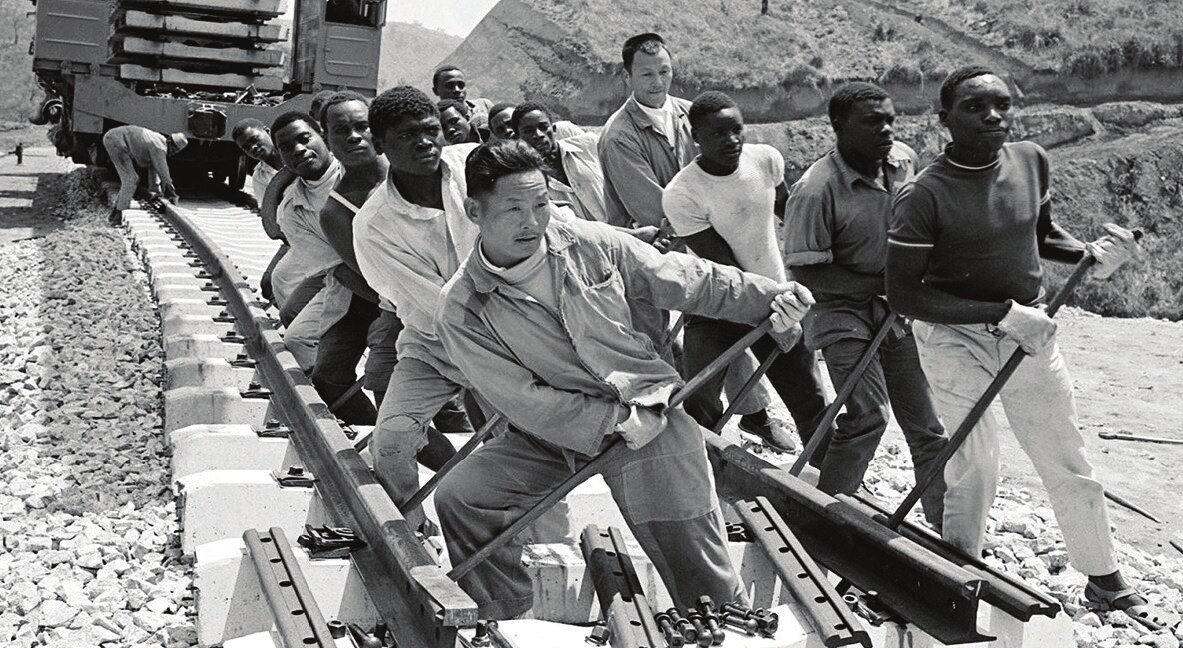
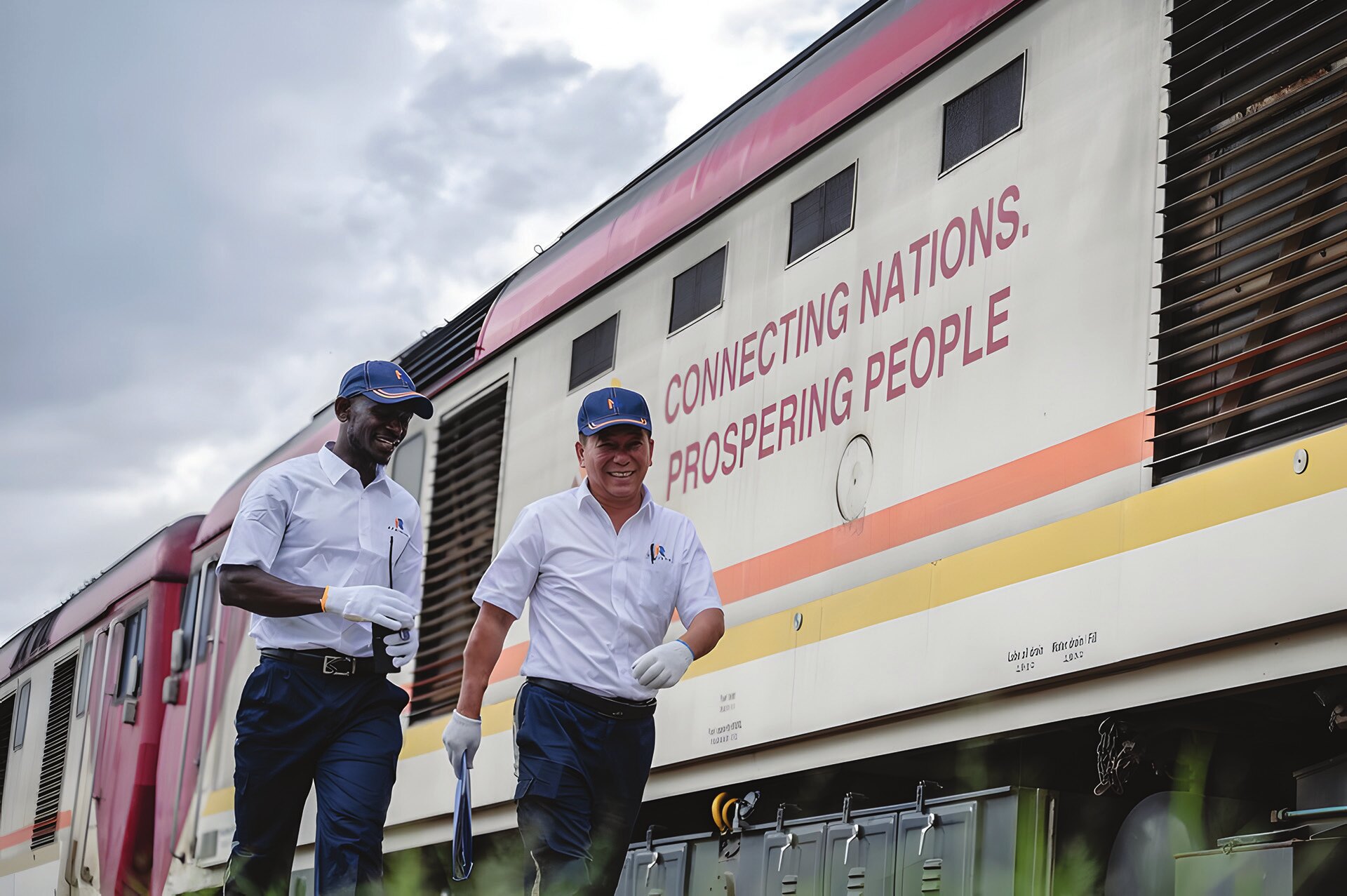
Consequently, the “Going Global” strategy especially in developing countries, has resulted in China’s cumulative investment in Africa to exceed over USD 200 billion (Wencheng, 2023Wencheng, M. (2023). China, Africa cooperation impacts the world. Retrieved November 20, 2023 from). As part of the “tangible global public goods”, Chinese companies have built railways, highways, ports, airports, special economic zones and industrial parks, and other forms of infrastructure in Africa, greatly improving the economic development of the continent, attracting foreign investment, promoting local employment, freeing people from poverty, and gradually moving towards a prosperous and well-off life (Wencheng, 2023Wencheng, M. (2023). China, Africa cooperation impacts the world. Retrieved November 20, 2023 from).
Thus, the primary objective of this paper is to analyze and comprehend the implications of China’s role as a provider of global public goods on the modernization and development of African nations, exploring the mechanisms employed and the reactions elicited from traditional Western partners. Through this research, the aim is to contribute valuable insights into the changing dynamics of international cooperation between China and African countries, specifically within the context of global public goods.
The debate on China-Africa cooperation forms part of the ‘solidarity thesis’ that enchants the enduring relationship between the two civilizations whose friendship is deeply rooted in ancient times and hardened in the trenches of mutual struggles against imperialism and shared aspirations for freedom and development (Kagwanja, 2016Kagwanja, P. (2016). Paving Africa’s Silk Road: China-Africa Relations in the 21st Century: The Development Turn. Nairobi, Kenya: Tafiti House Publishers for Africa Policy Institute.). This phenomenon was observed on two discrete instances. First, in December 1982 Chinese Premier Zhao Ziyang visited eleven African countries. His visit was to promote the ‘Four Principles’ of Chinese cooperation with Africa: equality and mutual benefit; an emphasis on practical results; diversity in form; and economic development (Uchehara, 2009Uchehara, K. E. (2009). China-Africa Relations in the 21st Century: Engagement, Compromise and Controversy. International Relations, Academic Journals, 6(23), 95-111.). Second, the May 1996 visit by then President Jiang Zemin to six African countries and his keynote speech delivered at the headquarters of the Organization of African Unity (OAU), the predecessor to the African Union, laid out a five-point proposal for the development and need to set up an institutional platform for consultation and cooperation with African countries to promote in-depth development of China-Africa relations (Anshan, 2012Anshan, L. (2012). Origin of the FOCAC: Reflections on China’s Africa Strategy. Foreign Affairs Review, (3).). These guiding events marked a new era in China-African relations and a new shift of sustaining its offer of public goods to a continent that was impoverished by under-development in all-fronts. ’
Essentially, the collaboration between China and Africa is deeply rooted in the longstanding historical connections between their civilizations. It is founded upon the extensive and enduring history of relations between China and Africa, stretching back centuries to a time when African traders, travelers, and scholars engaged with China, and Chinese sailors undertook numerous voyages to the African continent. Moreover, this collaboration mirrors contemporary China’s commitment to humanism, advocating for the belief that every individual deserves dignity, and respect, and the promotion of values that uphold freedom and independence (Meinert, 2010 and Liu, 2015Meinert, C. (2010). Traces of Humanism in China: Tradition and Modernity. Transcript.). Discussing how China’s offer of global public goods could contribute to the modernization of the African continent, the paper adopts a desktop literature review method (desk study). This also involves an in-depth process tracing analysis (Gürcan, 2020Gürcan, E. C. (2020). The Changing Geopolitical Economy of Transcaucasia under Multipolarity. World Review of Political Economy, 11(4), 533-550.) of process China’s key initiatives, which the paper refers to as global public goods from 2000 to 2023 such as the Forum on China Africa Cooperation, the Belt and Road Initiative, Global Development Initiative, Global Security Initiative, Global Civilization Initiative and the Outlook on Peace and Development in the Horn of Africa that have transformed the Continent of Africa to become a hub of development.
China and the Making of a Modernized Africa: A Process-Tracing Analysis
In the 1980s, dubbed the “lost decade” for Africa (Adjei, Kyei & Kwadwo, 2014Adjei, P. (2014). Global Economic Crisis and Socio-Economic Vulnerability: Historical Experience and Lessons from the “Lost Decade” for Africa in the 1980s. Ghana Studies, 17(1), 39-61.), the externally borrowed model of modernization plunged the continent into a complex socio-economic crisis. One-party tyrannies, military coups, and personal dictatorships undermined Africa’s efforts to chart an alternative path to modernization and economic recovery. Africa’s traditional partners in the West, through the Bretton Woods system (World Bank and International Monetary Fund), responded by imposing the ruinous Structural Adjustment Programme (SAP), which destroyed the continent’s economies rather than saving them (Geo-JaJa & Mangum, 2001Geo-JaJa, M. A., & Mangum, G. (2001). Structural Adjustment as an Inadvertent Enemy of Human Development in Africa. Journal of Black Studies, 30-49. doi). Modeled to adopt the colonial way of governance, most African countries were plagued by weak economic foundations. Diseases, instability, and poverty became the trinity of discord in Africa. The Continent of Africa quest for modernization was halted.
At the turn of the 21st century, success in Chinese modernization began to inspire a spirit of African renaissance and the continent’s independent path to modernization. The continent adopted a “Look East Policy” and forged a new partnership with China, defined by the trinity of ‘equal partnership’, ‘mutual cooperation’, and ‘solidarity’ in pursuit of a common future and shared prosperity (Kagwanja 2016Kagwanja, P. (2016). Paving Africa’s Silk Road: China-Africa Relations in the 21st Century: The Development Turn. Nairobi, Kenya: Tafiti House Publishers for Africa Policy Institute.). China through its offer of global public goods tapped into the spirit of Pan-Africanism as the ideology driving African modernization.
To effectively concretize the cooperation between the two civilizations, China’s offer of public goods has revolutionized Sino-Africa relations. Through process tracing, the paper will scrutinize the key initiatives (global public goods) from the year 2000 to 2023 that are playing a vital role in modernizing Africa and strengthening the Sino-Africa cooperations in the 21st century era.
First, the Forum on China-Africa Cooperation (FOCAC), established in 2000, became the premier official policy forum driving the engine of China-Africa relations (Kagwanja, 2020Kagwanja, P. (2017). Can China’s ‘Ecological Civilisation’ Paradigm Stabilise Liberal Democracy?. Retrieved December 14, 2020 from). A significant marker of South-South cooperation, FOCAC signifies the needed dialogue of civilizations in our divided and polarized global community facing the anti-globalization trends. Today, the “FOCAC Community” comprising China and 54 African countries with an estimation of more than 2.8 billion people has become an integral story of the “Africa Rising narrative”. The formation of FOCAC expressed the need to set up an institutional platform for consultation and cooperation with African countries to promote in-depth development of China-Africa relations (Anshan, 2012Anshan, L. (2012). Origin of the FOCAC: Reflections on China’s Africa Strategy. Foreign Affairs Review, (3).). Subsequently, every three years, the two civilizations meet to chart new ways to enhance their strategic relations.
Taking stock of the triannual summit that has become an anchor on China-Africa Cooperation, in December 2003, the second Ministerial Conference of the Forum on China-Africa Cooperation (FOCAC) took place in Addis Ababa, Ethiopia. The primary focus of this conference was to strengthen collaboration in human resource development, marked by China’s commitment to training over 10,000 African professionals in diverse fields. Additionally, China expanded its market access, granting tariff-exempt status to certain commodities. The conference also highlighted tourism cooperation, identifying eight African countries as potential destinations for Chinese tourist groups. Notably, the proposal for a China-Africa Youth Festival was introduced during this event (MFA, 2023MFA (2023). The source article does not provide a separate full bibliographic entry for this citation.).
The third Ministerial Conference and FOCAC Summit took place in Beijing in November 2006. During the summit, China allocated USD 5 billion in loans and buyers’ credits, along with an additional USD 5 billion in China-Africa Development Funds (CADF). These funds were designated to support Chinese companies investing in Africa. As part of its commitments, China promised to construct an African Union Conference Centre and expand the list of African export items from 190 to over 440, some of which would enjoy zero-tariff status. Primarily, health issues were included in the agenda for the first time, with China vowing to contribute to the fight against malaria by establishing prevention and treatment centers and providing anti-malaria drugs. In the realm of education, China pledged to build one hundred rural schools across Africa and double the number of annual scholarships to 2,000 by the year 2009 (China’s Ministry of Foreign Affairs). This has resulted in a significant increase in the number of African students studying in Chinese universities, marking a notable departure from the previously ‘preferred traditional study destinations’ for most students during the post-independence era.
The fourth Ministerial Conference of FOCAC occurred in Sharma el-Sheikh, Egypt, on November 8-9, 2009. In attendance were Chinese Premier Wen Jiabao, Egyptian President Hosni Mubarak, leaders from 49 African countries, and representatives from the African Union. During the meeting, participants adopted the Sharm el-Sheikh Declaration and Action Plan for 2010–2012, outlining the course for enhanced cooperation between China and Africa. Emphasis was placed on addressing climate change, with a commitment to respond proactively by establishing 100 clean energy projects. Further, regarding education, capacity building, and technology transfer, China made several commitments, including the formation of a China-Africa Science and Technology partnership. China pledged support for science and technological research projects and offered to host 100 post-doctoral fellows for research in China. Additionally, the meeting resolved to establish agricultural technology demonstration centers built by China, along with facilities to train over 2,000 African agricultural technicians. To ensure the implementation of the outcomes of FOCAC IV, China provided significant financial support, offering USD 10 billion in concessional loans and an additional USD 1 billion for small and medium enterprises (SMEs). Furthermore, China canceled the debt associated with interest-free government loans due to maturity by the end of that year, demonstrating its commitment to fostering economic cooperation between China and Africa (Enuka, 2010Enuka, C. (2010). The forum on China-Africa cooperation (FOCAC): A framework for Chi-na’s re-engagement with Africa in the 21st Century. Pakistan Journal of Social Sciences, 209-218.).
The Fifth Ministerial Conference of FOCAC unfolded in Beijing on July 19-20, 2012, coinciding with a shift in leadership within China. Notably, the United Nations Secretary-General, Ban Ki-Moon, participated in the conference for the first time, underscoring FOCAC’s burgeoning influence on the global stage. Beijing, in a substantial move, extended a credit line of USD 20 billion to support diverse sectors in Africa, including infrastructure, agriculture, manufacturing, and small and medium-sized enterprises (Zhang, 2015Zhang, J. (2015). China and Africa regional economic cooperation: History and prospects. PULA: Botswana Journal of African Studies, 29(1).).
The financial commitment extended to the China-Africa Development Fund, initially established during the 2006 FOCAC summit, experienced a significant increase from USD 1 billion to USD 5 billion. Moreover, China entered into bilateral agreements on investment protection with 32 African nations and established Joint Economic and Trade Commissions with 45 others. An investment totaling approximately USD 1.806 billion was injected into 53 projects, part of a broader initiative encompassing 61 projects across 30 African countries under the China-Africa Development Fund.
China also introduced new, non-conditional facilities aimed at supporting Africa’s infrastructure, mining, manufacturing, and finance sectors. Additionally, a noteworthy commitment emerged with the announcement of the “African Talent Programme,” designed to train 30,000 personnel across various sectors. However, the 2012 summit brought attention to unmet promises concerning technology transfer and highlighted concerns about the prevailing trade dynamics, where Africa continued to export raw materials while importing China’s manufactured goods, resulting in a trade imbalance (Bhura, 2016Bhura, S. (2016). FOCAC 2012 - Sino-African Ties Surge Ahead, Africa Trends. Retrieved December 11, 2020 from). To address the issues of trade imbalance, China pledged to increase imports of non-mining African goods and expand the list of duty-free goods permitted into the Chinese market, signaling a commitment to rectify the trade disparities between the two regions. Further, through the use of private organizations such as AVIC International Holding Corporation, China initiated the Africa Tech Challenge (ATC) in 2014 to use digital technology and provide African youth with rich knowledge in the vocational education field free of charge (Muthoni, 2023Mary Muthoni. (2023). Participants laud technology transfer initiative at just-concluded Africa Tech Challenge. Retrieved November 05, 2023 from).
The sixth Summit of 2015 took place in Johannesburg, South Africa, where the agenda shifted towards Africa’s industrialization. As a key global public good, President Xi emphasized the importance of “industrial cooperation” and “strategic complementarity” in shaping China-Africa relations. As part of this new direction, China initiated the relocation of its labor-intensive industries to Africa. Demonstrating a significant commitment, China pledged an unprecedented USD 60 billion in funding to Africa, comprising grants, interest-free loans, and commercial financing. This financial support included USD 5 billion for interest-free aid, USD 35 billion for preferential loans and export credits, an additional USD 5 billion each for the China-Africa Development Fund and the Special Loan for the Development of Africa Small and Medium Enterprises (SMEs), and USD 10 billion as the initial capital for the China-Africa Production Cooperation Fund (Xinhua, 2015Xinhua. (2015). Xi announces 10 major programs to boost China-Africa cooperation in coming 3 years. Retrieved December 11, 2020 from).
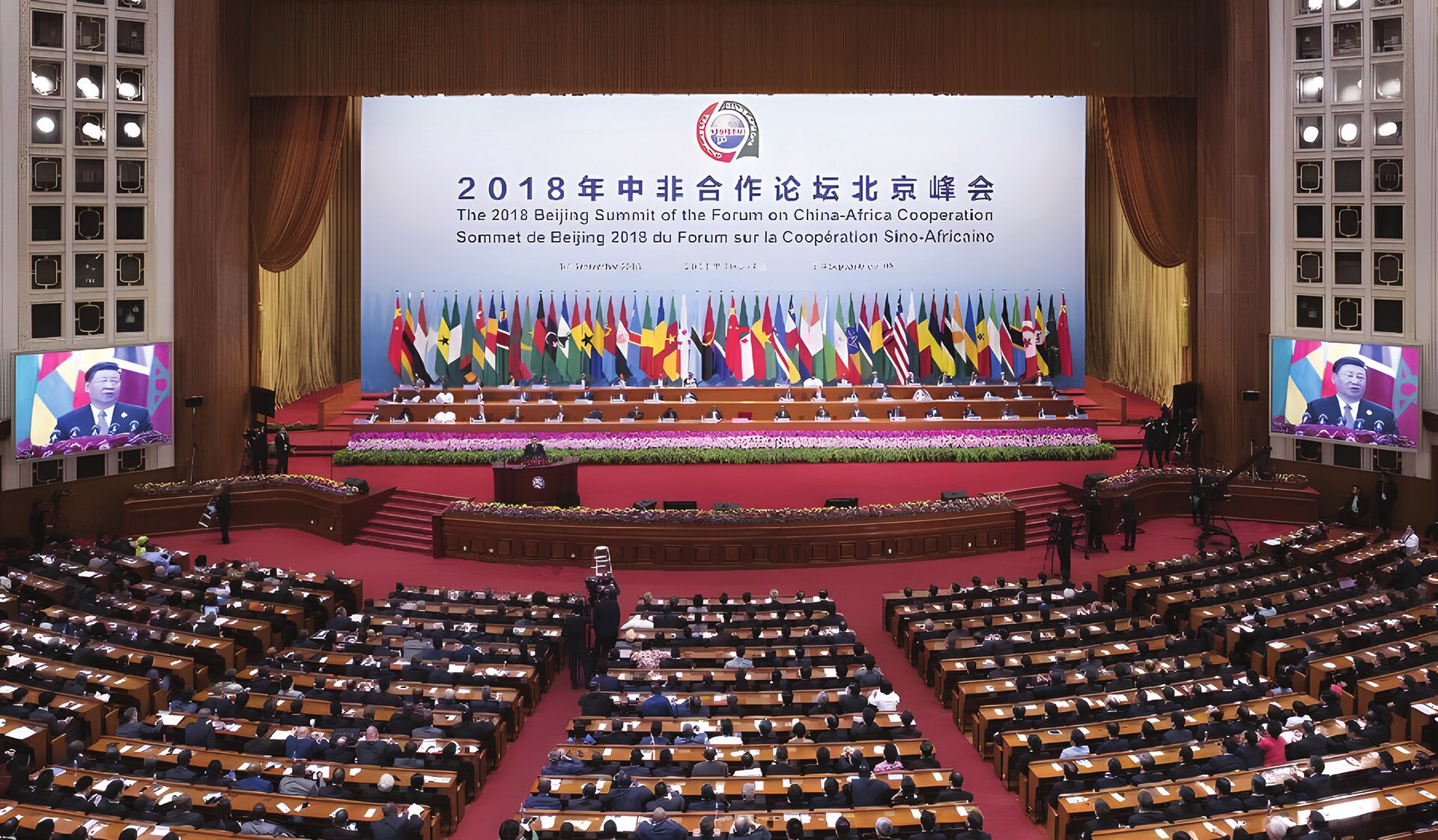
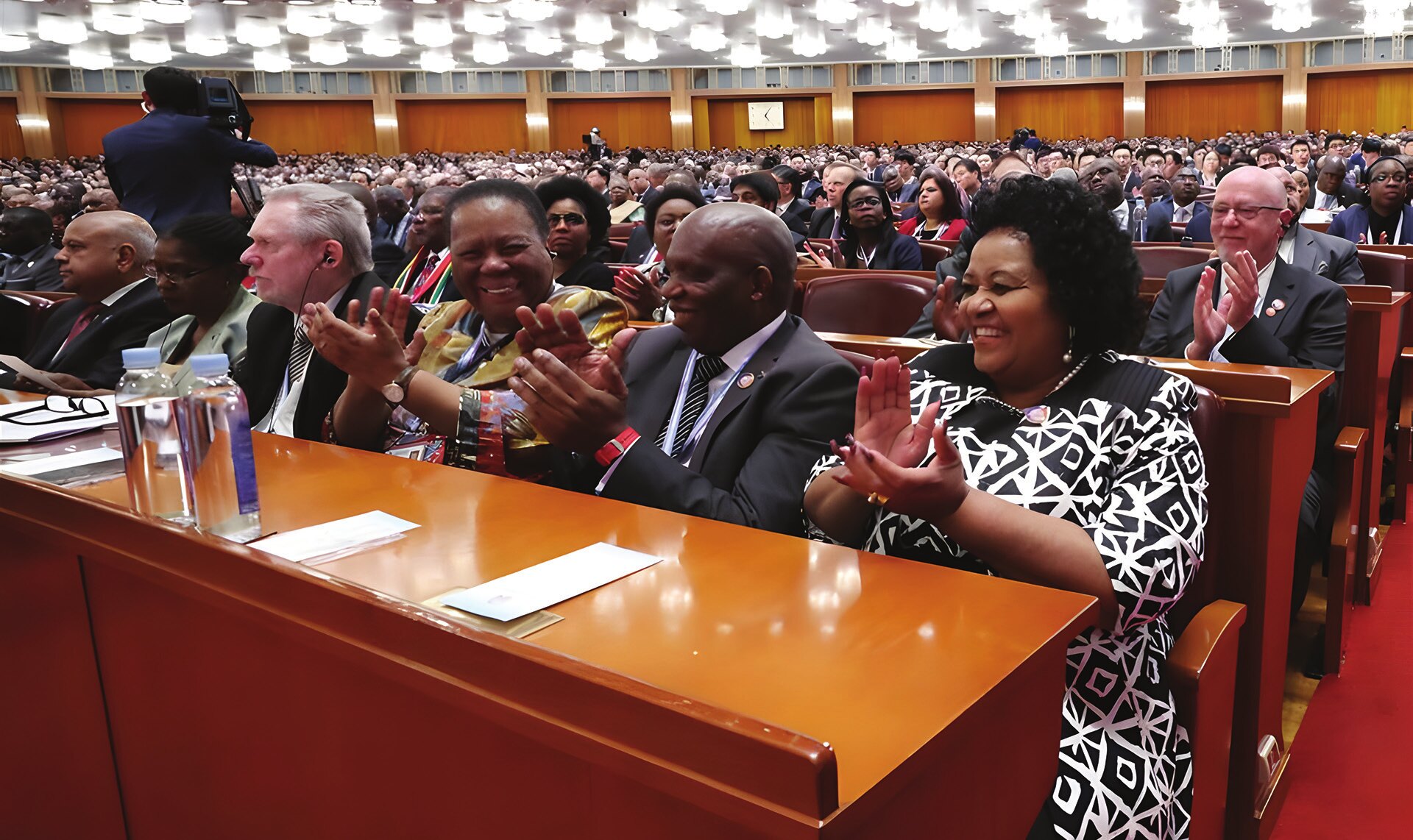
The 2018 Forum on China-Africa Cooperation marked a pivotal moment in the relationship between China and Africa. By May of that year, all African UN member states had officially recognized the People’s Republic of China as the sole legitimate representative of China, with Eswatini (Swaziland) being the only exception due to its relations with Taiwan. Remarkably, more African leaders attended the FO- CAC summit in Beijing in early September than the parallel UN General Assembly meeting. Knowing China’s offer of global public goods has become a key driver for sustainable development in Africa, majority of leaders opted to attend the 2018 FO- CAC Summit to secure bilateral agreements. During the summit, President Xi unveiled eight significant initiatives to guide Sino-Africa cooperation. These initiatives encompassed industrial promotion, infrastructure connectivity, trade facilitation, green development, capacity building, healthcare, people-to-people exchanges, and peace and security. In support of these pillars, China committed an additional USD 60 billion economic package. President Xi, in his opening remarks at the FOCAC 2018 summit, pledged USD 20 billion in new credit lines, USD 15 billion in foreign aid in the form of grants, interest-free loans, or concessional loans, USD 10 billion for a special fund dedicated to development financing, and USD 5 billion for a special fund aimed at financing imports from Africa. Additionally, President Xi announced that the remaining USD 10 billion would be contributed by Chinese companies (Xinhua, 2018Xinhua. (2018). Xi delivers speech at 2018 FOCAC Beijing Summit. Retrieved December 12, 2020 from).
At the 8th FOCAC meeting in 2021, significant announcements were made, and four resolutions were adopted, namely, the Dakar Action Plan, the China-Africa Cooperation Vision 2035, the Sino-African Declaration on Climate Change, and the Dakar Declaration of the 8th Ministerial Conference of FOCAC. Further, President Xi outlined nine areas of focus for the initial three years of the China-Africa Vision 2035 during the conference. These areas encompass health, poverty reduction and agriculture, trade, investment, digital innovation, green development, capacity building, people-to-people exchanges, and peace and security (Xi, 2021Xi (2021). The source article does not provide a separate full bibliographic entry for this citation.). The 8th session of FOCAC took place at a time when the world was facing the multi-faceted impacts of the coronavirus (COVID-19) pandemic. However, during the pandemic period, the China-Africa cooperation was tested at great heights. To note, China and Africa exhibit shared perspectives on numerous international and regional matters, maintaining relatively consistent positions.
Africa demonstrates unwavering support on issues central to China’s core interests, contributing to the stability of the amicable relations between the two. Amid the unprecedented challenges posed by the COVID-19 pandemic, China not only faced immense pressure in combating the outbreak domestically but also extended substantial assistance to African countries and the African Union. This assistance included the provision of approximately 5.4 million face masks, over a million test kits, and thousands of personal protective gears to bolster Africa’s resilience against the COVID-19 pandemic. Similarly, Jack Ma Foundation initiated a collaborative effort between the private and public sectors, contributing around 4.6 million masks, 500,000 pairs of gloves, 500,000 swabs and test kits, 200,000 face shields, 200,000 sets of protective clothing, 2,000 temperature guns, 300 ventilators, and 100 body temperature scanners for distribution across all 54 African countries. President Xi Jinping further committed to supplying Africa with 30 million test kits monthly, along with 10,000 ventilators and 80 million masks (Mwangi, 2020Mwangi, N. (2020). China’s aid to Africa in fighting COVID-19. Retrieved December 12, 2020 from CGTN Africa). Further, in support of the African Union’s (AU) aim to vaccinate 60 percent of the African population by 2022, President Xi declared that China would contribute an additional one billion vaccine doses to Africa. This commitment encompasses 600 million doses as a donation and 400 million doses through mechanisms like collaborative production involving Chinese companies and pertinent African nations (Huaxia, 2021Huaxia. (2021). Xi announces supplying Africa with additional 1 bln COVID-19 vaccine doses, pledges to jointly implement nine programs. Retrieved December 13, 2020 from). Furthermore, President Xi announced China’s commitment to undertake 10 medical and health projects for African countries. Additionally, 1,500 medical personnel and public health experts were dispatched to Africa as part of these initiatives. Actively supporting Africa in its battle against the pandemic, China played a crucial role in strengthening the continent’s response efforts (Elnor, 2022Elnor (2022). The source article does not provide a separate full bibliographic entry for this citation.).
Holistically, FOCAC became the policy framework that has guided China in offering its global public goods to Africa, that have resulted to Beijing overtaking the United States of America to become the world’s largest foreign direct investor into Africa (Yu, 2021Yu, S. Z. (2021). Why substantial Chinese FDI is flowing into Africa.). The implication, is that China has persisted in augmenting its investment capacity in Africa, a void left by the United States, propelled by the strategic significance arising from their compelling economic cooperation and Africa’s promising potential as the forthcoming catalyst for global economic growth.
Equally important in China’s efforts at contributing to global commons in Africa is the Belt and Road Initiative (BRI). In September 2013, President Xi Jinping while on a high-level visit to Kazakhstan, introduced to the world China’s grand plan of establishing a Silk Road Economic Belt (SREB). A month later in Indonesia, he announced a 21st Century Maritime Silk Road (MSR) (Jiao, 2013Jiao, W. (2013). President Xi Gives Speech to Indonesia’s Parliament. Retrieved December 12, 2020 from). These two initiatives thereafter became known as China’s One Belt, One Road (OBOR) initiative. However, to create a cohesive economic area, the two initiatives were merged and rebranded as the ‘Belt and Road Initiative’ (World Bank, 2018The World Bank. (2018). Belt and Road Initiative. Retrieved November 16, 2023 from).
Currently, the BRI has expanded and connected transport networks and markets, improved production capacity, and facilitated the transit of goods, capital, energy, raw materials, information, people, and culture (Ghiasy & Zhou, 2017Ghiasy & Zhou (2017). The source article does not provide a separate full bibliographic entry for this citation.). Wholistically, BRI encompasses the values that strengthen “people-oriented partnership”. Thus, in cognizant of its vision and purpose, BRI has and continues to achieve its collective goal of promoting policy coordination, facilitating connectivity, promoting unimpeded trade, promoting financial integration, and fostering people-to-people bonds (NDRC, 2015NDRC. (2015). National Development and Reform Commission, People’s Republic of Chi-na, Vision and Actions on Jointly Building Belt and Road. Retrieved October 22, 2023 from). Finding common ground with the African Union’s Agenda 2063 and the Programme for Infrastructure Development in Africa (PIDA), which push for greater regional integration within the continent, BRI has managed to become the driving architecture of industrialization and manufacturing in Africa (Marais & Labuschagne, 2019Marais, H. (2019). If you want to prosper, consider building roads: China’s role in African infrastructure and capital projects. Retrieved December 12, 2020 from). Further, 10 years after President Xi Jinping announced his grand plan to connect Asia, Africa, and Europe, the 21st century Belt and Road Initiative has morphed into a broad program describing almost all aspects of Chinese engagement abroad (World Bank, 2019TRT World. (2019). How China’s debt trap diplomacy works and what it means. Retrieved November 16, 2023 from). Currently, there are more than 150 countries and over 30 international organizations that have signed cooperation documents and participating in the BRI. Globally, there are over 3000 projects that have been implemented under BRI, with a total expenditure of 1 trillion USD (Embassy of PRC in Grenada, 2023Embassy news. (2023). 10 Years On, the Belt and Road Initiative Is Not Only Fruitful, but Also Promising. Retrieved November 15, 2023 from). These emancipating projects under BRI in Africa have elicited the debate on ‘debt trap’ diplomacy.
Third is the Global Development Initiative (GDI). Committed to ensuring that there is peace and development for humanity, in the wake of the COVID-19 pandemic, China moved the concept of peaceful development to a whole new level. Globally, President Xi Jinping unveiled the GDI as China’s new framework for providing global public goods.
GDI’s fundamental purpose is to assist the global community and the United Nations in achieving the 2030 Sustainable Development Goals and reverse the devastating impacts of COVID-19 on development in developing countries, address the challenges of environmental degradation and climate change, poverty alleviation and food security, promote green recovery and the principles of an ecological civilization that harmonize development and natural environment, industrialization, digital economy, and connectivity in the digital era (United Nations, 2023United Nations. (n.d.). Global Development Initiative-Building on 2030 SDGs for Stronger, Greener and Healthier Global Development. Retrieved November 16, 2023 from).
Fourth is the Global Security Initiative (GSI). To promote global stability, address common challenges, and safeguard the welfare of future generations and their democracies, China unveiled the Global Security Initiative. The initiative is anchored on six pillars of common security, sovereignty, and territorial integrity, abiding by the purposes and principles of the UN Charter, legitimate security concerns of all countries, peaceful dispute resolution between countries through dialogue and consultation, and security in traditional and non-traditional domains (PRC, 2023PRC (2023). The source article does not provide a separate full bibliographic entry for this citation.).
For China, without peace, there is no development, and the path to modernization will be rough and slippery. Thus, the GSI aims to uphold the principles of multilateralism and international solidarity, and the shared desire of all peoples to work together to overcome difficulties at a time when traditional and non-traditional security threats are posing a challenge to the existence of humanity. This initiative is key in Africa, due to the continent’s fragility in its governance architecture leading to inter and intra-state conflicts.
Fifth is the Outlook on Peace and Development in the Horn of Africa. As indicated above, some of the democracies in the Horn of Africa are unstable. The region has become the new theater of renewed superpower tensions. The geopolitical tensions from competitive and strategic positioning of vested interest in the region have made the Horn region in Africa more volatile. Learning from experience, China has avoided any military conflict over the last three decades. As a result of a long spell of peace, China has managed to emerge as the most developed and fastest-developing nation in the world. Thus, guided by the ethos of shared prosperity for all mankind, China in January 2022, unfurled the “Outlook on Peace and Development in the Horn of Africa” in Mombasa, Kenya (Azam, 2022Azam, A. (2022). Outlook for Peace and Development offers long-term solution for the Horn of Africa. Retrieved from CGTN.). The initiative seeks to localize the ideals of the GDI and GSI in the Horn region. The initiative aims to support regional countries to address security, development, and governance challenges. Crystallizing the initiative, Beijing also appointed a Special Envoy for the Horn of Africa Affairs to help galvanize regional consensus on political, security, and development agenda to realize lasting peace, stability, and prosperity.
Sixth is the unveiling of the Global Civilization Initiative (GCI). During the opening ceremony of the Communist Party of China (CPC) in Dialogue with World Political Parties High-Level Meeting via video link on March 15, 2023, President Xi Jinping proposed the Global Civilization Initiative and called on world political parties to closely integrate their development with their national modernization drives, to continuously steer the course and marshal strength for modernization (CGTN, 2023CGTN. (2023). Graphics: How Belt and Road has impacted China-Africa cooperation. Retrieved November 3, 2023 from). As an initiative, the GCI focuses on respecting the diversity of the world civilization, advocating the common values of humanity, highly valuing the inheritance and innovation of civilizations, and jointly advocating robust international people-to-people exchanges and cooperation. According to President Xi, peace, development, equity, justice, democracy, and freedom are the common aspirations of all peoples. Holistically, GCI has become a custodian of humanism to advance modernization among different civilizations, and the epitome of globalization. For Africa, the GCI becomes the crown of jewel that galvanizes the mutual relationship between the two civilizations. It resonates well with the African Governance Architecture (AGA). As a framework guided by the Constitutive Act of the African Union and the AU Shared Values, (AU, 2023AU (2023). The source article does not provide a separate full bibliographic entry for this citation.) AGA recognizes “good governance, democracy, respect for human rights, justice and the rule of law” as critical enablers and drivers of integration, prosperity, and development of Africa (AU, 2016AU (2016). The source article does not provide a separate full bibliographic entry for this citation.).
Rekindling of Africa’s Rising Narrative
The offer of global public goods by China (namely – FOCAC, BRI, GDI, GSI, Outlook on Peace and Development in the HoA, and GCI) has inspired a spirit of African rebirth and the continent’s independent path to modernization (Kagwanja, 2016Kagwanja, P. (2016). Paving Africa’s Silk Road: China-Africa Relations in the 21st Century: The Development Turn. Nairobi, Kenya: Tafiti House Publishers for Africa Policy Institute.). The continent adopted a “Look East Policy” and forged a new partnership with China, defined by the trinity of ‘mutual cooperation’, equal ‘partnership’ and ‘solidarity’ in pursuit of a community with common future and shared prosperity. China tapped into the spirit of Pan-Africanism as the ideology driving African modernization. Although China has engaged each of the African Union’s 54 member states bilaterally, its partnership with Africa is on a continental scale. The AU’s architecture of modernization has served as the framework of Sino-Africa partnership and solidarity underpinned by the spirit of Pan-Africanism.
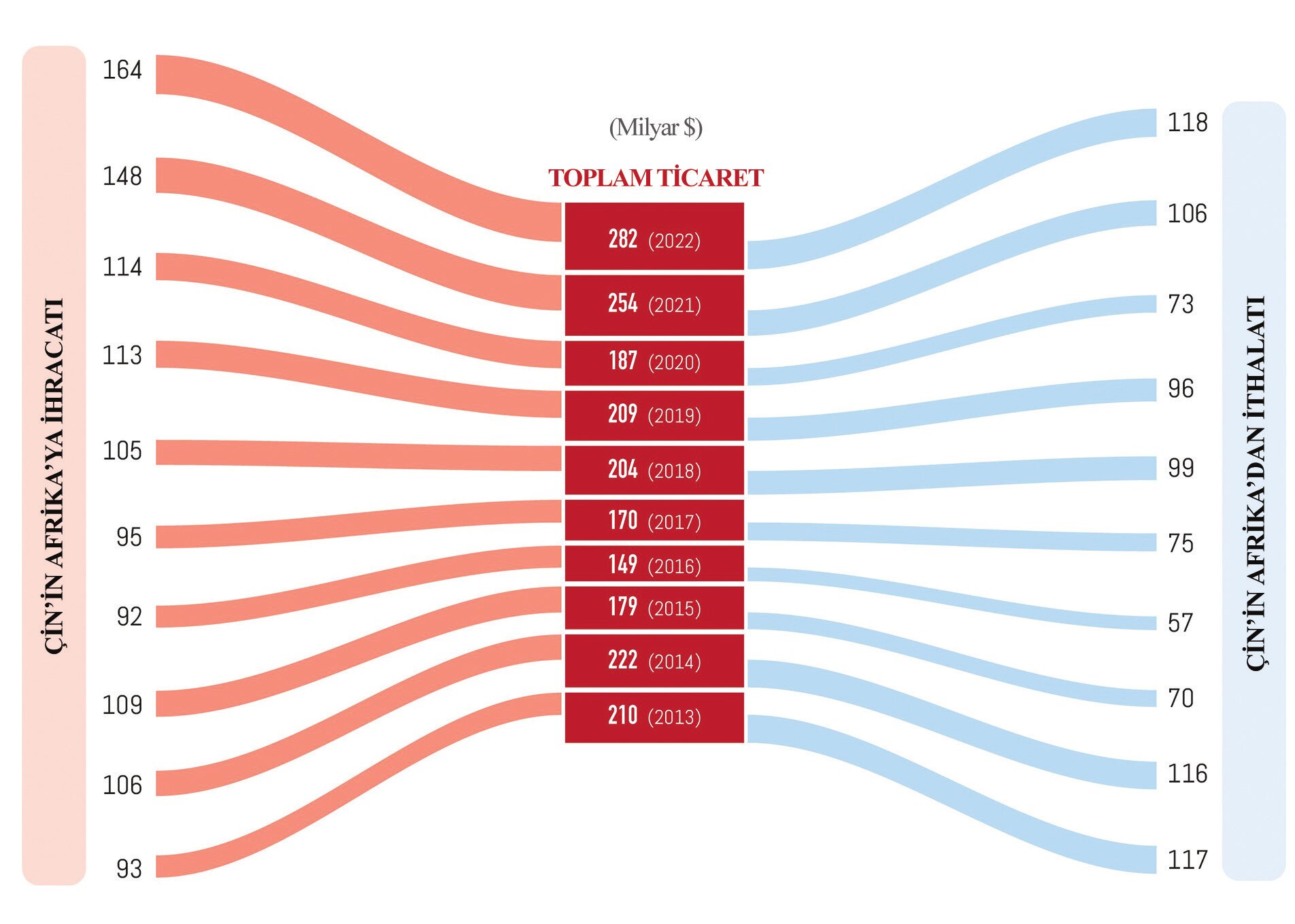
As a result, China has been Africa’s largest trading partner for the 14 years since 2009. According to the China-Africa Trade Index, China’s trade with Africa rose from less than 100 billion yuan in 2000 to 1.88 trillion yuan in 2022, posting a cumulative increase of more than 20 times, with an average annual growth rate of 17.7 percent (Xinhua, 2023Xinhua. (2023). Economic Watch: China-Africa trade index debuts, indicating strong growth. Retrieved November 15, 2023 from).
China’s growing footprint in Africa through its offer of global public goods such as FOCAC, BRI, GDI, GSI, GCI, and the Outlook of Peace and Development in the HoA has fueled a ‘cold-war’ mentality from liberal democracies. They have labeled China’s offer of public goods to Africa as agents of “debt trap”. Accusations of neo-colonialism and luring developing or underdeveloped countries to request financial loans for infrastructure projects and later controlling them if they fail to pay off their loans (TRT World, 2019TRT World. (2019). How China’s debt trap diplomacy works and what it means. Retrieved November 16, 2023 from) in time has become the post-truth narrative driving the China-Africa cooperation.
China has also been accused of perpetuating resource extraction from Africa, a continent that is endowed with natural resources such as aluminum, copper, iron ore, cobalt, and lithium, among other rare earth minerals. These resources have become the source of renewed geopolitical competition among global powers to influence Africa to abandon its cooperation with China. In a way to invalidate the propaganda narratives on “debt trap diplomacy”, between 2000 and 2019, China has cancelled at least USD 3.4 billion of debt in Africa, and restructured or refinanced about USD 15 billion in African debt (Bartlett, 2022Bartlett, K. (2022). China Cancels 23 Loans to Africa Amid ‘Debt Trap’ Debate. Retrieved October 1, 2023 from). At various FOCAC conferences, China has provided relief for the substantial debts accumulated by heavily indebted and poor countries, as well as the least developed countries in Africa, through interestfree Chinese government loans. The initial FOCAC conference initiated a debt exemption of RMB 10 billion for relevant African nations. Subsequent conferences, including the 2006 Beijing Summit, the 2009 Sharm el Sheikh Conference, the 2015 Johannesburg Summit, and the 2018 Beijing Summit, successively exempted inter-governmental interest-free loans set to mature by the end of 2005, 2009, 2015, and 2018 (Aiping & Zhan, 2018Zeng Aiping, a. S. (2018). Origin, Achievements, and Prospects of the Forum on China-Africa Cooperation.). This substantial measure significantly alleviated the financial burdens of African countries. Additionally, as part of the G20 Debt Service Suspension Initiative, China has entered into debt suspension agreements with 12 African nations. Furthermore, China decided to waive interest-free loans that matured by 2020 for 15 African countries, further contributing to easing the financial challenges faced by these nations (Li, 2020Li (2020). The source article does not provide a separate full bibliographic entry for this citation.). Thus, the “debt trap diplomacy” narratives hold no water in describing the China-Africa cooperation and its partnership in global public goods. Other post-truth narratives regarding the projects done by China to Africa are regarding the weaponization of environmental concerns—often by lobbies, civil society groups, and researchers. To mitigate environmental concerns, China has done its best to reconcile nature and development through the implementation of strategic measures through its guiding philosophy of enhancing ecological civilization (Gürcan, 2021Gürcan, E. C. (2021). On the development of China’s environmental policies towards an eco-logical civilization. Belt & Road Initiative Quarterly, 2(3).7-25.).