Introduction
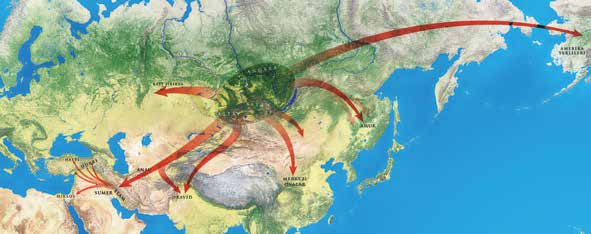
"The long walk hypothesis", which was developed in one of the recent theoretical studies (Güneri, 2022Güneri (2022). The source article does not provide a separate full bibliographic entry for this citation.) based on the information that at the end of The Last Glacial Maximum (18.000- 14.000 BP) in Yenisey-Lena region there had been small groups of people who spoke ‘only one’ language, predicts that at the end of this time period a part of these groups of people had spread to various regions through migration (Güneri, 2022Güneri (2022). The source article does not provide a separate full bibliographic entry for this citation.). According to the results of these studies (Güneri, 2022Güneri (2022). The source article does not provide a separate full bibliographic entry for this citation.) before 14.000s BP, the mass migrations - leaving from the area restricted by Yenisey in the West, Angara River which fed Yenisey in the North and Baykal region in the South- arrived at the Near East walking west. The majority of the distance traveled between Syberia – East Anatolia passes through the Silk Road line. (Fig. 1): Angara-Baykal→Yenisey Valley→Xinjiang-Uyghur→East Kazakhstan→Southern Kyrgyzstan→Southern Turkmenia→Northern
Iran→South Caspian Coast→Zagros Mountains→- Southern Mesopotamia→Northern Iraq→Southeastern Anatolia.
'The theory', based on the available data in the Upper Paleolithic, defines the ‘only one’ language spoken in the Angara-Baykal (Yenisey-Lena) region as the 'Archaic Yenisey-Lena Culture/ Language'. (Güneri, 2022Güneri (2022). The source article does not provide a separate full bibliographic entry for this citation.). Until 14.000 BP, only one language was spoken in the region, but after this point of time, the peoples of the 'Archaic Yenisey- Lena Culture', aiming for different geographies, developed their languages in different lands and in different directions over a long period of time. So, while it was a single language before 14.000 BP, in about five to six thousand years until the Neolithic Ages, the 'Archaic Yenisey-Lena Language' would turn into different languages that developed in different directions both in North Asia and in distant geographies. At the end of the development processes of the languages, there will be nothing shared in between those languages, except for
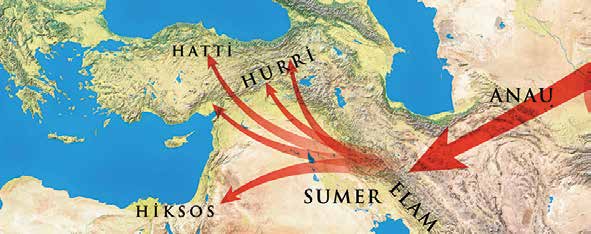
the agglutinative language feature and plenty of common words. The group of people from 'Archaic Yenisey-Lena culture' seeking a way in the West must have developed their languages in different directions in different lands after leaving their own regions. In the Near East, they arrived at during the Epi-Paleolithic period, these peoples (such as Sumerians, Elamite, Hurrians, Hyksos, Kassite, Guti, 'Luristan Blacksmiths' etc.) (Fig. 2) would have spoken their own agglutinative languages over time.1 Recent studies confirm the conclusion that the migrations targeting the 'New World (North
America)' at the latest 14.000 BP were indigenous peoples from the Altai. According to the results of these studies, the migrations from the Altai targeting North America did not take place long before 14.000 BP.
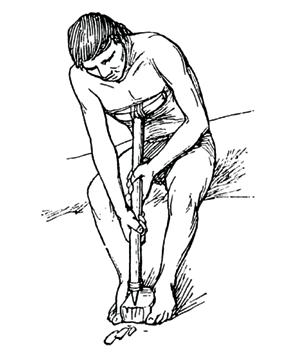
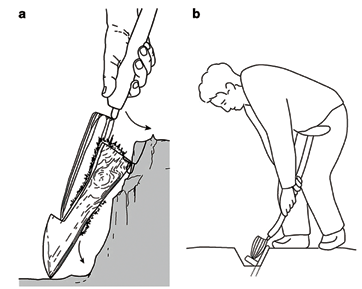
Stone tool industries using the pressure technique that emerged without pre-development and suddenly in Central Asia, Eastern Europe, Scandinavia, and finally the Near East since the end of the Upper Paleolithic period -which is widely accepted as originating from the 'cultural territory of the Altai' 2- are considered to be a development in parallel with the simultaneous
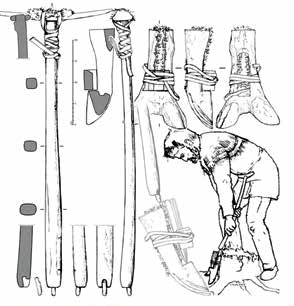
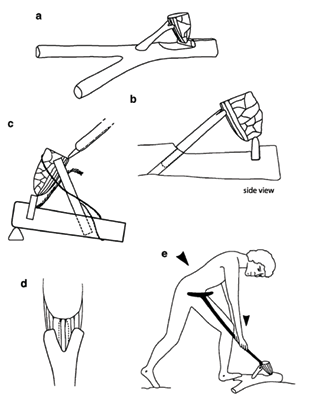
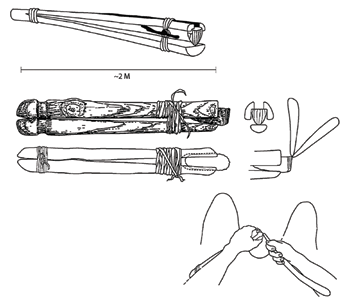
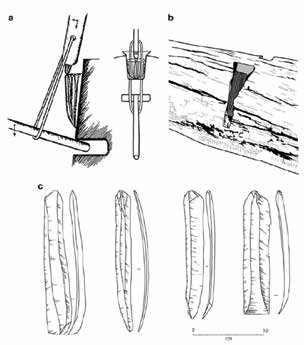
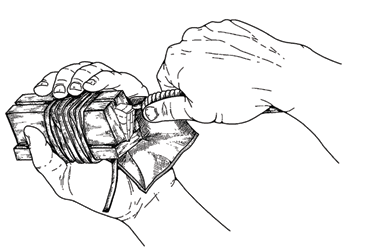
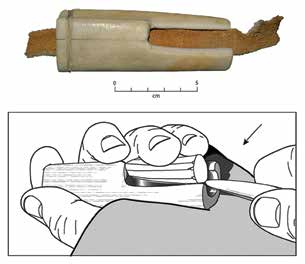
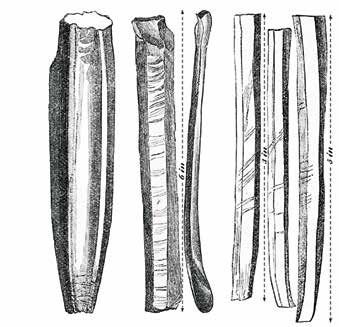
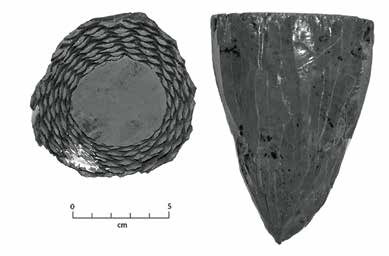
extensive expansion of 'Ancient North Eurasians' hunter-gatherers, which are the technology's carriers (Figs. 3-13). In the early periods of the Pre-pottery Neolithic (PPN), the 'pressure technique stone tool industries' that abruptly emerged on the eastern flank of the Fertile Crescent in the Near East, formed a pillar of the regional expansion. We briefly describe this development as follows: We can think that one of the components of the 'PPN Göbeklitepe Culture', which emerged without a pre-development process in Southeastern Anatolia, is related to a huntergatherer community coming from outside. The results of recent aDNA studies--discussed below-interestingly support the said spread. In this context, we hypothetically think that the existence of cultural groups speaking Sumerian, Elamite, Hurrian, Hiksos, Kassite, Gutian, 'Luristan Blacksmiths' and other regional agglutinative languages, almost all of which are understood to be of Zagros origin, may be related to these earliest migrations.
We can trace the migrations in question and
the cultural mixes with communities of different origins that Early North Asian peoples encountered in distant geographies, through the findings of both archaeological and genetics researches. The identification of these cultural and biological mixtures offers an important way out in determining the identities of the successor cultures that emerged in the Holocene. Thus, these scientific inferences will bring together the presentation of earliest evidence to illuminate the belonging related to language families, where intense debates took place in the scientific world (Berkant, 2020Berkant (2020). The source article does not provide a separate full bibliographic entry for this citation.).
A group of academics who consider themselves interested in the subject, especially the authors of this article, think that the creators of the Southeastern Anatolian 'PPN Göbeklitepe Culture' may have come from outside. We should think that the 'PPN Göbeklitepe Culture', which suddenly emerged with a developed understanding of depictive art, was at least shaped as a result of strong cultural influences from outside. According to the authors of this article, this cultural phenomenon, which probably moved from Northern Asia and followed the Southern shores of the Caspian to the Zagros region, must have landed in the Southeast Anatolian region via the Zagros-Northern Iraq. The pressure microblade tradition, which has a special place among the Epi-Paleolithic stone tool industries in the Zagros- Northern Iraq region, spread to the region, most probably as a result of this Northern Asian cultural movement.
Because the climate was mild until 25.000 BP, the Western slopes of the Zagros harbored many hunter-gatherer groups,3 and many of these camps were abandoned in the end of this period due to the dry and cold climate. After 17.000 BP, the Zagros were resettled, which lasted until the dry and cold climate wave called the "Younger Dryas"4. At the beginning of this period, hunter-gatherers who evacuated themselves from the Zagros must have started to migrate towards the Northern part
of the Fertile Crescent, namely the Southeastern Anatolian 'PPN Göbeklitepe Culture' region. Before the food production, the only inhabited area in Iran other than the western slopes of the Zagros was the Southern Caspian. Except for the Zagros and Northwest Iran, the regions were largely vacant due to unfavorable climate conditions. On the other hand, in the western parts of the Fertile Crescent, we see the Natufian culture, completely different from the Zarzi culture. Therefore, at the beginning of the "Younger Dryas" dry and cold climate wave, with the possible effects of North Asian migrations, the point where the march from the Zagros-Northern Iraq region came to an end was probably the Southeastern Anatolia region.
Pressure Technique of Micro-blade Stone Industries Traveling to the Near East via Silk Road
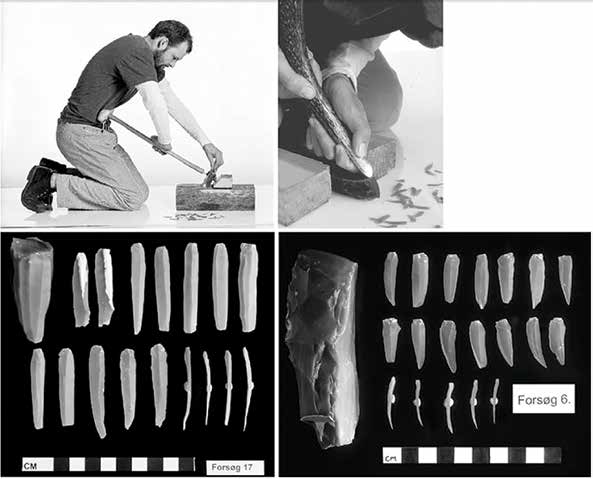
There has not been a deep, detailed, comprehensive research about the production of micro-blades by using the pressure technique in various cultural regions in Eurasia until the Bronze Ages. Therefore,
we would like to define the findings that we have reached by evaluating the results of the existing research, as only the movements in front of the light beams that leak through the small windows opened by the limited material, but as vivid as possible. Systematic research to be carried out between Siberia and Anatolia will bring different expansions together. Now, we move on to the details of the main idea that we have included in this general framework.
The Fertile Crescent, the core region of the Aceramic Neolithic period in the Near East, has been known to consist of two main cultural regions as the Eastern and Western wings, so far.
We divide the region today into three main parts, according to new data: The Zagros (Eastern part), the Southeastern Anatolia (Northern part) and the Levantine (Western part) and . Archaeological studies are much more detailed in the Western part than the others. The Zagros and the Levantine parts are interestingly culturally different. Cultural disconnections are severe. The border is in the Northern part of the Tigris and Euphrates, around
Northeast Syria (Nishiaki & Darabi 2018, p. 1-2Nishiaki, Y. & H. Darabi (2018). The earliest Neolithic Lithic Industries of the Central Zagros: New evidence from East Chia Sabz, Western Iran. Archaeological Research in Asia, 16, 46-57. Olszewski, D. (1994). The Late Epipaleolithic Chipped Stone “He ritage” in Early Aceramic Neolithic Assemblages in the Nort hern Fertile Crescent. Ed. H.G. Gebel, S.K. Kozlowski, Neolit hic Chipped Stone Industries of the Fertile Crescent, 83-90. Olszewski, D. (2012). The Zarzian in the Context of the Epipaleo lithic Middle East. Humanities 19, 3, 1-20. Özdoğan, M. (2014). Anatolia: From The Pre-Pottery Neolithic to the end of the Early Bronze Age (10,500–2000 BCE). The Cambridge world prehistory. (Ed by: C. Renfrew, P. Bahn), Cambridge University Press, 1508-1544. Pavlov, P.Y. (2008). The Paleolithic of Northeastern Europe: New Data. Archaeology, Ethnology and Anthropology of Eurasia, 33(1), 33-45. Pelegrin, J. (2012). New Experimental Observations for the Cha racterization of Pressure Blade Production Techniques. Ed.).
PPN Göbeklitepe Culture developed relations mainly with the Zagros-Northern Iraqi cultural environment and was influenced by this environment throughout the period. In addition, it is understood that it has local characteristics. The Zagros-Levantine-Eastern Anatolian Epipaleolithic shows similarities and differences in some respects. One of the culturally differentiating aspects of the Zagros and Levantine is determined by the identities of the stone tools industries (Kozlowski 1994, pp. 143-144Kozlowski (1994). The source article does not provide a separate full bibliographic entry for this citation.)⁵. In the Levantine part, blades and micro-blades are extracted by the 'direct percussion technique' and from the bipolar naviform cores. In the Eastern part, the cores from which blade/bladelets/micro-blades were extracted are generally conical or subconical with a single percusion platform. While direct percussion technique was used to pre-form such cores, indirect percussion technique was used to open percussion platform and chipping surface, followed by 'pressure technique' for systematic extraction of blanks (Kozlowski, 1994, pp. 148-149Kozlowski (1994). The source article does not provide a separate full bibliographic entry for this citation.; Olszewski, 1994, p. 86. -87Olszewski (1994). The source article does not provide a separate full bibliographic entry for this citation.; Inizan, Lechevallier & Plumet, 1992, pp. 671-672, 675Inizan, Lechevallier & Plumet (1992). The source article does not provide a separate full bibliographic entry for this citation.; Inizan & Lechevallier, 1994, pp. 23-29Pierre M. Desrosiers, The Emergence of Pressure Blade Ma king From Origin to Modern Experimentation, Springer, Bos ton, 11-43. Inizan, M.L. ve M. Lechevallier (1994). L’adoption du débitage laminaire par pression au Proche-Orient, Ed. H.G. Gebel, S.K. Kozlowski, Neolithic Chipped Stone Industries of the Fertile Crescent Neolithic Chipped Stone Industries of the Fertile Crescent, 23-32.. Inizan, M.L., M. Lechevallier ve P. Plumet (1992). A Techno logical Marker of the Penetration into North America: Pres sure Microblade Debitage, its Origin in the Paleolithic of North Asia and its Diffusion. MRS Online Proceedings Lib rary Archive, 267, 661-681. Keates, S.G. (2007). Microblade Technology in Siberia and Nei ghbouring Regions: An Overview, Ed. Yaroslav V. Kuzmin, Susan G. Keates ve Chen Shen, Origin and Spread of Microb lade Technology in Northern Asia and North America, 125- 146. Kozlowski, S.K. (1989). Nemrik 9, a PPN Neolithic Site in Nort hern Iraq. Paléorient, 15(1), 25-31. Kozlowski, S.K. (1994). Chipped Neolithic Industries at the Eas tern Wing of the Fertile Crescent (Synthesis Contribution), Ed. H.G. Gebel, S.K. Kozlowski, Neolithic Chipped Stone In dustries of the Fertile Crescent, 143-172.. Kuzmin, Y.V. (2007). Geoarchaeological Aspects of the Origin and Spread of Microblade Technology in Northern and Cent ral Asia. Origin and Spread of Microblade Technology in Northern Asia and North America, Ed. Yaroslav V. Kuzmin, Susan G. Keates ve Chen Shen, Origin and Spread of Microb lade Technology in Northern Asia and North America, 115- 124. Kayacan, N. (2015). Anadolu’da Neolitik Dönem’de Baskı Tekni ği ile Taş Yongalama: Uygulama, Dağılım ve Kültürel Farklı lıklar [Istanbul Üniversitesi Sosyal Bilimler Enstitüsü]. Lazaridis, I., Dani, N., Rollefson, G., Merett, D.C., Rohland, N., Mallick, S., Fernandes, D., vd. (2016). Genomic Insights Into the Origin of Farming in the Ancient Near East. Nature 536 (7617), 419-436. Lazaridis, I., Mallick, S., Cheronet, O., Rohland, N., Jakeli N., Kva vadze, E., Matzkevich, vd. (2018). Paleolithic DNA from the Caucasus Reveals Core of West Eurasian Ancestry. bi oRxiv 423079, 1-26. Milic, B. ve B. Horejs (2017). The Onset of Pressure Blade Making in Western Anatolia in the 7th Millennium BC: A Case Study from Neolithic Çukuriçi Höyük. Çukuriçi Höyük 1, 1, 27-52. Nian, X., X. Gao ve L. Zhou (2014). Chronological studies of Shu idonggou (SDG) locality 1 and their significance for archaeo logy. Quaternary International, 347, 5-11. Nishiaki, Y. ve K. Nagai (2011). Obsidian Knappers at the Late PPNB ‘Consumer’ Settlement of Tell Seker Al-Aheimar, Nort heast Syria. Paléorient, 37(2): 91-105.). The earliest evidence for the use of pressure technique, which appeared abruptly in the Zagros region, despite some problems with radio-carbon dating, came from the M'lefaat settlement on the Northwest outskirts of the Zagros (Szymczak, 2002, p. 230Szymczak (2002). The source article does not provide a separate full bibliographic entry for this citation.). The use of the pressure technique was spread along the Zagros in the South⁶, in the North and West directions to the Tigris basin in Northern Iraq⁷, to the Euphrates basin in Northern Syria⁸, to Southeastern Anatolia⁹ and although it is a singular and fugacious example, even to Kaletepe in Central Anatolia (8300-8200 BC) (Kozlowski, 1989, p. 30; Kozlowski, 1994, pp. 156-158; Binder, 2007, pp. 236-241; Tsuneki, Zeidi & Ohnuma, 2007, p. 19; Altınbilek-Algül et al. , 2012, pp. 158-
159; Nishiaki & Nagai, 2011, pp. 91-93; Nishiaki & Darabi, 2018, pp. 9-11; Kayacan, 2015, pp. 331-342; Milic & Horejs, 2017, p. .31-32). The widespread use of the pressure technique in Central and Western Anatolia started with the spread of the “Neolithic Package” from the 7th millennium BC (Erdoğdu and Çevik, 2020, p. 50 ff.Erdoğdu and Çevik (2020). The source article does not provide a separate full bibliographic entry for this citation.) (Binder, 2007, p. 241Binder (2007). The source article does not provide a separate full bibliographic entry for this citation.; Binder et al., 2012, pp. 212-213Binder et al. (2012). The source article does not provide a separate full bibliographic entry for this citation.; Kayacan, 2015, pp. 326, 343, 348-358Kayacan (2015). The source article does not provide a separate full bibliographic entry for this citation.; Milic & Horejs, 2017, pp. 38- 40Milic & Horejs (2017). The source article does not provide a separate full bibliographic entry for this citation.; Gatsov & Özdogan, 1994, pp. 102-110Gatsov & Özdogan (1994). The source article does not provide a separate full bibliographic entry for this citation.; Gatsov, 2016, p. 107Gatsov (2016). The source article does not provide a separate full bibliographic entry for this citation.; Gatsov et al., 2017, p. 308Gatsov et al. (2017). The source article does not provide a separate full bibliographic entry for this citation.).
The emergence of the pressure technique in the Near East has survived to the present day as a controversial issue. Some researchers tend to see the origin of stone industries using this technique in the Epi-paleolithic Zarzi culture in the Zagros (Olszewski, 1994, p. 87Olszewski (1994). The source article does not provide a separate full bibliographic entry for this citation.; Kozlowski, 1994, p. 169Kozlowski (1994). The source article does not provide a separate full bibliographic entry for this citation.). On the other hand, the connection
between Zarzi and M'lefaat stone industries is broken; both the absence of cultural layers that are expected to show local development and the time difference (Nishiaki & Darabi, 2018, p. 9Nishiaki, Y. & H. Darabi (2018). The earliest Neolithic Lithic Industries of the Central Zagros: New evidence from East Chia Sabz, Western Iran. Archaeological Research in Asia, 16, 46-57. Olszewski, D. (1994). The Late Epipaleolithic Chipped Stone “He ritage” in Early Aceramic Neolithic Assemblages in the Nort hern Fertile Crescent. Ed. H.G. Gebel, S.K. Kozlowski, Neolit hic Chipped Stone Industries of the Fertile Crescent, 83-90. Olszewski, D. (2012). The Zarzian in the Context of the Epipaleo lithic Middle East. Humanities 19, 3, 1-20. Özdoğan, M. (2014). Anatolia: From The Pre-Pottery Neolithic to the end of the Early Bronze Age (10,500–2000 BCE). The Cambridge world prehistory. (Ed by: C. Renfrew, P. Bahn), Cambridge University Press, 1508-1544. Pavlov, P.Y. (2008). The Paleolithic of Northeastern Europe: New Data. Archaeology, Ethnology and Anthropology of Eurasia, 33(1), 33-45. Pelegrin, J. (2012). New Experimental Observations for the Cha racterization of Pressure Blade Production Techniques. Ed.) prevent this connection. Some researchers (Inizan & Lechevallier, 1994, p. 23Pierre M. Desrosiers, The Emergence of Pressure Blade Ma king From Origin to Modern Experimentation, Springer, Bos ton, 11-43. Inizan, M.L. ve M. Lechevallier (1994). L’adoption du débitage laminaire par pression au Proche-Orient, Ed. H.G. Gebel, S.K. Kozlowski, Neolithic Chipped Stone Industries of the Fertile Crescent Neolithic Chipped Stone Industries of the Fertile Crescent, 23-32.. Inizan, M.L., M. Lechevallier ve P. Plumet (1992). A Techno logical Marker of the Penetration into North America: Pres sure Microblade Debitage, its Origin in the Paleolithic of North Asia and its Diffusion. MRS Online Proceedings Lib rary Archive, 267, 661-681. Keates, S.G. (2007). Microblade Technology in Siberia and Nei ghbouring Regions: An Overview, Ed. Yaroslav V. Kuzmin, Susan G. Keates ve Chen Shen, Origin and Spread of Microb lade Technology in Northern Asia and North America, 125- 146. Kozlowski, S.K. (1989). Nemrik 9, a PPN Neolithic Site in Nort hern Iraq. Paléorient, 15(1), 25-31. Kozlowski, S.K. (1994). Chipped Neolithic Industries at the Eas tern Wing of the Fertile Crescent (Synthesis Contribution), Ed. H.G. Gebel, S.K. Kozlowski, Neolithic Chipped Stone In dustries of the Fertile Crescent, 143-172.. Kuzmin, Y.V. (2007). Geoarchaeological Aspects of the Origin and Spread of Microblade Technology in Northern and Cent ral Asia. Origin and Spread of Microblade Technology in Northern Asia and North America, Ed. Yaroslav V. Kuzmin, Susan G. Keates ve Chen Shen, Origin and Spread of Microb lade Technology in Northern Asia and North America, 115- 124. Kayacan, N. (2015). Anadolu’da Neolitik Dönem’de Baskı Tekni ği ile Taş Yongalama: Uygulama, Dağılım ve Kültürel Farklı lıklar [Istanbul Üniversitesi Sosyal Bilimler Enstitüsü]. Lazaridis, I., Dani, N., Rollefson, G., Merett, D.C., Rohland, N., Mallick, S., Fernandes, D., vd. (2016). Genomic Insights Into the Origin of Farming in the Ancient Near East. Nature 536 (7617), 419-436. Lazaridis, I., Mallick, S., Cheronet, O., Rohland, N., Jakeli N., Kva vadze, E., Matzkevich, vd. (2018). Paleolithic DNA from the Caucasus Reveals Core of West Eurasian Ancestry. bi oRxiv 423079, 1-26. Milic, B. ve B. Horejs (2017). The Onset of Pressure Blade Making in Western Anatolia in the 7th Millennium BC: A Case Study from Neolithic Çukuriçi Höyük. Çukuriçi Höyük 1, 1, 27-52. Nian, X., X. Gao ve L. Zhou (2014). Chronological studies of Shu idonggou (SDG) locality 1 and their significance for archaeo logy. Quaternary International, 347, 5-11. Nishiaki, Y. ve K. Nagai (2011). Obsidian Knappers at the Late PPNB ‘Consumer’ Settlement of Tell Seker Al-Aheimar, Nort heast Syria. Paléorient, 37(2): 91-105.; Binder, 2007, pp. 240- 241Binder (2007). The source article does not provide a separate full bibliographic entry for this citation.; Altınbilek-Algül et al., 2012Altınbilek-Algül et al. (2012). The source article does not provide a separate full bibliographic entry for this citation.; Milic & Horejs, 2017, pp. 42-43Milic & Horejs (2017). The source article does not provide a separate full bibliographic entry for this citation.; Nishiaki & Darabi, 2018, p. 9Nishiaki, Y. & H. Darabi (2018). The earliest Neolithic Lithic Industries of the Central Zagros: New evidence from East Chia Sabz, Western Iran. Archaeological Research in Asia, 16, 46-57. Olszewski, D. (1994). The Late Epipaleolithic Chipped Stone “He ritage” in Early Aceramic Neolithic Assemblages in the Nort hern Fertile Crescent. Ed. H.G. Gebel, S.K. Kozlowski, Neolit hic Chipped Stone Industries of the Fertile Crescent, 83-90. Olszewski, D. (2012). The Zarzian in the Context of the Epipaleo lithic Middle East. Humanities 19, 3, 1-20. Özdoğan, M. (2014). Anatolia: From The Pre-Pottery Neolithic to the end of the Early Bronze Age (10,500–2000 BCE). The Cambridge world prehistory. (Ed by: C. Renfrew, P. Bahn), Cambridge University Press, 1508-1544. Pavlov, P.Y. (2008). The Paleolithic of Northeastern Europe: New Data. Archaeology, Ethnology and Anthropology of Eurasia, 33(1), 33-45. Pelegrin, J. (2012). New Experimental Observations for the Cha racterization of Pressure Blade Production Techniques. Ed.) cautiously attribute this development to the Near East to the Caucasus-Central Asia and even North Asia, considering the possibility that the origin of this technique may be 'outside'. However, the problem of the origin of the pressure technique seen in the Near East is briefly overlooked and expressed in a few sentences. The clearest view on the origin of the pressure technique seen in the Near East belongs to M.L. Inizan (Inizan, 2012, pp. 35-37Inizan (2012). The source article does not provide a separate full bibliographic entry for this citation.). The author claims that the roots of this technique are in North Asia, and from there it spread to the surrounding geographies . The author has not made a clear judgment about through which socio-cultural processes this spread may have taken place .
The use of the pressure technique in the Upper Paleolithic stone industries in North Asia has a long tradition. The earliest examples of the systematic use of pressure technique in stone industries in North Asia are in Northern China . It is emphasized to look for the origin of these stone industries, which appeared abruptly in Northern China, in the Siberian Early Upper Paleolithic (ca. 39.000/38.000-31.000/30.000 / Heinrich-4 to Heinrich-3) stone industries (Ust'-Karakol Tradition; "Proto-Micro-blade Technology") (Kuzmin, 2007, pp. 115-118Kuzmin (2007). The source article does not provide a separate full bibliographic entry for this citation.; Keates, 2007, pp. 125-129Keates (2007). The source article does not provide a separate full bibliographic entry for this citation.; Berkant, 2020, pp. 419-425Berkant (2020). The source article does not provide a separate full bibliographic entry for this citation.). Bladebased stone industries in Mongolia disappeared at the beginning of the Sartan Phase (OIS-2), which started after the Heinrich-3 (approximately event and experienced adverse 31.000/30.000 BP) climate conditions (Gladyshev et al., 2010, p. 39Gladyshev, S.A., A.V. Tabarev ve J.W. Olsen (2010). Origin and Evolution of the Late Paleolithic Microindustry in Northern Mongolia. Current Research in the Pleistocene, 27, 38-40. Graf, K.E. (2008). Uncharted territory: Late Pleistocene hun ter-gatherer dispersals in the Siberian Mammoth- Steppe (PhD dissertation), University of Nevada, Reno. Guan, Y., Wang, X., Wang, F., Olsen, J.W., Pei, S., Zhou, Z., Gao, X., vd. (2019). “Microblade Remains from the Xishahe site, North China and their Implications for the Origin of Microb lade Technology in Northeast Asia”, Quaternary International, 1-21. Güneri, A.S. (2018). Türk-Altay Kuramı: Arkeolojik Belgeler Işı ğında Kuzey Asya’da Türklerin Erken Kültür Tarihi, Kaynak Yayınları, Istanbul. Güneri, A.S. (2022). Türk-Altay Kuramı: Arkeolojik Belgeler Işı ğında Kuzey Asya’da Türklerin Erken Kültür Tarihi, (Güncel lenmiş 2. Baskı), Atayurt Yayınevi, Ankara. Güneri, A.S., E.B. Berkant, A. Avcı, A.Z. Bayburt, A. Yalnız, R.E.; Rybin et al.., 2016, p. 6Rybin et al.. (2016). The source article does not provide a separate full bibliographic entry for this citation.). The situation is the same in the Northwest Altai. According to the findings, communities in Southern Siberia withdrew to micro-climate areas where environmental
conditions were more suitable such as the Yenisey- Angara basins, in Southern Siberia, during the Last Glacial Maximum (26.500-19.000 BP) , which includes the coldest part of the Sartan Phase (about 30.000-11,800 years ago). Under these conditions, we can say that the communities that formed the earliest true micro-blade industries in North China did not remain in Southern Siberia but left there and migrated to the East .
Blade-based stone industries, which began to appear in Southern Siberia and Mongolia after about 39.000/38.000 (Heinrich-4) BP, must be connected to the spread of Aurignacian stone industries in Western Eurasia in a broad sense (Berkant, 2020Berkant (2020). The source article does not provide a separate full bibliographic entry for this citation.). We can also define the communities living the stone industries processes, which had cultural continuity with some technological developments in the process from the beginning of this phase to the end of the Pleistocene, as "Early North Asian Peoples / Ancient North Asian Populations" or "Archaic Altaic Peoples" (Berkant, 2020, p. 13 et alBerkant (2020). The source article does not provide a separate full bibliographic entry for this citation.). This culture group is genetically represented in aDNA studies by the "Ancient North Eurasians" genetic cluster, which consists of genomes dated to the Upper Paleolithic found in the Baykal region and its 1000 km Northwest of Krasnoyarsk (Raghavan et al., 2014, p. 7Pierre M. Desrosiers, The Emergence of Pressure Blade Ma king From Origin to Modern Experimentation, Springer, Bos ton 465-500. Raghavan, M., Skoglung, P., Metspalu, M., Graf, K.E., Albrecht sen, A., Molkte, I., Rassmussen, S., vd. (2014). Upper Palaeo lithic Siberian Genome Reveals Dual Ancestry of Native Americans. Nature, 505(7481), 87-91. Rybin, E.P., Khatsenovich, A.M., Pavlenok, G.D. (2016). Posledo vatel'nost' razvitiya industriy rannego-pozdnego verhnego paleolita Mongolii. Izvestiya Irkutskogo gosudarstvennogo universiteta Seriya: Geoarkheologiya. Etnologiya. Antropo logiya, 16, 3-23. Sikora, M., Khatsenovich, V.I., Pitulko, V.V., Sousa, V.C., Margar yan A., Yang, M.A., Arppe, L., vd. (2018). The Population His tory of Northeastern Siberia Since the Pleistocene. bioRxiv, 1-39. Sato, H. ve T. Tsutsumi (2007). The Japanese Microblade Indust ries: Technology, Raw Material Procurement, and Adaptati ons. Origin and Spread of Microblade Technology in Nort hern Asia and North America, Ed. Yaroslav V. Kuzmin, Su san G. Keates ve Chen Shen, Origin and Spread of Microblade Technology in Northern Asia and North America, 53-78. Song, Y., Cohen, D.J., Shi, J., Wu, X., Kvavadze, E., Goldberg, P., Zhang, S., vd. (2017). Environmental reconstruction and da ting of Shizitan 29, Shanxi Province: An early microblade site in North China. Journal of Archaeological Science, 79, 19-35. Sorensen, M. (2012). The Arrival and Development of Pressure Blade Technology in Southern Scandinavia, Ed. Pierre M.). Two genomes of approximately
32.000 years from the Yana-RHS settlement in the Arctic make up the "North Siberians" genetic cluster. The ancestors of these two genetic clusters probably descended from an ancestral population that lived in the Angara-Baykal region around 38.000 BP (Sikora et al., 2018, p. 7, Supp. 66Sikora et al. (2018). The source article does not provide a separate full bibliographic entry for this citation.).
Stone industries using the pressure technique were found in Korea without a premise (Bae & Bae, 2012, pp. 27-33Bae & Bae (2012). The source article does not provide a separate full bibliographic entry for this citation.; Coutouly, 2018, pp. 14-16Coutouly (2018). The source article does not provide a separate full bibliographic entry for this citation.) and Hokkaido Island in Japan (Sato & Tsutsumi, 2007, p. 55Sato & Tsutsumi (2007). The source article does not provide a separate full bibliographic entry for this citation.), after the earliest examples appeared in Northern China. After the GS-3 (27,500- 23,300 BP), with relatively favorable climatic development, in Central Amur , Yakutia and Sakhalin , true micro-blade industries using the pressure technique have emerged in Southern Siberia and Northern Mongolia. In TransBaykal and Cis-Baykal , Yenisey , Northern Mongolia and Northwest Altai , Late Upper Paleolithic stone industries, in which the pressure technique was used, began to appear (Berkant, 2020Berkant (2020). The source article does not provide a separate full bibliographic entry for this citation.).
As in the "Last Glacial Maximum", the population in Southern Siberia migrated to the Yenisey basin during the period defined as the "N'iapan Cooling Stage (N'iapan Stade)" according to the traditional climatic scheme of Siberia, which
corresponds to the period between 18.000-16.000 BP in the Late Upper Paleolithic. (Graf, 2008, p. 136, Table 3.19Graf (2008). The source article does not provide a separate full bibliographic entry for this citation.). Considering the increase in the number of settlements in other parts of Southern Siberia (Northwest Altai, Cis-Baykal, Trans- Baykal), it can be said that the population clustered in Yenisey during the warming phase (Kokorevo warming) following this process spread to the environment (Berkant, 2020, pp. 486-492Berkant (2020). The source article does not provide a separate full bibliographic entry for this citation.).
However, it can be said based on the archaeological and genetic data that the true micro-blade industries, in which the pressure technique was used, and the communities that created them began to spread towards “Western Eurasia”. The use of the pressure technique that emerged in the Urals (Pavlov, 2008, p. 42Pavlov (2008). The source article does not provide a separate full bibliographic entry for this citation.) after about 16.000/15.000 BP - "Final Upper Paleolithic" for the Urals - originates many cultures (Yangelka, Romanovka-Ilmursin, Kama, Butovo et al.) that emerged around the Urals and in Eastern Europe during the Pleistocene- Holocene transition (Pavlov, 2008, p. 42Pavlov (2008). The source article does not provide a separate full bibliographic entry for this citation.). (Hartz,
Terberger & Zhilin, 2010, pp. 158-164; Sorensen, 2012, pp. 254-256; Sorensen et al., 2013, pp. 6-13; Berkant, 2020, pp. 635-642). It is supported by both archaeological and genetic findings that communities using the pressure technique reached Scandinavia at the beginning of the Holocene (Sorensen et al., 2013, pp. 14-25Desrosiers, The Emergence of Pressure Blade Making, From Origin to Modern Experimentation, Springer, Boston, 237- 259. Sorensen, M., Rankama, T., Kankaanpaa, J., Knutsson, K., Knut sson H.J., Melvold, S., Eriksen, B.V., vd. (2013). The First Eastern Migrations of People and Knowledge into Scandi navia: Evidence from Studies of Mesolithic Technology, 9th- 8th millennium BC. Norwegian Archaeological Review, 46(1), 19-56. Szymczak, K. (2002). A Problem of the Bullet Shaped Cores: A Global Perspective. Światowit: rocznik poświęcony arche ologii przeddziejowej i badaniom pierwotnej kultury polskiej i słowiańskiej (Światowit: a year dedicated to prehistoric ar cheology and research on primitive Polish and Slavic culture), 4(45), 229-242. Tabarev, A.V. (2012). Blades and Microblades, Percussion and Pressure: Towards the Evolution of Lithic Technologies of the Stone Age Period, Russian Far East, Ed. Pierre M. Desrosiers, The Emergence of Pressure Blade Making, From Origin to Modern Experimentation, Springer, Boston, 329-346. Tsuneki, A., M. Zeidi ve K. Ohnuma (2007). Proto-Neolithic Ca ves in the Bolaghi Valley, South Iran. Iran, 45(1), 1-22. Vasil'ev, S.A. (2001). The Final Paleolithic in Northern Asia: Lit hic Assemblage Diversity and Explanatory Models. Arctic Anthropology, 38(2), 3-30. Vasil'ev, S.A., Y.V. Kuzmin, L. A. Orlova, V.N. Dementiev (2002).). Mesolithic genomes from Eastern Europe form the "Eastern European Hunter-Gatherers" genetic cluster.
The southern branch of the spread from Southern Siberia is formed by the stone industries in Central Asia using the pressure technique dated to the Late Pleistocene - Early Holocene. Archaeological research carried out in the former Soviet period until the 1980s revealed the find area, which is mostly represented by surface materials and a small number of excavated settlements (Sorensen et al., 2018, p. 1Sorensen et al. (2018). The source article does not provide a separate full bibliographic entry for this citation.). Recent archaeological research has started to reveal that the mentioned industries spread from the South of the Altai to Northeast Kazakhstan along the “Central Asian Mountain Corridor” to Northern Afghanistan (Sorensen et al., 2017, p. 4Sorensen et al. (2017). The source article does not provide a separate full bibliographic entry for this citation.). This process is considered as between 16.000/15.000- 13.000/11.000 BP (Berkant, 2020, pp. 610-634Berkant (2020). The source article does not provide a separate full bibliographic entry for this citation.).
Back to the beginning, the wide spread of the stone industries using the pressure technique, traced from Southern Siberia to Northern Afghanistan at the end of the Pleistocene, must be related to the sudden emergence of pressure techniques in the Near East in the East Part of the Fertile Crescent (in the Zagros). Today, we lack evidence in the Iranian Plateau due to the lack of research. On the other hand, we can fill this gap in a more interesting way with findings from aDNA studies: In the genetic cluster of genomes dated to PPN in Zagros (Ganj Dareh, Wezmeh Cave, Tepe Abdul-Husein), North Asian peoples have a calculated genetic contribution of 20-25%. Therefore, it is obvious that the carriers
of the pressure-micro-blade technology, which set out from Southern Siberia, are so intertwined and 'integrated' that they pass on their genes to the Zagros. The dates of this should be early PPN in the least. The same is true for the Caucasian Hunter-Gatherers genetic cluster .
The result is: The PPN Göbeklitepe Culture in Southeastern Anatolia emerged suddenly without a pre-development process. There is no other potential cultural system in the immediate vicinity that can be a triggering to this special development (Özdoğan, 2014, p. 1511Özdoğan (2014). The source article does not provide a separate full bibliographic entry for this citation.). It has always come to us as an interesting, 'unexpected observation' that the Eastern Mediterranean Epi-paleolithic cultural fenomenon have almost no influence on
the Southeastern Anatolian PPN cultures during our Near Eastern Prehistory lectures, seminars that we have been teaching for years. Therefore, in this case, we cannot talk about the influence of Eastern Mediterranean Epi-paleolithic dominant cultures on the formation and development of Göbeklitepe culture. However, it should be focused on that a dominant cultural influence from outside created the advanced PPN Göbeklitepe Culture by mixing with local communities. Since the Eastern Mediterranean Epi-paleolithic local cultural groups are out of picture, we must look for the dominant culture candidate among the Early North Asian cultural groups using the pressure technique.
It was mentioned above. We know that the dominant culture in question influenced not only Eastern Anatolia but also different territories. It seems unlikely that a complex technology such as blade, micro-blade production with the pressure technique will be transferred without a masterapprentice relationship (Sorensen et al., 2013, p. 26Desrosiers, The Emergence of Pressure Blade Making, From Origin to Modern Experimentation, Springer, Boston, 237- 259. Sorensen, M., Rankama, T., Kankaanpaa, J., Knutsson, K., Knut sson H.J., Melvold, S., Eriksen, B.V., vd. (2013). The First Eastern Migrations of People and Knowledge into Scandi navia: Evidence from Studies of Mesolithic Technology, 9th- 8th millennium BC. Norwegian Archaeological Review, 46(1), 19-56. Szymczak, K. (2002). A Problem of the Bullet Shaped Cores: A Global Perspective. Światowit: rocznik poświęcony arche ologii przeddziejowej i badaniom pierwotnej kultury polskiej i słowiańskiej (Światowit: a year dedicated to prehistoric ar cheology and research on primitive Polish and Slavic culture), 4(45), 229-242. Tabarev, A.V. (2012). Blades and Microblades, Percussion and Pressure: Towards the Evolution of Lithic Technologies of the Stone Age Period, Russian Far East, Ed. Pierre M. Desrosiers, The Emergence of Pressure Blade Making, From Origin to Modern Experimentation, Springer, Boston, 329-346. Tsuneki, A., M. Zeidi ve K. Ohnuma (2007). Proto-Neolithic Ca ves in the Bolaghi Valley, South Iran. Iran, 45(1), 1-22. Vasil'ev, S.A. (2001). The Final Paleolithic in Northern Asia: Lit hic Assemblage Diversity and Explanatory Models. Arctic Anthropology, 38(2), 3-30. Vasil'ev, S.A., Y.V. Kuzmin, L. A. Orlova, V.N. Dementiev (2002).). Current research results show that this route was generally vacant in the Epi-paleolithic (Berkant, 2020Berkant (2020). The source article does not provide a separate full bibliographic entry for this citation.). Therefore, this suggests that the transfer of pressure technology from Siberia to Göbeklitepe may have been carried out directly by North Asian hunter-gatherers. Thus, the carriers/ masters of pressure-micro-blade technology, which set out from North Asia, must have reached Eastern Anatolia via the Zagros-Northern Iraq wing of the Fertile Crescent, as in the examples of Eastern Europe and Scandinavia. Genetic research results also support this situation (Berkant, 2020Berkant (2020). The source article does not provide a separate full bibliographic entry for this citation.).
Therefore, we think that the PPN Göbeklitepe Culture is related to the migration of North Asian Late Upper Paleolithic hunter-gatherers to the Near East. In this context, we think that the cultures of other dominant cultures with Near Eastern agglutinative languages, such as Sumer, Elam, Hurri, Hiksos, Kassit, Guti, 'Luristan
Blacksmiths' etc., emerged from the groups that had passed through the Zagros within the scope of the North Asian Upper Paleolithic migrations to Mesopotamia and completed their development in certain directions over time.
Consequently, we think that the rise of the Göbeklitepe culture might be related to the migrations of North Asian Late Upper Paleolithic hunter-gatherers to the Near East. In this context, it is also considered that the other Near Eastern late cultures such as Sumer, Elamite, Hurri, Hyksos (?), Kasite, Guti, 'Luristan smiths' (Khorasani, 2009, 185 pp) may be directly connected with these migrations.